Visualizar em escala Visualizar em RA Alternar para Impressão Encomendar reprodução pintada à mão Enviar
Ver detalhes Adicionar aos favoritos Baixar imagem Semelhantes Raio X Apresentação de slides Estatísticas

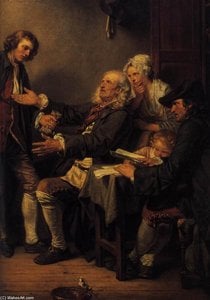
The Broken Pitcher

Experience the poignant emotion of The Broken Pitcher by Jean-Baptiste Greuze (1771), a masterpiece capturing sentimental 18th-century life; bring this timeless sorrow home.

Jean-Baptiste Greuze (1725-1805): Pintor francês renomado por cenas de gênero emocionantes e retratos moralizantes, capturando a vida cotidiana e valores da época com grande expressividade e sensibilidade.

Adquira uma imagem digital de alta resolução e aprimorada, muito superior à prévia online.

Cada arquivo é meticulosamente preparado por nossos especialistas internos, utilizando ferramentas avançadas e retoques manuais de alta precisão. Garantimos que cada imagem apresente clareza excepcional, fidelidade de cores e detalhes minuciosos.

O arquivo final é entregue por e-mail em até 72 horas, otimizado para uso imediato em ambientes profissionais, editoriais e de impressão. Esta é a mesma qualidade utilizada por estúdios de design de alto nível, editoras e galerias.

Imagem Digital

Baixe um arquivo de alta resolução para exibição pessoal, impressão e projetos criativos. ( Alternar para Impressão Encomendar reprodução pintada à mão)

Preço Total

$ 24,90

Incluído em cada pedido de imagem digital

Entrega Digital Especializada e Garantida

Ao escolher o WahooArt.com, você não está apenas adquirindo uma imagem — você está recebendo uma obra de arte digital profissionalmente aprimorada, elaborada com precisão e com garantia de satisfação. Aqui está tudo o que acompanha seu pedido, automaticamente:

shipping_icon
Entrega rápida por e-mail

O seu arquivo de imagem digital em alta resolução será enviado por e-mail em até 72 horas após o pedido — pronto para uso imediato.

canvas_icon
Arquivo Digital com IA Otimizado

Sua obra de arte é otimizada profissionalmente por meio de ferramentas avançadas de IA e edição manual, garantindo o máximo de detalhes, clareza e precisão de cores.

insurance_icon
Reenvio gratuito vitalício

Apagou ou perdeu o seu ficheiro acidentalmente? Não se preocupe – nós reenviamos para si a qualquer momento, gratuitamente.

tax_icon
Sem Taxas de Importação - Sempre

Desfrute da sua obra de arte instantaneamente, sem taxas alfandegárias, impostos ou custos de entrega — downloads digitais são sempre isentos de taxas.

color_icon
Garantia de Precisão de Cores

Garantimos que sua imagem digital reflita as cores originais com a maior fidelidade possível, utilizando ferramentas profissionais e gerenciamento de cores.

return_icon
Garantia de satisfação de 100 dias

Se não estiver satisfeito com a sua imagem digital, nós a revisaremos ou reembolsaremos 100% dentro de 100 dias — sem perguntas.

guarantee_icon
Garantia de Reembolso 100%

Não está satisfeito? Receba o reembolso total em até 100 dias após o recebimento do seu arquivo digital — sem perguntas.

discount_icon
Descontos para pedidos em lote

Compre 3 imagens, economize 10% - Compre 5, economize 15% - Compre 10+, economize 20%. Ideal para projetos criativos, galerias e agências.

Detalhes Rápidos

  • Year: 1771
  • Artist: Jean-Baptiste Greuze
  • Subject or theme: Distress, loss, heartbreak
  • Artistic style: Sentimental genre painting
  • Dimensions: 109 x 87 cm

Teste de Conhecimentos Artísticos

Cada pergunta possui apenas uma resposta correta.

Questão 1:
What is the primary emotional atmosphere suggested by 'The Broken Pitcher'?
Questão 2:
Who is the artist credited with painting 'The Broken Pitcher'?
Questão 3:
In what year was 'The Broken Pitcher' painted?
Questão 4:
Which element is NOT mentioned as being in the background of the painting?
Questão 5:
Jean-Baptiste Greuze was known for his talent in capturing which aspect of human life?

A Whisper of Melancholy: Exploring The Broken Pitcher

To stand before Jean-Baptiste Greuze's The Broken Pitcher is to step directly into the heart of eighteenth-century sentimentality. This painting, executed in 1771, is far more than a mere portrait; it is a carefully composed tableau vivant of human vulnerability. The subject—a woman enveloped in a simple white dress—commands immediate attention, her posture speaking volumes without uttering a single word. Her hands, clasped together near her chest, suggest a profound internal dialogue, perhaps one tinged with loss or deep contemplation. Greuze masterfully captures that fleeting moment when emotion crests just before it breaks.

The Art of Sentiment: Context and Style

Greuze himself was a pivotal figure whose career blossomed during the rise of genre painting, an art form deeply attuned to the everyday dramas and emotional nuances of bourgeois life. While academic tastes often favored grand historical epics or mythological grandeur, Greuze found his voice in the intimate sphere. The Broken Pitcher exemplifies this shift toward sentimentality. The inclusion of secondary elements—the watchful dog and the sturdy chair—are not mere props; they are silent witnesses to the woman's emotional state. They ground the ethereal quality of her sorrow in a tangible, domestic reality, making her heartbreak feel immediate and deeply relatable to the viewer.

Technique and Emotional Resonance

The technical brilliance at play here lies in Greuze’s ability to render texture and gesture with exquisite care. Observe the soft fall of the white drapery against the darker tones of the background; this contrast serves to isolate and illuminate the figure's emotional core. The brushwork, while skilled enough for a high-quality reproduction, retains the characteristic warmth of an artist deeply invested in narrative feeling. It is through these subtle gradations of light and shadow that Greuze guides our eye directly to the poignant expression on her face, inviting us into the quiet drama unfolding within the frame.

Symbolism of Loss and Connection

The title itself, The Broken Pitcher, hints at a narrative tragedy or a broken promise—a potent symbol of shattered domestic peace or emotional wholeness. The pitcher, though unseen in its broken state, acts as an emotional proxy for the woman's own fractured spirit. The dog, often symbolizing unwavering loyalty, adds a layer of poignant companionship to her solitude. For the modern collector or decorator, this piece offers more than just aesthetic beauty; it offers a contemplation point—a beautiful meditation on resilience found within moments of perceived breakage.

Bringing Sentiment Home

Reproducing such an emotionally charged work allows one to infuse a space with history and deep feeling. Whether displayed in a formal drawing-room or a more intimate study, The Broken Pitcher acts as a soulful anchor. It speaks to the enduring human capacity for profound feeling—joy, sorrow, longing—and reminds us that the most powerful art often resides not in what is grandly depicted, but in what is quietly felt.


Biografia do Artista

Jean-Baptiste Greuze (1725–1805): A Master of Sentiment in the Rococo Era

Jean-Baptiste Greuze, born in Tournus, a small Burgundian town in 1725, stands as one of the most distinctive and emotionally resonant figures of eighteenth-century French art. His life’s journey is a compelling narrative of artistic ascent, punctuated by both extraordinary success and profound personal struggles. Initially discouraged from pursuing his passion for painting by his roofer father, young Greuze found early encouragement in Lyon, where he studied under Grandon, an artist who recognized the nascent talent within him. This initial mentorship proved pivotal, leading to further studies in Paris at the prestigious Royal Academy, under the tutelage of Charles-Joseph Natoire – a setting that ultimately shaped his artistic trajectory and distinct style. Greuze’s story is not merely one of artistic skill; it's a testament to an artist who profoundly captured the emotional currents of his time, becoming synonymous with the burgeoning sentimentalism of the Rococo era.

The Rise of a Genre Painter: Capturing the Essence of Everyday Life

Greuze’s breakthrough arrived in 1755 with *Le Père de famille expliquant la Bible à ses enfants* (The Father Explaining the Bible to His Children). This painting, far more than a simple depiction of domestic life, became an embodiment of Enlightenment ideals. It resonated deeply with contemporary audiences precisely because it presented a vision of familial piety and moral instruction – values that were gaining increasing prominence in French society. The success of this work catapulted Greuze into the spotlight, securing him entry into the Royal Academy and establishing him as a leading figure in the emerging genre painting movement. He swiftly followed this triumph with a series of further genre scenes—intimate glimpses into everyday life imbued with profound emotional depth and moral undertones. These weren’t merely illustrations; they were carefully constructed narratives designed to evoke empathy, provoke reflection, and subtly impart moral lessons. A significant turning point in his career was his journey to Italy in 1755, undertaken alongside Abbé Gougenot. While the trip itself yielded limited artistic gains, it broadened Greuze's exposure to classical art and provided him with a renewed sense of purpose.

Mastering Emotion and Moral Narrative: A Unique Artistic Approach

Greuze’s true genius lay in his ability to translate complex emotions onto canvas—joy, sorrow, remorse, innocence, and even transgression—with remarkable sensitivity and precision. He possessed an extraordinary talent for capturing subtle nuances of expression, conveying inner turmoil with a depth rarely seen in his contemporaries. His compositions were often meticulously staged, utilizing dramatic lighting, carefully chosen props, and expressive gestures to heighten the emotional impact of each scene. Unlike many of his peers who focused on historical or mythological subjects, Greuze chose to depict the realities of everyday life—the struggles of families, the vulnerability of children, the complexities of human relationships. This focus on contemporary themes, combined with his masterful command of emotion, set him apart and established him as a pioneer in a new form of genre painting. The influence of earlier Dutch masters is evident in his work, particularly their ability to convey narrative through visual detail and emotional resonance.

Key Works & Their Significance

  • Le Père de famille expliquant la Bible à ses enfants (1755): A cornerstone of his early success, embodying Enlightenment ideals of familial piety and establishing his signature style.
  • La Jeune Fille qui pleure son oiseau mort (c. 1765): Demonstrates Greuze’s mastery of emotional expression and poignant storytelling through the depiction of a child's grief.
  • Savoyard with a Dancing Doll (c. 1763): Captures the spirit and vulnerability of childhood, showcasing his skill in portraiture and his ability to convey innocence.
  • Septimius Severus Reproaching Caracalla (1769): A failed attempt at historical painting that highlighted his strengths lay elsewhere, but demonstrated his ambition and artistic range.
  • The Broken Pitcher (c. 1770s): Represents a shift towards more sensual and morally ambiguous themes in his later work, reflecting the changing social landscape of France.

Later Years and Lasting Legacy: A Complex Figure

Despite his initial success, Greuze’s career took a difficult turn after he was rejected by the Academy for failing to submit a historical painting. This rejection, coupled with personal hardships—including a failed marriage—led to a period of isolation and bitterness. In his later years, Greuze increasingly explored themes of seduction and moral transgression, sometimes venturing into territory that bordered on the overtly sensual. These works, while technically proficient, lacked the emotional depth and moral clarity of his earlier masterpieces. Tragically, he died in poverty within the Louvre itself in 1805, a stark contrast to the acclaim he had once enjoyed. However, Jean-Baptiste Greuze’s influence on French art remains profound. He pioneered a new form of genre painting that focused on contemporary life and explored universal human emotions—a style that continues to captivate viewers today. His legacy is not simply one of artistic skill; it's a testament to an artist who dared to capture the complexities of the human heart, leaving behind a body of work that speaks powerfully across the centuries.

Jean-Baptiste Greuze

Jean-Baptiste Greuze

1725 - 1805 , França

Informações Rápidas

  • Artistic Movement Or Style: Rococó, Pintura de gênero
  • Artists Or Movements Influenced By This Artist: ['Pintura holandesa de gênero']
  • Artists Who Influenced This Artist: ['Grandon (ou Grondom)']
  • Date Of Birth: 1725
  • Date Of Death: 1805
  • Full Name: Jean-Baptiste Greuze
  • Nationality: Francês
  • Notable Artworks:
    • Pai explicando a Bíblia
    • Menina chorando pássaro
    • Savoyard com boneca dançante
  • Place Of Birth: Tournus, França