Consultoria de arte gratuita

x
Comprar impressão Comprar impressãoComprar imagem em alta resolução Comprar imagem em alta resolução EnviarEnviar
DetalhesDetalhes Adicionar aos favoritos Adicionar aos favoritos BaixarBaixar SemelhantesSemelhantes Raio XRaio X SlideshowSlideshow

Gray numbers

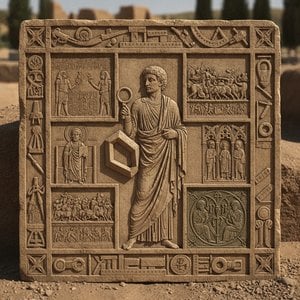
Explore Jasper Johns’ ‘Gray Numbers,’ a textured relief sculpture evoking Mesopotamian reliefs. Layers of grey & green depict figures in a grid-like pattern – a unique abstract work.

Descubra Jasper Johns (1930), pioneiro de Pop & Expressionismo Abstrato! Explore obras icônicas como 'A Bandeira', mapas e alvos – redefinindo a arte moderna.

Reprodução em Óleo Feita à Mão

Óleo sobre tela pintado à mão no seu tamanho e moldura, feito sob encomenda pelos nossos artistas.

P118B $10
P118H $10
P118W $10
P438Z $10
P508JH $12
P508YH $12
P805H $10
P805Z $10
P919BZ $10
P919G $10
P919XJ $10
P959ZH $10
P968JZ $12
W106C $8
W218G $10
W218JH $8
W218Y $10
W307PJ $10
W316G $10
W316PJ $8
W316Y $10
W398PJ $8
W4111J $10
W500HY $15
W500JH $15
W692G $12
W849H $8
W940BG $15
W953PJ $8

Standard
custom
CM
INCH

Escolha entre os nossos tamanhos pré-definidos que respeitam as proporções originais da obra de arte.

largura
altura

Pode inserir as suas próprias dimensões para se adequar a uma moldura ou espaço específico. Se o tamanho selecionado não corresponder às proporções da imagem original, iremos cortar a obra de arte ou estender a pintura com elementos adicionais pintados à mão. Um esboço digital será enviado para sua aprovação antes do início da produção.
Tenha em atenção que a pré-visualização no ecrã não reflete o corte ou extensão real. Apenas o esboço mostrará com precisão a composição final.
Embora tamanhos personalizados estejam disponíveis, recomendamos selecionar uma dimensão da lista predefinida para preservar as proporções originais.

Exemplos do que pode ser alterado: Substituir o rosto pela foto do cliente; Adicionar um animal de estimação (ex: substituir gato por cão); Incluir uma mensagem oculta no fundo; Alterar a paisagem ou elementos do fundo.
Após o pedido, a equipa WahooArt.com enviará um e-mail ao cliente para solicitar instruções e fornecer uma prévia do esboço.

Entrega Mundial () em 3 a 4 semanas, em vez das 5 semanas padrão. (2 Julho). Sem comprometer a qualidade.

why_choose_icon
Envio Expresso Gratuito para todo o Mundo
why_choose_icon
Tela de Linho Premium
why_choose_icon
Seguro de envio completo
why_choose_icon
Garantia de Reembolso de Impostos Alfandegários
why_choose_icon
Garantia de Fidelidade de Cores
why_choose_icon
Política de Devolução de 60 Dias (Apenas para Defeitos)
why_choose_icon
Garantia de 100% de Reembolso
why_choose_icon
Desconto para múltiplas unidades

Preço Total

-

reproduction

Gray numbers

Técnica de Reprodução

Dimensões da Reprodução

-

Preço Total Final

-

Dados Rápidos

  • medium: encaustic on canvas
  • title: Gray Numbers
  • notable elements: Grid, stenciled numerals, encaustic texture, newspaper fragments
  • subject: Numbers
  • style: Abstract
  • influences: Cubism

Teste de Arte

Cada pergunta possui apenas uma resposta correta.

Pergunta 1:
Jasper Johns' 'Gray Numbers' is notable for its use of what painting technique?
Pergunta 2:
What primary subject matter does 'Gray Numbers' explore?
Pergunta 3:
To what art movements is Jasper Johns commonly associated?
Pergunta 4:
The artist often embedded what material within the encaustic layers of 'Gray Numbers'?
Pergunta 5:
What was a key conceptual aim behind Johns’ choice of commonplace subjects like numbers?

Descrição da Obra

A Cipher of Modernity: Decoding Jasper Johns’ *Gray Numbers*

Jasper Johns' *Gray Numbers*, created between 1958-61, is a pivotal work that encapsulates the artist’s groundbreaking exploration of representation and perception in post-war America. Moving beyond Abstract Expressionism, Johns ushered in a new era by focusing on commonplace imagery – flags, targets, maps, and, as seen here, numerals – elevating them to the realm of high art. This piece isn't merely *about* numbers; it’s about how we see, interpret, and assign meaning to symbols within a visual field.

Visual Language & Artistic Technique

The artwork presents a densely packed grid of stenciled numerals rendered in varying shades of gray encaustic on canvas. Encaustic – an ancient technique involving pigment mixed with hot wax – lends the surface a unique texture, simultaneously matte and subtly luminous. The application is not pristine; drips, overlaps, and slight imperfections reveal the hand of the artist and emphasize the materiality of the paint itself. This deliberate focus on the physical qualities of the artwork challenges traditional notions of painting as illusionistic representation. The limited palette, dominated by grayscale tones, further directs attention to form, texture, and the interplay between positive and negative space.

Historical Context & The Rise of Pop Art

*Gray Numbers* emerged during a period of significant cultural shift. America was experiencing unprecedented economic prosperity and a growing fascination with mass media and consumer culture. Johns’ choice to depict everyday objects resonated with this changing landscape, foreshadowing the emergence of Pop Art. However, unlike the often celebratory tone of Pop artists like Andy Warhol, Johns' approach is more ambiguous and introspective. He wasn’t simply *celebrating* these symbols; he was questioning their inherent meaning and our relationship to them.

Symbolism & Interpretation

The symbolism within *Gray Numbers* is multi-layered. Numerals, inherently abstract, represent systems of order and quantification – tools we use to navigate the world. Yet, divorced from their functional context, they become purely visual elements, open to subjective interpretation. The grid structure itself suggests organization and control, while the slight irregularities in application hint at a subtle resistance to complete systematization. The work invites contemplation on themes of language, code, and the inherent limitations of representation.
  • The repetition of numbers can be seen as an echo of industrial production and standardization.
  • The use of stencils suggests mechanical reproduction, blurring the lines between original artwork and mass-produced imagery.
  • The encaustic medium adds a tactile quality that grounds the work in physicality, counteracting the abstract nature of the subject matter.

Emotional Impact & Aesthetic Appeal

Despite its seemingly austere subject matter, *Gray Numbers* possesses a quiet power. The subtle variations in tone and texture create a visually engaging surface that rewards close observation. The work evokes a sense of intellectual curiosity and invites viewers to actively participate in the process of meaning-making. Its understated elegance and sophisticated use of materials make it a compelling addition to any collection, lending an air of refined contemplation to interior spaces. For collectors, *Gray Numbers* represents a cornerstone of modern art history; for designers, it offers a versatile aesthetic that complements both contemporary and traditional settings.

Obras Relacionadas


Biografia do Artista

A Life Painted in Symbols: The World of Jasper Johns

Jasper Johns emerged as a pivotal figure in the landscape of American art, bridging the emotive intensity of Abstract Expressionism with the burgeoning Pop Art movement that would soon redefine artistic boundaries. Born in Augusta, Georgia, in 1930, his early life was marked by a sense of displacement following his parents’ divorce, an experience that perhaps subtly informed his later explorations of identity and belonging within the context of American iconography. His formative years unfolded across various schools before he briefly attended the University of South Carolina, but it wasn't until his move to New York City in 1949 that Johns truly began to forge his artistic path. A period of service during the Korean War further shaped his perspective, exposing him to a world far removed from the burgeoning art scene he was eager to embrace upon his return.

Breaking with Abstraction: The Dawn of a New Visual Language

The post-war American art world was dominated by Abstract Expressionism—a style characterized by spontaneous gesture and deeply personal emotional expression. While initially influenced by this movement, Johns felt compelled to move beyond its purely non-representational approach. He sought a new visual language, one that incorporated recognizable imagery not as illustrations but as vehicles for deeper contemplation. This wasn’t simply about *depicting* the world; it was about questioning how we perceive and interpret symbols within it. Key influences guided his departure: Marcel Duchamp's radical readymades challenged conventional notions of art-making, demonstrating that everyday objects could be elevated to the status of art through their presentation, while the emphasis on materiality in Abstract Expressionism informed Johns’ early techniques. However, it was the everyday objects and potent symbols of American culture—flags, targets, maps, numbers—that truly became central to his artistic vocabulary. He wasn’t interested in escaping representation; he wanted to dissect it, layer it with meaning, and ultimately reveal its inherent ambiguities. Johns' early work often involved layering paint over collage elements – newspaper clippings, photographs, and other found materials – creating a complex interplay of image and texture.

Iconic Images: Flags, Targets, and the Language of Symbols

Johns’ breakthrough works arrived in the mid-1950s, instantly establishing him as a force to be reckoned with. His paintings of flags, most notably *Flag* (1954–55), were not patriotic declarations but rather investigations into the very nature of representation. Rendered in a semi-abstract style, using encaustic—pigment mixed with hot wax—and collage techniques, these flags weren’t simply images; they were textured surfaces laden with symbolic weight. The *Flag* painting itself is particularly complex, incorporating elements of a map and a military target, prompting viewers to consider the multiple layers of meaning embedded within a seemingly simple symbol. Similarly, his series of targets—starting in 1958—explored themes of visibility, danger, and the relationship between perception and reality. The stark simplicity of the bullseye contrasted with the meticulous detail of the surrounding paint application, creating a tension that invited contemplation. *Map* (1961), with its fragmented and layered depictions of the United States, delved into themes of geography, identity, and the complexities of national representation. Works like *False Start* (1959) demonstrated his experimentation with language and visual codes, creating complex compositions that challenged viewers to decipher their underlying meanings. Even *White Flag* (1955), a seemingly simple monochrome canvas, prompted profound questions about absence, surrender, and the very act of seeing.

A Legacy of Influence: Paving the Way for Pop Art and Beyond

Jasper Johns’ impact on the trajectory of modern art is undeniable. He played a crucial role in the transition from Abstract Expressionism to Pop Art, challenging the prevailing aesthetic norms and opening up new avenues for artistic exploration. By embracing recognizable imagery, he paved the way for artists like Andy Warhol and Roy Lichtenstein, who would further blur the lines between high art and popular culture. His close collaboration with Robert Rauschenberg was also profoundly influential, fostering a spirit of experimentation and pushing the boundaries of artistic practice. Johns’ work often incorporated elements of Neo-Dada, referencing found objects and challenging traditional notions of authorship and originality. He wasn't simply replicating images; he was transforming them through his unique process—building up layers of paint, collage, and other materials to create works that were both visually arresting and intellectually stimulating. Johns’ enduring legacy lies not only in the iconic images he created but also in the profound questions he raised about the nature of representation, symbolism, and the very essence of what it means to be an artist in a rapidly changing world.

Recognition and Enduring Impact

Throughout his illustrious career, Jasper Johns has received numerous accolades, including a Golden Lion at the Venice Biennale in 1988, the National Medal of Arts in 1990, and the Presidential Medal of Freedom in 2011. His works are held in major museum collections worldwide—the Museum of Modern Art, the Whitney Museum of American Art, the Metropolitan Museum of Art in New York, and Tate Modern in London, to name just a few. He has been the subject of countless exhibitions, cementing his position as one of the most important figures in 20th and 21st-century art. Beyond his paintings, Johns’ contributions extend to sculpture and printmaking, demonstrating his versatility and unwavering commitment to artistic innovation. He remains an active artist, constantly evolving his approach and solidifying his place as a vital voice in contemporary art.
Jasper Johns

Jasper Johns

1930 - , Estados Unidos da América

Informações Rápidas

  • Artistic Movement Or Style: Pop e Expressionismo Abstrato
  • Artists Or Movements Influenced By This Artist: ['Andy Warhol']
  • Artists Who Influenced This Artist: ['Marcel Duchamp']
  • Date Of Birth: 15 de maio de 1930
  • Full Name: Jasper Johns
  • Nationality: Americano
  • Notable Artworks:
    • Flag
    • Target
    • Mapa
  • Place Of Birth: Augusta, EUA
Explore obras de arte organizadas por temas, estilos e características.