Visualizar na parede Visualizar em RA Comprar pintura feita à mão Alternar para Imagem Digital Compartilhar
Detalhes Guia Adicionar aos favoritos Baixar imagem Semelhantes Raio X Ver diaporama Q&A Estatísticas

Deesis

Discover Jan Gossaert’s ‘Deesis,’ a stunning 1527 Renaissance masterpiece! Admire its rich detail, dramatic lighting & profound religious symbolism in this exquisite oil painting.

Descubra Jan Gossaert (Mabuse), pintor flamengo dos séculos XV-XVI! Explore seu estilo romanista, cenas religiosas e retratos – uma figura fundamental na arte do Renascimento.

Giclée / Impressão de Arte

Impressão giclée ou em tela de qualidade de museu, com produção rápida e opções flexíveis de acabamento. ( Comprar pintura feita à mão Alternar para Imagem Digital)

Corner sample of the P118B picture frame: poliestireno moldado, 5 cm wide and 3 cm thick
P118B €10
Corner sample of the P118H picture frame: poliestireno moldado, 5 cm wide and 3 cm thick
P118H €10
Corner sample of the P118W picture frame: poliestireno moldado, 5 cm wide and 3 cm thick
P118W €10
Corner sample of the P438Z picture frame: poliestireno moldado, 5.5 cm wide and 3.5 cm thick
P438Z €10
Corner sample of the P508JH picture frame: poliestireno moldado, 7 cm wide and 3.5 cm thick
P508JH €12
Corner sample of the P508YH picture frame: poliestireno moldado, 7 cm wide and 3.5 cm thick
P508YH €12
Corner sample of the P805H picture frame: poliestireno moldado, 5 cm wide and 3.5 cm thick
P805H €10
Corner sample of the P805Z picture frame: poliestireno moldado, 5 cm wide and 3.5 cm thick
P805Z €10
Corner sample of the P919BZ picture frame: poliestireno moldado, 7 cm wide and 3.5 cm thick
P919BZ €10
Corner sample of the P919G picture frame: poliestireno moldado, 7 cm wide and 3.5 cm thick
P919G €10
Corner sample of the P919XJ picture frame: poliestireno moldado, 7 cm wide and 3.5 cm thick
P919XJ €10
Corner sample of the P959ZH picture frame: poliestireno moldado, 5 cm wide and 3 cm thick
P959ZH €10
Corner sample of the P968JZ picture frame: poliestireno moldado, 6 cm wide and 4 cm thick
P968JZ €12
Corner sample of the W106C picture frame: madeira maciça, 5 cm wide and 3 cm thick
W106C €8
Corner sample of the W218G picture frame: madeira maciça, 5 cm wide and 3 cm thick
W218G €10
Corner sample of the W218JH picture frame: madeira maciça, 5 cm wide and 3 cm thick
W218JH €8
Corner sample of the W218Y picture frame: madeira maciça, 5 cm wide and 3 cm thick
W218Y €10
Corner sample of the W307PJ picture frame: madeira maciça, 6 cm wide and 3 cm thick
W307PJ €10
Corner sample of the W316G picture frame: madeira maciça, 6 cm wide and 3 cm thick
W316G €10
Corner sample of the W316PJ picture frame: madeira maciça, 6 cm wide and 3 cm thick
W316PJ €8
Corner sample of the W316Y picture frame: madeira maciça, 6 cm wide and 3 cm thick
W316Y €10
Corner sample of the W398PJ picture frame: madeira maciça, 5 cm wide and 3 cm thick
W398PJ €8
Corner sample of the W4111J picture frame: madeira maciça, 6.5 cm wide and 3.5 cm thick
W4111J €10
Corner sample of the W500HY picture frame: madeira maciça, 7 cm wide and 5 cm thick
W500HY €15
Corner sample of the W500JH picture frame: madeira maciça, 7 cm wide and 5 cm thick
W500JH €15
Corner sample of the W692G picture frame: madeira maciça, 8 cm wide and 4 cm thick
W692G €12
Corner sample of the W849H picture frame: madeira maciça, 5 cm wide and 3 cm thick
W849H €8
Corner sample of the W940BG picture frame: madeira maciça, 7.5 cm wide and 4.5 cm thick
W940BG €15
Corner sample of the W953PJ picture frame: madeira maciça, 6 cm wide and 3.5 cm thick
W953PJ €8

Tamanho padrão
personalizado
CM
INCH

Escolha entre os nossos tamanhos pré-definidos que respeitam as proporções originais da obra de arte.

largura
altura

Insira a largura e a altura desejadas para se ajustarem à sua moldura ou parede. Uma impressão pode ser apenas cortada, nunca ampliada além da imagem original; portanto, um tamanho com proporções diferentes resultará na perda de parte da imagem. Enviamos uma maquete digital para sua aprovação antes de realizarmos a impressão. A imagem exibida nesta página não mostra o corte real — apenas a maquete o faz.

Entrega mundial () em 2 semanas, em vez das 4/5 semanas padrão. (30 Outubro)

Envio expresso gratuito para todo o mundo
Tela de Linho de Alta Qualidade
Seguro de transporte completo
Garantia de Reembolso de Impostos Alfandegários
Garantia de Fidelidade Cromática
Política de Devolução em 100 Dias (Apenas para Defeitos)
Garantia de reembolso de 100%
Oferta de desconto por quantidade

Preço Total

€ 60

Deesis

Giclée / Impressão de Arte

Tamanho da Reprodução

-

Preço Total

€ 60

Informações Rápidas

  • Influences:
    • Italian Renaissance
    • Flemish tradition
  • Movement: Romanism / Northern Renaissance
  • Artist: Jan Gossaert (Mabuse)
  • Title: Deesis
  • Notable elements or techniques: Gold leaf, glazing, dramatic lighting

A Divine Encounter: The Sacred Majesty of Jan Gossaert’s Deesis

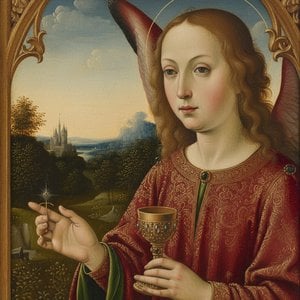
In the quiet, hallowed atmosphere of the early sixteenth century, few works captured the intersection of earthly realism and celestial glory as profoundly as Jan Gossaert’s Deesis. Created in 1527, this masterpiece serves as a breathtaking window into the soul of the Northern Renaissance. The painting presents a sacred triad: Christ at the apex, flanked by the Virgin Mary and St. John the Baptist. This traditional iconographic arrangement, known as the Deësis—or "supplication"—depicts the holy figures in a moment of eternal intercession for humanity. As one gazes upon the composition, there is an immediate sense of being drawn into a divine court, where the boundaries between the viewer and the heavens begin to dissolve.

The emotional resonance of the piece lies in its delicate balance of power and tenderness. Gossaert, often referred to by his evocative moniker Mabuse, masterfully utilizes a triangular composition to guide the eye upward toward the central figure of Christ. The lighting is nothing short of dramatic; a soft yet piercing radiance emanicates from the center, illuminating the faces of the saints with a glow that feels both physical and spiritual. This chiaroscuro effect creates deep, velvety shadows within the dark wooden arch that frames the scene, lending the work a sculptural weight and an air of profound mystery. For the collector or designer, this painting offers more than mere decoration; it provides a focal point of intense contemplation and quiet strength.

The Alchemy of Technique and Texture

To appreciate the Deesis is to marvel at the technical virtuosity of the Netherlandish tradition blended with the burgeoning influences of Italian Romanism. Gossaert was a pioneer, an artist who breathed the air of Rome and brought its classical elegance back to the Low Countries. In this work, we see the meticulous attention to detail characteristic of his Flemish roots—the heavy, tactile folds of the drapery, the subtle translucency of skin, and the rich, opulent textures of gold and deep crimson pigments. The use of oil on wood panel allows for a layering of glazes that gives the colors an inner luminosity, making the gold leaf appear to shimmer as if caught in a flickering candlelight.

Every brushstroke serves a purpose in building a sense of tangible reality. The organic shapes of the flowing robes and rounded, compassionate faces contrast beautifully with the rigid, geometric architecture of the arched frame. This interplay between the soft and the structured creates a rhythmic harmony that is deeply pleasing to the eye. For those seeking to incorporate such a piece into a curated interior, the painting’s rich palette of earth tones, golds, and deep reds offers a sophisticated foundation for any classical or transitional design scheme, bringing an aura of historical prestige and timeless elegance to a room.

A Legacy of Faith and Humanism

Beyond its aesthetic brilliance, the Deesis is a profound theological statement. It captures the precise moment in art history when the medieval preoccupation with symbolic representation began to embrace the humanistic focus on anatomical accuracy and spatial depth. The gestures within the painting—Mary’s prayerful tilt and John the Baptist’s outstretched hand—are not merely poses; they are silent prayers captured in oil. They represent the bridge between the mortal struggle and divine mercy.

Owning a high-quality reproduction of this work allows one to invite this spirit of reverence into the modern home. It is an invitation to slow down, to observe the intricate details of Gossaert’s genius, and to find beauty in the intersection of the human and the divine. Whether placed in a private study, a grand library, or a sophisticated living space, the Deesis stands as a testament to the enduring power of Renaissance mastery, offering an unparalleled sense of peace, history, and artistic splendor.

Perguntas e Respostas

Qual é a proporção de "Deesis", de Jan Gossaert (Mabuse) e quais são as suas dimensões?

"Deesis", de Jan Gossaert (Mabuse) possui as proporções de uma obra em Square de 133 x 122 cm.

Qual o tamanho e a orientação de impressão sugeridos para "Deesis", de Jan Gossaert (Mabuse)?

Recomenda-se uma impressão de "Deesis", de Jan Gossaert (Mabuse) no tamanho Large com orientação Square.

Onde posso comprar uma imagem digital de "Deesis", de Jan Gossaert (Mabuse)?

Para obter uma versão digital de "Deesis", de Jan Gossaert (Mabuse), peça download de imagem digital em alta resolução em sua página Imagem Digital de Alta Resolução.


Biografia do Artista

O Pioneiro do Renascimento: A Vida e o Legado de Jan Gossaert

Na paisagem mutável do início do século XVI, poucos artistas uniram a lacuna entre as tradições meticulosas do Norte e o humanismo emergente do Sul com tanta maestria quanto Jan Gossaert. Conhecido pela história pelo evocativo apelido de Mabuse, este pintor visionário surgiu de Maubeuge, na França, para se tornar um pilar do movimento Romanista. A obra de sua vida representa uma metamorfose profunda na arte neerlandesa, onde o realismo nítido e tátil dos mestres flamengos encontrou a elegância grandiosa e escultural do Renascimento italiano. Estudar Gossaert é testemunhar o exato momento em que a alma medieval começou a abraçar a luz clássica da antiguidade.

Embora os detalhes precisos de sua formação inicial permaneçam envoltos nas névoas do tempo, o DNA artístico de Gossaert estava profundamente enraizado nas tradições dos Países Baixos. Acredita-se amplamente que seus anos formativos foram dedicados à absorção do rigor técnico de mestres como Rogier van der Weyden e Hugo van der Goes. De seus predecessores, ele herdou uma devoção inigualável ao detalhe — uma forma de renderizar texturas, tecidos e luz que parecia quase tangível para o espectador. No entanto, Gossaert estava longe de ser um mero imitador do passado; ele possuía uma curiosidade insaciável pelo novo, voltando-se para o sul para integrar a precisão anatômica e a grandiosidade arquitetônica do Renascimento italiano ao seu estilo nativo.

Uma Síntese entre o Norte e o Sul

O verdadeiro gênio de Mabuse reside em sua capacidade de harmonizar dois mundos aparentemente díspares. Seu desenvolvimento como pintor Romanista marcou um afastamento das sensibilidades puramente góticas que haviam dominado o norte da Europa por tanto tempo. Onde artistas anteriores focavam na profundidade simbólica e na iconografia espiritual, Gossaerto introduziu uma sensação de peso físico e proporção clássica. Ele estudou a forma humana com um novo vigor científico, permitindo que suas figuras ocupassem o espaço com uma presença escultural que parecia revolucionária para sua era.

Esta evolução estilística é mais evidente em seu tratamento da luz e da atmosfera. Em suas mãos, a luz não apenas ilumina uma cena; ela a esculpe. Ele utilizou a perspectiva atmosférica para criar paisagens vastas e imersivas que parecem recuar infinitamente no horizonte, proporcionando um palco dramático para seus temas. Suas composições frequentemente apresentam um complexo jogo de sombras e brilho, uma técnica que confere às suas cenas religiosas e mitológicas uma intensidade quase teatral. Esse domínio permitiu-lhe navegar pelo delicado equilíbrio entre a profunda contemplação espiritual exigida pelos encargos religiosos e a grandiosidade intelectual demandada pelos estudiosos humanistas de seu tempo.

Obras-Primas e Significância Histórica

A carreira prolífica de Gossaert foi sustentada por uma prestigiada rede de patronos, que variavam de mercadores ricos ao alto clero e à nobreza. Sua produção era notavelmente diversa, abrangendo desde monumentais retábulos que ancoravam os interiores das catedrais até retratos íntimos que capturavam a essência psicológica de seus modelos. Algumas de suas contribuições mais duradouras incluem:

  • Iconografia Religiosa: Obras como Deesis demonstram sua habilidade em usar a luz e a cor para evocar uma profunda reverência espiritual, retratando Cristo com uma majestade que é, ao mesmo tempo, humana e divina.
  • Narrativas Mitológicas: Em peças como Hércules e Dejanira, Gossaert exibiu seu domínio de temas clássicos, utilizando a musculatura do mito antigo para expandir os limites da pintura anatômica do Norte.
  • Retratística: Seus retratos permanecem como documentos históricos vitais, caracterizados por uma representação meticulosa dos trajes e um olhar digno e constante que reflete a ascensão do status do indivíduo na sociedade renascentista.

A importância histórica de Jan Gossaert não pode ser subestimada. Ele atuou como um conduto vital, transportando os ideais clássicos da Itália através dos Alpes e plantando-os firmemente no solo fértil dos Países Baixos. Ao fundir o artesanato meticuloso da tradição flamenga com as inovações estruturais do Renascimento Romano, ele pavimentou o caminho para as futuras gerações de artistas do Norte. Seu legado permanece gravado na própria trama da história da arte, representando uma era triunfante de síntese cultural e renascimento artístico.

Jan Gossaert (Mabuse)

Jan Gossaert (Mabuse)

1478 - 1532 , França

Dados Rápidos

  • Artistas Que Influenciaram Este Artista:
    • Andrea Mantegna
    • Leonardo da Vinci
  • Data De Morte: 1532
  • Data De Nascimento: Maubeuge, França
  • Local De Nascimento: França
  • Movimento Ou Estilo Artístico: Pintura Romanista
  • Nacionalidade: Flamengo
  • Nome Completo: Jan Gossaert (Mabuse)
  • Obras De Arte Notáveis:
    • Deesis
    • Hércules e Deianeira
    • Sagrada Família