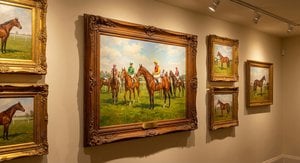
James Ward: Um Mestre da Pintura Animal e Paisagens Românticas Britânicas
James Ward (1769-1859) foi um pintor inglês de grande destaque, reverenciado por suas pinturas de animais cativantes, paisagens românticas e retratos perspicazes. Embora muitas vezes ofuscado por contemporâneos mais renomados, seu estilo único e habilidade influenciaram significativamente o desenvolvimento da arte britânica no século XIX.
Primeiros Anos e Formação
Nascido em 23 de outubro de 1769, na vibrante cidade de Londres, Inglaterra, James Ward era o irmão mais jovem do gravador William Ward. Desde cedo, suas inclinações artísticas foram nutridas em um ambiente familiar criativo e estimulante. Embora tenha recebido alguma instrução formal, seu desenvolvimento artístico foi impulsionado principalmente pela observação atenta e pela prática constante – uma dedicação que moldaria sua visão singular.
Desenvolvimento Artístico e Influências
A carreira de Ward pode ser dividida em dois períodos distintos, marcados por influências distintas. Inicialmente, até cerca de 1803, suas obras exibiam uma forte semelhança com a de seu cunhado, George Morland, caracterizada por cenas do cotidiano e um foco na vida simples. No entanto, a partir dessa época, ele foi profundamente inspirado pelo mestre barroco Peter Paul Rubens, adotando uma composição mais dinâmica, uma paleta de cores rica e um uso dramático da luz e sombra – elementos que dariam vida às suas pinturas.
Obras Notáveis e Estilo Único
O estilo singular de Ward o distinguiu de muitos contemporâneos. Ele se destacou em diversos gêneros, incluindo pintura histórica, retrato, paisagem e arte animal. Algumas de suas obras mais celebradas incluem:
- Gordale Scar (1814/15): Considerada sua obra-prima, esta representação dramática do desfilvo escocês de Gordale exemplifica as qualidades sublimes da pintura romântica inglesa. A cena, com suas rochas imponentes e a atmosfera melancólica, evoca um senso de admiração e temor diante da natureza selvagem.
- The Deer Stealer (1823): Comissionada pelo Theophilus Levett, esta pintura demonstra a habilidade de Ward em narrar histórias e representar animais com precisão e sensibilidade. A cena captura o momento de perseguição com dinamismo e emoção, revelando a relação complexa entre o homem e a natureza.
- John Levett Hunting at Wychnor, Staffordshire (1817): Um retrato do seu patrono, John Levett, que demonstra a capacidade de Ward em capturar tanto a semelhança física quanto a atmosfera geral de uma cena. A pintura transmite um senso de movimento e aventura, revelando o estilo de vida da aristocracia inglesa no início do século XIX.
Suas pinturas são caracterizadas por um detalhe meticuloso, especialmente na representação dos animais, combinado com uma sensibilidade romântica que enfatiza a beleza e o poder da natureza. Ward demonstra um profundo conhecimento anatômico e comportamental dos animais, capturando sua graça, força e individualidade em cada pincelada.
Comissões e Exposições
Ward recebeu inúmeras comissões de figuras proeminentes da época, como Theophilus Levett, o que lhe permitiu desenvolver uma carreira lucrativa. Ele regularmente expôs suas obras na Royal Academy, ganhando reconhecimento por sua habilidade e originalidade. Sua admissão na Academia em 1811 solidificou sua posição no cenário artístico britânico.
Vida Tardia e Legado
Ward continuou a pintar com vigor até o ataque que sofreu em 1855, que limitou sua capacidade de trabalhar. Ele faleceu em 17 de novembro de 1859, em relativa pobreza apesar do sucesso anterior. No entanto, seu impacto na arte britânica permanece inegável, e suas obras continuam a inspirar e encantar admiradores até hoje.
Significado Histórico
James Ward ocupa uma posição significativa na transição da pintura neoclássica para o romantismo na arte inglesa. Ele conectou os estilos tradicionais de gênero com o crescente interesse em paisagens e naturalismo, deixando um legado de obras cativantes que moldaram a direção da arte britânica no século XIX. Sua habilidade em capturar a beleza e o poder da natureza, combinada com sua sensibilidade emocional, o estabeleceu como um dos pintores mais importantes de sua época.



 Visualizar em escala
 Alternar para Impressão
 Enviar
 Compartilhar
 Ver detalhes
 Guia
Guia

 Baixar imagem
 Semelhantes
 Raio X
 Apresentação de slides
 Estatísticas


 Ver mais






































 A opção de vidro está disponível apenas para tamanhos inferiores a 110 cm