Visualizar em escala Visualizar em RA Alternar para Impressão Ver Imagem Digital Enviar
Ver detalhes Guia Adicionar aos favoritos Baixar imagem Semelhantes Raio X Apresentação de slides Estatísticas

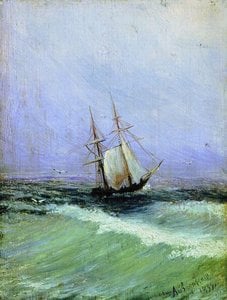
Tempest, sunset

Experience Ivan Aivazovsky’s Tempest, sunset – a dramatic seascape capturing the ocean's fury and serene beauty in 1856 Russian Romanticism. Witness masterful brushstrokes illuminate crashing waves under a fiery sunset; explore exquisite handmade reproductions at WahooArt.

Ivan Aivazovsky: Mestre da arte marinha russa, capturou a alma do oceano com pinceladas vibrantes e emoção romântica. Suas paisagens e batalhas evocam o poder e a beleza dos mares.

Reprodução em Óleo Feita à Mão

Óleo sobre tela pintado à mão no tamanho e moldura de sua escolha, feito sob encomenda pelos nossos artistas. ( Alternar para Impressão Ver Imagem Digital)

P118B $10
P118H $10
P118W $10
P438Z $10
P508JH $12
P508YH $12
P805H $10
P805Z $10
P919BZ $10
P919G $10
P919XJ $10
P959ZH $10
P968JZ $12
W106C $8
W218G $10
W218JH $8
W218Y $10
W307PJ $10
W316G $10
W316PJ $8
W316Y $10
W398PJ $8
W4111J $10
W500HY $15
W500JH $15
W692G $12
W849H $8
W940BG $15
W953PJ $8

Padrão
sob medida
CM
INCH

Escolha entre os nossos tamanhos pré-definidos que respeitam as proporções originais da obra de arte.

largura
altura

Pode inserir as suas próprias dimensões para se adequar a uma moldura ou espaço específico. Se o tamanho selecionado não corresponder às proporções da imagem original, iremos cortar a obra de arte ou estender a pintura com elementos adicionais pintados à mão. Um esboço digital será enviado para sua aprovação antes do início da produção.
Tenha em atenção que a pré-visualização no ecrã não reflete o corte ou extensão real. Apenas o esboço mostrará com precisão a composição final.
Embora tamanhos personalizados estejam disponíveis, recomendamos selecionar uma dimensão da lista predefinida para preservar as proporções originais.

Exemplos do que pode ser personalizado: Substituir o rosto pela foto do cliente; Adicionar um animal de estimação (ex: substituir gato por cão); Incluir uma mensagem oculta no fundo; Alterar a paisagem ou elementos do fundo.
Após o pedido, a equipa WahooArt.com enviará um e-mail ao cliente para solicitar instruções e fornecer uma prévia do esboço.

Entrega mundial () em 3 a 4 semanas, em vez das 5 semanas padrão. (20 Setembro). Sem comprometer a qualidade.

why_choose_icon
Envio expresso gratuito para todo o mundo
why_choose_icon
Tela de Linho Premium
why_choose_icon
Seguro de transporte total
why_choose_icon
Garantia de Reembolso de Impostos Alfandegários
why_choose_icon
Garantia de Fidelidade de Cor
why_choose_icon
Política de Devolução em 100 Dias (Apenas para Defeitos)
why_choose_icon
Garantia de reembolso de 100%
why_choose_icon
Desconto para múltiplas unidades

Preço Total

$ 272

reproduction

Tempest, sunset

Técnica de Reprodução

Dimensões da Reprodução

-

Preço Total

$ 272

Detalhes Rápidos

  • Artistic style: Dramatic contrast
  • Year: 1856
  • Title: Tempest, sunset
  • Subject or theme: Ocean seascape
  • Dimensions: 67 x 89 cm
  • Artist: Ivan Aivazovsky
  • Medium: Oil on canvas

A Symphony of Light and Fury: Exploring Ivan Aivazovsky’s Tempest

The painting “Tempest,” sunset by Ivan Konstantinovich Aivazovsky—a monumental seascape measuring 67 x 89 cm created in 1856—stands as a testament to the Romantic era's fascination with untamed nature and its ability to evoke profound emotion. More than just a depiction of turbulent waves, it’s an immersive experience for the viewer, transporting them to the precipice of oceanic drama where beauty clashes violently with power. Aivazovsky wasn’t merely recording what he saw; he was channeling his own visceral response to the sea—a reaction deeply rooted in his upbringing amidst the Crimean coastline and solidified by years of dedicated artistic study.

Style and Technique: Bold Strokes, Vibrant Color

Aivazovsky's distinctive style is instantly recognizable through his audacious brushwork and masterful manipulation of color. Unlike many artists of his time who favored meticulous detail, he prioritized conveying movement and atmosphere above all else. Thick impasto—heavy application of paint—dominates the canvas, creating a palpable sense of texture that mimics the churning foam and spray of the storm. The palette is dominated by fiery oranges and reds reflecting the dying embers of sunset, juxtaposed against deep blues and greens representing the turbulent depths of the ocean. This dramatic contrast isn’t accidental; it serves to heighten the emotional impact of the scene and underscores Aivazovsky's commitment to capturing the sublime—that elusive blend of terror and wonder experienced when confronted with overwhelming natural grandeur.

Historical Context: Romanticism at Its Zenith

“Tempest,” sunset emerged during a period of fervent artistic experimentation within Romanticism, an intellectual movement that championed emotion over reason and celebrated the power of imagination. Artists like Turner and Friedrich similarly sought to depict landscapes as expressions of human experience, prioritizing subjective feeling alongside objective observation. Aivazovsky’s work aligns perfectly with this ethos, reflecting the broader cultural preoccupation with confronting mortality and grappling with the forces beyond human control—themes prevalent in literature and philosophy of the era. The painting was conceived during a time when scientific inquiry was challenging traditional beliefs about the natural world, prompting artists to reconsider their role as interpreters of these grand narratives.

Symbolism: Facing Down Chaos

Beyond its visual splendor, “Tempest,” sunset carries symbolic weight. The tempest itself represents not merely meteorological disturbance but also psychological turmoil—the struggle between order and chaos inherent in human existence. The figures scattered along the shoreline serve as anchors to this drama, symbolizing humanity’s vulnerability against the immensity of nature. Yet, amidst the darkness and fury, there's a glimmer of hope embodied by the warm glow of the sunset, suggesting resilience and the promise of renewal after periods of adversity. This duality—the confrontation with destructive forces followed by an affirmation of beauty—is characteristic of Romantic art’s exploration of the human condition.

Emotional Impact: Capturing Sublime Terror

Ultimately, “Tempest,” sunset succeeds in eliciting a powerful emotional response from the viewer. The painting compels us to contemplate our place within the universe and confronts us with the awe-inspiring majesty of nature—a force capable of both destruction and sublime beauty. It’s a scene that lingers in the mind long after viewing, prompting reflection on themes of courage, vulnerability, and the enduring power of artistic vision. Reproductions of this masterpiece offer an opportunity to experience this profound aesthetic and intellectual engagement firsthand.

Biografia do Artista

A Life Embraced by the Waves

Ivan Konstantinovich Aivazovsky, born Hovhannes Aivazian in 1817, was more than a painter of seascapes; he was a conduit to the ocean’s soul. His very existence seemed inextricably linked to the Black Sea—a vast, unpredictable expanse that would forever dominate his artistic vision and fuel an extraordinary career spanning nearly six decades. Born in the Crimean port city of Feodosia, Aivazovsky didn't merely observe the sea; he felt it – its raw energy, sublime beauty, and inherent danger becoming the very essence of his art. From a young age, this connection was nurtured, initially by local architect Jacob Koch who recognized the boy’s talent, then blossoming within the rigorous academic environment of the Imperial Academy of Arts in Saint Petersburg. Yet, formal training alone couldn't account for the depth of Aivazovsky’s understanding; it was the constant presence of salt-laced air and the cries of gulls that truly shaped his artistic sensibility. His Armenian heritage also played a significant role, as he was baptized at the St. Sargis Armenian Church in Feodosia and maintained strong cultural ties throughout his life, occasionally incorporating Armenian themes into his expansive body of work.

The Early Years and Artistic Foundations

Aivazovsky’s early years were steeped in the maritime traditions of Feodosia, a bustling port city with deep roots in trade and seafaring. His family, of Armenian descent, had migrated from Western Armenia to Crimea centuries earlier, establishing themselves as merchants and artisans. This exposure to the sea—the ships, the sailors, the rhythms of coastal life—proved formative, shaping his artistic sensibilities long before he entered the formal training of the Imperial Academy of Arts in Saint Petersburg. There, he honed his skills under the tutelage of established masters, mastering techniques of perspective, composition, and color theory. However, Aivazovsky’s unique vision extended beyond traditional academic principles. He sought to capture not just the *appearance* of the sea, but its very *spirit*, its power, and its emotional resonance. This desire for authenticity led him to spend countless hours observing the Black Sea firsthand, sketching scenes from memory, and immersing himself in the sensory experience of the maritime world. His early works, often depicting coastal towns and harbors, demonstrated a remarkable ability to capture light and atmosphere—qualities that would become hallmarks of his mature style.

The Italian Interlude: Refining the Vision

In the early 1840s, Aivazovsky embarked on a transformative journey to Italy, a period considered crucial in the development of his artistic voice. He spent several months exploring the landscapes and light of Venice, Florence, Naples, and Rome, absorbing the techniques of Italian masters such as Canaletto and Turner. This immersion in a new artistic environment broadened his horizons, allowing him to experiment with different color palettes, brushstrokes, and compositional approaches. The vibrant colors and dramatic lighting of the Italian landscape profoundly influenced his work, adding a richness and intensity that characterized many of his later seascapes. He began to incorporate elements of Romanticism into his paintings—a heightened sense of emotion, an emphasis on nature’s power, and a fascination with sublime landscapes. It was during this period that he developed his signature style: loose brushstrokes, vibrant colors, and a dynamic use of light and shadow to convey the movement and energy of the sea.

Service to the Russian Navy and Artistic Recognition

Upon returning to Russia in 1844, Aivazovsky’s artistic talents quickly gained recognition. He was appointed as the main painter of the Russian Navy—a position that provided him with unparalleled access to naval life, ship battles, and firsthand observation of maritime activity. This appointment not only secured his financial stability but also profoundly influenced his work, leading to a series of powerful paintings depicting naval engagements, such as *The Battle of Navarino* (1846), a monumental depiction of the pivotal 1827 battle that effectively ended the Ottoman Empire’s dominance in the Eastern Mediterranean. His depictions were not merely historical records; they were imbued with a sense of drama, heroism, and the raw power of naval warfare. Aivazovsky's work became synonymous with Russian naval prowess, solidifying his reputation as one of Russia’s greatest artists. He continued to serve the Navy for decades, producing countless paintings that celebrated the nation’s maritime achievements.

A Legacy of Seascapes: Style and Influence

Ivan Konstantinovich Aivazovsky's artistic legacy is primarily defined by his extraordinary seascapes—paintings that capture the essence of the ocean with unparalleled skill and emotional depth. His technique involved layering thin washes of paint to create luminous effects, capturing the shimmering play of light on the waves and seafoam. He was a master of atmospheric perspective, creating a sense of distance and depth through subtle variations in color and tone. Aivazovsky’s paintings are characterized by their dynamic compositions, vibrant colors, and evocative mood—a blend of realism and Romanticism that continues to captivate viewers today. His influence on subsequent generations of Russian landscape painters is undeniable, establishing a new standard for depicting the sea as both a powerful force of nature and a source of sublime beauty. Works like *The Ninth Wave* (1850), with its depiction of a devastating shipwreck, remain iconic examples of his artistic vision—a testament to his ability to convey both terror and awe through his art. His paintings are exhibited in museums worldwide, ensuring that the legacy of this remarkable artist will endure for generations to come.
  • Key Characteristics: Loose brushstrokes, vibrant colors, dynamic compositions, atmospheric perspective, evocative mood.
  • Notable Works: *The Ninth Wave*, *Battle of Navarino*, *Seascape with Full Moon*.
  • Historical Significance: Aivazovsky’s paintings helped to shape the image of Russia as a major naval power and influenced generations of Russian artists.

Ivan Aivazovsky

Ivan Aivazovsky

1817 - 1900 , Ucrânia

Informações Rápidas

  • Artistic Movement Or Style: Romantismo, Arte Marinha
  • Artists Or Movements Influenced By This Artist: Pintura Romântica Russa
  • Artists Who Influenced This Artist: Pintura de paisagens russas
  • Date Of Birth: 1817
  • Date Of Death: 1900
  • Full Name: Ivan Konstantinovich Aivazovsky
  • Nationality: Russo-Armênio
  • Notable Artworks:
    • Oitava Onda
    • Navio em Tempestade
    • Paisagem com Lua Cheia
  • Place Of Birth: Feodosia, Rússia
Explore obras de arte organizadas por temas, estilos e características.