Visualizar na paredeVisualizar na parede Ver em RAVer em RA Alternar para Impressão Alternar para ImpressãoComprar pintura feita à mão Comprar pintura feita à mão CompartilharCompartilhar
DetalhesDetalhes Adicionar aos favoritos Adicionar aos favoritos Baixar imagemBaixar imagem SemelhantesSemelhantes Raio XRaio X SlideshowSlideshow EstatísticasEstatísticas

Avenue in a Park

Hubert Robert's 'Avenue in a Park' (1799) captures a serene Parisian landscape with a classical statue and lively figures. This oil on canvas painting evokes the beauty of 18th-century parks, showcasing Robert’s masterful detail and romantic vision.

Hubert Robert (1733-1808): Pintor francês de paisagens evocativas e 'capriccios' de ruínas, combinando história, decadência e imaginação. Descubra sua arte!

Adquira uma imagem digital de alta resolução e aprimorada, muito superior à prévia online.

Cada arquivo é meticulosamente preparado por nossos especialistas internos, utilizando ferramentas avançadas e retoques manuais de alta precisão. Garantimos que cada imagem apresente clareza excepcional, fidelidade de cores e detalhes minuciosos.

O arquivo final é entregue por e-mail em até 72 horas, otimizado para uso imediato em ambientes profissionais, editoriais e de impressão. Esta é a mesma qualidade utilizada por estúdios de design de alto nível, editoras e galerias.

Imagem Digital

Baixe um arquivo de alta resolução para exibição pessoal, impressão e projetos criativos. (Alternar para Impressão Alternar para ImpressãoComprar pintura feita à mão Comprar pintura feita à mão)

Preço Total

$ 24,90

Incluído em cada compra de imagem digital

Entrega Digital Especializada e Garantida

Ao escolher o WahooArt.com, você não está apenas adquirindo uma imagem — você está recebendo uma obra de arte digital profissionalmente aprimorada, elaborada com precisão e com garantia de satisfação. Aqui está tudo o que acompanha seu pedido, automaticamente:

shipping_icon
Entrega rápida por e-mail

O seu arquivo de imagem digital em alta resolução será enviado por e-mail em até 72 horas após o pedido — pronto para uso imediato.

canvas_icon
Arquivo Digital com IA Otimizado

Sua obra de arte é otimizada profissionalmente por meio de ferramentas avançadas de IA e edição manual, garantindo o máximo de detalhes, clareza e precisão de cores.

insurance_icon
Reenvio gratuito vitalício

Apagou ou perdeu o seu ficheiro acidentalmente? Não se preocupe – nós reenviamos para si a qualquer momento, gratuitamente.

tax_icon
Sem Taxas de Importação - Sempre

Desfrute da sua obra de arte instantaneamente, sem taxas alfandegárias, impostos ou custos de entrega — downloads digitais são sempre isentos de taxas.

color_icon
Garantia de Fidelidade de Cores

Garantimos que sua imagem digital reflita as cores originais com a maior fidelidade possível, utilizando ferramentas profissionais e gerenciamento de cores.

return_icon
Garantia de Satisfação de 100 Dias

Se não estiver satisfeito com a sua imagem digital, nós a revisaremos ou reembolsaremos 100% dentro de 100 dias — sem perguntas.

guarantee_icon
Garantia de Reembolso 100%

Não está satisfeito? Receba o reembolso total em até 100 dias após o recebimento do seu arquivo digital — sem perguntas.

discount_icon
Descontos para pedidos em lote

Compre 3 imagens, economize 10% - Compre 5, economize 15% - Compre 10+, economize 20%. Ideal para projetos criativos, galerias e agências.

Informações Rápidas

  • Artistic style: Romantic landscape
  • Influences:
    • Rococo
    • Ruins
  • Title: Avenue in a Park
  • Location: Musées Royaux des Beaux-Arts, Brussels
  • Artist: Hubert Robert
  • Dimensions: 59 x 39 cm
  • Medium: Oil on canvas

Quiz de Arte

Cada pergunta possui apenas uma resposta correta.

Pergunta 1:
What is the approximate date of creation for Hubert Robert’s ‘Avenue in a Park’?
Pergunta 2:
The painting depicts a scene primarily featuring:
Pergunta 3:
What artistic movement is Hubert Robert most closely associated with?
Pergunta 4:
According to the description, what is a prominent feature of the painting’s composition?
Pergunta 5:
What type of paint was used by Hubert Robert to create this artwork?

An Evocative Journey Through Time: Hubert Robert’s “Avenue in a Park”

Hubert Robert's "Avenue in a Park," painted in 1799, is more than just a landscape; it’s a carefully constructed tableau of memory and imagination. This exquisite work, currently residing within the Musées Royaux des Beaux-Arts in Brussels, offers a glimpse into the sensibilities of late 18th-century France – a period grappling with the waning influence of Rococo elegance while simultaneously embracing the burgeoning ideals of Neoclassicism. Robert, a master of capturing atmospheric effects and the melancholic beauty of ruins, wasn’t simply depicting a park; he was crafting an experience, inviting the viewer to step into a world suspended between reality and dream.

The Painter's Technique: Light, Shadow, and Illusion

Robert’s skill lies not just in his subject matter but in his masterful execution. Executed in oil on canvas, “Avenue in a Park” is a testament to his ability to manipulate light and shadow with remarkable precision. Notice how he employs a subtle atmospheric perspective – distant trees appear paler and less defined, creating an illusion of depth that draws the eye into the scene. The brushstrokes are delicate yet confident, building layers of color to capture the texture of foliage, the sheen of water, and the worn surfaces of the park’s features. He utilizes a technique reminiscent of Claude Lorrain, known for his idealized landscapes, but imbues it with a distinctly Robertian sensibility – a touch of wistful melancholy that elevates the painting beyond mere representation.

A Historical Tapestry: Context and Influence

To understand “Avenue in a Park,” one must consider the historical context in which it was created. The late 18th century witnessed significant social and political upheaval, culminating in the French Revolution. Robert’s fascination with ruins – both natural and man-made – reflects a broader cultural preoccupation with the passage of time and the fragility of human endeavors. He wasn't simply painting a pretty park; he was exploring themes of memory, loss, and the enduring power of nature. His work aligns with the Romantic movement’s growing interest in subjective experience and emotional resonance, though predating its full flowering. The painting itself is a product of the *rocaille* style, which emphasized natural forms and asymmetry, but Robert's use of perspective and composition demonstrates his understanding of classical principles.

Symbolism and Narrative: A Scene of Quiet Contemplation

The scene depicted is rich in subtle symbolism. The central statue of a woman, standing proudly on her pedestal, represents an idealized feminine form – perhaps a reference to classical mythology or the virtues of civic pride. The figures scattered throughout the park – seated on benches, strolling along the avenue – suggest a moment of respite and contemplation amidst the bustle of Parisian life. Robert’s choice of subject matter—a carefully curated landscape—hints at the artificiality of such spaces, even as they offer a refuge from the realities of the city. The overall effect is one of serene beauty tinged with a poignant awareness of time's relentless flow.

A Timeless Masterpiece: Reproduction and Inspiration

“Avenue in a Park” remains a captivating work of art, offering a window into the artistic sensibilities of a bygone era. Its delicate balance of realism and imagination continues to resonate with viewers today. High-quality reproductions capture the painting’s luminous quality and intricate details, making it an ideal addition to any collection or interior space. Whether you are an art enthusiast, a collector seeking a touch of elegance, or simply someone drawn to the beauty of landscape painting, “Avenue in a Park” offers a timeless invitation to step into a world of serene contemplation and artistic wonder.


Biografia do Artista

A Painter of Ruins and Visions: The World of Hubert Robert

Hubert Robert, a name inextricably linked to the evocative beauty of ruins and the romantic allure of landscapes, stands as a singular figure in 18th-century French art. Born in Paris in 1733, his life unfolded against a backdrop of profound artistic transformation—from the opulent elegance of the Rococo to the nascent ideals of Neoclassicism, all while navigating the tumultuous currents of the French Revolution. Robert’s genius wasn't merely in documenting decay; it resided in crafting meticulously detailed visions that blended astute observation with boundless imagination, creating scenes that resonated with a poignant nostalgia for the past and an anticipatory gaze towards the future. His artistic journey began within the structured confines of formal training, initially under the tutelage of the sculptor Michel-Ange Slodtz, who recognized Robert’s innate talent but wisely steered him toward painting, sensing his true calling lay in capturing light, atmosphere, and the subtle poetry of form.

Roman Reveries: Shaping an Artistic Identity

The defining moment in Robert's artistic development arrived with his extended sojourn to Rome between 1754 and 1765. This period wasn’t simply a vacation; it was a crucible where his artistic identity was forged. Accompanying Étienne-François de Choiseul, the future duc de Choiseul, Robert immersed himself in the ancient city's layered history and architectural grandeur. Rome became his open-air studio, its crumbling temples, majestic arches, and overgrown gardens fueling an inexhaustible wellspring of inspiration. Crucially, he spent eleven years working alongside Giovanni Paolo Panini, a master of *vedute* – views of cities – whose influence is profoundly evident in Robert’s early *capriccio* compositions. These fantastical scenes weren't mere reproductions; they were imaginative reinterpretations, juxtaposing classical ruins with contemporary life, creating an illusionistic world where the past and present intertwined seamlessly. Robert quickly surpassed imitation, however, developing a distinctive style characterized by meticulous detail, masterful atmospheric perspective, and a deep sensitivity to the interplay of light and shadow. He wasn’t merely painting ruins; he was capturing time itself, imbuing his canvases with a sense of melancholy beauty and the poignant awareness of transience. His extensive sketchbook drawings from this period—detailed studies of Roman landmarks like the Villa d'Este and Caprarola—offer invaluable insights into his artistic process and demonstrate an unparalleled eye for architectural nuance and landscape composition.

Parisian Acclaim and Royal Patronage

Robert’s return to Paris in 1765 marked a dramatic shift in his career trajectory. He swiftly gained recognition within the Parisian art world, securing admission to the Académie Royale de Peinture et de Sculpture with “The Port of Rome, Ornamented with Different Monuments of Architecture, Ancient and Modern.” This success was followed by a series of exhibitions at the Salon, where his evocative depictions of ruins and picturesque landscapes captivated audiences. Denis Diderot, a leading figure of the Enlightenment, famously lauded Robert’s paintings, recognizing his ability to transport viewers to another time and place—a testament to the power of illusionistic painting. This widespread acclaim led to royal patronage, with commissions for decorative projects within grand palaces and gardens, and ultimately, appointments as “Designer of the King's Gardens” and later, “Keeper of the King’s Pictures.” Robert became a highly sought-after artist, not only for his easel paintings but also for his innovative designs for elaborate garden layouts—a testament to his versatility and artistic vision. His work resonated with the prevailing taste for *capriccio* painting – a genre that appealed to collectors fascinated by history, archaeology, and the picturesque – yet Robert infused it with a unique sensibility, elevating it beyond mere decorative art.

Revolution, Resilience, and Lasting Legacy

The French Revolution presented an unprecedented challenge for Robert, as for many artists of his time. While navigating the turbulent political climate, he demonstrated remarkable resilience, continuing to paint prolifically despite the upheaval. He even faced imprisonment during the Reign of Terror, a harrowing experience that nonetheless fueled a series of poignant drawings documenting his confinement—a testament to his unwavering commitment to his art and his ability to find beauty even in adversity. Following the Revolution, Robert was appointed curator of the newly established Muséum Central des Arts – later known as the Musée du Louvre – a significant recognition of his expertise and dedication to preserving France’s artistic heritage. He played a crucial role in organizing and cataloging the museum's vast collection, ensuring that its treasures were safeguarded for future generations. Hubert Robert died in Paris in 1808, leaving behind an extraordinary body of work—a testament to his singular vision and enduring legacy. His paintings continue to captivate viewers with their evocative beauty, blending historical accuracy with imaginative vision, solidifying his place as a pivotal figure bridging the Rococo and Neoclassical periods and anticipating aspects of Romanticism with his fascination for history and imagination.
  • Key Influences: Giovanni Paolo Panini, Piranesi, the architectural landscape of Rome.
  • Major Themes: Ruins, landscapes, *capriccio* paintings, historical memory, the passage of time.
  • Artistic Style: Meticulous detail, atmospheric perspective, evocative lighting, blending observation with imagination.

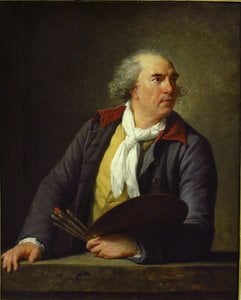
Hubert Robert

Hubert Robert

1733 - 1808 , França

Breve Biografia

  • Artistic Movement Or Style: Romantismo, Neoclassicismo
  • Artists Or Movements Influenced By This Artist: ['Romantismo']
  • Artists Who Influenced This Artist:
    • Giovanni Panini
    • Piranesi
  • Date Of Birth: 22 Maio 1733
  • Date Of Death: 15 Abr 1808
  • Full Name: Hubert Robert
  • Nationality: Francês
  • Notable Artworks:
    • Porto de Roma
    • Voo de Galatea
    • Galeria do Louvre
  • Place Of Birth: Paris, França