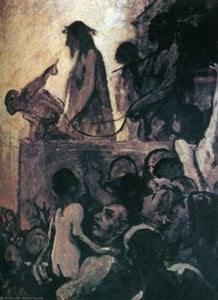
A Vida Esculpida em Sátira: O Mundo de Honoré Daumier
Nascido em Marselha em 1808, a jornada de Honoré-Victorin Daumier esteve intrinsecamente ligada às correntes turbulentas da França do século XIX. Sua vida inicial, marcada pelas ambições poéticas de seu pai e subsequente mudança para Paris em 1814, o imerso em uma cidade fervilhando com energia artística. Embora inicialmente destinado a uma carreira jurídica, a inclinação de Daumier se inclinou irrevogavelmente para as artes. Ele aprendeu com Alexandre Lenoir, absorvendo influências clássicas ao lado de uma apreciação pelo chiaroscuro dramático de Rubens, e aperfeiçoou ainda mais suas habilidades na Academia Suíça. Esse treinamento fundamental provaria crucial para moldar seu estilo distinto – uma combinação poderosa de realismo e draftsmanship expressiva. No entanto, não foi apenas a técnica artística que definiu Daumier; foi uma profunda sensibilidade às injustiças sociais e à absurdidade política ao seu redor.
A Caneta Afiada: Caricatura e Comentário Social
A carreira de Daumier ganhou verdadeiro ímpeto após a Revolução de 1830, um evento que alterou irreversivelmente o curso da história francesa e, simultaneamente, forneceu terreno fértil para seu talento satírico em ascensão. Ele rapidamente se estabeleceu como um mestre litógrafo, contribuindo inicialmente anonimamente para várias publicações antes de ganhar destaque por meio de seu trabalho com *Le Charivari*, uma revista cômica independente fundada por Charles Philipon. Foi aqui que o gênio de Daumier realmente floresceu. Suas caricaturas não eram meras representações humorísticas; eram denúncias mordazes da burguesia, do sistema legal e do establishment político. Ele ridicularizou sem piedade Luís-Philippe, ganhando uma prisão de seis meses em 1832 por uma caricatura particularmente mordaz. Essa experiência, longe de silenciá-lo, solidificou seu compromisso em expor a hipocrisia e desafiar a autoridade através da arte. Seus litografias se tornaram manifestos visuais, capturando o espírito da dissidência e oferecendo um comentário crítico sobre as desavenças sociais de sua época. O volume impressionante de sua produção durante esse período é notável – milhares de litografias que serviram tanto como entretenimento popular quanto como declarações políticas poderosas.
Além da Caricatura: Pintura e Visões Esculturais
Embora Daumier seja mais celebrado por sua litografia, limitar sua existência apenas a caricaturas seria um grave desrespeito. Ele também era um pintor e escultor dedicado, embora o reconhecimento para esses trabalhos tenha chegado mais tarde em sua vida. Suas pinturas, frequentemente retratando cenas da vida cotidiana parisiense – o vagão de terceira classe, as lavadeiras, os advogados – estão imbuídas de um profundo senso de realismo e empatia. Eles não são representações idealizadas, mas sim descrições sem compromisso de dificuldades e lutas. Ele empregou habilmente pinceladas soltas e iluminação dramática para transmitir emoção e atmosfera, prenunciando algumas das técnicas mais tarde adotadas pelos Impressionistas. Seu trabalho escultórico, em grande parte criado em argila (muitos pedaços permanecendo não cozidos durante sua vida), revela um compromisso semelhante em capturar a forma humana com honestidade e profundidade emocional. Essas esculturas, redescobertas após sua morte, demonstram um talento notável para modelagem e uma capacidade de transmitir complexidade psicológica através da postura física.
Um Legado Duradouro: Influência e Significado Histórico
O impacto de Honoré Daumier na história da arte é inegável. Ele preencheu a lacuna entre o Romantismo e o Realismo, abrindo caminho para as gerações futuras de artistas que buscavam retratar o mundo como ele realmente era – com todas as suas imperfeições. Seu comentário social implacável influenciou artistas como Gustave Courbet e Édouard Manet, enquanto seu uso inovador da litografia revolucionou a gravura. Sua obra continua a ressoar hoje, nos lembrando do poder da arte para desafiar a autoridade, expor a injustiça e testemunhar a condição humana. O Musée d'Orsay em Paris abriga uma coleção significativa de suas pinturas e esculturas, oferecendo aos visitantes um vislumbre do mundo que ele retratou tão vívidamente. Suas litografias estão amplamente acessíveis por meio de coleções como as encontradas em WahooArt, garantindo que seu gênio satírico continue a provocar o pensamento e inspirar o diálogo. Daumier não era apenas um artista; ele era um cronista de sua época – um poeta visual que usou seu talento para dar voz aos marginalizados e responsabilizar o poder. Seu legado perdura como um testemunho da relevância duradoura da arte como força para a mudança social.
Informações Adicionais
- Artistas Influenciados: Alexandre Lenoir, Jacques-Louis David
- Período Artístico: Romantismo, Realismo
- Técnicas Principais: Litografia, Pintura a óleo, Escultura em argila
- Temas Recorrentes: A vida cotidiana parisiense, a pobreza, a hipocrisia social, a crítica política
Curiosidades
- Daumier foi preso por sua caricatura de Luís-Philippe.
- Sua obra influenciou artistas como Courbet e Manet.
- Muitas de suas esculturas permaneceram inacabadas durante sua vida.
Ligações Externas



 Encomendar reprodução pintada à mão
 Enviar
 Compartilhar
 Ver detalhes
 Guia de Obras do Aluno

 Baixar imagem
 Semelhantes
 Apresentação de slides
 Estatísticas


 Ver mais






































 A opção de vidro está disponível apenas para tamanhos inferiores a 110 cm