Biografia do Artista
Hieronymus Bosch: Um Enigma Holandês
Nascido por volta de 1450 na vibrante e movimentada cidade de ‘s-Hertogenbosch, nos Países Baixos—então parte da Baviera—Hieronymus Bosch, originalmente Jheronimus van Aken, permanece uma das figuras mais intrigantes e misteriosas da história da arte. Seu mundo era permeado pelo fervor religioso medieval tardio, folclore e um crescente senso de inquietação social, todos os quais moldariam sua visão artística única e perturbadora. Proveniente de uma família com uma longa tradição na pintura—seu avô, Jan van Aken, e seu pai, Anthonius van Aken, eram ambos artistas—Bosch provavelmente recebeu seus primeiros treinamentos dentro do workshop familiar, absorvendo as técnicas e convenções da pintura neerlandesa. No entanto, mesmo em seus anos formativos, ele começou a se desviar das normas estabelecidas, prenunciando a imaginação extraordinária que definiria sua carreira. Os detalhes biográficos são frustrantemente escassos; os registros são fragmentados, deixando muito aberto à especulação e interpretação, adicionando ao ar de mistério que envolve tanto o homem quanto sua obra. Casou-se com Aleyt Goyaerts van den Meerveen em algum momento antes de 1481, uma união que lhe proporcionou alguma segurança financeira através dos bens de sua família, mas pouco mais é conhecido sobre sua vida pessoal.
Visões Fantásticas e Profundezas Simbólicas
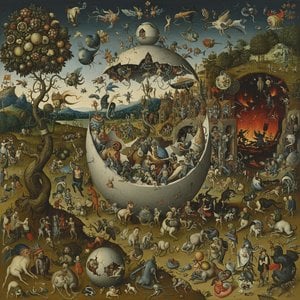
O estilo artístico de Bosch é instantaneamente reconhecível—uma combinação cativante de detalhes meticulosos e imagens imaginativas. Ele trabalhou principalmente com óleo sobre painéis de carvalho, demonstrando um domínio magistral do meio, alcançando cores luminosas e texturas intrincadas. Embora suas primeiras obras mostrem influências da pintura neerlandesa tradicional, particularmente em seu realismo e atenção aos detalhes, ele rapidamente se moveu além da mera imitação, desenvolvendo uma visão profundamente original. Suas pinturas não são simplesmente representações da realidade; são paisagens alegóricas povoadas por criaturas bizarras, seres híbridos e cenas perturbadoras que parecem saídas de sonhos—ou pesadelos. Temas religiosos formam o núcleo de muito de seu trabalho, mas raramente são representações literais de histórias bíblicas. Em vez disso, Bosch usa simbolismo para explorar conceitos morais e teológicos complexos, muitas vezes concentrando-se nos perigos do pecado, na fragilidade dos prazeres terrenos e na inevitabilidade do julgamento divino. Suas criaturas—demônios grotescos, animais fantásticos e figuras estranhamente humanas—não são meros elementos decorativos; são encarnações da vice, da tentação e da corrupção espiritual. A combinação do sagrado e do profano, da beleza e do grotesco, cria um efeito único e perturbador que continua a cativar os espectadores séculos depois.
Mestrias de Alegoria Moral
Entre as obras mais celebradas de Bosch está *O Jardim das Delícias Terrenas* (c. 1490-1510), uma triptique que permanece uma das obras mais enigmáticas e debatidas da história da arte. Quando aberta, apresenta uma visão panorâmica do paraíso, da vida terrena e do inferno—uma representação alegórica complexa da queda da graça humana. O painel esquerdo retrata o Jardim do Éden, repleto de criaturas fantásticas e vegetação exuberante; o painel central representa um mundo consumido pelo prazer sensual e pelo desejo descontrolado; e o painel direito oferece um vislumbre aterrorizante do tormento do inferno. O Triptique do Último Julgamento (c. 1480-1490) é outro exemplo poderoso de sua habilidade em retratar a felicidade celestial e o tormento infernal, enquanto *A Ascensão dos Bem-aventurados* (c. 1480-1490) demonstra sua capacidade de criar cenas etéreas e oníricas. Mesmo obras menores como *O Epifania* (c. 1495) exibem seu uso inovador de óleo sobre madeira e simbolismo complexo, revelando uma mente constantemente confrontada com questões profundas sobre fé, moralidade e a condição humana.
Influências e Legado Duradouro
Identificar as influências diretas de Bosch é uma tarefa desafiadora, dada a originalidade de sua visão. Os estudiosos sugerem possíveis conexões com o folclore medieval, textos religiosos—particularmente aqueles enfatizando temas apocalípticos—e as ansiedades crescentes da época, incluindo medos de heresia e agitação social. No entanto, está claro que ele sintetizou esses elementos em algo totalmente novo e exclusivamente seu. Seu impacto nos artistas posteriores é inegável. Pieter Bruegel o Velho seguiu seus passos diretamente, adotando temas e técnicas composicionais semelhantes, enquanto movimentos posteriores, como o Surrealismo, também se inspiraram em suas imagens oníricas e na exploração do inconsciente. Artistas como Salvador Dalí e Max Ernst reconheceram abertamente sua dívida com suas visões perturbadoras. Até hoje, a obra de Bosch continua a fascinar e provocar debate, consolidando seu lugar como um mestre da pintura neerlandesa e um artista visionário cujo impacto se estende muito além de seu próprio tempo. Suas pinturas oferecem insights valiosos sobre o clima religioso, social e psicológico do final do século XV e início do século XVI, desafiando as normas convencionais e abrindo caminho para novas formas de expressão artística. Ele morreu em 1516, deixando para trás um corpo de trabalho que continua a assombrar e inspirar, garantindo sua herança duradoura como uma das vozes mais singulares e inesquecíveis da história da arte.
Influências
Bosch foi influenciado por vários artistas e movimentos, incluindo os pintores alemães Martin Schongauer, Matthias Grünewald e Albrecht Dürer. Ele também foi influenciado pelo estilo de Jan van Eyck, mas desenvolveu um estilo próprio que era muito mais imaginativo e simbólico.



 Visualizar em escala
 Encomendar reprodução pintada à mão
 Enviar
 Compartilhar
 Ver detalhes
 Guia de Obras do Aluno

 Baixar imagem
 Semelhantes
 Raio X
 Apresentação de slides
 Estatísticas


 Ver mais






































 A opção de vidro está disponível apenas para tamanhos inferiores a 110 cm