Visualizar em escala Visualizar em RA Encomendar reprodução pintada à mão Ver Imagem Digital Enviar
Ver detalhes Guia de Obras do Aluno Adicionar aos favoritos Baixar imagem Semelhantes Raio X Apresentação de slides Estatísticas

untitled (5500)

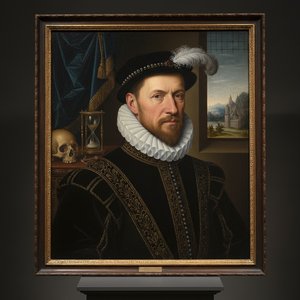
Hans Holbein's "Untitled (5500)" depicts Jesus and his disciples sharing a meal, rich with symbolism & detail. Explore the masterpiece’s religious & humanist themes through stunning realism.

Hans Holbein, o Jovem (1497-1543): mestre do Renascimento Nórdico no retrato realista, famoso por pintar a realeza Tudor, como Henrique VIII, com detalhes minuciosos.

Giclée / Impressão de Arte

Impressão giclée ou em tela de qualidade de museu, com produção rápida e opções flexíveis de acabamento. ( Encomendar reprodução pintada à mão Ver Imagem Digital)

Corner sample of the P118B picture frame: poliestireno moldado, 5 cm wide and 3 cm thick
P118B €10
Corner sample of the P118H picture frame: poliestireno moldado, 5 cm wide and 3 cm thick
P118H €10
Corner sample of the P118W picture frame: poliestireno moldado, 5 cm wide and 3 cm thick
P118W €10
Corner sample of the P438Z picture frame: poliestireno moldado, 5.5 cm wide and 3.5 cm thick
P438Z €10
Corner sample of the P508JH picture frame: poliestireno moldado, 7 cm wide and 3.5 cm thick
P508JH €12
Corner sample of the P508YH picture frame: poliestireno moldado, 7 cm wide and 3.5 cm thick
P508YH €12
Corner sample of the P805H picture frame: poliestireno moldado, 5 cm wide and 3.5 cm thick
P805H €10
Corner sample of the P805Z picture frame: poliestireno moldado, 5 cm wide and 3.5 cm thick
P805Z €10
Corner sample of the P919BZ picture frame: poliestireno moldado, 7 cm wide and 3.5 cm thick
P919BZ €10
Corner sample of the P919G picture frame: poliestireno moldado, 7 cm wide and 3.5 cm thick
P919G €10
Corner sample of the P919XJ picture frame: poliestireno moldado, 7 cm wide and 3.5 cm thick
P919XJ €10
Corner sample of the P959ZH picture frame: poliestireno moldado, 5 cm wide and 3 cm thick
P959ZH €10
Corner sample of the P968JZ picture frame: poliestireno moldado, 6 cm wide and 4 cm thick
P968JZ €12
Corner sample of the W106C picture frame: madeira maciça, 5 cm wide and 3 cm thick
W106C €8
Corner sample of the W218G picture frame: madeira maciça, 5 cm wide and 3 cm thick
W218G €10
Corner sample of the W218JH picture frame: madeira maciça, 5 cm wide and 3 cm thick
W218JH €8
Corner sample of the W218Y picture frame: madeira maciça, 5 cm wide and 3 cm thick
W218Y €10
Corner sample of the W307PJ picture frame: madeira maciça, 6 cm wide and 3 cm thick
W307PJ €10
Corner sample of the W316G picture frame: madeira maciça, 6 cm wide and 3 cm thick
W316G €10
Corner sample of the W316PJ picture frame: madeira maciça, 6 cm wide and 3 cm thick
W316PJ €8
Corner sample of the W316Y picture frame: madeira maciça, 6 cm wide and 3 cm thick
W316Y €10
Corner sample of the W398PJ picture frame: madeira maciça, 5 cm wide and 3 cm thick
W398PJ €8
Corner sample of the W4111J picture frame: madeira maciça, 6.5 cm wide and 3.5 cm thick
W4111J €10
Corner sample of the W500HY picture frame: madeira maciça, 7 cm wide and 5 cm thick
W500HY €15
Corner sample of the W500JH picture frame: madeira maciça, 7 cm wide and 5 cm thick
W500JH €15
Corner sample of the W692G picture frame: madeira maciça, 8 cm wide and 4 cm thick
W692G €12
Corner sample of the W849H picture frame: madeira maciça, 5 cm wide and 3 cm thick
W849H €8
Corner sample of the W940BG picture frame: madeira maciça, 7.5 cm wide and 4.5 cm thick
W940BG €15
Corner sample of the W953PJ picture frame: madeira maciça, 6 cm wide and 3.5 cm thick
W953PJ €8

Padrão
sob medida
CM
INCH

Escolha entre os nossos tamanhos pré-definidos que respeitam as proporções originais da obra de arte.

largura
altura

Digite a largura e a altura de que necessita, para se ajustar à sua moldura ou à sua parede. Uma impressão só pode ser cortada, nunca ampliada além da imagem original, pelo que um tamanho com uma proporção diferente perderá parte da imagem. Enviamos-lhe uma maquete digital para aprovação antes de imprimirmos qualquer coisa. A imagem apresentada nesta página não mostra o corte real — apenas a maquete o faz.

Entrega mundial () em 2 semanas, em vez das 4/5 semanas padrão. (24 Outubro)

Envio expresso gratuito para todo o mundo
Tela de Linho Premium
Seguro de transporte total
Garantia de Reembolso de Impostos Alfandegários
Garantia de Fidelidade de Cor
Política de Devolução em 100 Dias (Apenas para Defeitos)
Garantia de reembolso de 100%
Desconto para múltiplas unidades

Preço Total

€ 60

untitled (5500)

Giclée / Impressão de Arte

Dimensões da Reprodução

-

Preço Total

€ 60

Detalhes Rápidos

  • Subject or theme: Religious scene, feast
  • Title: untitled (5500)
  • Medium: Oil on panel
  • Artistic style: Realistic portraiture

Teste de Conhecimentos Artísticos

Cada pergunta possui apenas uma resposta correta.

Questão 1:
What is the primary subject depicted in ‘untitled (5500)’?
Questão 2:
According to the description, how many people are depicted in the painting?
Questão 3:
What is a prominent feature on the dining table that suggests symbolic meaning?
Questão 4:
Hans Holbein the Younger is known for his expertise in which artistic style?
Questão 5:
The inclusion of the anamorphic skull in ‘untitled (5500)’ most likely represents:

A Window into Tudor Intrigue: Hans Holbein’s “Untitled (5500)”

Hans Holbein the Younger's "Untitled (5500)" is not merely a group portrait; it’s a meticulously crafted tableau of power, faith, and subtle symbolism—a frozen moment within the opulent world of 16th-century England. This remarkable painting, depicting Jesus surrounded by his disciples at a shared meal, transcends simple representation to offer a profound glimpse into the political and religious currents of its time. The sheer scale of the composition – an unknown size but undoubtedly commanding – immediately draws the viewer in, inviting them to become part of this intimate scene. Holbein’s mastery is evident not just in his astonishingly realistic depiction of each figure, but also in the way he uses light and shadow to create a palpable sense of depth and atmosphere, reminiscent of the masterful works of Jan van Eyck.

The painting unfolds around a richly appointed dining table, laden with bowls, knives, and various instruments of learning – a deliberate arrangement that speaks volumes about the intellectual climate of the Tudor court. Three bowls are strategically placed, hinting at shared sustenance and fellowship, while the knife suggests both practicality and perhaps, a subtle undercurrent of tension. The figures themselves are rendered with an almost unsettling level of detail; each face is etched with individual character, reflecting not just likeness but also personality and status. The seated disciples, ranging from the youthful to the seasoned, embody a diverse group united by their devotion to Jesus. Notably, Jesus himself is positioned at the head of the table, asserting his central role within this community.

Renaissance Realism and Psychological Depth

Holbein’s artistic genius lies in his ability to capture not just outward appearances but also the inner lives of his subjects. This painting exemplifies his signature style – a blend of meticulous observation and psychological insight. He was renowned for his portraits, particularly those commissioned by Henry VIII and Anne Boleyn, and this work demonstrates his skill at conveying character through subtle gestures, expressions, and clothing choices. The use of oil paints allowed him to achieve an unprecedented level of detail and luminosity, capturing the textures of fabrics, the sheen of metal, and the nuances of skin tones with remarkable accuracy.

The technical brilliance is further enhanced by Holbein’s innovative approach to perspective and composition. He masterfully employs atmospheric perspective – creating a sense of distance through variations in color and detail – to draw the viewer's eye into the scene. The arrangement of figures around the table, with Jesus at its center, establishes a clear hierarchy while simultaneously fostering a feeling of intimacy and shared experience. It’s a carefully orchestrated visual narrative that invites contemplation.

Symbolism and Historical Context

Beyond its aesthetic qualities, “Untitled (5500)” is rich in symbolic meaning. The inclusion of scientific instruments – globes, sundials, and quadrants – reflects the burgeoning interest in astronomy and navigation during the Renaissance, a period marked by both exploration and intellectual curiosity. The reference to Rome through the Cosmati pavement pattern, likely incorporated as a gift for Anne Boleyn, subtly alludes to the political tensions between England and the Papal States. The lute with its broken string is a potent symbol of discord, perhaps representing the religious divisions that were fracturing Europe at the time.

The presence of Martin Luther’s hymnbook, open on facing pages referencing Law and Grace, adds another layer of complexity to the painting's interpretation. It suggests a dialogue between faith and reason, tradition and reform – themes that were central to the Protestant Reformation. Even the seemingly simple act of sharing a meal becomes imbued with significance, representing not just sustenance but also fellowship, community, and spiritual nourishment.

A Timeless Masterpiece: Reproduction Possibilities

WahooArt offers meticulously crafted hand-painted reproductions of Hans Holbein’s “Untitled (5500),” allowing you to bring this extraordinary artwork into your home or office. Our skilled artisans replicate Holbein's intricate details, vibrant colors, and atmospheric depth with unparalleled precision. Whether you are an art collector, a design enthusiast, or simply someone who appreciates the beauty of Renaissance art, our reproduction provides a stunning and authentic representation of this iconic masterpiece. Explore the available sizes and canvas options to find the perfect way to experience the power and allure of “Untitled (5500).”

Perguntas e Respostas

Como "untitled (5500)" de Hans Holbein, O Jovem conecta Northern Renaissance ao país de origem do artista?

"untitled (5500)" conecta o movimento Northern Renaissance com Alemanha por meio do local de nascimento de seu criador.

Qual é a orientação de "untitled (5500)" de Hans Holbein, O Jovem?

"untitled (5500)" de Hans Holbein, O Jovem possui um formato Portrait. O formato descreve as proporções da composição.

Qual é a saturação de cor de "untitled (5500)" de Hans Holbein, O Jovem?

"untitled (5500)" de Hans Holbein, O Jovem é registrado com uma saturação de Subtle Color.


Biografia do Artista

Uma Vida Gravada em Detalhes: O Mundo de Hans Holbein, o Jovem

Nascido por volta de 1497 no vibrante centro artístico de Augsburg, na Alemanha, Hans Holbein, o Jovem, emergiu como uma figura definidora do Renascimento Nórdico — um mestre do retrato cuja obra continua a ressoar com um realismo de tirar o fôlego e profundidade psicológica. Sua criação em uma família artisticamente dotada lançou as bases para seu talento excepcional; seu pai, Hans Holbein, o Velho, era um respeitado pintor e gravador que instilou no jovem Hans uma abordagem meticulosa de observação e técnica. Este treinamento precoce não consistia apenas em dominar pincelidades ou misturar pigmentos — tratava-se de aprender a *ver*, para capturar não apenas a semelhança, mas a própria essência de um sujeito. As explorações artísticas iniciais de Holbein ocorreram na oficina de seu pai, onde ele aperfeiçoou suas habilidades antes de embarcar em uma jornada que o levaria pela Suíça e, finalmente, ao coração da corte inglesa.

De Basileia à Corte Tudor: Uma Estrela Ascendente

Após concluir seu aprendizado, Holbein viajou extensivamente pela Suíça, estabelecendo-se como um artista independente com uma reputação crescente. Ele passou vários anos formativos em Basileia, criando não apenas retratos impressionantes, mas também obras religiosas e intrincados designs de xilogravura — mais notavelmente a série assombrosa que retrata a Dança da Morte. Estas peças iniciais revelam um domínio emergente da composição e uma fascinação em desenvolvimento por capturar as complexidades da emoção humana. Foi em 1526 que o destino interveio, atraindo Holbein para a Inglaterra, um evento que alteraria irrevogavelmente sua trajetória artística. Ele chegou portando uma carta de introdução de Erasmo, o renomado estudioso humanista, o que abriu portas aos círlar influentes da sociedade inglesa. Seu talento rapidamente cativou figuras proeminentes como Sir Thomas More, que se tornou tanto um patrono quanto um modelo para vários retratos envolventes. Esta conexão provou ser crucial, levando à nomeação de Holbein como pintor da corte do Rei Henrique VIII em 1536 — uma posição que ele ocupou, com algumas interrupções, até sua morte prematura em 1543.

A Arte da Percepção: Estilo e Obras-Primas

O estilo artístico de Holbein é caracterizado por um compromisso extraordinário com o realismo, alcançado através de uma atenção minuciosa aos detalhes na representação de texturas, tecidos e as sutis nuances das feições faciais. Ele não simplesmente pintava retratos; ele os construía meticulosamente, camada por camada, capturando não apenas a aparência física, mas também a personalidade e a vida interior de seus modelos. Suas composições inovadoras aumentaram ainda mais o impacto de seu trabalho, muitas vezes empregando objetos simbólicos ou fundos para transmitir significados mais profundos. Os Embaixadores (1533) permanece como um testemunho desta abordagem — um retrato duplo complexo e simbolicamente rico que exibe tanto o brilhantismo técnico de Holbein quanto sua profundidade intelectual. O crânio anamórfico sutilmente inserido na pintura serve como um austero memento mori, lembrando os espectadores da inevitabilidade da morte. Seus inúmeros retratos de Henrique VIII estabeleceram uma imagem duradoura do poder Tudor, enquanto sua representação de Erasmo de Roterdã captura a profunda gravitas intelectual do estudioso. Outras obras notáveis incluem o deslumbrante Retrato de Nikolaus Kratzer (1528), uma obra-prima de realismo e detalhe científico.

Legado e Influência: Uma Impressão Duradoura

A jornada artística de Holbein foi moldada por uma confluência de influências, misturando a precisão das tradições artísticas alemãs com os princípios composicionais do Renascimento Italiano. Ele admirava o trabalho de Albrecht Dürer e outros mestres alemães, ao mesmo tempo em que estudava a arte italiana durante suas viagens, absorvendo suas técnicas e incorporando-as ao seu próprio estilo único. Seu legado é profundo; os retratos de Holbein estabeleceram um novo padrão para o realismo e a percepção psicológica na retratística, influenciando gerações de artistas que o sucederam. Suas representações de figuras fundamentais durante o período Tudor fornecem visões inestimáveis sobre as vidas e personalidades daqueles que moldaram a história inglesa. Ele não apenas registrou aparências — ele capturou momentos no tempo, preservando-os para a posteridade. Sua obra serve como um poderoso testemunho do poder duradouro da arte para documentar, interpretar e iluminar o passado.

Uma Última Pincelada: Significância Histórica

Hans Holbein, o Jovem, morreu em Londres em 1543, deixando para trás um corpo de trabalho que continua a cativar o público séculos depois. Seus retratos são mais do que apenas imagens belas; são documentos históricos, oferecendo vislumbres das intrigas políticas, convulsões religiosas e mudanças culturais da era Tudor.
  • Suas representações de Henrique VIII tornaram-se representações icônicas do poder real.
  • Sua retratística oferece uma janela para as vidas de humanistas proeminentes como Erasmo e More.
  • Seu uso inovador de simbolismo adiciona camadas de significado ao seu trabalho, convidando os espectadores a contemplar temas mais profundos.
A arte de Holbein transcende a mera habilidade técnica; é uma personificação da curiosidade intelectual, da inovação artística e de uma compreensão profunda da condição humana. Ele permanece como um dos pintores mais admirados e estudados do Renascimento — um mestre cujo legado continua a inspirar e a fascinar.

Hans Holbein, O Jovem

Hans Holbein, O Jovem

1497 - 1543 , Alemanha

Informações Rápidas

  • Artistic Movement Or Style: Renascimento Norte
  • Artists Who Influenced This Artist: ['Albrecht Dürer']
  • Date Of Birth: c. 1497
  • Date Of Death: October or November 1543
  • Full Name: Hans Holbein der Jüngere
  • Nationality: Deutsch-Schweiz
  • Notable Artworks:
    • Os Embaixadores
    • Retrato de Henrique VIII
    • Retrato de Erasmo
  • Place Of Birth: Augsburg, Alemanha
Explore obras de arte organizadas por temas, estilos e características.