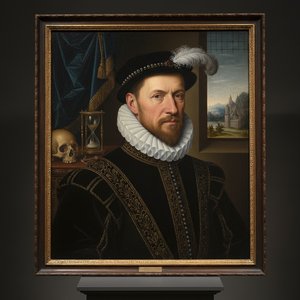
A Swabian Enigma: The Life and Early Influences of Hans Baldung Grien
Hans Baldung, também conhecido como Hans Baldung Grien, (Schwäbisch Gmünd, 1484 ou 1485 — Estrasburgo, setembro de 1545) foi um famoso pintor alemão do Renascimento. Viveu na sua cidade natal até 1502, quando se mudou para Nuremberga, onde trabalhou no ateliê de Albrecht Dürer, tendo permanecido aí cinco anos, o que muito o influenciou nas suas obras. Em 1509 mudou-se, novamente, para Estrasburgo, onde entra em contacto com os círculos intelectuais de Martinho Lutero. Porém, entre 1512 e 1517, passou a residir em Friburgo, trabalhando na sua obra-prima, o altar da catedral. Apesar de realizar uma boa produção religiosa, a sua temática favorita era macabra, sendo a morte e o erotismo contantes em toda a sua obra. Na actualidade, algumas das suas obras estão expostas no Museu do Prado em Madrid.
Under Dürer’s Wing and Forging an Individual Style
O momento crucial no desenvolvimento de Baldung ocorreu em 1503, quando se tornou aprendiz no ateliê de Albrecht Dürer em Nuremberga. Este período foi profundamente formativo, expondo-o aos detalhes meticulosos, rigor intelectual e técnicas inovadoras de impressão que definiram o estilo de Dürer. Os dois artistas desenvolveram uma relação próxima; Baldung até geriu o atelier de Dürer durante a sua viagem para Veneza. No entanto, embora profundamente influenciado por Dürer – evidente em trabalhos iniciais que exibiam draftsmanship precisa e realismo do norte – Baldung rapidamente começou a forjar a sua própria identidade artística. Absorveu as lições dos mestres renascentistas, mas infundiu-as com uma sensibilidade alemã única, caracterizada por cor expressiva, composições imaginativas e uma crescente profundidade psicológica inquietante. Esta divergência do estilo clássico de Dürer tornou-se um traço distintivo da obra madura de Baldung. O seu tempo em Veneza, supervisionando os assuntos de Dürer, também o expôs ao cenário artístico renascentista italiano emergente, ampliando os seus horizontes artísticos e influenciando sutilmente a sua paleta e escolhas composicionais. Ele retornou da Itália com um senso aguçado de cor e uma disposição para experimentar com arranjos espaciais que o diferenciavam dos seus contemporâneos.
A Master of Many Mediums: Themes and Techniques
Hans Baldung Grien era um artista de notável versatilidade, proficiente em pintura, impressão – especialmente xilogravuras e gravuras – desenho, design de tapeçaria e até trabalho em vitrais. As suas pinturas frequentemente apresentam obras em pequena escala repletas de alegorias enigmáticas e narrativas míticas, renderizadas com uma paleta vibrante e um senso distintivo de ambiguidade espacial. Ele se destacou na pintura de retratos, capturando a semelhança dos seus patronos tanto com realismo quanto com insight psicológico. No entanto, é talvez pela sua xilogravuras que Baldung é mais amplamente reconhecido hoje em dia. Estas impressões são caracterizadas pelas suas composições dramáticas, detalhes intrincados e tema frequentemente macabro. Um tema recorrente em toda a sua obra é uma fascinação por bruxaria, morte e o sobrenatural – um reflexo das ansiedades e crenças prevalecentes na Alemanha do século XVI. As suas representações de bruxas são particularmente marcantes, retratando-as não como bruxas estereotipadas, mas como figuras complexas, até sedutoras, que encarnam tanto medo quanto fascínio. *O Domador de Cavalos Amaldiçoado*, por exemplo, é uma obra inquietantemente evocativa que encapsula esta preocupação com o lado mais sombrio da experiência humana. A técnica de Baldung na xilogravura era magistral; ele explorou a capacidade do meio para contrastes marcantes e detalhes intrincados para criar imagens que eram tanto visualmente impressionantes quanto psicologicamente perturbadoras.
Reformation Currents and Lasting Legacy
A carreira de Baldung desenrolou-se durante um período de intensa agitação religiosa e política, marcada pelo surgimento da Reforma Protestante. Embora não esteja alinhado abertamente com qualquer facção específica, a sua obra frequentemente reflete o cenário espiritual em mudança da Alemanha. O seu monumental altar alto para a cidade de Münster, concluído em 1531, é um testemunho do envolvimento dele, mostrando apoio ao movimento da reforma através da sua iconografia e escolhas estilísticas. Em 1545, Baldung morreu em Estrasburgo, deixando para trás um corpo de trabalho que continua a cativar e intrigar os espectadores de hoje. A sua influência pode ser vista nas obras de artistas posteriores, e a sua combinação única de técnica renascentista, expressão do norte e tema alegórico garante o seu lugar como uma figura significativa na história da arte. Ele permanece um artista cujo trabalho convida à contemplação, desafiando-nos a confrontar os aspetos mais sombrios da natureza humana e os mistérios do invisível. A sua exploração de temas como bruxaria e mortalidade continua a ressoar com o público contemporâneo, tornando-o uma figura atemporal e cativante no panteão dos mestres renascentistas.
Museums and Collections
Baldung’s works can be found in prominent museums across Europe and North America:
- Gemäldegalerie Alte Meister, Dresden, Germany: This renowned museum houses a significant collection of European paintings from the 15th to the 18th centuries, providing valuable context for understanding Baldung’s artistic milieu.
- National Gallery of Art, Washington D.C.: The NGA holds several important woodcuts and drawings by Baldung, offering insights into his printmaking techniques and artistic process.
- The J. Paul Getty Museum, Los Angeles: Features works that showcase the breadth of Baldung’s talent.
- Kunstmuseum Basel, Switzerland: A museum with a rich collection spanning various periods, offering a broader understanding of Renaissance art in Europe.
These institutions provide opportunities to experience firsthand the captivating artistry and enduring legacy of Hans Baldung Grien.



 Visualizar em escala
 Encomendar reprodução pintada à mão
 Enviar
 Compartilhar
 Ver detalhes

 Baixar imagem
 Semelhantes
 Raio X
 Apresentação de slides
 Estatísticas


 Ver mais






































 A opção de vidro está disponível apenas para tamanhos inferiores a 110 cm