Visualizar na parede Visualizar em RA Comprar pintura feita à mão Alternar para Imagem Digital Compartilhar
Detalhes Guia Adicionar aos favoritos Baixar imagem Semelhantes Raio X Ver diaporama Estatísticas

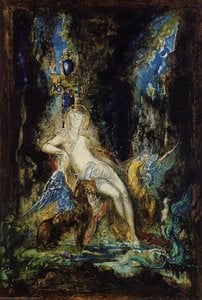
Goddess on the Rocks

Discover Gustave Moreau’s ‘Goddess on the Rocks,’ a mesmerizing Symbolist watercolor. Explore its mythology, dramatic beauty & unique artistic vision.

Explore a obra singular de Gustave Moreau (1826-1898), mestre do simbolismo francês! Mitologia, religião e sonhos em pinturas exuberantes e enigmáticas. Influenciou Matisse & Rouault.

Giclée / Impressão de Arte

Impressão giclée ou em tela de qualidade de museu, com produção rápida e opções flexíveis de acabamento. ( Comprar pintura feita à mão Alternar para Imagem Digital)

Corner sample of the P118B picture frame: poliestireno moldado, 5 cm wide and 3 cm thick
P118B €10
Corner sample of the P118H picture frame: poliestireno moldado, 5 cm wide and 3 cm thick
P118H €10
Corner sample of the P118W picture frame: poliestireno moldado, 5 cm wide and 3 cm thick
P118W €10
Corner sample of the P438Z picture frame: poliestireno moldado, 5.5 cm wide and 3.5 cm thick
P438Z €10
Corner sample of the P508JH picture frame: poliestireno moldado, 7 cm wide and 3.5 cm thick
P508JH €12
Corner sample of the P508YH picture frame: poliestireno moldado, 7 cm wide and 3.5 cm thick
P508YH €12
Corner sample of the P805H picture frame: poliestireno moldado, 5 cm wide and 3.5 cm thick
P805H €10
Corner sample of the P805Z picture frame: poliestireno moldado, 5 cm wide and 3.5 cm thick
P805Z €10
Corner sample of the P919BZ picture frame: poliestireno moldado, 7 cm wide and 3.5 cm thick
P919BZ €10
Corner sample of the P919G picture frame: poliestireno moldado, 7 cm wide and 3.5 cm thick
P919G €10
Corner sample of the P919XJ picture frame: poliestireno moldado, 7 cm wide and 3.5 cm thick
P919XJ €10
Corner sample of the P959ZH picture frame: poliestireno moldado, 5 cm wide and 3 cm thick
P959ZH €10
Corner sample of the P968JZ picture frame: poliestireno moldado, 6 cm wide and 4 cm thick
P968JZ €12
Corner sample of the W106C picture frame: madeira maciça, 5 cm wide and 3 cm thick
W106C €8
Corner sample of the W218G picture frame: madeira maciça, 5 cm wide and 3 cm thick
W218G €10
Corner sample of the W218JH picture frame: madeira maciça, 5 cm wide and 3 cm thick
W218JH €8
Corner sample of the W218Y picture frame: madeira maciça, 5 cm wide and 3 cm thick
W218Y €10
Corner sample of the W307PJ picture frame: madeira maciça, 6 cm wide and 3 cm thick
W307PJ €10
Corner sample of the W316G picture frame: madeira maciça, 6 cm wide and 3 cm thick
W316G €10
Corner sample of the W316PJ picture frame: madeira maciça, 6 cm wide and 3 cm thick
W316PJ €8
Corner sample of the W316Y picture frame: madeira maciça, 6 cm wide and 3 cm thick
W316Y €10
Corner sample of the W398PJ picture frame: madeira maciça, 5 cm wide and 3 cm thick
W398PJ €8
Corner sample of the W4111J picture frame: madeira maciça, 6.5 cm wide and 3.5 cm thick
W4111J €10
Corner sample of the W500HY picture frame: madeira maciça, 7 cm wide and 5 cm thick
W500HY €15
Corner sample of the W500JH picture frame: madeira maciça, 7 cm wide and 5 cm thick
W500JH €15
Corner sample of the W692G picture frame: madeira maciça, 8 cm wide and 4 cm thick
W692G €12
Corner sample of the W849H picture frame: madeira maciça, 5 cm wide and 3 cm thick
W849H €8
Corner sample of the W940BG picture frame: madeira maciça, 7.5 cm wide and 4.5 cm thick
W940BG €15
Corner sample of the W953PJ picture frame: madeira maciça, 6 cm wide and 3.5 cm thick
W953PJ €8

Tamanho padrão
personalizado
CM
INCH

Escolha entre os nossos tamanhos pré-definidos que respeitam as proporções originais da obra de arte.

largura
altura

Insira a largura e a altura desejadas para se ajustarem à sua moldura ou parede. Uma impressão pode ser apenas cortada, nunca ampliada além da imagem original; portanto, um tamanho com proporções diferentes resultará na perda de parte da imagem. Enviamos uma maquete digital para sua aprovação antes de realizarmos a impressão. A imagem exibida nesta página não mostra o corte real — apenas a maquete o faz.

Entrega mundial () em 2 semanas, em vez das 4/5 semanas padrão. (27 Outubro)

Envio expresso gratuito para todo o mundo
Tela de Linho de Alta Qualidade
Seguro de transporte completo
Garantia de Reembolso de Impostos Alfandegários
Garantia de Fidelidade Cromática
Política de Devolução em 100 Dias (Apenas para Defeitos)
Garantia de reembolso de 100%
Oferta de desconto por quantidade

Preço Total

€ 60

Goddess on the Rocks

Giclée / Impressão de Arte

Tamanho da Reprodução

-

Preço Total

€ 60

Informações Rápidas

  • Notable elements or techniques: Clock, bird, lush landscape
  • Year: 1890
  • Influences: Delacroix
  • Artistic style: Symbolist, detailed
  • Medium: Watercolor

Quiz de Arte

Cada pergunta possui apenas uma resposta correta.

Pergunta 1:
Gustave Moreau’s ‘Goddess on the Rocks’ is a prime example of which art movement?
Pergunta 2:
What symbolic object is prominently featured above the goddess’s head in ‘Goddess on the Rocks’?
Pergunta 3:
The rocky landscape in the painting can be interpreted as representing what?
Pergunta 4:
What is a key characteristic of Moreau’s artistic technique as demonstrated in ‘Goddess on the Rocks’?
Pergunta 5:
What is the significance of the bird perched on the goddess's shoulder?

A Dreamscape of Femininity and Time

Gustave Moreau’s *Goddess on the Rocks*, completed in 1890, is not merely a painting; it's an immersion into the heart of Symbolism – a movement that dared to prioritize the evocative power of imagery and subjective experience over strict realism. This captivating watercolor transports viewers to a realm steeped in mythology, sensuality, and the poignant awareness of time’s passage. The reclining nude figure, draped across a landscape both lush and desolate, immediately commands attention with an ethereal beauty underscored by a pervasive sense of mystery. It is a work that doesn't simply depict; it invites contemplation.

Decoding the Layers of Symbolism

Moreau was a master of imbuing his canvases with layers of symbolic meaning, and *Goddess on the Rocks* stands as a prime example of this skill. The goddess herself embodies a compelling duality – vulnerability intertwined with potent power. Her languid pose suggests both repose and a latent energy waiting to be unleashed. The gentle placement of her hands upon her breasts emphasizes femininity, hinting at themes of creation or nurturing life itself. But it is the details that truly unlock the painting’s deeper resonance. A bird perched delicately on her shoulder acts as a messenger, often associated with the soul or spiritual realms, adding an air of mysticism and otherworldly connection. Perhaps most strikingly, a clock suspended above her head serves as a stark memento mori – a poignant reminder of time's relentless march and the ephemeral nature of beauty and existence. The rocky landscape surrounding her can be interpreted as representing the harsh realities of life, providing a dramatic contrast to the goddess’ serene form.

Moreau’s Artistic Technique & Style

Moreau’s technique is characterized by meticulous detail and a rich, jewel-toned palette that seems to glow from within. Though executed in watercolor, the painting possesses a density and luminosity often associated with oil painting – a testament to his masterful control of the medium. His brushwork is expressive yet controlled, creating textures that evoke both the softness of flesh and the ruggedness of stone. The dramatic lighting—strong contrasts between light and shadow—heightens the emotional intensity and draws the eye to key elements within the composition. *Goddess on the Rocks* exemplifies Moreau’s unique style: a fusion of academic precision with fantastical imagination, resulting in an aesthetic that is both alluring and unsettling. He wasn't simply painting what he saw; he was visualizing the unseen realms of myth and emotion.

Historical Context & The Symbolist Vision

Emerging in the late 19th century as a reaction against the perceived limitations of Realism and Impressionism, Symbolism sought to explore inner worlds, dreams, and spiritual truths. Artists like Moreau rejected the objective representation of reality, instead focusing on conveying emotions and ideas through symbolic imagery. Moreau was a leading figure in this movement, profoundly influencing artists such as Matisse and Rouault with his visionary approach. His work resonated with a growing sense of disillusionment with modernity and a yearning for something beyond the material world – a return to myth, spirituality, and the power of imagination. *Goddess on the Rocks* is not just a product of its time; it embodies the very spirit of Symbolism.

Emotional Resonance & Interior Design

*Goddess on the Rocks* evokes a complex range of emotions – serenity, melancholy, mystery, and perhaps even a touch of foreboding. The painting’s dreamlike quality invites contemplation and allows viewers to project their own interpretations onto its enigmatic scene. As an element in interior design, this artwork would lend itself beautifully to spaces seeking a sophisticated and evocative atmosphere. Its muted color palette complements both classic and contemporary settings, while its symbolic depth provides a compelling focal point for conversation and reflection. The painting’s themes of femininity, time, and the natural world make it particularly well-suited for bedrooms, libraries, or living rooms designed to inspire tranquility and introspection. It is a piece that speaks not just to the eye, but to the soul. For those seeking to delve deeper into Moreau’s world, a visit to the Musée National Gustave-Moreau in Paris is highly recommended.

Perguntas e Respostas

Onde posso encontrar obras de arte semelhantes a "Goddess on the Rocks", de Gustave Moreau?

A página Obras semelhantes de "Goddess on the Rocks", de Gustave Moreau apresenta obras relacionadas.

A imagem de "Goddess on the Rocks", de Gustave Moreau pode ser reproduzida livremente?

Quanto aos direitos autorais, "Goddess on the Rocks" está em em domínio público — seus direitos autorais expiraram.

Qual é a identidade cromática de "Goddess on the Rocks", de Gustave Moreau?

A identidade cromática de "Goddess on the Rocks", de Gustave Moreau: uma paleta Earthy, dominada por Rosy Brown (#ccb081).


Biografia do Artista

A Dream Weaver of Symbolism: The Life and Art of Gustave Moreau

Gustave Moreau, a name inextricably linked to the ethereal beauty and profound mysteries of Symbolist painting, emerged from 19th-century Paris as an artist utterly distinct in his vision. Born in 1826 into a comfortable bourgeois family—his father an architect and archivist—Moreau’s early life was steeped in intellectual curiosity and a deep appreciation for aesthetics. From a remarkably young age, he displayed a prodigious talent for drawing, nurtured through the rigorous training of the École des Beaux-Arts under masters like François-Édouard Picot. However, Moreau's artistic trajectory swiftly diverged from the prevailing Realist and Impressionist currents of his time. He wasn’t driven by a desire to capture fleeting moments or represent objective reality; instead, he sought to unlock the hidden realms of myth, religion, and the intricate workings of the human psyche through a deeply personal and symbolic visual language. His journey was one of inward exploration, translating subjective emotions and spiritual yearnings onto canvas with an almost obsessive attention to detail and a palette often rich in vibrant, unexpected hues.

The Forge of Imagination: Influences and Artistic Development

Moreau’s artistic development wasn't forged in isolation. While consciously rejecting the dominant trends of his era, he drew inspiration from a remarkably diverse range of sources. The dramatic use of color and exotic subject matter found in the works of Eugène Delacroix ignited within him a passionate interest in narrative painting imbued with intense emotionality. He held Renaissance masters—Michelangelo and Leonardo da Vinci, in particular—in high regard, deeply admiring their mastery of composition, anatomical precision, and their remarkable ability to penetrate the complexities of human psychology. Yet, Moreau wasn’t merely imitating these giants; he was skillfully synthesizing their influences into something entirely new, a distinctly personal style. His pivotal journey to Italy during the 1850s proved transformative, immersing him in the art of antiquity and the Renaissance. This experience provided an unparalleled wealth of motifs and stylistic cues that would subsequently populate his paintings—a treasure trove of imagery he meticulously studied and absorbed. He undertook countless copies of Old Master works, not as mere reproductions, but as a means of understanding their techniques and unlocking the secrets behind their enduring power. This dedication to meticulous study, combined with an increasingly fervent interest in mythology and literature, formed the bedrock of his unique artistic vision.

A World of Symbols: Themes and Techniques

Moreau’s paintings are not simply illustrations of myths or biblical stories; they are complex allegories designed to provoke contemplation and interpretation. He didn't aim to retell these narratives literally but rather to explore their underlying psychological and spiritual truths. His canvases are often teeming with symbolic imagery—serpents representing temptation, jewels signifying earthly desires, and figures embodying abstract concepts such as grief, loss, or redemption. He masterfully created an atmosphere of dreaminess through intricate detail, rich textures, and a frequently unsettling juxtaposition of light and shadow. Moreau’s technique was characterized by a deliberate layering of paint—a painstaking process that resulted in surfaces shimmering with iridescent colors and evoking a sense of otherworldly beauty. His skillful use of gold leaf further enhanced this effect, lending his works a Byzantine quality that underscored their spiritual dimension. Crucially, Moreau wasn't concerned with capturing realistic textures or perspectives; instead, he prioritized the expressive power of color and form to convey mood and meaning—a deliberate departure from conventional artistic practices.

Notable Works and Lasting Legacy

Throughout his prolific career, Gustave Moreau produced a remarkable body of work, including iconic paintings such as *Salome Dancing before Herod*, *Jupiter and Semele*, *Orpheus*, *The Apparition*, and *Desdemona*. *Salome Dancing before Herod*, perhaps his most celebrated painting, exemplifies his opulent style and enduring fascination with biblical narratives. *Jupiter and Semele* showcases his masterful command of composition and color, while *Orpheus* explores the themes of loss and artistic inspiration through multiple iterations. Moreau’s influence extended far beyond his own lifetime. He accepted a professorship at the École des Beaux-Arts in 1893, where he profoundly impacted generations of artists, including Henri Matisse and Georges Rouault, encouraging them to embrace imagination, symbolism, and individual expression. Despite initially facing mixed reactions from critics, Moreau’s work gained increasing recognition in the decades following his death in 1898, culminating in the establishment of the Musée Gustave Moreau in Paris—a dedicated space for showcasing his extraordinary artistic legacy. Today, Gustave Moreau is widely regarded as a pivotal figure in the Symbolist movement and a significant precursor to modern art, his paintings continuing to captivate audiences with their evocative beauty and profound psychological depth.
Gustave Moreau

Gustave Moreau

1826 - 1898 , França

Dados Rápidos

  • Artistic Movement Or Style: Simbolismo
  • Artists Or Movements Influenced By This Artist:
    • Matisse
    • Rouault
  • Artists Who Influenced This Artist:
    • Delacroix
    • Michelangelo
    • Leonardo
  • Date Of Birth: 6 de abril de 1826
  • Date Of Death: 18 de abril de 1898
  • Full Name: Gustave Moreau
  • Nationality: Francês
  • Notable Artworks:
    • Salomé Dançando
    • Júpiter e Semele
    • Orfeu
    • A Aparição
    • Desdemona
  • Place Of Birth: Paris, França
Explore obras de arte organizadas por temas, estilos e características.