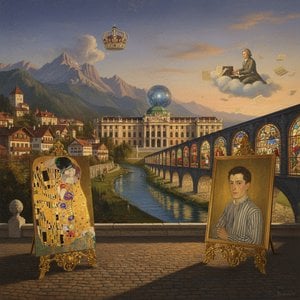
Os Primeiros Anos e o Despertar Artístico
Gustav Klimt, nascido em 14 de julho de 1862, em Baumgarten, nos arredores de Viena, emergiu de uma família marcada tanto pela inclinação artística quanto pelas dificuldades financeiras. Seu pai, Ernst Klimt, era um ourives talentoso, profissão que sutilmente, mas profundamente, influenciaria a sensibilidade estética do jovem Gustav – o fascínio pelo ouro, os detalhes meticulosos, a opulência pura. As lutas da família significavam mudanças frequentes dentro de Viena, uma infância transitória que talvez tenha fomentado em Klimt uma observação aguçada do ambiente ao seu redor e uma sensibilidade à experiência humana. Desde cedo, suas habilidades de desenho eram notáveis, nutridas pela profissão de seu pai e por um talento inato que rapidamente se tornou evidente. Em 1876, ingressou na Kunstgewerbeschule de Viena (Escola de Artes Aplicadas), embarcando em treinamento formal em pintura arquitetônica sob a orientação de Ferdinand Laufberger. Isso lhe proporcionou uma base técnica sólida, mas também o expôs aos estilos acadêmicos predominantes – estilos que Klimt acabaria desafiando e transcendendo. Foi ali, também, que formou uma importante parceria artística com seu irmão Ernst e Franz von Matsch, uma colaboração que garantiu os primeiros contratos para murais decorativos e tetos, lançando as bases para o seu futuro sucesso.
A Ascensão da Secessão de Viena
Na década de 1890, Klimt tornou-se cada vez mais desiludido com o conservador establishment artístico de Viena. Ele ansiava por maior liberdade criativa, um espaço onde a inovação pudesse prosperar sem as restrições da tradição. Esse desejo culminou na formação da Secessão de Viena em 1897, um momento crucial na história da arte austríaca. Klimt foi eleito seu primeiro presidente, tornando-se a figura central de um movimento que buscava romper com as rígidas normas acadêmicas e abraçar novas correntes artísticas que varriam a Europa – Art Nouveau, Simbolismo e Japonismo. O próprio edifício de exposição da Secessão, projetado por Joseph Maria Olbrich, tornou-se um símbolo dessa rebelião, um templo dedicado à arte moderna. A obra de Klimt era central para o ethos da Secessão, incorporando sua rejeição da estética convencional e seu apreço por elementos decorativos, cores ousadas e imagens simbólicas. Suas pinturas começaram a explorar temas de amor, morte e sexualidade com uma franqueza sem precedentes, desafiando as normas sociais e provocando admiração e indignação.
A Fase Dourada e a Maturidade Artística
Por volta de 1900, Klimt entrou no que é agora conhecido como sua “fase dourada”, um período caracterizado pelo uso exuberante de folhas de ouro inspirado em mosaicos bizantinos e manuscritos medievais iluminados. Essa técnica transformou suas pinturas em visões etéreas e cintilantes, imbuídas de uma sensação de profundidade espiritual e fascínio sensual.
O Beijo (1907-1908), talvez sua obra mais icônica, exemplifica esse estilo – um casal entrelaçado em um abraço apaixonado, envolto em uma aura dourada, seus corpos adornados com padrões intrincados. Este período também viu Klimt produzir uma série de retratos impressionantes, incluindo *Retrato de Adele Bloch-Bauer I* (1907), que demonstrou sua capacidade de capturar não apenas a semelhança física, mas também a complexidade psicológica de seus sujeitos. Ele borrava cada vez mais as fronteiras entre pintura e ornamentação, integrando elementos decorativos em suas composições para criar uma fusão harmoniosa de forma e conteúdo. A influência da arte japonesa – o Japonismo – era particularmente evidente em sua perspectiva achatada, ênfase na linha e uso de padrões decorativos.
Controvérsia, Influências e Legado Duradouro
A carreira de Klimt não foi isenta de controvérsias. Em 1900, recebeu um prestigioso encargo para pintar murais no Grande Salão da Universidade de Viena, representando Filosofia, Jurisprudência e Teologia. No entanto, essas obras – particularmente *Filosofia* – foram consideradas provocativas e até mesmo pornográficas por críticos conservadores, levando a protestos públicos e, finalmente, levando Klimt a recusar outros encargos públicos. Este incidente marcou um ponto de virada em sua carreira, impulsionando-o para o patrocínio privado e permitindo-lhe maior liberdade artística. Ao longo de sua vida, Klimt foi influenciado por uma variedade diversificada de artistas e estilos – das pinturas históricas de Hans Makart às artes decorativas de Bizâncio e Japão. Ele também se inspirou no movimento simbolista, explorando temas de mitologia, alegoria e o subconsciente. Gustav Klimt continuou pintando prolificamente até sua morte em 6 de fevereiro de 1918, vítima de um derrame durante a pandemia da gripe espanhola. Suas obras posteriores exploraram formas mais abstratas e paisagens, demonstrando uma evolução artística contínua. Ele é agora reconhecido como uma das figuras mais importantes na história da arte austríaca, um expoente líder da Secessão de Viena e um símbolo duradouro da elegância Art Nouveau.
Suas pinturas alcançam altos preços em leilões, e sua influência continua a ressoar na arte e no design contemporâneos.
Características Chave & Estilo Artístico
- Simbolismo: A obra de Klimt é profundamente simbólica, frequentemente explorando temas de amor, morte, sexualidade e a condição humana.
- Art Nouveau: Ele foi uma figura líder no movimento Art Nouveau, caracterizado por suas linhas orgânicas, padrões decorativos e ênfase na beleza.
- Fase Dourada: Seu uso de folhas de ouro criou superfícies cintilantes e opulentas que se tornaram seu estilo característico.
- Elementos Decorativos: Klimt integrou elementos decorativos em suas composições, borrando as fronteiras entre pintura e ornamentação.
- Forma Feminina: O corpo feminino era um tema central em sua obra, frequentemente retratado com sensualidade e profundidade psicológica.



 Visualizar na parede
 Comprar pintura feita à mão
 Compartilhar
 Compartilhar
 Detalhes

 Baixar imagem
 Semelhantes
 Raio X
 Slideshow
 Stats
Stats

 Ler mais






































 A opção de vidro está disponível apenas para tamanhos inferiores a 110 cm