Consultoria de arte gratuita

x
Comprar impressão Comprar impressãoEncomendar pintura Encomendar pintura EnviarEnviar
Detalhes da obraDetalhes da obra Adicionar aos favoritos Adicionar aos favoritos BaixarBaixar SemelhantesSemelhantes Raio XRaio X SlideshowSlideshow

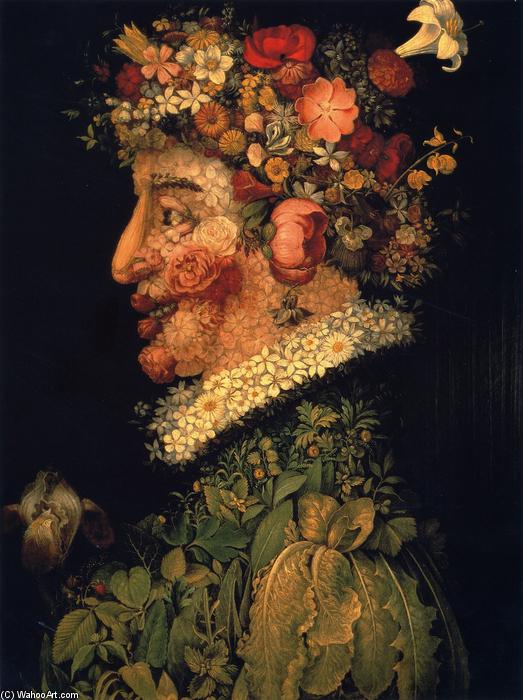
Spring

Behold 'Spring' by Giuseppe Arcimboldo! This surreal Mannerist masterpiece transforms a portrait into a vibrant botanical wonder, blending human form with nature’s beauty.

Giuseppe Arcimboldo (1527-1593) foi um mestre da pintura renascentista, conhecido por seus retratos surreais e fantásticos feitos de frutas, flores e objetos. Sua obra desafia a representação tradicional e explora simbolismos complexos, influenciando o surrealismo.

Adquira uma imagem digital de alta resolução e aprimorada, muito superior à prévia online.

Cada arquivo é meticulosamente preparado por nossos especialistas internos, utilizando ferramentas avançadas e retoques manuais de alta precisão. Garantimos que cada imagem apresente clareza excepcional, fidelidade de cores e detalhes minuciosos.

O arquivo final é entregue por e-mail em até 72 horas, otimizado para uso imediato em ambientes profissionais, editoriais e de impressão. Esta é a mesma qualidade utilizada por estúdios de design de alto nível, editoras e galerias.

Imagem Digital

Baixe um arquivo de alta resolução para exibição pessoal, impressão e projetos criativos.

Preço Total

$9.99

Incluído em cada pedido de imagem digital

Entrega Digital Especializada, Garantida

Ao escolher o WahooArt.com, você não está apenas recebendo uma imagem — você está recebendo uma obra de arte digital profissionalmente aprimorada, elaborada com precisão e com garantia de satisfação. Aqui está tudo o que acompanha seu pedido, automaticamente:

shipping_icon
Entrega rápida por e-mail

O seu arquivo de imagem digital em alta resolução será enviado por e-mail em até 72 horas após o pedido — pronto para uso imediato.

canvas_icon
Arquivo Digital com IA

Sua obra de arte é otimizada profissionalmente por meio de ferramentas avançadas de IA e edição manual, garantindo o máximo de detalhes, clareza e precisão de cores.

insurance_icon
Reenvio Gratuito Vitalício

Apagou ou perdeu o seu ficheiro acidentalmente? Não se preocupe – nós reenviamos para si a qualquer momento, gratuitamente.

tax_icon
Sem Taxas de Importação - Sempre

Desfrute da sua obra de arte instantaneamente, sem taxas alfandegárias, impostos ou custos de entrega — downloads digitais são sempre isentos de taxas.

color_icon
Garantia de Precisão de Cores

Garantimos que sua imagem digital reflita as cores originais com a maior fidelidade possível, utilizando ferramentas profissionais e gerenciamento de cores.

return_icon
Garantia de Satisfação de 60 Dias

Se você não estiver satisfeito com sua imagem digital, nós a revisaremos ou reembolsaremos 100% dentro de 60 dias — sem perguntas.

guarantee_icon
Garantia de Reembolso 100%

Não está satisfeito? Receba o reembolso total em até 60 dias após o recebimento do seu arquivo digital — sem perguntas.

discount_icon
Descontos para pedidos em lote

Compre 3 imagens, economize 10% - Compre 5, economize 15% - Compre 10+, economize 20%. Ideal para projetos criativos, galerias e agências.

Dados Rápidos

  • Artist: Giuseppe Arcimboldo
  • Year: 1563
  • Artistic style: Stylized and surreal
  • Title: Spring
  • Notable elements or techniques:
    • Floral arrangement
    • Surreal portraiture
  • Movement: Mannerism

Teste de Arte

Cada pergunta possui apenas uma resposta correta.

Pergunta 1:
What artistic movement is Giuseppe Arcimboldo’s ‘Spring’ most closely associated with?
Pergunta 2:
The artwork's composition primarily features what type of elements?
Pergunta 3:
What is a key characteristic of the lighting in ‘Spring’?
Pergunta 4:
The description suggests that 'Spring' symbolically represents which of the following themes?
Pergunta 5:
What is notable about Arcimboldo's technique in creating this artwork?

Descrição do Colecionável

A Botanical Portrait: Unveiling Giuseppe Arcimboldo's "Spring"

Step into a world where nature intertwines with human form in this captivating artwork, “Spring,” created by the ingenious Italian painter, Giuseppe Arcimboldo in 1563. This piece is far more than just a portrait; it’s a vibrant exploration of transformation and the enduring power of the natural world. The subject, almost entirely obscured by an elaborate arrangement of flowers, foliage, and fruits, presents a fascinating enigma. It's a visual riddle that invites viewers to contemplate the relationship between humanity and nature.

Mannerism and Artistic Technique

Arcimboldo’s “Spring” exemplifies the Mannerist style, a movement that emerged in 16th-century Italy as a reaction against the High Renaissance's emphasis on classical ideals and naturalism. Notice the elongated proportions of the figure, the dramatic lighting that highlights specific elements, and the overall sense of stylized elegance rather than strict realism. The artwork is skillfully rendered using oil painting techniques, evident in the visible brushstrokes and layered application of pigments which create depth and texture. The dark background serves to amplify the brilliance of the floral components, drawing the eye directly to the central figure’s botanical disguise.

Symbolism and Interpretation

Beyond its aesthetic appeal, “Spring” is rich in symbolic meaning. The abundance of flowers and fruits—typical springtime imagery—suggests themes of renewal, growth, and fertility. However, the obscured human form introduces a layer of complexity. It could be interpreted as nature’s dominance over humanity, or perhaps a meditation on the ephemeral quality of human existence compared to the enduring cycle of flora. The composition's asymmetry and unconventional arrangement further contribute to its enigmatic character, prompting viewers to consider multiple interpretations. The careful selection of each botanical element—the type of flower, fruit, or leaf—likely held specific symbolic significance within the context of Renaissance Neo-Platonism, though precise meanings remain open to scholarly debate.

Emotional Impact and Legacy

“Spring” evokes a powerful emotional response – one of intense beauty tempered by a slight sense of unease. The distortion of the human form, while visually striking, can be unsettling, prompting reflection on our place within the natural world. Arcimboldo’s innovative approach to portraiture challenged artistic conventions and captivated audiences during his time, particularly at the courts of Ferdinand I, Maximilian II, and Rudolf II. Today, “Spring” stands as a testament to Arcimboldo's unique genius and continues to inspire awe and intrigue in art lovers worldwide. It is a remarkable example of how art can transcend mere representation to become a profound exploration of life, nature, and the human condition.

Obras Relacionadas


Biografia do Artista

Giuseppe Arcimboldo: A Master of Illusion and Symbol

Giuseppe Arcimboldo, a name synonymous with playful paradox and profound symbolism, remains one of the most singular figures in the history of Renaissance art. Born in Milan in 1527, his career unfolded against a backdrop of intellectual ferment, religious upheaval, and an unprecedented curiosity about the natural world – a confluence that profoundly shaped his unique artistic vision. Initially recognized for more conventional works—frescoes adorning grand cathedrals and portraits adhering to the established conventions of courtly portraiture—Arcimboldo’s enduring legacy rests upon a series of astonishing composite heads constructed entirely from meticulously arranged objects: fruits, vegetables, flowers, books, musical instruments, even entire animals. These weren't mere whimsical diversions; they were complex allegories, imbued with layers of symbolism that resonated deeply within the Renaissance worldview and continue to captivate audiences today. His father, Biagio Arcimboldo, a skilled painter in his own right, provided young Giuseppe with an early artistic foundation, likely influencing his initial explorations into design work for stained glass windows and frescoes at Milan Cathedral beginning around 1549 – experiences that honed his technical skill and eye for detail, qualities that would become the cornerstones of his later, more unconventional creations.

Courtly Patronage and the Birth of a Unique Style

Arcimboldo’s trajectory took a dramatic turn in 1562 when he was appointed court portraitist to Ferdinand I at the Habsburg court in Vienna. This appointment marked a pivotal moment, catapulting him into the heart of European power and providing him with an environment ripe for experimentation. Over the next two decades, he served as a multifaceted artistic polymath for three successive Habsburg rulers: Maximilian II and his son, Rudolf II – a period during which he moved far beyond traditional portraiture, embracing roles as costume designer, festival decorator, and even chief organizer of imperial collections. It was within this atmosphere of refined taste, intellectual curiosity, and the constant demand for spectacle that Arcimboldo’s signature style began to blossom. The Habsburg court, renowned for its lavish celebrations and intricate rituals, provided a fertile ground for his inventive spirit, allowing him to push the boundaries of artistic convention and explore new ways of representing human form. He wasn't simply creating portraits; he was crafting elaborate visual metaphors—statements about power, status, and the interconnectedness of nature and humanity. The influence of earlier artists who experimented with *trompe l’oeil* effects and distorted perspectives can be detected in his work, yet Arcimboldo synthesized these elements into something entirely his own – a unique visual language that challenged conventional notions of representation and invited viewers to engage in a process of interpretation.

Decoding the Symbolism: More Than Meets the Eye

To dismiss Arcimboldo’s work as mere whimsicality is to fundamentally misunderstand its profound intellectual depth. Each object within his composite portraits—whether a single peach, a stack of books, or a cluster of flowers—was deliberately chosen, laden with symbolic meaning related to the sitter's character, profession, or social status. *The Librarian*, for example, isn’t simply a face constructed from books; it’s a subtle and witty critique of scholarly pretension – a commentary on those who amass knowledge without truly engaging with its content. The animal tails forming the beard represent dusters, hinting at neglected volumes gathering dust on shelves. Similarly, his portraits of the seasons—particularly *Vertumnus*, depicting Emperor Rudolf II as the Roman god of gardens and change—are rich in botanical symbolism, reflecting the emperor’s patronage of science and natural history. These weren't intended to be immediately deciphered; they were designed to provoke contemplation, inviting viewers to unravel layers of meaning hidden within the seemingly playful arrangement of objects. The very act of constructing a human likeness from inanimate matter served as a meditation on the interconnectedness of all things—a reflection of Renaissance Neoplatonism’s belief in the underlying harmony of the universe. The Habsburg emperors, particularly Rudolf II, were fascinated by such intricate and layered works, appreciating their intellectual complexity and visual ingenuity.

Major Achievements and Artistic Innovations

Arcimboldo's most celebrated achievements include his series of “composite heads,” which became a defining feature of his artistic legacy. These portraits—*The Librarian*, *Vertumnus*, *Winter*, *Summer*, and others—demonstrate his mastery of composition, color, and symbolism. Beyond these iconic works, Arcimboldo also produced numerous religious paintings, still lifes, and decorative panels for the Habsburg court. He was a skilled designer of costumes and stage sets, contributing to elaborate festivities and imperial processions. His innovative use of perspective, his ability to create convincing illusions through the arrangement of objects, and his profound understanding of symbolism set him apart from his contemporaries. Notably, he developed the technique of the “Arcimboldo palindrome”—a reversible image that retains its visual coherence when viewed from either side—demonstrating a sophisticated awareness of artistic principles and a playful engagement with the viewer. His work was highly sought after by European royalty and nobility, solidifying his reputation as one of the most inventive and influential artists of his time.

Legacy and Rediscovery: A Precursor to Surrealism

Despite achieving considerable success during his lifetime, Arcimboldo’s reputation waned in the centuries following his death in 1593. His work was often relegated to the realm of curiosities—appreciated for its technical skill but dismissed as lacking serious artistic merit. It wasn't until the early 20th century that a renewed appreciation for his art emerged, fueled by the rise of Surrealism. Artists like Salvador Dalí recognized in Arcimboldo a kindred spirit – a visionary who dared to challenge conventional perceptions and explore the subconscious through unexpected juxtapositions of imagery. The influence of Arcimboldo can be seen in Dalí’s own dreamlike compositions and his fascination with metamorphosis and illusion. Today, Giuseppe Arcimboldo is celebrated as a pivotal figure in art history—a precursor to Surrealism whose innovative use of symbolism and playful distortion continues to inspire artists and captivate audiences worldwide. His paintings are housed in prestigious museums such as the Kunsthistorisches Museum in Vienna and the Louvre in Paris, ensuring that his unique vision will continue to resonate for generations to come. *His legacy is a testament to the enduring power of imagination and the ability of art to transform our understanding of the world around us.*
Giuseppe Arcimboldo

Giuseppe Arcimboldo

1527 - 1593 , Itália

Informações Rápidas

  • Artistic Movement Or Style: Mannerismo, Surrealismo
  • Artists Or Movements Influenced By This Artist: ['Salvador Dalí']
  • Artists Who Influenced This Artist: ['Leonardo da Vinci']
  • Date Of Birth: 5 Abril 1527
  • Date Of Death: 11 Julho 1593
  • Full Name: Giuseppe Arcimboldo
  • Nationality: Italiano
  • Notable Artworks:
    • As Quatro Estações
    • Vertumnus
    • O Bibliotecário
  • Place Of Birth: Milão, Itália