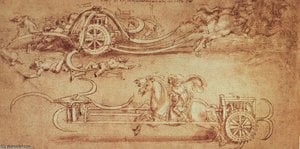
Giulio Parigi: A Florentine Polymath at the Heart of the Medici Court
Giulio Parigi, born in Florence on April 6, 1571, emerged from a family deeply rooted in the artistic and architectural traditions of the Medici court. His father, Alfonso di Santi Parigi, an already established architect and set designer serving the Grand Duke of Tuscany, provided young Giulio with an unparalleled education—a direct immersion into a world where creativity, construction, and theatrical illusion intertwined seamlessly. This wasn’t merely observation; it was a hands-on apprenticeship, a formative experience that shaped his unique approach to art and design. Initially enrolled in the Academy of Design as a painter in 1594, demonstrating early artistic inclinations, Giulio's path swiftly converged with the family legacy. By 1597, he had formally integrated into the Grand Ducal Court, embarking on rigorous training under not only his father but also the esteemed figures of Bartolomeo di Antonio Ammannati and Bernardo Buontalenti—a renowned architect and theatre engineer whose innovations would profoundly influence Parigi’s own work. This diverse mentorship forged a remarkable skillset – a synthesis of architectural precision, theatrical dynamism, and inventive engineering principles. Parigi wasn't simply learning trades; he was absorbing a holistic philosophy of artistic creation, one that would define his extraordinary career.
Architectural Innovations: Shaping the Florentine Landscape
Giulio Parigi’s impact on Florentine architecture is substantial and undeniably innovative. He didn’t merely replicate existing styles but actively shaped the urban landscape with forward-thinking designs, establishing a distinctive visual vocabulary for the era. Perhaps his most celebrated achievement is the Loggia del Grano, completed in 1619, which stands as a pivotal example of the loggia style—a covered arcade designed specifically for public market trading. This wasn’t simply an aesthetic choice; it was a functional solution, creating vibrant and welcoming public spaces that fostered commerce and community life. Parigi's involvement with the Boboli Gardens (1617-1622) further showcased his versatility, transforming this expansive landscape into a harmonious blend of formal gardens and naturalistic elements. He meticulously designed the second axis of the garden, introducing elegant bosquets and creating a sense of balanced grandeur. The reconstruction of Villa di Poggio Imperiale (1620-1622), a significant restoration project, demonstrated his ability to breathe new life into historical structures while maintaining their original character. Furthermore, his work on the Ospedale dei Medicanti (1621) – a public hospital – and the Church of San Felice in Piazza (1634-1635) underscored his commitment to designing buildings that served both aesthetic beauty and practical needs. These projects weren’t isolated endeavors; they were integral components of the Medici's ambitious program of urban renewal, reflecting their patronage of art and innovation.
The Stage as a Canvas: Parigi’s Revolutionary Theatrical Designs
Beyond architecture, Giulio Parigi left an indelible mark on theatrical design, becoming one of the most inventive stage designers of the 17th century. Working extensively for the Medici court, he transformed the theatre into a realm of illusion and spectacle—a space where the boundaries between reality and imagination blurred. While few original sets survive, historical accounts vividly depict elaborate productions featuring complex machinery capable of simulating natural phenomena: storms, celestial events, and dramatic transformations. This wasn’t merely about creating visually arresting backdrops; it was about immersing the audience in a believable world, amplifying the emotional impact of the performance through technological ingenuity. His designs profoundly influenced figures like Inigo Jones, who was simultaneously crafting similar theatrical spectacles for the English court, demonstrating Parigi's international reach and influence. He designed sets for groundbreaking operas such as Ottavio Rinuccini’s *Festa dell’Agnolo Gabriello* (1620) and Marco da Gagliano’s *La regina Sant’Orsola* (1624), pioneering new mechanical devices to elevate these productions. These innovations were not simply decorative; they represented a radical shift in theatrical presentation, pushing the boundaries of what was possible on stage.
Influences and Legacy: A Renaissance Mind
Giulio Parigi's artistic vision was shaped by a confluence of influences—his family’s architectural heritage, the teachings of prominent Florentine masters like Buontalenti, and his own innate creativity. He absorbed the principles of classical architecture while embracing the dynamism of the Baroque style. His academy served as a vital center for learning, where he imparted his knowledge of geometry, perspective, mechanics, and architectural design to a new generation of artists and engineers—including Cosimo de' Medici, who subsequently engaged Parigi to create numerous stage sets and festival designs. Parigi’s legacy extends beyond specific buildings and theatrical productions; it embodies the Renaissance ideal – a harmonious integration of artistry, intellect, and innovation. He wasn’t merely skilled in these disciplines; he synthesized them, bringing a unique perspective to each project. His son, Alfonso Parigi the Younger, continued this family tradition, ensuring that the family's influence resonated throughout Florentine art and design for generations. Giulio Parigi remains a testament to the power of creative vision and the enduring impact of a truly versatile mind.
Exploring Parigi’s Art Today
- Maid drawing water from a well near a farmhouse: A captivating 18th-century monochrome drawing showcasing his mastery of linear perspective and detailed hatching techniques.
- Wall Painting From The Uffizi Gallery: An oil painting that exemplifies Renaissance art with its dramatic depiction of a fortified city under attack, revealing atmospheric detail and conflict.
- A fantastic figure on horseback holding a conch design for a cavalcade: A magnificent Baroque painting featuring a dynamic scene of a noble figure on horseback, demonstrating his skill in capturing movement and grandeur.
These works, available as hand-painted reproductions through platforms like WahooArt.com, offer a glimpse into the world of Giulio Parigi – a world where art, architecture, and engineering converged to create lasting beauty and innovation. His legacy continues to inspire artists and designers today, reminding us of the power of creativity and the enduring impact of a truly versatile mind.



 Visualizar na parede
 Alternar para Impressão
 Compartilhar
 Compartilhar
 Detalhes
 Guia
Guia

 Baixar imagem
 Semelhantes
 Raio X
 Ver diaporama
 Q&A
Q&A Estatísticas
 Ler mais