x
Visualizar na paredeVisualizar na parede Ver em RAVer em RA Comprar impressão Comprar impressãoComprar pintura feita à mão Comprar pintura feita à mão CompartilharCompartilhar
DetalhesDetalhes Adicionar aos favoritos Adicionar aos favoritos Baixar imagemBaixar imagem SemelhantesSemelhantes Raio XRaio X SlideshowSlideshow

Perspective View (Stage design)

Discover Canaletto's 'Perspective View (Stage design)': A captivating capriccio depicting a fantastical Roman Capitol stage set, showcasing intricate details and masterful perspective.

Canaletto: mestre dos paisagens urbanas de Veneza! Seus desenhos detalhados e vistas icônicas capturam a beleza da cidade, influenciando artistas por séculos. Explore sua obra única!

Adquira uma imagem digital de alta resolução e aprimorada, muito superior à prévia online.

Cada arquivo é meticulosamente preparado por nossos especialistas internos, utilizando ferramentas avançadas e retoques manuais de alta precisão. Garantimos que cada imagem apresente clareza excepcional, fidelidade de cores e detalhes minuciosos.

O arquivo final é entregue por e-mail em até 72 horas, otimizado para uso imediato em ambientes profissionais, editoriais e de impressão. Esta é a mesma qualidade utilizada por estúdios de design de alto nível, editoras e galerias.

Imagem Digital

Baixe um arquivo de alta resolução para exibição pessoal, impressão e projetos criativos. (Comprar impressão Comprar impressãoComprar pintura feita à mão Comprar pintura feita à mão)

Preço Total

$ 24,90

Incluído em cada compra de imagem digital

Entrega Digital Especializada e Garantida

Ao escolher o WahooArt.com, você não está apenas adquirindo uma imagem — você está recebendo uma obra de arte digital profissionalmente aprimorada, elaborada com precisão e com garantia de satisfação. Aqui está tudo o que acompanha seu pedido, automaticamente:

shipping_icon
Entrega rápida por e-mail

O seu arquivo de imagem digital em alta resolução será enviado por e-mail em até 72 horas após o pedido — pronto para uso imediato.

canvas_icon
Arquivo Digital com IA Otimizado

Sua obra de arte é otimizada profissionalmente por meio de ferramentas avançadas de IA e edição manual, garantindo o máximo de detalhes, clareza e precisão de cores.

insurance_icon
Reenvio gratuito vitalício

Apagou ou perdeu o seu ficheiro acidentalmente? Não se preocupe – nós reenviamos para si a qualquer momento, gratuitamente.

tax_icon
Sem Taxas de Importação - Sempre

Desfrute da sua obra de arte instantaneamente, sem taxas alfandegárias, impostos ou custos de entrega — downloads digitais são sempre isentos de taxas.

color_icon
Garantia de Fidelidade de Cores

Garantimos que sua imagem digital reflita as cores originais com a maior fidelidade possível, utilizando ferramentas profissionais e gerenciamento de cores.

return_icon
Garantia de Satisfação de 60 Dias

Se você não estiver satisfeito com sua imagem digital, nós a revisaremos ou reembolsaremos 100% dentro de 60 dias — sem perguntas.

guarantee_icon
Garantia de Reembolso 100%

Não está satisfeito? Receba o reembolso total em até 60 dias após o recebimento do seu arquivo digital — sem perguntas.

discount_icon
Descontos para pedidos em lote

Compre 3 imagens, economize 10% - Compre 5, economize 15% - Compre 10+, economize 20%. Ideal para projetos criativos, galerias e agências.

Informações Rápidas

  • Movement: Venetian School
  • Title: Perspective View (Stage design)
  • Medium: Oil on canvas
  • Notable elements or techniques: Perspective, foreshortening
  • Artistic style: Veduta, Capriccio
  • Artist: giovanni antonio canal

Quiz de Arte

Cada pergunta possui apenas uma resposta correta.

Pergunta 1:
What is the primary subject depicted in ‘Perspective View (Stage design)’?
Pergunta 2:
The description mentions that the painting may have been created shortly after Canaletto’s stay in Rome. What does this suggest about its style?
Pergunta 3:
The painting features a prominent equestrian monument. What historical figure does it resemble?
Pergunta 4:
According to the description, what is a key characteristic of Canaletto’s style that has been debated by scholars?
Pergunta 5:
What type of perspective is prominently featured in ‘Perspective View (Stage design)’?

A Captivating Vision of Venetian Theatre

Canaletto’s “Perspective View (Stage Design)” is more than just a depiction of a bustling scene; it's a window into the vibrant theatrical culture of 18th-century Venice. Painted likely in the early 1720s, this capriccio – a term Canaletto himself employed for imaginary or idealized views – transports us to a fantastical Capitol, glimpsed through a grand loggia adorned with Corinthian columns and shimmering with golden ornamentation. The composition is anchored by an equestrian monument, reminiscent of Marcus Aurelius, rising majestically from the steps of a triumphal arch, creating a powerful sense of grandeur and historical resonance.

The painting’s genius lies not merely in its technical precision but also in its evocative atmosphere. Canaletto masterfully employs linear perspective to draw the viewer into this meticulously rendered space. The receding lines of the loggia, the diminishing scale of the statues, and the subtle shifts in light create a convincing illusion of depth, inviting us to step through the painted world and become part of the scene. Notice how he uses atmospheric perspective – distant elements are paler and less defined, contributing to the overall sense of vastness and theatrical spectacle.

The Artist’s Context: Canaletto and Venetian Topography

Giovanni Antonio Canal, known as Canaletto, was a pivotal figure in the development of topographical painting. Born in Venice in 1697, he initially trained under his father, Bernardo Canal, a stage designer for theatrical productions. This early experience instilled in him a deep understanding of perspective and spatial relationships – skills that would later define his remarkable career. Canaletto’s work was profoundly shaped by the bustling commercial activity of Venice, a city renowned for its trade and artistic patronage. He meticulously documented the city's canals, palaces, markets, and everyday life, creating a vast archive of visual records.

His approach differed significantly from earlier Venetian painters who focused primarily on religious or mythological subjects. Canaletto’s interest lay in capturing the tangible reality of Venice – its architecture, its people, and its atmosphere. This shift towards secular subject matter reflected a broader cultural trend during the 18th century, as artists increasingly sought to depict the world around them with greater accuracy and detail. The painting's attribution has been debated by scholars, but Stefano Susinno recognized it as a unique example in Canaletto’s oeuvre due to its drawing, points of light, and similarities to other capricci.

Symbolism and Theatrical Allusion

Beyond its technical brilliance, “Perspective View (Stage Design)” is rich in symbolic meaning. The equestrian monument, a reference to Roman emperors, suggests an ideal of leadership and power. The triumphal arch evokes the grandeur of ancient Rome, while the golden ornaments symbolize wealth and prestige. The inclusion of figures engaged in various activities – musicians, spectators, and performers – underscores the importance of theatre as a central element of Venetian society. It’s a scene brimming with life, energy, and the allure of entertainment.

Interestingly, scholars believe this painting may have been created shortly after Canaletto's stay in Rome (1718-1720), possibly inspired by the city’s ancient ruins and theatrical traditions. The presence of numerous architectural elements reminiscent of Roman antiquity suggests a deliberate attempt to evoke the spirit of the classical world.

A Legacy of Precision and Vision

“Perspective View (Stage Design)” stands as a testament to Canaletto's exceptional skill and artistic vision. It’s a captivating blend of realism, imagination, and theatricality – a painting that continues to delight and intrigue viewers centuries after its creation. Reproductions of this work offer a remarkable opportunity to experience the beauty and detail of Canaletto’s artistry in your own home or office, bringing a touch of Venetian elegance and historical grandeur to any space.


Biografia do Artista

Giovanni Antonio Canal: The Master of Venetian Light and Shadow

Born in the heart of Venice on October 18, 1697, Giovanni Antonio Canal – better known as Canaletto – emerged from a lineage steeped in artistic tradition. His father, Bernardo Canal, was a respected scene painter for theatrical productions, instilling in young Giovanni an early appreciation for composition and visual storytelling. This foundation, combined with the influence of his mother, Artemisia Barbieri, a talented artist herself, laid the groundwork for a career that would forever capture the essence of Venetian life and its captivating atmosphere. Canaletto’s artistic journey began not with grand palaces or historical events, but with the humble world of theatrical scenery – a demanding apprenticeship that honed his observational skills and understanding of perspective, crucial elements in his later success.

In 1718, seeking further refinement, Canaletto embarked on a transformative period in Rome. Here, he immersed himself in the works of Luca Carlevaris, a renowned topographical painter known for his meticulous depictions of Roman ruins and monuments. This encounter proved pivotal, exposing Canaletto to the principles of accurate representation and the art of capturing architectural detail with remarkable precision. He spent years meticulously sketching ancient structures, absorbing the techniques of perspective and mastering the subtle nuances of light and shadow – skills that would later define his unique style.

The Rise of a Veduta Painter

Returning to Venice in 1725, Canaletto swiftly established himself as a leading artist specializing in *vedute* – Italian for “views.” Unlike the grand historical paintings popular at the time, *vedute* focused on capturing the everyday realities of urban life. Canaletto’s canvases became windows into the bustling streets, vibrant markets, and elegant squares of his beloved city. He wasn't merely recording scenes; he was translating them onto canvas with a remarkable sensitivity to light, color, and atmosphere. His early works, such as “The Stonemason’s Yard” (circa 1725), demonstrate this skill perfectly – a vibrant snapshot of daily life brimming with detail and imbued with a palpable sense of energy.

Canaletto's artistic vision extended beyond the confines of Venice. In 1746, he journeyed to England, invited by Joseph Smith, a prominent British merchant who recognized Canaletto’s talent and commissioned numerous paintings of London landmarks. This period marked a significant shift in his style, as he adapted his techniques to capture the grandeur of English architecture and landscapes. Works like “Eton College” (1746-1756) showcase his ability to translate Venetian sensibilities into a distinctly British aesthetic, while retaining his signature meticulousness and atmospheric depth.

Technique and Innovation

Canaletto’s artistic approach was characterized by an extraordinary blend of observation, technical skill, and innovative techniques. While the question of whether he employed a camera obscura to aid in his topographical accuracy remains debated among scholars, there's no doubt that Canaletto possessed an unparalleled ability to capture perspective and create convincing illusions of depth. His preparatory drawings were legendary for their detail and precision, serving as invaluable guides for his finished paintings. He was a master of light and shadow, skillfully manipulating color and tone to evoke the mood and atmosphere of each scene. His use of layering and glazing created a luminous quality that is instantly recognizable in his work.

Legacy and Influence

Canaletto’s impact on art history is profound. He elevated the *veduta* genre to new heights, establishing it as a respected form of landscape painting. His meticulous depictions of Venice served as models for generations of artists, influencing not only painters but also printmakers who sought to reproduce his captivating views. His work can be found in prestigious collections worldwide, including the National Gallery in London and the Palazzo Ducale in Venice. Canaletto’s legacy extends beyond individual artworks; he represents a pivotal moment in the development of topographical painting, demonstrating how art could simultaneously document reality and capture its essence with remarkable beauty and skill. His paintings continue to enchant viewers today, offering a timeless glimpse into the vibrant heart of Venice and the artistic genius of Giovanni Antonio Canal.

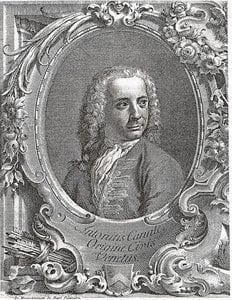
Canaletto

Canaletto

1697 - 1768 , Itália

Breve Biografia

  • Artistic Movement Or Style: Vedute Veneza
  • Artists Or Movements Influenced By This Artist: ['Tintoretto']
  • Artists Who Influenced This Artist: ['Luca Carlevaris']
  • Date Of Birth: 18 de outubro de 1697
  • Date Of Death: 19 de abril de 1768
  • Full Name: Giovanni Antonio Canal
  • Nationality: Italiano
  • Notable Artworks:
    • Estalagem da Pedra
    • Regata no Canal Grande
    • Eton College
  • Place Of Birth: Veneza, Itália