Visualizar em escala Visualizar em RA Alternar para Impressão Ver Imagem Digital Enviar
Ver detalhes Guia de Obras do Aluno Adicionar aos favoritos Baixar imagem Semelhantes Raio X Apresentação de slides Estatísticas

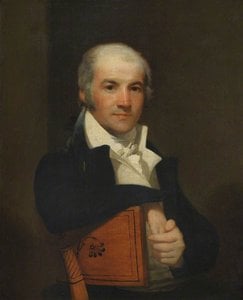
William Woollett

A captivating 1783 portrait by Gilbert Stuart of William Woollett, an engraver, showcasing his skill and capturing a moment of artistic brilliance.

Gilbert Stuart (1755-1828): O pintor americano mais famoso por retratos icônicos como o George Washington e uma influência marcante na arte estadounidense.

Reprodução em Óleo Feita à Mão

Óleo sobre tela pintado à mão no tamanho e moldura de sua escolha, feito sob encomenda pelos nossos artistas. ( Alternar para Impressão Ver Imagem Digital)

P118B 10
P118H 10
P118W 10
P438Z 10
P508JH 12
P508YH 12
P805H 10
P805Z 10
P919BZ 10
P919G 10
P919XJ 10
P959ZH 10
P968JZ 12
W106C 8
W218G 10
W218JH 8
W218Y 10
W307PJ 10
W316G 10
W316PJ 8
W316Y 10
W398PJ 8
W4111J 10
W500HY 15
W500JH 15
W692G 12
W849H 8
W940BG 15
W953PJ 8

Padrão
sob medida
CM
INCH

Escolha entre os nossos tamanhos pré-definidos que respeitam as proporções originais da obra de arte.

largura
altura

Pode inserir as suas próprias dimensões para se adequar a uma moldura ou espaço específico. Se o tamanho selecionado não corresponder às proporções da imagem original, iremos cortar a obra de arte ou estender a pintura com elementos adicionais pintados à mão. Um esboço digital será enviado para sua aprovação antes do início da produção.
Tenha em atenção que a pré-visualização no ecrã não reflete o corte ou extensão real. Apenas o esboço mostrará com precisão a composição final.
Embora tamanhos personalizados estejam disponíveis, recomendamos selecionar uma dimensão da lista predefinida para preservar as proporções originais.

Exemplos do que pode ser personalizado: Substituir o rosto pela foto do cliente; Adicionar um animal de estimação (ex: substituir gato por cão); Incluir uma mensagem oculta no fundo; Alterar a paisagem ou elementos do fundo.
Após o pedido, a equipa WahooArt.com enviará um e-mail ao cliente para solicitar instruções e fornecer uma prévia do esboço.

Entrega mundial () em 3 a 4 semanas, em vez das 5 semanas padrão. (5 Outubro). Sem comprometer a qualidade.

why_choose_icon
Envio expresso gratuito para todo o mundo
why_choose_icon
Tela de Linho Premium
why_choose_icon
Seguro de transporte total
why_choose_icon
Garantia de Reembolso de Impostos Alfandegários
why_choose_icon
Garantia de Fidelidade de Cor
why_choose_icon
Política de Devolução em 100 Dias (Apenas para Defeitos)
why_choose_icon
Garantia de reembolso de 100%
why_choose_icon
Desconto para múltiplas unidades

Preço Total

€ 234

reproduction

William Woollett

Técnica de Reprodução

Dimensões da Reprodução

-

Preço Total

€ 234

Detalhes Rápidos

  • Movement: Neoclassicism
  • Artistic style: Portraiture
  • Notable elements: Engraving portrait
  • Artist: Gilbert Stuart
  • Year: 1783
  • Medium: Oil on canvas
  • Location: Tate Britain, London

Teste de Conhecimentos Artísticos

Cada pergunta possui apenas uma resposta correta.

Questão 1:
What is the primary subject of Gilbert Stuart’s ‘Portrait of William Woollett’?
Questão 2:
In what year was ‘Portrait of William Woollett’ painted?
Questão 3:
Who commissioned the ‘Portrait of William Woollett’?
Questão 4:
Which artistic movement is most closely associated with Gilbert Stuart’s style?
Questão 5:
What is a notable characteristic of William Woollett's work as depicted in the portrait?

A Portrait of Industry and Ambition: Gilbert Stuart’s William Woollett

Gilbert Stuart's "Portrait of William Woollett," painted in 1783, is more than just a likeness; it’s a carefully constructed tableau of the burgeoning British art world and the ambitions of its most talented engravers. The painting captures Woollett, a prominent figure known for his intricate prints of historical scenes, seated at a richly appointed table, meticulously engaged in his craft. Stuart masterfully utilizes light and shadow to draw the viewer's eye across the composition, highlighting both Woollett’s focused concentration and the opulence surrounding him.

The style is firmly rooted in Neoclassicism, a movement that sought inspiration from the art of ancient Greece and Rome. However, Stuart infuses this classical framework with a distinctly English sensibility – evident in the formal arrangement of the figures, the restrained palette dominated by warm browns, creams, and subtle blues, and the overall sense of dignified composure. The composition is balanced and symmetrical, reflecting an appreciation for order and harmony, hallmarks of Neoclassical aesthetics. Stuart’s skill lies not just in replicating Woollett's appearance but in conveying his character – a man dedicated to his profession, possessing both intellect and a certain quiet self-assurance.

The Engraver’s Studio: A Symbol of Skill and Status

Woollett’s studio is presented as a microcosm of artistic achievement. The table before him isn't merely a workspace; it’s laden with symbols of his profession. A partially completed print, presumably depicting Benjamin West’s “The Death of General Wolfe,” lies open, demonstrating the subject matter he’s currently working on. A bowl containing writing implements and ink suggests the intellectual labor involved in creating these detailed engravings. The inclusion of a green cloth beneath the table adds a touch of luxury and reinforces the idea that Woollett's work is valued and appreciated.

The background, though somewhat indistinct, hints at a comfortable domestic setting – a glimpse of a room filled with books and perhaps other artistic endeavors. This suggests not only Woollett’s success but also his status within society. Engraving was a highly skilled trade in the 18th century, requiring years of training and meticulous attention to detail. Stuart's portrait elevates Woollett beyond a mere craftsman; he becomes an emblem of artistic excellence and a respected member of the cultural elite.

A Window into the Age of Enlightenment

"Portrait of William Woollett" offers a fascinating glimpse into the intellectual and artistic climate of the late 18th century. The painting reflects the values of the Age of Enlightenment – a period characterized by reason, scientific inquiry, and a renewed interest in classical antiquity. Woollett’s dedication to his craft embodies the Enlightenment ideal of pursuing knowledge and mastering one's skills. Furthermore, the commission itself speaks volumes about the patronage system that supported artists during this era, demonstrating how wealthy individuals and institutions invested in artistic endeavors.

The painting’s provenance – displayed initially at the Society of Artists exhibition and later residing in Boydell’s Shakespeare Gallery – underscores its importance within the art world. It wasn't simply a private commission; it was a public statement, showcasing Woollett’s talent and contributing to the vibrant artistic scene of London. The fact that it eventually found its home in the National Gallery testifies to its enduring quality and historical significance.

Capturing Character: Stuart’s Technique

Stuart's masterful technique is evident in every brushstroke. He employs a subtle, almost velvety texture, achieved through careful layering of paint – a characteristic of his style known as “impasto.” The lighting is particularly effective, creating a sense of depth and volume while simultaneously highlighting Woollett’s features. Note the way Stuart captures the glint of light on Woollett's turban, adding a touch of drama to the composition.

Furthermore, Stuart skillfully uses color to convey mood and atmosphere. The muted palette contributes to the painting’s overall sense of quiet dignity and intellectual seriousness. The artist’s ability to capture not just Woollett’s physical appearance but also his personality – a man of focus, dedication, and quiet confidence – is what truly elevates this portrait beyond a mere likeness. It's a testament to Stuart’s artistic genius and his profound understanding of human character.

Perguntas e Respostas

O que "William Woollett" compartilha com o restante da obra de Gilbert Stuart?

"William Woollett" compartilha com as outras obras de Gilbert Stuart o seu estilo Neoclassicism e os temas recorrentes: neoclassical ideals, british portraiture, 18th-century social hierarchy, woollett’s engraving, west’s influence, stuart's career progression”, national gallery acquisition”.

Quem é o artista por trás de "William Woollett"?

"William Woollett" foi criado por Gilbert Stuart. As informações nesta página descrevem a obra original de Gilbert Stuart.

Qual era a idade de Gilbert Stuart quando "William Woollett" foi criada?

Gilbert Stuart criou "William Woollett" aos 28 anos. O artista nasceu em 1755 e a obra data de 1783.

Onde posso ver o original "William Woollett" de Gilbert Stuart?

Você pode ver a obra original "William Woollett" no Tate Gallery, Londres, Reino Unido.

Como "William Woollett" equilibra luz e sombra?

"William Woollett" possui deep_shadow de brilho geral, e sua luminância é Dark.

Está disponível um download para "William Woollett"?

Um download está disponível para "William Woollett": a página de Baixar da obra oferece download de imagem digital em alta resolução.

Em que ano foi criado "William Woollett" de Gilbert Stuart?

A criação de "William Woollett" de Gilbert Stuart data de 1783.


Biografia do Artista

Gilbert Stuart: Uma Vida na Retratística

  • Nascimento: 3 de dezembro de 1755, Saunderstown, Rhode Island
  • Falecimento: 9 de julho de 1828, Boston, Massachusetts
  • Nacionalidade: Americano
  • Movimento: Neoclassicismo
  • Conhecido por: Retratística, particularmente retratos de figuras proeminentes da história inicial da América.

Primeira Infância e Formação

  • Gilbert Stuart nasceu em uma família com raíções escocesas; seu pai, também chamado Gilbert, era um inventor que estabeleceu o primeiro moinho de tabaco em Rhode Island.
  • Seu talento artístico emergiu ainda muito jovem, demonstrando habilidade desde a infância.
  • Aos 14 anos, ele pintou "Os Spaniels do Dr. Hunter", revelando uma promessa precoce.
  • Ele viajou para a Escócia por volta de 1771 para estudar com Cosmo Alexander, mas retornou após a morte de Alexander em 1775.
  • Um treinamento mais profundo ocorreu em Londres com Benjamin West, um proeminente pintor americano que residia na Inglaterra, de 1775 a 1780. Este período foi crucial para o desenvolvimento de seu estilo artístico e para ganhar reconhecimento dentro da Royal Academy.

Carreira Artística e Grandes Obras

  • A carreira de Stuart enfrentou desafios durante a Revolução Americana, o que o levou a se mudar para a Inglaterra em 1775.
  • Ele alcançou o sucesso inicial com "O Patinador" (1782), um retrato que estabeleceu sua reputação.
  • Sua obra mais famosa é o retrato inacabado de George Washington, conhecido como o Retrato Athenaeum (iniciado em 1796). Esta imagem tornou-se icônica, aparecendo na moeda dos EUA e em selos postais. Stuart produziu inúmeras cópias deste retrato para patronos em toda a América e Europa.
  • Ele pintou retratos de várias outras figuras proeminentes, incluindo John Adams, Thomas Jefferson, James Madison e muitos membros da elite Federalista.
  • O estilo de Stuart era caracterizado por uma abordagem Neoclássica, enfatizando o realismo e capturando a semelhança e o caráter de seus modelos. Ele frequentemente empregava um uso dramático de luz e sombra para aumentar o impacto dos retratos.

Influências e Desenvolvimento

  • Cosmo Alexander proporcionou o treinamento inicial em técnica e composição.
  • A influência de Benjamin West foi significativa, moldando a compreensão de Stuart sobre a retratística e os princípios artísticos.
  • O movimento Neoclássico, com sua ênfase em formas e ideais clássicos, influenciou fortemente seu estilo.
  • As próprias observações e interações de Stuart com seus modelos contribuíram para a profundidade psicológica e o realismo em seus retratos. Ele buscava capturar não apenas uma semelhança física, mas também o caráter e a personalidade daqueles que pintava.

Significância Histórica e Legado

  • Gilbert Stuart é considerado um dos mais importantes retratistas da América, desempenhando um papel vital na documentação dos primeiros anos dos Estados Unidos.
  • O Retrato Athenaeum de George Washington tornou-se um símbolo duradouro da identidade e liderança americana.
  • Seus retratos oferecem valiosas percepções históricas sobre a vida e a aparência de figuras proeminentes do final do século XVIII e início do século XIX.
  • A obra de Stuart está representada em grandes museus nos Estados Unidos e na Europa, garantindo que seu legado continue sendo apreciado por gerações.
  • Ele estabeleceu um estilo americano distinto de retratística, que fundiu técnicas europeias com sensibilidades unicamente americanas.
Gilbert Stuart

Gilbert Stuart

1755 - 1828 , Reino Unido

Informações Rápidas

  • Artistic Movement Or Style: Neoclassicismo
  • Artists Who Influenced This Artist:
    • Cosmo Alexander
    • Benjamin West
  • Date Of Birth: 3 de dezembro de 1755
  • Date Of Death: 9 de julho de 1828
  • Full Name: Gilbert Charles Stuart
  • Nationality: Americano
  • Notable Artworks:
    • O Ateneu e o Retrato inacabado
    • George Washington
  • Place Of Birth: Saunderstown, Rhode Island
Explore obras de arte organizadas por temas, estilos e características.