Consultoria de arte gratuita

x
Encomendar pintura Encomendar pinturaComprar imagem em alta resolução Comprar imagem em alta resolução EnviarEnviar
DetailsDetails Adicionar aos favoritos Adicionar aos favoritos BaixarBaixar SemelhantesSemelhantes X-RayX-Ray SlideshowSlideshow

Valery

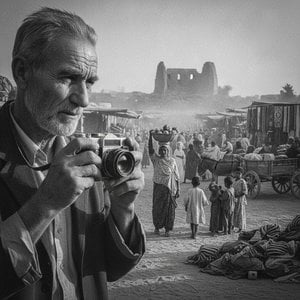
Explore Gerhard Richter's 'Valery,' a haunting black-and-white portrait capturing a contemplative man’s gaze. Witness Richter’s masterful blend of realism and abstraction, reflecting on history & the human condition.

Explore Gerhard Richter (1932): um artista alemão icônico com pinturas abstratas e fotorealistas. Conheça sua obra, 'Capitalist Realism' e as cores vibrantes que o consagraram no mundo da arte contemporânea.

Giclê / Impressão de Arte

Impressão giclée ou em tela de qualidade de museu, com produção rápida e opções flexíveis de acabamento.

P118B $10
P118H $10
P118W $10
P438Z $10
P508JH $12
P508YH $12
P805H $10
P805Z $10
P919BZ $10
P919G $10
P919XJ $10
P959ZH $10
P968JZ $12
W106C $8
W218G $10
W218JH $8
W218Y $10
W307PJ $10
W316G $10
W316PJ $8
W316Y $10
W398PJ $8
W4111J $10
W500HY $15
W500JH $15
W692G $12
W849H $8
W940BG $15
W953PJ $8

Standard
custom
CM
INCH

Escolha entre os nossos tamanhos pré-definidos que respeitam as proporções originais da obra de arte.

largura
altura

Você pode inserir suas próprias dimensões para se ajustar a uma moldura ou espaço específico. Se o tamanho selecionado não corresponder às proporções da imagem original, iremos recortar a obra de arte ou estender a imagem com uma borda espelhada ou preenchimento sólido. Um mockup digital será enviado para sua aprovação antes do início da produção.
Por favor, observe que a visualização na tela não reflete o recorte ou a extensão real. Apenas o mockup mostrará com precisão a composição final.
Embora tamanhos personalizados estejam disponíveis, recomendamos selecionar uma dimensão da lista predefinida para preservar as proporções originais.

Entrega mundial () em 2 semanas, em vez das 4/5 semanas padrão. (2 Julho)

why_choose_icon
Envio Expresso Gratuito para todo o Mundo
why_choose_icon
Tela de Linho Premium
why_choose_icon
Seguro de envio completo
why_choose_icon
Garantia de Reembolso de Impostos Alfandegários
why_choose_icon
Garantia de Fidelidade de Cores
why_choose_icon
Política de Devolução de 60 Dias (Apenas para Defeitos)
why_choose_icon
Garantia de 100% de Reembolso
why_choose_icon
Desconto para múltiplas unidades

Preço Total

-

reproduction

Valery

Giclê / Impressão de Arte

Dimensões da Reprodução

-

Preço Total Final

-

Dados Rápidos

  • Movement: Contemporary Art
  • Artist: Gerhard Richter
  • Title: Valery
  • Influences: Richter's work
  • Subject: Man with mustache
  • Style: Photorealism, Abstract

Teste de Arte

Cada pergunta possui apenas uma resposta correta.

Pergunta 1:
The photograph depicts a man in what era?
Pergunta 2:
What is the dominant mood conveyed by the man's expression in the photograph?
Pergunta 3:
Which artist is most closely associated with this type of photographic work?
Pergunta 4:
The black and white photography style contributes to which effect?
Pergunta 5:
Valery Legasov, a figure associated with this image, is primarily known for his role in:

Descrição da Obra

Valery: A Study in Contemplation – Gerhard Richter’s Echoes of History

Gerhard Richter's "Valery," a seemingly simple black and white photograph, is far more than a portrait; it’s a carefully constructed meditation on time, memory, and the weight of experience. The image presents a man, his features etched with a quiet seriousness, gazing into the distance – an act that immediately invites us to project our own narratives onto his face. The starkness of the monochrome palette amplifies this effect, stripping away any superficial distractions and forcing a direct engagement with the subject’s internal state. Richter's masterful control over light and shadow creates a palpable sense of atmosphere, suggesting both vulnerability and resilience.

Born in Dresden in 1932, Richter’s life has been inextricably linked to the tumultuous history of Germany. His childhood, marked by displacement during wartime and the subsequent rise of National Socialism, instilled within him a profound awareness of uncertainty – an element that profoundly informs his artistic practice. This early experience isn't merely biographical; it’s woven into the very fabric of his work, manifesting as a persistent questioning of representation and the nature of reality. The photograph’s composition—a close-up portrait emphasizing the man’s face—can be interpreted as an attempt to capture this elusive sense of inner life, a feeling Richter has consistently explored throughout his career.

The Language of Absence: Richter's Photorealistic Technique

Richter is renowned for his distinctive approach to photography. He doesn’t aim to replicate reality with photographic precision; instead, he employs a technique often described as “photographic painting.” He builds up layers of paint on canvas, meticulously recreating the appearance of a photograph – not by faithfully reproducing details, but by suggesting them through subtle gradations of tone and texture. This process deliberately obscures the original image, creating an ambiguity that is central to Richter’s work. In "Valery," this technique is particularly evident in the soft blurring of edges and the delicate rendering of the man's mustache – elements that are not sharply defined but rather hinted at through a careful orchestration of color and brushstroke.

The choice of black and white further enhances this effect, removing the potential for color to distract from the underlying structure. It’s a deliberate decision that aligns with Richter’s broader exploration of memory and the subjective nature of perception. Black and white photographs often evoke a sense of nostalgia, transporting us back in time and inviting us to contemplate the past. The absence of color also allows the viewer to focus on the formal elements of the image – its composition, texture, and tonal range – creating a more contemplative experience.

Valery: A Reflection of Legasov’s Legacy

Interestingly, Richter's work shares thematic resonances with Valery Alekseyevich Legasov, the Soviet nuclear physicist who played a crucial role in containing the 1986 Chernobyl disaster. Legasov, depicted in a photograph from the IAEA investigation, embodies a similar sense of quiet dignity and profound responsibility – qualities that are powerfully conveyed in Richter’s portrait. Both figures grapple with the consequences of immense tragedy and possess an unwavering commitment to truth, even in the face of overwhelming adversity. While Richter's work doesn't directly depict the Chernobyl event, "Valery" can be seen as a broader meditation on human resilience and the enduring power of memory.

The photograph’s contemplative mood invites us to consider the unseen burdens carried by individuals who have witnessed or experienced profound loss. It’s a portrait not just of a man, but of an entire era – a testament to the complexities of history and the enduring human spirit. Richter's "Valery" is therefore more than simply a photograph; it’s a poignant reminder of our shared humanity and the importance of bearing witness to the past.

Obras Relacionadas


Biografia do Artista

A Life Shaped by Division: The Early Years and Artistic Formation of Gerhard Richter

Gerhard Richter’s story is inextricably linked to the fractured history of 20th-century Germany. Born in Dresden in 1932, his childhood unfolded under the shadow of a rising National Socialist regime. This formative period, marked by displacement – his family moved several times during the war years – instilled within him a profound sense of uncertainty and a questioning spirit that would permeate his artistic practice for decades to come. The idyllic landscapes of his early upbringing in Reichenau and Waltersdorf were soon disrupted by conflict, leaving an indelible mark on his psyche. His father, though not a fervent supporter of the Nazi party, navigated the complexities of life under authoritarian rule as a schoolteacher, while his mother fostered a love for literature and music within the family. This duality – a pragmatic acceptance of circumstance alongside a yearning for cultural expression – became a defining characteristic of Richter’s own artistic approach. He began formal training at the Dresden Academy of Fine Arts in 1951, initially immersed in the tradition of socialist realism demanded by the East German state. However, even within this constrained environment, a desire for artistic freedom simmered beneath the surface, fueled by a growing dissatisfaction with ideological constraints and a longing to explore more expansive creative possibilities.

Escaping Constraints: Düsseldorf and the Exploration of Style

The year 1961 proved pivotal. Richter, along with his wife Marianne Eufinger, made the daring decision to flee East Germany, seeking refuge in the burgeoning art scene of Düsseldorf. This move marked a radical shift in his artistic trajectory. The West German landscape offered a liberating environment where experimentation and innovation were not only permitted but actively encouraged. In Düsseldorf, he encountered a vibrant community of artists grappling with questions of identity, representation, and the legacy of history. He quickly began to dismantle the rigid stylistic conventions of socialist realism, embarking on a period of intense exploration that would define his early mature work. This era saw him oscillate between seemingly disparate approaches – from photorealism, meticulously recreating photographic images with astonishing precision, to abstract compositions characterized by bold colors and dynamic brushstrokes. His collaboration with Sigmar Polke led to the coining of the term ‘Capitalist Realism,’ a deliberately ambiguous label that reflected their shared skepticism towards established artistic norms and their appropriation of imagery from advertising and mass media. This period wasn’t about finding *a* style, but rather questioning the very notion of stylistic coherence, embracing contradiction as a fundamental principle.

Blurring Boundaries: Photorealism, Abstraction, and the Power of Chance

Richter's photorealistic paintings, often based on family photographs or newspaper images, are not merely copies of reality but rather investigations into the nature of perception and representation. By meticulously rendering these images with an almost clinical detachment, he forces viewers to confront the inherent ambiguity of photographic truth. Simultaneously, Richter delved deeper into abstraction, creating canvases layered with vibrant colors and gestural marks. These abstract works are often created using a unique technique involving squeegees – tools typically used for cleaning windows – which he drags across the surface of the canvas, manipulating the paint in unpredictable ways. This embrace of chance and spontaneity is central to his artistic philosophy, allowing him to relinquish control and invite unexpected outcomes. His ‘Color Charts,’ systematic arrangements of colored squares, further challenge traditional notions of artistic expression, questioning the very definition of painting itself. These works are not about individual aesthetic preferences but rather about exploring the inherent properties of color and its organizational possibilities. The influence of artists like Picasso and Fontana, who explored abstraction through gesture and fragmentation, became crucial during this period.

A Legacy of Ambiguity and Innovation

Throughout his career, Gerhard Richter has consistently resisted easy categorization, defying attempts to pin him down to a single style or movement. His work is characterized by a profound sense of ambiguity—a willingness to embrace contradiction, uncertainty, and the limitations of representation. From his early photorealistic portraits to his later abstract compositions, Richter’s paintings are imbued with a deep awareness of history, memory, and the complexities of the human condition. He has been recognized for his technical mastery, his innovative use of materials, and his intellectual rigor. His work has had a profound influence on generations of artists, shaping the course of contemporary art and challenging conventional notions of what painting can be. Richter’s paintings are not simply beautiful objects; they are complex statements about the nature of reality, the power of image, and the enduring legacy of the past. His continued exploration of these themes ensures that his work will remain relevant and thought-provoking for years to come.
Gerhard Richter

Gerhard Richter

1932 - , Alemanha

Informações Rápidas

  • Artistic Movement Or Style:
    • Fotorealismo
    • Abstração
    • Realismo capitalista
  • Artists Or Movements Influenced By This Artist: ['Pintores contemporâneos']
  • Artists Who Influenced This Artist:
    • Picasso
    • Arp
  • Date Of Birth: 9 fevereiro 1932
  • Full Name: Gerhard Richter
  • Nationality: Alemão
  • Notable Artworks:
    • Pintura abstrata 610-1
    • Gilbert
    • S. com Criança
    • 18 de outubro de 1977
  • Place Of Birth: Dresden, Alemanha
Explore obras de arte organizadas por temas, estilos e características.