

Obtenha um arquivo pronto para impressão que vai muito além da visualização na web. Cada imagem digital que vendemos provém de um arquivo mestre de alta resolução em nosso banco de dados — geralmente entre 5.000 e 15.000 pixels de largura — para que você possa imprimir em grandes formatos, realizar cortes precisos ou reproduzir detalhes minuciosos com total confiança.
Nenhum arquivo sai do nosso estúdio sem passar por um cuidadoso processo de revisão. Um especialista digital verifica as cores em relação à pintura original e as corrige se necessário, aumentando então a clareza e o detalhe com ferramentas profissionais de retoque — sempre mantendo a fidelidade às pinceladas e ao estilo do artista. O resultado é uma imagem que se assemelha à pintura, e não a um scan com filtros.
Aprovação antes da finalização: nosso especialista enviará a imagem por e-mail em até 72 horas para sua revisão. Não ficou satisfeito? Solicite melhorias ou correções, ou peça o reembolso caso a qualidade não atenda às suas expectativas.
Esta é a qualidade em que confiam editoras, estúdios de design, galerias e gráficas.
Baixe um arquivo de alta resolução para exibição pessoal, impressão e projetos criativos. ( Alternar para Impressão Comprar pintura feita à mão)
Ao escolher o WahooArt.com, você não está apenas adquirindo uma imagem — você está recebendo uma obra de arte digital profissionalmente aprimorada, elaborada com precisão e com garantia de satisfação. Aqui está tudo o que acompanha seu pedido, automaticamente:
O seu arquivo de imagem digital em alta resolução será enviado por e-mail em até 72 horas após o pedido — pronto para uso imediato.
Sua obra de arte é otimizada profissionalmente por meio de ferramentas avançadas de IA e edição manual, garantindo o máximo de detalhes, clareza e precisão de cores.
Apagou ou perdeu o seu ficheiro acidentalmente? Não se preocupe – nós reenviamos para si a qualquer momento, gratuitamente.
Desfrute da sua obra de arte instantaneamente, sem taxas alfandegárias, impostos ou custos de entrega — downloads digitais são sempre isentos de taxas.
Garantimos que sua imagem digital reflita as cores originais com a maior fidelidade possível, utilizando ferramentas profissionais e gerenciamento de cores.
Se não estiver satisfeito com a sua imagem digital, nós a revisaremos ou reembolsaremos 100% dentro de 100 dias — sem perguntas.
Não está satisfeito? Receba o reembolso total em até 100 dias após o recebimento do seu arquivo digital — sem perguntas.
Compre 3 imagens, economize 10% - Compre 5, economize 15% - Compre 10+, economize 20%. Ideal para projetos criativos, galerias e agências.
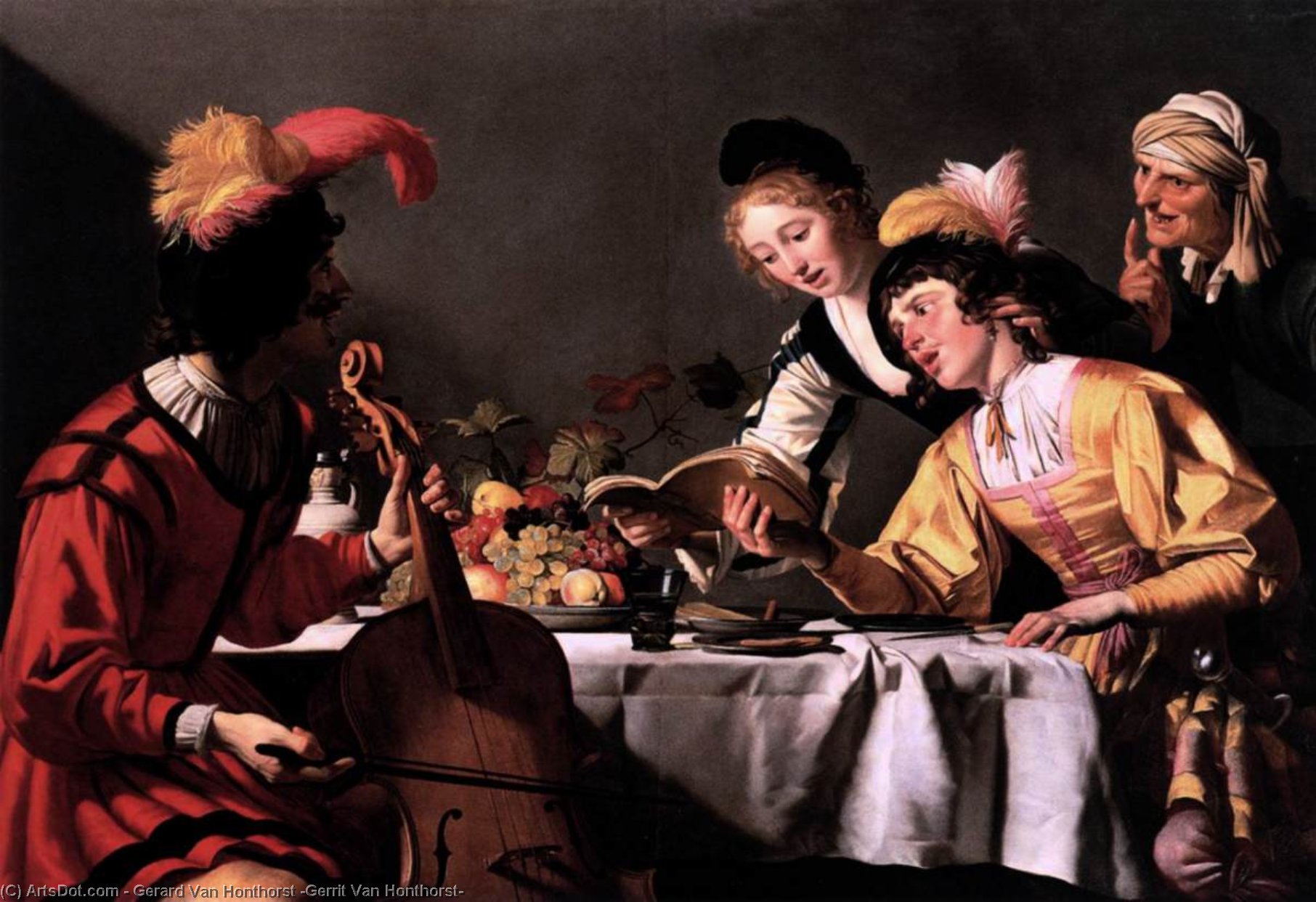
Gerard van Honthorst’s “The Concert,” painted in 1626 and currently residing within the Galleria Borghese in Rome, is more than just a depiction of musicians; it's a meticulously crafted distillation of the vibrant energy and social grace of the Dutch Golden Age. This oil on canvas masterpiece transcends mere representation, offering a glimpse into a world where music, fashion, and conversation intertwine—a microcosm of courtly life rendered with astonishing skill and dramatic flair. The painting immediately captivates with its dynamic composition, pulling the viewer into a scene brimming with movement and animated dialogue.
Honthorst’s signature style, deeply rooted in Caravaggism, is powerfully evident here. He masterfully employs *tenebrism*, a technique characterized by stark contrasts between light and shadow, to sculpt forms and direct our gaze. The brightly illuminated figures – particularly the woman at the cello – stand out against the enveloping darkness of the background, creating an immediate sense of drama and intimacy. This strategic use of light not only highlights the performers but also subtly suggests a narrative unfolding within the scene: a moment of shared enjoyment, perhaps even a flirtatious exchange between the musicians.
The painting’s details are remarkably rich and layered with symbolic meaning. The central figure, seated at the cello, is dressed in a vibrant red gown—a color associated with passion, energy, and leadership within the Baroque era. Her posture exudes confidence and enthusiasm as she commands the ensemble. To her right, another woman holds a book, likely sheet music or lyrics, subtly suggesting the intellectual underpinning of the performance. The two men flanking her are equally compelling; one sports a flamboyant yellow hat adorned with feathers—a symbol of status and perhaps even playful vanity – while the other is clad in a striking red and white striped outfit, holding a lute, an instrument traditionally linked to courtly entertainment.
Beyond the individual figures, the setting itself contributes significantly to the painting’s narrative. The dark room behind the musicians creates a sense of enclosure and intimacy, drawing attention to the performers as if they were trapped within a private world of music and merriment. The strategically placed window on the right side allows natural light to flood the scene, further emphasizing the figures' presence and adding a touch of warmth and vitality.
Gerard van Honthorst’s “The Concert” emerged during a period of immense artistic innovation in Europe. Following his transformative journey to Rome, where he encountered the revolutionary work of Caravaggio, Honthorst embraced *tenebrism* as his signature style. This technique, characterized by dramatic contrasts between light and dark, became a hallmark of Baroque art across the continent. His ability to capture fleeting moments of human interaction with such intensity and realism cemented his reputation as one of the most influential painters of the Dutch Golden Age.
The painting’s subject matter—a musical performance—was particularly popular during this era, reflecting a growing appreciation for music within aristocratic circles. “The Concert” offers a rare glimpse into the social rituals and cultural values of 17th-century Holland, where music played a vital role in shaping identity and fostering social connections.
WahooArt.com is proud to offer meticulously crafted, hand-painted oil painting reproductions of Gerard van Honthorst’s “The Concert.” These reproductions capture the essence of the original artwork—the dramatic lighting, the intricate details, and the palpable sense of energy—with unparalleled accuracy. Whether you are an art collector, interior designer seeking a statement piece, or simply an admirer of Baroque artistry, our reproductions provide a beautiful and authentic way to experience this iconic masterpiece.
Explore further by visiting our online gallery or contacting us directly to discuss your specific needs. You can also delve deeper into Honthorst’s life and work by visiting the National Gallery of Art's page on “The Concert” or exploring related resources such as Google Arts & Culture’s entry and the Wikipedia article on Gerard van Honthorst.
A intensidade de cor de "The Concert" é Monochromatic. A intensidade descreve o quão vibrantes as cores parecem ser.
A imagem de "The Concert", de Gerard van Honthorst pode ser baixada na página de download da obra: Download download de imagem digital em alta resolução.
"The Concert" é executada em Oil.


1590 - 1656 , Países Baixos
 Visualizar na parede
 Compartilhar
 Compartilhar
 Detalhes
 Guia
Guia

 Baixar imagem
 Semelhantes
 Raio X
 Ver diaporama
 Perguntas e Respostas
 Estatísticas


 Ler mais


