Impressão giclée ou em tela de qualidade de museu, com produção rápida e opções flexíveis de acabamento. ( Comprar pintura feita à mão Comprar imagem)





























Escolha entre os nossos tamanhos pré-definidos que respeitam as proporções originais da obra de arte.

Você pode inserir suas próprias dimensões para se ajustar a uma moldura ou espaço específico. Se o tamanho selecionado não corresponder às proporções da imagem original, iremos recortar a obra de arte ou estender a imagem com uma borda espelhada ou preenchimento sólido. Um mockup digital será enviado para sua aprovação antes do início da produção.
Por favor, observe que a visualização na tela não reflete o recorte ou a extensão real. Apenas o mockup mostrará com precisão a composição final.
Embora tamanhos personalizados estejam disponíveis, recomendamos selecionar uma dimensão da lista predefinida para preservar as proporções originais.
Entrega mundial () em 2 semanas, em vez das 4/5 semanas padrão. (6 Setembro)


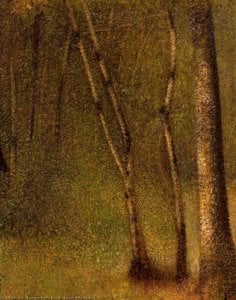
Man Dining
Tamanho da Reprodução
Georges Pierre Seurat (1859-1891) stands as a monumental figure in the artistic landscape of late 19th century France, irrevocably altering perceptions of painting through his pioneering exploration of Pointillism. More than just a technique—though undeniably revolutionary—Pointillism represented a profound intellectual commitment to scientific principles and an unwavering dedication to capturing optical reality. Seurat’s brief but impactful career wasn't merely about applying pigment; it was about fundamentally reshaping how artists understood the relationship between perception and representation.
Seurat’s intellectual framework was inseparable from his artistic practice. He meticulously studied the work of Henri Poincaré, a mathematician who championed the idea that color perception is not simply how objects appear but rather how they are interpreted by the eye—a concept central to Pointillism's theoretical underpinning. This dedication to scientific rigor distinguishes Seurat’s approach from many of his contemporaries and underscores his conviction that art could benefit from incorporating insights into sensory experience.
“Man Dining” exemplifies Seurat’s early experiments with Pointillism, demonstrating a willingness to challenge established artistic conventions. While he would later refine the technique—particularly in monumental canvases like ‘A Sunday on La Grande Jatte’—this smaller study remains a testament to his foundational understanding of optical mixing and his unwavering commitment to capturing the essence of visual perception. It stands as an enduring symbol of Seurat's transformative contribution to modern art.
The artwork’s subdued palette and textured surface lend themselves beautifully to interior design projects seeking a calming, contemplative aesthetic. Consider incorporating reproductions in spaces where tranquility is valued—perhaps alongside complementary shades of grey or earthy tones—to evoke the same sense of quiet observation that characterizes Seurat's masterpiece.


1859 - 1891 , França

Explore the scientific brilliance of Seurat and Signac. Discover how Pointillism revolutionized color through optical mixing and light, offering a profound look into the Neo-Impressionist movement for true art connoisseurs and collectors.

Explore the vibrant evolution of Post-Impressionism. From Seurat's revolutionary Pointillism to the emotional depth of masters, discover how this movement redefined modern art history through color, structure, and unparalleled creative expression.

 Visualizar na parede
 Compartilhar
 Compartilhar
 Detalhes

 Baixar imagem
 Semelhantes
 Raio X
 Slideshow
 Ler mais







 A opção de vidro está disponível apenas para tamanhos inferiores a 110 cm