Gabriel Metsu: Um Retrato Íntimo da Vida Cotidiana na Era de Ouro Holandesa
A paisagem artística do século XVII holandês é pontilhada por nomes que definiram uma era, e entre eles brilha Gabriel Metsu. Nascido em Leiden, em 1629, filho de um pintor flamengo e uma parteira local, Metsu emergiu como uma voz singular no panorama da pintura holandesa, tecendo cenas domésticas com uma delicadeza e atenção aos detalhes que o distinguem de seus contemporâneos. Sua trajetória artística, embora relativamente breve – faleceu em Amsterdã em 1667, aos 38 anos – deixou um legado duradouro, revelando a maestria de um artista capaz de capturar a essência da vida cotidiana com uma sensibilidade inigualável.
Formação e Influências: Um Caminho Artístico Multifacetado
A infância de Metsu foi marcada pela perda precoce do pai, mas sua educação artística parece ter sido moldada por diversas influências. Embora os detalhes precisos de seu aprendizado permaneçam envoltos em mistério, acredita-se que tenha recebido instruções iniciais de Claes Pietersz. de Grebber, um ourives e pintor respeitado em Leiden. A influência de Rembrandt van Rijn é inegável em suas primeiras obras, especialmente no uso magistral da luz e sombra para criar uma atmosfera dramática e envolvente. Mais tarde, sua passagem por Utrecht, onde possivelmente estudou com Nicolaus Knüpfer, adicionou nuances à sua paleta e aprimorou sua habilidade em retratar figuras históricas. No entanto, foi em Amsterdã que Metsu encontrou seu verdadeiro caminho artístico, desenvolvendo um estilo único que combinava elementos de diferentes tradições pictóricas.
A Arte de Capturar o Cotidiano: Gênero e Simbolismo
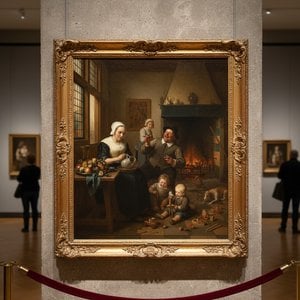
Metsu é particularmente celebrado por suas pinturas de gênero, cenas da vida cotidiana que retratam a burguesia holandesa com uma riqueza de detalhes impressionante. Suas obras não são meros registros da realidade; elas são cuidadosamente construídas narrativas visuais, repletas de simbolismo e significado oculto. Em quadros como "O Mercado de Vegetais em Amsterdã", por exemplo, a disposição dos personagens, a escolha das cores e até mesmo os objetos presentes na cena carregam mensagens sutis sobre a prosperidade, a moralidade e as complexidades da vida social na época. A influência de artistas como Gerrit Dou e Gerard Terborch é evidente em sua atenção meticulosa aos detalhes e em sua habilidade em criar uma sensação de intimidade e realismo. Metsu também se destacou por suas pinturas de interiores, onde o uso da luz natural para iluminar os espaços domésticos cria uma atmosfera acolhedora e convidativa.
Um Legado Duradouro: A Contribuição de Metsu à Arte Holandesa
Apesar do número relativamente limitado de obras atribuídas a ele – apenas 14 são datadas com certeza –, o impacto de Gabriel Metsu na arte holandesa é inegável. Sua capacidade de combinar técnica impecável, narrativa envolvente e simbolismo sutil o consagrou como um dos mestres da Era de Ouro Holandesa. Suas pinturas continuam a fascinar colecionadores e estudiosos, oferecendo uma janela única para a vida cotidiana do século XVII. A influência de Metsu pode ser vista em gerações posteriores de artistas, que se inspiraram em sua abordagem inovadora da pintura de gênero e em sua habilidade em capturar a essência da experiência humana.
- Suas obras estão presentes em importantes museus como o Rijksmuseum em Amsterdã.
- A análise detalhada de suas pinturas revela uma profunda compreensão da psicologia humana e das nuances sociais da época.
Conclusão: Um Artista para Todas as Épocas
Gabriel Metsu foi um artista singular, cuja obra transcende o tempo e continua a inspirar admiração e encantamento. Sua capacidade de transformar cenas cotidianas em obras de arte atemporais é uma prova de seu talento excepcional e de sua visão artística única. Ao contemplarmos suas pinturas, somos transportados para o século XVII holandês, onde podemos testemunhar a beleza, a complexidade e a riqueza da vida cotidiana através dos olhos de um mestre.
Sua contribuição à história da arte é inestimável, e seu legado continuará a brilhar por muitas gerações.



 Visualizar em escala
 Encomendar reprodução pintada à mão
 Enviar
 Compartilhar
 Ver detalhes
 Guia de Obras do Aluno

 Baixar imagem
 Semelhantes
 Raio X
 Apresentação de slides
 Estatísticas

 Ver mais






































 A opção de vidro está disponível apenas para tamanhos inferiores a 110 cm