Consultoria de arte gratuita

x
Comprar impressão Comprar impressãoComprar imagem em alta resolução Comprar imagem em alta resolução EnviarEnviar
Detalhes da obraDetalhes da obra Adicionar aos favoritos Adicionar aos favoritos BaixarBaixar SemelhantesSemelhantes Raio XRaio X SlideshowSlideshow

Weeping Coconuts

Frida Kahlo (1907-1954) was a Mexican painter known for her self-portraits and exploration of themes like identity, pain, and feminist legacy.

Explore 'As Duas Fridas' de Frida Kahlo: um autorretrato pungente sobre dor, resiliência e identidade. Mergulhe na arte surrealista e no legado mexicano da artista.

Reprodução em Óleo Feita à Mão

Óleo sobre tela pintado à mão no seu tamanho e moldura, feito sob encomenda pelos nossos artistas.

P118B $10
P118H $10
P118W $10
P438Z $10
P508JH $12
P508YH $12
P805H $10
P805Z $10
P919BZ $10
P919G $10
P919XJ $10
P959ZH $10
P968JZ $12
W106C $8
W218G $10
W218JH $8
W218Y $10
W307PJ $10
W316G $10
W316PJ $8
W316Y $10
W398PJ $8
W4111J $10
W500HY $15
W500JH $15
W692G $12
W849H $8
W940BG $15
W953PJ $8

Standard
custom
CM
INCH

Escolha entre os nossos tamanhos pré-definidos que respeitam as proporções originais da obra de arte.

largura
altura

Pode inserir as suas próprias dimensões para se adequar a uma moldura ou espaço específico. Se o tamanho selecionado não corresponder às proporções da imagem original, iremos cortar a obra de arte ou estender a pintura com elementos adicionais pintados à mão. Um esboço digital será enviado para sua aprovação antes do início da produção.
Tenha em atenção que a pré-visualização no ecrã não reflete o corte ou extensão real. Apenas o esboço mostrará com precisão a composição final.
Embora tamanhos personalizados estejam disponíveis, recomendamos selecionar uma dimensão da lista predefinida para preservar as proporções originais.

Exemplos do que pode ser alterado: Substituir o rosto pela foto do cliente; Adicionar um animal de estimação (ex: substituir gato por cão); Incluir uma mensagem oculta no fundo; Alterar a paisagem ou elementos do fundo.
Após o pedido, a equipa WahooArt.com enviará um e-mail ao cliente para solicitar instruções e fornecer uma prévia do esboço.

Entrega Mundial () em 3 a 4 semanas, em vez das 5 semanas padrão. (4 Julho). Sem comprometer a qualidade.

why_choose_icon
Envio Expresso Gratuito para todo o Mundo
why_choose_icon
Tela de Linho Premium
why_choose_icon
Seguro de envio completo
why_choose_icon
Garantia de Reembolso de Impostos Alfandegários
why_choose_icon
Garantia de Fidelidade de Cores
why_choose_icon
Política de Devolução de 60 Dias (Apenas para Defeitos)
why_choose_icon
Garantia de 100% de Reembolso
why_choose_icon
Desconto para múltiplas unidades

Preço Total

-

reproduction

Weeping Coconuts

Técnica de Reprodução

Dimensões da Reprodução

-

Preço Total Final

-

Dados Rápidos

  • Movement: Surrealism
  • Year: 1951
  • Artist: Frida Kahlo
  • Notable elements or techniques: Symbolic weeping coconut
  • Title: Weeping Coconuts
  • Artistic style: Naive folk art
  • Medium: Oil on board

Teste de Arte

Cada pergunta possui apenas uma resposta correta.

Pergunta 1:
What is Frida Kahlo primarily known for?
Pergunta 2:
The painting "Weeping Coconuts" showcases Kahlo's style as:
Pergunta 3:
Where is "Weeping Coconuts" currently housed?
Pergunta 4:
What cultural element does Kahlo incorporate into her artwork?
Pergunta 5:
The painting’s surrealist atmosphere reflects Kahlo's exploration of:

Descrição da Obra

Weeping Coconuts: A Surrealist Meditation on Pain and Resilience

Frida Kahlo’s “Weeping Coconuts,” painted in 1951, stands as a poignant testament to her artistic vision—a deceptively simple composition brimming with profound symbolism and imbued with the palpable emotion of personal experience. More than just a depiction of fruit, it's an exploration of grief, vulnerability, and the enduring spirit of survival against overwhelming odds.

Kahlo’s distinctive style—characterized by meticulous detail combined with fantastical elements—is immediately apparent. The painting showcases her masterful use of oil on board, layering textures and colors to create a luminous surface that captures the subtle nuances of light and shadow. Her brushstrokes are deliberate and expressive, conveying both precision and feeling; they mirror Kahlo’s own struggle to translate her inner turmoil onto canvas.

The central motif—a coconut weeping tears—is deliberately unsettling. Surrealist art sought to liberate imagination from rational thought, presenting dreamlike imagery alongside recognizable forms. Here, the coconut transcends its mundane materiality, becoming a vessel for sorrow and loss. This choice reflects Kahlo’s own physical suffering following her devastating bus accident; she herself described pain as “a constant companion,” and this image encapsulates that inescapable reality.

Beyond personal symbolism, “Weeping Coconuts” speaks to broader themes of resilience and transformation. The coconut, traditionally associated with fertility and abundance in Mexican culture, is rendered vulnerable—its weeping face suggesting a profound sadness despite its inherent strength. This juxtaposition underscores Kahlo’s ability to find beauty within pain, transforming suffering into an impetus for artistic creation.

The painting resides at the Los Angeles County Museum of Art (LACMA), which houses an impressive collection dedicated to Mexican art—a legacy championed by artists like Diego Rivera and Angelina Beloff. Viewing “Weeping Coconuts” alongside these masterpieces offers a deeper appreciation for Kahlo’s contribution to the artistic canon and illuminates the broader context of Surrealism's exploration of emotion and identity.

Furthermore, the Museo Dolores Olmedo in Mexico City showcases another significant collection featuring Kahlo’s work alongside pieces by Rivera and Beloff. Visiting this museum provides invaluable insight into Kahlo’s artistic influences and her enduring impact on contemporary art.

To delve deeper into Frida Kahlo's life and extraordinary oeuvre, visit WahooArt.com/@/FridaKahlo. Explore the painting Weeping Coconuts at https://WahooArt.com/ADC/Art.nsf/O/8CEFJK/$File/Frida-Kahlo-Weeping-Coconuts.JPG.

Frida Kahlo’s artwork continues to inspire and captivate audiences worldwide, and “Weeping Coconuts” serves as a poignant reminder of her singular perspective—a testament to artistic courage and unwavering determination in confronting adversity.


Biografia do Artista

A Life Forged in Pain and Passion

Magdalena Carmen Frida Kahlo y Calderón, known to the world simply as Frida Kahlo, was more than an artist; she was a force of nature, a defiant spirit whose life became inextricably woven into her art. Born on July 6, 1907, in Coyoacán, Mexico City, her existence was marked by physical suffering and emotional turbulence, experiences that would ultimately fuel the intensely personal and symbolic imagery for which she is celebrated. Her father, Guillermo Kahlo, a German-Mexican photographer, fostered her intellectual curiosity and artistic inclinations from an early age. However, Frida’s childhood was shadowed by illness; at six years old, she contracted polio, leaving her with a permanent limp and impacting her physical development. This early encounter with vulnerability and limitation would become a recurring theme in her work, shaping her perspective on the body, pain, and resilience.

The Shattered Body, The Blossoming Art

In 1925, at the tender age of eighteen, Frida’s life irrevocably changed. A horrific bus accident left her with catastrophic injuries – fractures to her spine, pelvis, and leg, among others. Confined to a lengthy period of recovery, often bedridden and encased in plaster casts, she turned inward, finding solace and expression through painting. Her mother provided an easel adapted for use while lying down, transforming the confines of her physical limitations into a space for artistic exploration. It was during this time that Frida began to explore self-portraiture with relentless intensity. Unable to venture out into the world, she turned her gaze inward, meticulously documenting her own image as a means of understanding and confronting her pain, both physical and emotional. These early works were not merely representations of her likeness; they were visceral explorations of identity, vulnerability, and the enduring power of the human spirit. The accident wasn’t simply a tragedy; it was a catalyst that unlocked her artistic potential, forcing her to confront her own mortality and find meaning in suffering.

A Tumultuous Union and Artistic Flourishing

Frida's life took another pivotal turn in 1929 when she married the renowned Mexican muralist Diego Rivera. Their relationship was a passionate but tempestuous affair, marked by intense love, infidelity, artistic rivalry, and periods of separation and reconciliation. Despite the emotional turmoil, Rivera proved to be a significant influence on Frida’s artistic development. He encouraged her unique vision, offering constructive criticism while recognizing the raw power and originality of her work. Under his guidance, and through her own relentless experimentation, Frida's style began to coalesce, blending elements of Mexican folk art, realism, and surrealism into a distinctive visual language. Her paintings became increasingly symbolic, exploring themes of identity, the human body, pain, death, and the complexities of female experience. She didn’t shy away from depicting her own suffering; instead, she embraced it as a central theme in her work, transforming personal trauma into universal statements about the human condition.

Symbols of Suffering, Resilience, and Identity

Frida Kahlo is perhaps best known for her self-portraits, which are characterized by their unflinching honesty and symbolic depth. Works like The Two Fridas (1939), a powerful depiction of her dual identity following her divorce from Rivera, showcase her ability to externalize internal conflict through striking visual metaphors. Self-Portrait with Thorn Necklace and Hummingbird (1940) is laden with symbolism – the thorns representing pain, the hummingbird symbolizing hope and resilience, and the black cat a harbinger of bad luck. The Broken Column (1944), a harrowing portrayal of her physical suffering, depicts Frida’s torso split open to reveal a crumbling Ionic column in place of her spine, held together by straps and pierced with nails. Even Henry Ford Hospital (1932), a raw and deeply personal depiction of her miscarriage, demonstrates her willingness to confront taboo subjects with unflinching honesty. These paintings are not merely representations of pain; they are acts of defiance, assertions of selfhood in the face of adversity.

A Lasting Legacy

Frida Kahlo’s influence extends far beyond the realm of art. She was a cultural icon who challenged traditional gender roles and societal expectations through her life and work. Her embrace of Mexican culture and identity helped to elevate its profile on the international stage, and her unflinching portrayal of pain resonated with audiences worldwide, making her a symbol of resilience and strength. She became an important figure for Chicanos in the United States, representing their cultural heritage and struggles. Though she resisted being categorized as a Surrealist, her work shares affinities with the movement’s exploration of the subconscious and dreamlike imagery. Today, Frida Kahlo is celebrated as one of the most important artists of the 20th century, whose legacy continues to inspire generations to embrace their identities, confront adversity, and express themselves authentically. Her art remains a testament to the enduring power of the human spirit to find beauty and meaning even in the darkest of times.

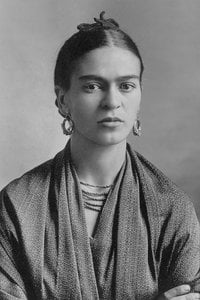
Frida Kahlo

Frida Kahlo

1907 - 1954 , México

Informações Rápidas

  • Artistic Movement Or Style: Surrealismo, Folk art
  • Artists Or Movements Influenced By This Artist: ['Chicano art']
  • Artists Who Influenced This Artist:
    • Diego Rivera
    • Mexican folk artists
  • Date Of Birth: 6 julho 1907
  • Date Of Death: 13 julho 1954
  • Full Name: Magdalena Carmen Frida Kahlo y Calderón
  • Nationality: Mexicana
  • Notable Artworks:
    • As Duas Fridas
    • Flor da Vida
    • Henry Ford Hospital
  • Place Of Birth: Cidade do México, México
Explore obras de arte organizadas por temas, estilos e características.