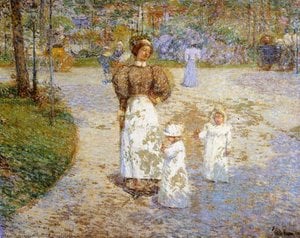
Obtenha um arquivo pronto para impressão que vai muito além da visualização na web. Cada imagem digital que vendemos provém de um arquivo mestre de alta resolução em nosso banco de dados — geralmente entre 5.000 e 15.000 pixels de largura — para que você possa imprimir em grandes formatos, realizar cortes precisos ou reproduzir detalhes minuciosos com total confiança.
Nenhum arquivo sai do nosso estúdio sem passar por um cuidadoso processo de revisão. Um especialista digital verifica as cores em relação à pintura original e as corrige se necessário, aumentando então a clareza e o detalhe com ferramentas profissionais de retoque — sempre mantendo a fidelidade às pinceladas e ao estilo do artista. O resultado é uma imagem que se assemelha à pintura, e não a um scan com filtros.
Aprovação antes da finalização: nosso especialista enviará a imagem por e-mail em até 72 horas para sua revisão. Não ficou satisfeito? Solicite melhorias ou correções, ou peça o reembolso caso a qualidade não atenda às suas expectativas.
Esta é a qualidade em que confiam editoras, estúdios de design, galerias e gráficas.
Baixe um arquivo de alta resolução para exibição pessoal, impressão e projetos criativos. ( Alternar para Impressão Comprar pintura feita à mão)
Ao escolher o WahooArt.com, você não está apenas adquirindo uma imagem — você está recebendo uma obra de arte digital profissionalmente aprimorada, elaborada com precisão e com garantia de satisfação. Aqui está tudo o que acompanha seu pedido, automaticamente:
O seu arquivo de imagem digital em alta resolução será enviado por e-mail em até 72 horas após o pedido — pronto para uso imediato.
Sua obra de arte é otimizada profissionalmente por meio de ferramentas avançadas de IA e edição manual, garantindo o máximo de detalhes, clareza e precisão de cores.
Apagou ou perdeu o seu ficheiro acidentalmente? Não se preocupe – nós reenviamos para si a qualquer momento, gratuitamente.
Desfrute da sua obra de arte instantaneamente, sem taxas alfandegárias, impostos ou custos de entrega — downloads digitais são sempre isentos de taxas.
Garantimos que sua imagem digital reflita as cores originais com a maior fidelidade possível, utilizando ferramentas profissionais e gerenciamento de cores.
Se não estiver satisfeito com a sua imagem digital, nós a revisaremos ou reembolsaremos 100% dentro de 100 dias — sem perguntas.
Não está satisfeito? Receba o reembolso total em até 100 dias após o recebimento do seu arquivo digital — sem perguntas.
Compre 3 imagens, economize 10% - Compre 5, economize 15% - Compre 10+, economize 20%. Ideal para projetos criativos, galerias e agências.
Frederick Childe Hassam's The Sonata, painted in 1893 and currently residing at the Nelson-Atkins Museum of Art, is a captivating oil on canvas that embodies the serenity and elegance characteristic of American Impressionism. This piece offers a glimpse into late 19th-century domestic life, skillfully blending realism with the soft light and atmospheric qualities of the Impressionist movement.
The painting depicts a young woman seated at a grand piano, her posture suggesting a moment of quiet introspection. Her fingers rest poised above the keys, while her gaze is directed downward, lost in thought as she prepares to play. The piano itself serves as a central focal point, symbolizing creativity and artistic expression. Two books are placed on its surface – one closer to the left side and another nearer to the right – potentially representing the intellectual pursuits of the subject. A vase positioned subtly in the background adds an element of refinement to the scene. The overall composition directs attention to the woman and her contemplative state, inviting viewers to share in her moment of reflection.
Hassam’s signature Impressionist style is readily apparent in The Sonata. He masterfully employs soft, muted colors – primarily warm yellows, creams, and browns – creating a sense of calmness and intimacy. Gentle brushstrokes capture the play of light on the woman's dress and the polished surface of the piano. While the subject’s face is rendered with precision, the background remains subtly blurred, drawing further attention to the central figure. This technique, common in Impressionism, prioritizes capturing a fleeting moment and subjective impression over strict realism. The use of layered paint creates texture and luminosity, enhancing the overall visual appeal.
The Sonata emerged during a period of significant artistic evolution, coinciding with the rise of Impressionism in both Europe and America. Hassam was instrumental in introducing and popularizing this movement within the United States. The painting reflects the cultural trends of its time, portraying an idealized vision of domestic life and highlighting the importance of music and intellectual pursuits among the upper classes. It captures a moment of leisure and artistic appreciation, offering insight into the values and aesthetics prevalent during the late 19th century.
Beyond its aesthetic beauty and historical significance, The Sonata resonates with viewers through its timeless themes of creativity, contemplation, and the pursuit of beauty. The woman’s introspective pose evokes a sense of quiet melancholy and invites reflection on the power of music to inspire and soothe. Its enduring appeal lies in its ability to transport us to a bygone era while simultaneously tapping into universal human emotions. For those interested in exploring more works by Frederick Childe Hassam, Marlborough Street, Boston is another notable piece showcasing his talent for capturing urban scenes.
"The Sonata", de Frederick Childe Hassam pertence ao movimento Impressionism. Este movimento fornece o contexto estilístico da obra.
Quando "The Sonata" foi criada em 1893, Frederick Childe Hassam — nascido(a) em 1859 — tinha 34 anos.
"The Sonata" pertence ao período 19th Century.


1859 - 1935 , Estados Unidos da América
 Visualizar na parede
 Compartilhar
 Compartilhar
 Detalhes
 Guia
Guia

 Baixar imagem
 Semelhantes
 Raio X
 Ver diaporama
 Perguntas e Respostas
 Estatísticas


 Ler mais