Visualizar em escala Visualizar em RA Encomendar reprodução pintada à mão Ver Imagem Digital Enviar
Ver detalhes Guia Adicionar aos favoritos Baixar imagem Semelhantes Raio X Apresentação de slides Estatísticas

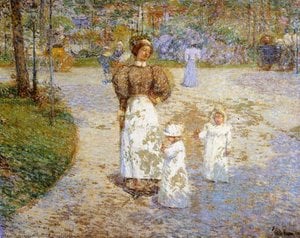
Sunday Morning, Appledore

Experience the tranquility of Frederick Childe Hassam's "Sunday Morning, Appledore." This stunning watercolor captures a serene coastal scene from 1912, showcasing his Impressionistic style and mastery of light.

Explore as vibrantes paisagens urbanas e costeiras de Frederick Childe Hassam (1859-1935). Pioneiro do Impressionismo americano, capturou a essência da sua época com luz e cor.

Giclée / Impressão de Arte

Impressão giclée ou em tela de qualidade de museu, com produção rápida e opções flexíveis de acabamento. ( Encomendar reprodução pintada à mão Ver Imagem Digital)

Padrão
sob medida
CM
INCH

Escolha entre os nossos tamanhos pré-definidos que respeitam as proporções originais da obra de arte.

largura
altura

Você pode inserir suas próprias dimensões para se ajustar a uma moldura ou espaço específico. Se o tamanho selecionado não corresponder às proporções da imagem original, iremos recortar a obra de arte ou estender a imagem com uma borda espelhada ou preenchimento sólido. Um mockup digital será enviado para sua aprovação antes do início da produção.
Por favor, observe que a visualização na tela não reflete o recorte ou a extensão real. Apenas o mockup mostrará com precisão a composição final.
Embora tamanhos personalizados estejam disponíveis, recomendamos selecionar uma dimensão da lista predefinida para preservar as proporções originais.

Entrega mundial () em 2 semanas, em vez das 4/5 semanas padrão. (20 Setembro)

why_choose_icon
Envio expresso gratuito para todo o mundo
why_choose_icon
Tela de Linho Premium
why_choose_icon
Seguro de transporte total
why_choose_icon
Garantia de Reembolso de Impostos Alfandegários
why_choose_icon
Garantia de Fidelidade de Cor
why_choose_icon
Política de Devolução em 100 Dias (Apenas para Defeitos)
why_choose_icon
Garantia de reembolso de 100%
why_choose_icon
Desconto para múltiplas unidades

Preço Total

$ 68

reproduction

Sunday Morning, Appledore

Giclée / Impressão de Arte

Dimensões da Reprodução

-

Preço Total

$ 68

Detalhes Rápidos

  • Title: Sunday Morning, Appledore
  • Subject or theme: Coastal landscape and serenity
  • Artist: Frederick Childe Hassam
  • Notable elements or techniques: Loose brushstrokes, muted colors
  • Artistic style: Impressionistic
  • Movement: Impressionism
  • Location: Brooklyn Museum

Teste de Conhecimentos Artísticos

Cada pergunta possui apenas uma resposta correta.

Questão 1:
What year was "Sunday Morning, Appledore" created?
Questão 2:
Which artistic style best characterizes Frederick Childe Hassam's work, as exemplified in this painting?
Questão 3:
What is the primary medium used to create "Sunday Morning, Appledore”?
Questão 4:
Where is "Sunday Morning, Appledore" currently housed?

Sunday Morning, Appledore: A Serene Impression of Coastal Life

Frederick Childe Hassam's "Sunday Morning, Appledore," created in 1912, is a captivating watercolor painting housed within the esteemed Brooklyn Museum. This piece exemplifies Hassam’s mastery of capturing fleeting moments and atmospheric conditions, transporting viewers to a tranquil coastal scene brimming with understated elegance.

Artistic Style and Technique

"Sunday Morning, Appledore" showcases Hassam's signature Impressionist style. He skillfully employs soft, feathery brushstrokes and a muted color palette—primarily blues, greens, and sandy hues—to evoke a sense of serenity and peacefulness. The watercolor medium lends itself beautifully to the depiction of light reflecting on water and the subtle gradations of color in the sky and landscape. Notice how Hassam doesn't focus on sharp details; instead, he prioritizes capturing the overall impression of the scene, allowing the viewer’s imagination to fill in the gaps. This technique is characteristic of Impressionism, which sought to represent sensory experience rather than precise realism.

Subject Matter and Composition

The painting depicts a picturesque view of Appledore Island, likely off the coast of Maine. A small group of figures are casually positioned on the shore, enjoying a leisurely Sunday morning. Two boats rest gently in the water near the shoreline, adding to the scene's idyllic charm. The composition is carefully balanced, with horizontal bands representing the rocky shoreline, sandy beach, and expansive sky. This arrangement creates a sense of stability while also conveying the vastness of the ocean. Hassam’s use of atmospheric perspective—where distant objects appear paler and less defined—further enhances the depth and realism of the scene.

Historical Context and Symbolism

Created during the early 20th century, "Sunday Morning, Appledore" reflects a period of increasing leisure time for Americans. The painting captures a moment of respite and relaxation, symbolizing the simple pleasures of coastal life. It also speaks to the growing popularity of outdoor recreation and tourism in America at the time. The scene evokes feelings of nostalgia and tranquility, reminding viewers of simpler times and the beauty of nature. While seemingly straightforward, the painting subtly explores themes of community, leisure, and the enduring appeal of the American coastline.

Emotional Impact and Legacy

"Sunday Morning, Appledore" is more than just a depiction of a coastal scene; it's an invitation to experience a moment of quiet contemplation. The gentle colors, soft brushstrokes, and serene atmosphere combine to create a deeply calming effect on the viewer. Hassam’s ability to capture such subtle nuances of light and emotion has cemented his place as one of America’s most beloved Impressionist painters. The painting's enduring appeal lies in its timeless depiction of beauty, tranquility, and the simple joys of life.


Biografia do Artista

A Pioneer of American Impressionism: The Life and Art of Frederick Childe Hassam

Frederick Childe Hassam, born in Boston on October 17, 1859, stands as a pivotal figure in the development of American Impressionism. His artistic journey, beginning with an early inclination towards drawing and culminating in recognition as one of the nation’s most celebrated painters, is a testament to his dedication, innovative spirit, and unique ability to capture the essence of his time. Unlike many of his contemporaries who sought formal training exclusively abroad, Hassam largely honed his skills through diligent self-study and practical experience, initially finding employment as an illustrator for prominent magazines such as *Harper’s Weekly* and *Scribner’s Monthly*. This formative period instilled within him a keen observational eye and a talent for narrative composition—qualities that would consistently define his artistic style. While he did undertake a brief study abroad in Paris in 1886, it was the American landscape and burgeoning urban life that truly ignited his creative imagination. He wasn’t merely replicating European techniques; rather, he skillfully adapted them to depict distinctly *American* scenes and experiences.

Capturing Light and Modern Life

Hassam's art is immediately recognizable for its luminous quality, achieved through a masterful manipulation of light and color. Heavily influenced by the revolutionary work of Claude Monet and Edgar Degas, he wholeheartedly embraced the core principles of Impressionism—the fleeting nature of moments and the evocative power of atmospheric effects. However, Hassam’s artistic vision transcended mere imitation; he infused his paintings with a uniquely American sensibility. He found beauty not only in idyllic landscapes but also in the vibrant energy of modern cities like New York and Boston. His canvases frequently depicted scenes of urban life—fashionable ladies strolling along Fifth Avenue, horse-drawn carriages navigating crowded streets, or quiet moments within domestic interiors. These weren’t simply representations of places; they were poignant portraits of a rapidly evolving society, capturing the dynamism and spirit of late 19th and early 20th century America. Works such as *The Sonata* (1893) exemplify his ability to evoke mood and atmosphere through subtle color harmonies and delicate brushwork, creating an intimate and contemplative experience for the viewer. Similarly, his coastal scenes, like *Gloucester* (1899), demonstrate a remarkable sensitivity to light and atmosphere, transforming ordinary harbors into shimmering visions of tranquility.

The Ten American Painters and Artistic Independence

A defining moment in Hassam’s career was his involvement with “The Ten American Painters,” a collective formed in 1897 as a bold assertion against the conservative policies of the Society of American Artists. This influential group, comprised of artists like John Henry Twachtman, Willard Leroy Metcalf, and Edmund Tarbell, sought to establish an independent exhibition platform and champion a more progressive approach to art. Hassam assumed the role of the first president of The Ten, solidifying his position as a leading figure within the American art world. This period marked a significant commitment to artistic independence—a deliberate rejection of academic constraints and a celebration of individual expression. His participation in these independent exhibitions played a crucial role in establishing Impressionism as a legitimate and respected movement within the United States.

Patriotism and Later Years: The Flag Paintings

With the outbreak of World War I, Hassam’s artistic focus underwent a dramatic shift. Inspired by a surge of patriotic fervor, he embarked on a series of paintings depicting American flags waving proudly along Fifth Avenue in New York City. These “Flag” paintings, created between 1916 and 1919, are arguably his most iconic works. They transcend simple representations of national symbols; they are powerful expressions of civic pride and wartime solidarity. The vibrant colors and dynamic compositions convey a sense of energy and optimism amidst the anxieties of global conflict. *Victory Day, May 1919* stands as a prime example, capturing the jubilant atmosphere of New York City following the armistice. In his later years, Hassam continued to paint, experimenting with etching and lithography alongside his oil paintings, demonstrating an ongoing commitment to artistic exploration and innovation.

Legacy and Enduring Influence

Frederick Childe Hassam passed away in East Hampton, New York, on August 27, 1935, leaving behind a vast and influential body of work. His legacy extends far beyond his technical mastery; he played a crucial role in establishing American Impressionism as a distinct artistic movement. He demonstrated that American artists could not only adopt European techniques but also adapt them to create something uniquely their own. Hassam’s paintings continue to resonate with audiences today, offering glimpses into a bygone era and reminding us of the enduring power of art to capture the spirit of a time and place. *His influence can be seen in the work of countless artists who followed him*, solidifying his position as one of the most important figures in American art history. His dedication to capturing light, color, and the essence of modern life ensures that his paintings will continue to inspire and captivate generations to come.
Frederick Childe Hassam

Frederick Childe Hassam

1859 - 1935 , Estados Unidos da América

Informações Rápidas

  • Artistic Movement Or Style: Impressionismo, Tonalismo
  • Artists Or Movements Influenced By This Artist: ['Impressionismo Americano']
  • Artists Who Influenced This Artist: ['Claude Monet']
  • Date Of Birth: 17 Outubro 1859
  • Date Of Death: 27 Agosto 1935
  • Full Name: Frederick Childe Hassam
  • Nationality: Americano
  • Notable Artworks:
    • Maestras na Neblina
    • Monte Beacon em Newburgh
    • A Caixa de Música
    • Gloucester
    • O Sonato
    • Dia da Vitória, 1919
  • Place Of Birth: Boston, Estados Unidos
Explore obras de arte organizadas por temas, estilos e características.