Visualizar na parede Visualizar em RA Comprar pintura feita à mão Alternar para Imagem Digital Compartilhar
Detalhes Guia Adicionar aos favoritos Baixar imagem Semelhantes Raio X Ver diaporama Q&A Estatísticas

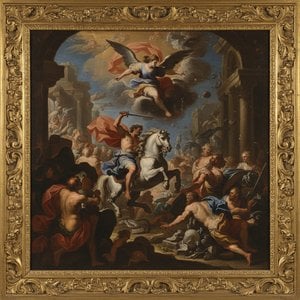
Hercules and Omphale

François Lemoyne’s "Hercules & Omphale" (1724) – a stunning Baroque oil painting of mythological love. Explore its dynamic composition, rich textures & classical beauty.

François Lemoyne (1688-1737): Pintor rococó francês que reviveu as grandes alegorias, influenciado por Rubens! Explore sua elegância e esplendor barroco!

Giclée / Impressão de Arte

Impressão giclée ou em tela de qualidade de museu, com produção rápida e opções flexíveis de acabamento. ( Comprar pintura feita à mão Alternar para Imagem Digital)

Corner sample of the P118B picture frame: poliestireno moldado, 5 cm wide and 3 cm thick
P118B €10
Corner sample of the P118H picture frame: poliestireno moldado, 5 cm wide and 3 cm thick
P118H €10
Corner sample of the P118W picture frame: poliestireno moldado, 5 cm wide and 3 cm thick
P118W €10
Corner sample of the P438Z picture frame: poliestireno moldado, 5.5 cm wide and 3.5 cm thick
P438Z €10
Corner sample of the P508JH picture frame: poliestireno moldado, 7 cm wide and 3.5 cm thick
P508JH €12
Corner sample of the P508YH picture frame: poliestireno moldado, 7 cm wide and 3.5 cm thick
P508YH €12
Corner sample of the P805H picture frame: poliestireno moldado, 5 cm wide and 3.5 cm thick
P805H €10
Corner sample of the P805Z picture frame: poliestireno moldado, 5 cm wide and 3.5 cm thick
P805Z €10
Corner sample of the P919BZ picture frame: poliestireno moldado, 7 cm wide and 3.5 cm thick
P919BZ €10
Corner sample of the P919G picture frame: poliestireno moldado, 7 cm wide and 3.5 cm thick
P919G €10
Corner sample of the P919XJ picture frame: poliestireno moldado, 7 cm wide and 3.5 cm thick
P919XJ €10
Corner sample of the P959ZH picture frame: poliestireno moldado, 5 cm wide and 3 cm thick
P959ZH €10
Corner sample of the P968JZ picture frame: poliestireno moldado, 6 cm wide and 4 cm thick
P968JZ €12
Corner sample of the W106C picture frame: madeira maciça, 5 cm wide and 3 cm thick
W106C €8
Corner sample of the W218G picture frame: madeira maciça, 5 cm wide and 3 cm thick
W218G €10
Corner sample of the W218JH picture frame: madeira maciça, 5 cm wide and 3 cm thick
W218JH €8
Corner sample of the W218Y picture frame: madeira maciça, 5 cm wide and 3 cm thick
W218Y €10
Corner sample of the W307PJ picture frame: madeira maciça, 6 cm wide and 3 cm thick
W307PJ €10
Corner sample of the W316G picture frame: madeira maciça, 6 cm wide and 3 cm thick
W316G €10
Corner sample of the W316PJ picture frame: madeira maciça, 6 cm wide and 3 cm thick
W316PJ €8
Corner sample of the W316Y picture frame: madeira maciça, 6 cm wide and 3 cm thick
W316Y €10
Corner sample of the W398PJ picture frame: madeira maciça, 5 cm wide and 3 cm thick
W398PJ €8
Corner sample of the W4111J picture frame: madeira maciça, 6.5 cm wide and 3.5 cm thick
W4111J €10
Corner sample of the W500HY picture frame: madeira maciça, 7 cm wide and 5 cm thick
W500HY €15
Corner sample of the W500JH picture frame: madeira maciça, 7 cm wide and 5 cm thick
W500JH €15
Corner sample of the W692G picture frame: madeira maciça, 8 cm wide and 4 cm thick
W692G €12
Corner sample of the W849H picture frame: madeira maciça, 5 cm wide and 3 cm thick
W849H €8
Corner sample of the W940BG picture frame: madeira maciça, 7.5 cm wide and 4.5 cm thick
W940BG €15
Corner sample of the W953PJ picture frame: madeira maciça, 6 cm wide and 3.5 cm thick
W953PJ €8

Tamanho padrão
personalizado
CM
INCH

Escolha entre os nossos tamanhos pré-definidos que respeitam as proporções originais da obra de arte.

largura
altura

Insira a largura e a altura desejadas para se ajustarem à sua moldura ou parede. Uma impressão pode ser apenas cortada, nunca ampliada além da imagem original; portanto, um tamanho com proporções diferentes resultará na perda de parte da imagem. Enviamos uma maquete digital para sua aprovação antes de realizarmos a impressão. A imagem exibida nesta página não mostra o corte real — apenas a maquete o faz.

Entrega mundial () em 2 semanas, em vez das 4/5 semanas padrão. (30 Outubro)

Envio expresso gratuito para todo o mundo
Tela de Linho de Alta Qualidade
Seguro de transporte completo
Garantia de Reembolso de Impostos Alfandegários
Garantia de Fidelidade Cromática
Política de Devolução em 100 Dias (Apenas para Defeitos)
Garantia de reembolso de 100%
Oferta de desconto por quantidade

Preço Total

€ 60

Hercules and Omphale

Giclée / Impressão de Arte

Tamanho da Reprodução

-

Preço Total

€ 60

Informações Rápidas

  • Influences: Rubens
  • Notable elements: Mythological scene
  • Medium: Oil on canvas
  • Location: Louvre Museum, Paris
  • Dimensions: 184 x 149 cm
  • Artist: François Lemoyne

Quiz de Arte

Cada pergunta possui apenas uma resposta correta.

Pergunta 1:
What mythological scene is depicted in François Lemoyne’s ‘Hercules and Omphale’?
Pergunta 2:
In ‘Hercules and Omphale’, what symbolic element does Omphale hold that represents Hercules's former strength?
Pergunta 3:
The painting ‘Hercules and Omphale’ is primarily associated with which artistic movement?
Pergunta 4:
What technique did François Lemoyne employ to create the rich textures and detailed figures in ‘Hercules and Omphale’?

A Dance of Desire: François Lemoyne’s “Hercules and Omphale”

François Lemoyne's "Hercules and Omphale," painted in 1724, isn’t merely a depiction of a mythological tale; it’s an exquisitely rendered exploration of desire, power, and the blurring lines between masculine and feminine. This captivating work, housed within the opulent confines of the Louvre Museum in Paris, offers a glimpse into the heart of the Rococo era – a period defined by its embrace of sensuality, playful extravagance, and a deliberate rejection of the rigid formality of preceding artistic movements. Lemoyne, a master painter deeply influenced by the grandeur of Rubens, skillfully translates this spirit into a scene brimming with dynamic energy and subtle emotional complexity.

The narrative itself is rooted in Greek mythology – Hercules, famed for his strength and twelve labors, finds himself unexpectedly bound to Omphale, the alluring queen of Lydia. Initially a consequence of servitude, their relationship swiftly evolves into an intense, almost unsettling, exchange of roles. The painting captures this pivotal moment: Hercules, rendered with a youthful vitality that belies his legendary status, leans towards Omphale, his gaze fixed upon her with unmistakable admiration. She, in turn, holds him gently, her expression a captivating blend of amusement and desire. The scene unfolds within a lavishly decorated boudoir – a testament to the queen’s wealth and influence – where crimson velvet drapes cascade from the bed, scattering decorative objects across the floor, creating an atmosphere of delightful chaos.

A Baroque Embrace: Technique and Composition

Lemoyne's technical prowess is immediately evident in the painting’s rich textures and masterful use of chiaroscuro. The artist employs a layering technique – a hallmark of Baroque painting – to build up color and create an astonishingly tactile surface. The folds of fabric ripple with life, each thread seemingly rendered with meticulous detail; the musculature of Hercules is both powerful and subtly idealized, while Omphale’s form is presented with a delicate grace. Notice how light dramatically sculpts their bodies, highlighting key features and casting intriguing shadows that deepen the sense of intimacy. The composition itself is carefully orchestrated – a diagonal arrangement of figures creates a dynamic flow, drawing the viewer's eye through the scene and emphasizing the central interaction.

The use of color is particularly noteworthy. Lemoyne employs a palette dominated by warm ochres, earthy browns, and vibrant reds, creating a visual feast that’s both luxurious and emotionally resonant. The bold red of the velvet canopy serves as a dramatic backdrop, further intensifying the scene's sensual atmosphere. Furthermore, the artist subtly incorporates symbolic elements – the lion’s pelt draped over Omphale’s shoulder represents Hercules’ former status as a slave, while her possession of his club signifies a temporary reversal of power dynamics. The presence of Cupid, a small but significant detail, underscores the theme of passionate love and transformation.

Symbolism and the Shifting Power Dynamic

“Hercules and Omphale” is far more than a simple retelling of a mythological story; it’s a complex meditation on themes of gender roles, desire, and the fluidity of power. The painting deliberately subverts traditional depictions of Hercules – typically portrayed as an imposing figure of strength and authority – by presenting him in a vulnerable, almost effeminate pose. His embrace of Omphale's breast is not one of dominance but of surrender, suggesting a willingness to relinquish control and indulge in the pleasures of the moment.

Omphale’s role is equally significant. She isn’t merely a passive recipient of Hercules’ affections; she actively participates in the exchange, holding his club and wearing his lion's skin – symbols of his former status. This act of appropriation challenges conventional notions of masculinity and femininity, suggesting that power can be fluid and subject to change. The painting invites us to question established hierarchies and consider the possibility of a more reciprocal relationship between men and women.

A Legacy of Rococo Grandeur

François Lemoyne’s “Hercules and Omphale” stands as a quintessential example of Rococo art – a style characterized by its elegance, sensuality, and playful exuberance. Influenced by the works of Rubens, Lemoyne masterfully blends classical subject matter with contemporary French tastes, creating a work that is both visually stunning and intellectually stimulating. The painting’s enduring appeal lies in its ability to capture the complexities of human desire and the shifting dynamics of power – themes that continue to resonate with audiences today. Reproductions of this masterpiece offer a chance to bring this captivating scene into your own home, adding a touch of Rococo grandeur and timeless allure to any space.

Perguntas e Respostas

Onde e para qual finalidade é recomendado "Hercules and Omphale"?

"Hercules and Omphale", de François Lemoyne é recomendado para Statement, idealmente em um(a) Living Room. O uso e o espaço juntos orientam onde uma reprodução se encaixa.

Quem criou "Hercules and Omphale" e em qual estilo se encontra?

Por trás de "Hercules and Omphale" estão François Lemoyne e o movimento Baroque.

Qual tamanho e orientação são recomendados para uma impressão de "Hercules and Omphale", de François Lemoyne?

Para "Hercules and Omphale", o formato de impressão recomendado é o tamanho Large com orientação Portrait.


Biografia do Artista

François Lemoyne: Um Legado Parisiense em Esplendor Rococó

François Lemoyne, um nome talvez menos imediato que o de seus contemporâneos Boucher ou Watteau, ocupa, contudo, uma posição significativa no rico tecido da arte francesa do século XVIII. Nascido em Paris em 1688, Lemoyne dedicou sua vida a reviver a grandiosidade da pintura alegórica em grande escala—uma tradição que havia diminuído um tanto desde a era de Charles Le Brun, a quem Lemoyne profundamente admirava e buscava emular. Sua ambição não era meramente decorar, mas criar obras imbuídas de peso intelectual e ressonância emocional, refletindo o espírito complexo do período Rococó, ao mesmo tempo que remetia a um ideal mais clássico. Desde seu treinamento inicial sob a tutela de seu padrasto, Robert le Vrac, e posteriormente no rigoroso ambiente da Académie Royale de peinture et de sculpture, Lemoyne demonstrou uma dedicação em dominar tanto a habilidade técnica quanto a expressão artística. Sua educação formal com Louis Galloche e Pierre-Jacques Cazes se mostrou formativa, particularmente no desenvolvimento de sua compreensão sutil da cor—uma característica que se tornaria cada vez mais proeminente ao longo de sua carreira. O cobiçado Prix de Rome em 1711 marcou um momento crucial, embora restrições financeiras tenham inicialmente atrasado sua jornada para a Itália; uma viagem que ele finalmente empreendeu em 1723 acompanhando François Berger.


Ecos Italianos e Florescências Rococó

A estadia na Itália provou ser transformadora para Lemoyne. Imerso nas obras dos mestres do Renascimento como Rafael, Correggio e Ticiano, absorveu suas técnicas e princípios estéticos, enriquecendo seu vocabulário artístico. No entanto, foi a energia dinâmica de Peter Paul Rubens que deixou uma marca indelével em seu estilo—evidente em suas paletas vibrantes e composições dramáticas. A exposição à pintura veneziana dentro da renomada coleção de Pierre Crozat refinou ainda mais seus sentidos, fomentando um amor por texturas ricas e efeitos atmosféricos. Essas influências se condensaram em uma estética rococó distinta caracterizada pela elegância, ornamentação e foco na beleza decorativa. No entanto, Lemoyne nunca abandonou completamente a ambição de narrativa grandiosa que definia a pintura acadêmica francesa anterior; ele buscou sintetizar esses elementos aparentemente díspares—a leveza e a graça do Rococó com o rigor intelectual da tradição clássica. Essa mistura única é o que diferencia seu trabalho e contribui para seu apelo duradouro.

Versalhes e Reconhecimento Real

A proeza artística de Lemoyne encontrou sua expressão mais espetacular em seus monumentais afrescos de teto, notavelmente L'Apothéose d'Hercule (A Apoteose de Hércules) no Salon d’Hercule dentro do Palácio de Versalhes. Esta obra-prima—um deslumbrante display de técnica ilusionista e composição dinâmica—garimpou imediatamente amplo reconhecimento. Contemporâneos como Voltaire e o Cardeal Fleury elogiaram sua brilhantidade, reconhecendo Lemoyne como um mestre de sua arte. Além de Versalhes, ele também empreendeu importantes encomendas religiosas, como A Transfiguração no chancel da Igreja dos Jacobinos (agora Igreja Paroquial de St. Thomas d’Aquin) em Paris, demonstrando sua versatilidade e capacidade de adaptar seu estilo a diferentes assuntos. Em 1736, Lemoyne atingiu o auge de sua carreira com sua nomeação como Premier peintre du roi (Primeiro Pintor do Rei) sob Luís XV—um testemunho de suas realizações artísticas e posição na corte francesa.

Um Fim Trágico e Influência Duradoura

Apesar de ter alcançado tais alturas, a vida de Lemoyne foi tragicamente interrompida por suicídio em 1737. Sua morte prematura não apenas marcou uma perda pessoal, mas também sinalizou uma mudança nas preferências artísticas; coincidiu com um declínio na popularidade dos afrescos de teto alegóricos em grande escala que ele tanto defendeu apaixonadamente. No entanto, seu legado perdurou por meio de seus alunos, incluindo artistas proeminentes como Charles-Joseph Natoire e François Boucher, a quem transmitiu seu conhecimento e habilidades. Embora talvez não seja tão universalmente celebrado hoje quanto alguns de seus contemporâneos, as contribuições de Lemoyne para a arte rococó francesa são cada vez mais apreciadas por sua maestria técnica, ambição artística e a síntese única de ideais clássicos com as sensibilidades estéticas prevalecentes de sua época. Suas obras permanecem um testemunho de um artista dedicado que buscou elevar a pintura à sua forma mais elevada—um legado que continua a inspirar e cativar o público séculos depois.

Obras Chave & Contribuições Artísticas

  • Afrescos de Teto: As realizações mais celebradas de Lemoyne, exemplificadas por L'Apothéose d'Hercule, demonstram sua maestria das técnicas ilusionistas e composição dinâmica.
  • Cenas Mitológicas: Obras como Hércules e Omphale demonstram sua capacidade de retratar narrativas clássicas com intensidade dramática e graça sensual.
  • Pinturas Religiosas: A Transfiguração exemplifica sua habilidade em representar assuntos religiosos com profundidade emocional e precisão técnica.
  • Retratos: Seu retrato do Cabeça do Rei Luís XV, revela uma compreensão sutil de caráter e um domínio das técnicas de carvão e pastel.
François Lemoyne

François Lemoyne

1688 - 1737 , França

Dados Rápidos

  • Artistas Influenciados:
    • Boucher
    • Natoire
  • Artistas Que Influenciaram:
    • Rubens
    • Raphael
    • Correggio
    • Titian
  • Data De Morte: 1737
  • Data De Nascimento: 1688
  • Local De Nascimento: Paris, França
  • Movimento Artístico: Rococó
  • Nacionalidade: Francês
  • Nome Completo: François Lemoyne
  • Obras Notáveis:
    • A Apoteose de Hércules
    • Hércules e Omphale
    • Perseu e Andrômeda
    • Transfiguração