Visualizar em escala Visualizar em RA Alternar para Impressão Ver Imagem Digital Enviar
Ver detalhes Guia de Obras do Aluno Adicionar aos favoritos Baixar imagem Semelhantes Raio X Apresentação de slides Estatísticas

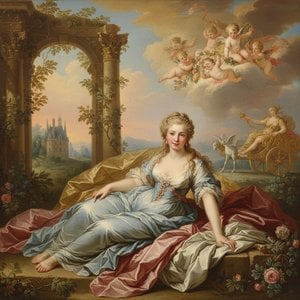
The Forest

Experience the Rococo elegance of Boucher's Forest (1740), a serene scene bathed in light and lush greens; discover this masterpiece for your collection.

Descubra François Boucher (1703-1770), mestre do Rococó! Explore suas pinturas sensuais – cenas mitológicas, retratos e paisagens idílicas – definindo a arte francesa do século XVIII.

Reprodução em Óleo Feita à Mão

Óleo sobre tela pintado à mão no tamanho e moldura de sua escolha, feito sob encomenda pelos nossos artistas. ( Alternar para Impressão Ver Imagem Digital)

Corner sample of the P118B picture frame: poliestireno moldado, 5 cm wide and 3 cm thick
P118B €10
Corner sample of the P118H picture frame: poliestireno moldado, 5 cm wide and 3 cm thick
P118H €10
Corner sample of the P118W picture frame: poliestireno moldado, 5 cm wide and 3 cm thick
P118W €10
Corner sample of the P438Z picture frame: poliestireno moldado, 5.5 cm wide and 3.5 cm thick
P438Z €10
Corner sample of the P508JH picture frame: poliestireno moldado, 7 cm wide and 3.5 cm thick
P508JH €12
Corner sample of the P508YH picture frame: poliestireno moldado, 7 cm wide and 3.5 cm thick
P508YH €12
Corner sample of the P805H picture frame: poliestireno moldado, 5 cm wide and 3.5 cm thick
P805H €10
Corner sample of the P805Z picture frame: poliestireno moldado, 5 cm wide and 3.5 cm thick
P805Z €10
Corner sample of the P919BZ picture frame: poliestireno moldado, 7 cm wide and 3.5 cm thick
P919BZ €10
Corner sample of the P919G picture frame: poliestireno moldado, 7 cm wide and 3.5 cm thick
P919G €10
Corner sample of the P919XJ picture frame: poliestireno moldado, 7 cm wide and 3.5 cm thick
P919XJ €10
Corner sample of the P959ZH picture frame: poliestireno moldado, 5 cm wide and 3 cm thick
P959ZH €10
Corner sample of the P968JZ picture frame: poliestireno moldado, 6 cm wide and 4 cm thick
P968JZ €12
Corner sample of the W106C picture frame: madeira maciça, 5 cm wide and 3 cm thick
W106C €8
Corner sample of the W218G picture frame: madeira maciça, 5 cm wide and 3 cm thick
W218G €10
Corner sample of the W218JH picture frame: madeira maciça, 5 cm wide and 3 cm thick
W218JH €8
Corner sample of the W218Y picture frame: madeira maciça, 5 cm wide and 3 cm thick
W218Y €10
Corner sample of the W307PJ picture frame: madeira maciça, 6 cm wide and 3 cm thick
W307PJ €10
Corner sample of the W316G picture frame: madeira maciça, 6 cm wide and 3 cm thick
W316G €10
Corner sample of the W316PJ picture frame: madeira maciça, 6 cm wide and 3 cm thick
W316PJ €8
Corner sample of the W316Y picture frame: madeira maciça, 6 cm wide and 3 cm thick
W316Y €10
Corner sample of the W398PJ picture frame: madeira maciça, 5 cm wide and 3 cm thick
W398PJ €8
Corner sample of the W4111J picture frame: madeira maciça, 6.5 cm wide and 3.5 cm thick
W4111J €10
Corner sample of the W500HY picture frame: madeira maciça, 7 cm wide and 5 cm thick
W500HY €15
Corner sample of the W500JH picture frame: madeira maciça, 7 cm wide and 5 cm thick
W500JH €15
Corner sample of the W692G picture frame: madeira maciça, 8 cm wide and 4 cm thick
W692G €12
Corner sample of the W849H picture frame: madeira maciça, 5 cm wide and 3 cm thick
W849H €8
Corner sample of the W940BG picture frame: madeira maciça, 7.5 cm wide and 4.5 cm thick
W940BG €15
Corner sample of the W953PJ picture frame: madeira maciça, 6 cm wide and 3.5 cm thick
W953PJ €8

Padrão
sob medida
CM
INCH

Escolha entre os nossos tamanhos pré-definidos que respeitam as proporções originais da obra de arte.

largura
altura

Digite a largura e a altura de que necessita, para se ajustar à sua moldura ou à sua parede. Esta obra é pintada à mão, por isso, para um tamanho com uma proporção diferente, o artista pode pintar um pouco mais ao redor da imagem ou cortar um pouco — você escolhe. Enviamos-lhe uma maquete digital para aprovação antes de a pintura começar. A imagem exibida nesta página não mostra o resultado real — apenas a maquete mostra.

Exemplos do que pode ser personalizado: Substituir o rosto pela foto do cliente; Adicionar um animal de estimação (ex: substituir gato por cão); Incluir uma mensagem oculta no fundo; Alterar a paisagem ou elementos do fundo.
Após o pedido, a equipa WahooArt.com enviará um e-mail ao cliente para solicitar instruções e fornecer uma prévia do esboço.

Entrega mundial () em 3 a 4 semanas, em vez das 5 semanas padrão. (22 Outubro). Sem comprometer a qualidade.

Envio expresso gratuito para todo o mundo
Tela de Linho Premium
Seguro de transporte total
Garantia de Reembolso de Impostos Alfandegários
Garantia de Fidelidade de Cor
Política de Devolução em 100 Dias (Apenas para Defeitos)
Garantia de reembolso de 100%
Desconto para múltiplas unidades

Preço Total

€ 239

The Forest

Técnica de Reprodução

Dimensões da Reprodução

-

Preço Total

€ 239

Detalhes Rápidos

  • Year: 1740
  • Dimensions: 131 x 163 cm
  • Notable elements or techniques: Loose brushstrokes; interplay of light
  • Artist: François Boucher
  • Subject or theme: Serene forest scene/Pastoral life

A Rococo Dream in Verdant Hues

To gaze upon François Boucher's The Forest is to step through a veil of time and into an idealized pastoral reverie. This masterpiece, painted in 1740, captures the very essence of the Rococo spirit—a breathy confluence of lightness, exquisite elegance, and unrestrained natural exuberance. The scene unfolds with a breathtaking dominance of greens and blues, hues that speak of deep woodland mystery tempered by the soft glow of an imagined sun. It is more than just a depiction of trees; it is an emotional landscape, inviting the viewer to pause, breathe deeply, and surrender to nature's gentle embrace.

Composition and the Art of Light

Boucher masterfully guides the eye through this verdant tapestry. In the immediate foreground, two figures are seated upon a moss-kissed rock, seemingly lost in quiet conversation or shared contemplation. Their presence anchors the intimacy of the scene, while their attire whispers tales of 18th-century leisure and refined sensibility. Notice the artist's technique: the loose, almost spontaneous brushwork employed here lends an immediate sense of lived reality, drawing the viewer into the moment as if they could hear the rustle of leaves beneath unseen feet. Contrast this immediacy with the background, where details become more defined, allowing the eye to wander toward a meandering river glimpsed through the foliage. The handling of light is nothing short of miraculous; it filters through the dense canopy in ethereal shafts, suggesting moments when the clouds part just enough to bless the scene with golden illumination.

Historical Echoes and Rococo Sensibility

This painting stands as a quintessential artifact of the Rococo period. Boucher, a titan of 18th-century French art, channeled the era's love for idyllic subjects, decorative allegory, and graceful naturalism. The Rococo favored asymmetry and curving forms over rigid classical structure, and The Forest embodies this philosophy perfectly. It eschews grand historical narratives for moments of exquisite, cultivated pleasure—a hallmark of aristocratic taste. Owning a reproduction allows one to bring this sophisticated, playful spirit of the Enlightenment era into a modern setting, transforming any room into a salon worthy of Parisian salons.

Symbolism and Emotional Resonance

The forest itself has always been a potent symbol in art—a liminal space between civilization and wilderness. Here, Boucher presents it not as threatening, but as nurturing; a sanctuary for quiet reflection. The pairing of the figures suggests themes of companionship, shared solitude, and the harmonious relationship between humanity and the natural world. For the collector or designer, this piece offers more than mere decoration; it is an emotional anchor. It evokes peace, nostalgia, and a profound sense of harmony—a visual balm against the clamor of modern life. To reproduce this work is to invite that same deep, restorative calm into your personal space.

Perguntas e Respostas

A que fase da carreira de François Boucher corresponde a data de 1740 de "The Forest"?

Dada a sua data de 1740, "The Forest" insere-se no período Mature Period de François Boucher.

Que tema e atmosfera combinam em "The Forest" de François Boucher?

"The Forest" de François Boucher retrata forest scene, rococo style, pastoral setting, figures conversing, nature painting, outdoor leisure, em uma atmosfera Serene. O tema e a ambientação descrevem, juntos, a obra.

"The Forest", de François Boucher, está em domínio público? E por quê?

O status de direitos autorais de "The Forest" - em domínio público - seus direitos autorais expiraram - decorre do falecimento do artista em 1770.


Biografia do Artista

François Boucher: A Master of Rococo’s Delicate Embrace

François Boucher (1703-1770) stands as a monumental figure in the history of French art, inextricably linked to the opulent and sensual world of the Rococo. More than simply a painter, he was a master decorator, a designer of elegance, and an interpreter of aristocratic desires – a true embodiment of the era’s refined aesthetic. His work, characterized by a breathtaking blend of technical skill, mythological grandeur, and playful eroticism, continues to captivate viewers centuries later.

Early Years and Artistic Foundations

Born on September 29th, 1703, in the heart of Paris, François Boucher’s artistic journey began within a family steeped in creative tradition. His father, Jean Boucher, was himself a painter, providing young François with his initial exposure to the world of art. This early influence laid the groundwork for a career that would ultimately define an entire style. At the tender age of seventeen, Boucher caught the discerning eye of François Lemoyne, a prominent artist at the time, and became his apprentice. This brief but formative period instilled in him fundamental techniques and artistic principles. Further honing his skills with Jean-François Cars, a renowned engraver, broadened his technical repertoire and introduced him to the world of printmaking – a skill that would later prove invaluable.

However, the defining moment in Boucher’s early career arrived in 1720: he secured the prestigious Grand Prix de Rome. This competition, fiercely contested by aspiring artists, offered the winner the opportunity to study at the renowned Academy of France in Rome – a crucial stepping stone for any ambitious artist seeking recognition. Boucher's victory signaled his immense talent and set him on a path toward artistic greatness. His time in Italy was transformative, exposing him to the classical masterpieces of the Renaissance and Baroque periods, particularly the frescoes of Michelangelo in the Vatican’s Sistine Chapel. He meticulously studied these works, absorbing their grandeur, dynamism, and masterful use of color and composition – influences that would profoundly shape his own style.

Return to France and Ascendancy

Upon his return to Paris in 1731, Boucher was immediately welcomed into the Académie Royale de Peinture et de Sculpture. His debut work, “Rinaldo and Armida” (1734), instantly established him as a leading figure of the Rococo style. This monumental painting showcased his burgeoning talent – a masterful command of color, composition, and dramatic storytelling. The piece was so successful that it propelled Boucher to immediate fame and solidified his position within the Parisian art scene.

Boucher’s career truly flourished under the patronage of Madame de Pompadour, mistress of King Louis XV. She recognized his exceptional talent and became a devoted patron, commissioning numerous works from him – portraits, mythological scenes, landscapes, and decorative designs for her lavish chateaux. Her influence elevated Boucher to the highest echelons of French society, granting him unprecedented access to royal circles and solidifying his reputation as the foremost painter of the court.

A Flourishing Career: Themes and Techniques

Boucher’s oeuvre is remarkably diverse, encompassing a vast range of subjects. He excelled in mythological scenes – transforming classical narratives into exquisitely beautiful and sensual compositions. His “Triumph of Venus” (1740-1751), a series of paintings depicting the goddess Venus, stands as a testament to his mastery of color, form, and dramatic lighting. He also produced numerous portraits, often capturing the elegance and charm of aristocratic figures. Landscape painting was another significant aspect of his work, characterized by idyllic settings and a lyrical quality that evoked a sense of peace and tranquility.

Boucher’s technique was equally remarkable. He employed delicate brushwork, pastel palettes, and a masterful use of light and shadow to create an atmosphere of ethereal beauty. His figures were often depicted with a voluptuousness and grace that embodied the ideals of Rococo aesthetics – emphasizing pleasure, sensuality, and refined elegance. His designs for tapestries and porcelain further demonstrated his versatility as a decorator, contributing significantly to the opulent aesthetic of French aristocratic interiors.

Legacy and Historical Significance

François Boucher’s influence extended far beyond his own lifetime. He was not merely a painter; he was a cultural icon, embodying the tastes and values of 18th-century France. His work reflected the aristocratic culture of the era – characterized by luxury, refinement, and a pursuit of pleasure. He remains a significant figure in art history, celebrated for his technical skill, artistic innovation, and enduring contribution to the Rococo style. While some critics later questioned the perceived superficiality of Rococo art, Boucher’s legacy endures as one of the most influential and beloved artists of the French Baroque period.

François Boucher

François Boucher

1703 - 1770 , França

Informações Rápidas

  • Artistic Movement Or Style: Rococó
  • Artists Or Movements Influenced By This Artist: ['Jean-Honoré Fragonard']
  • Artists Who Influenced This Artist:
    • François Lemoyne
    • Jean-François Cars
  • Date Of Birth: 29 de Setembro de 1703
  • Date Of Death: 30 de Maio de 1770
  • Full Name: François Boucher
  • Nationality: Francês
  • Notable Artworks:
    • Rinaldo e Armida
    • O Café
    • Triumpha de Vênus
  • Place Of Birth: Paris, França
Explore obras de arte organizadas por temas, estilos e características.