François Boucher: A Master of Rococo’s Delicate Embrace
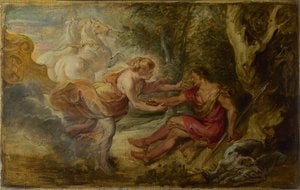
François Boucher (1703-1770) stands as a monumental figure in the history of French art, inextricably linked to the opulent and sensual world of the Rococo. More than simply a painter, he was a master decorator, a designer of elegance, and an interpreter of aristocratic desires – a true embodiment of the era’s refined aesthetic. His work, characterized by a breathtaking blend of technical skill, mythological grandeur, and playful eroticism, continues to captivate viewers centuries later.
Early Years and Artistic Foundations
Born on September 29th, 1703, in the heart of Paris, François Boucher’s artistic journey began within a family steeped in creative tradition. His father, Jean Boucher, was himself a painter, providing young François with his initial exposure to the world of art. This early influence laid the groundwork for a career that would ultimately define an entire style. At the tender age of seventeen, Boucher caught the discerning eye of François Lemoyne, a prominent artist at the time, and became his apprentice. This brief but formative period instilled in him fundamental techniques and artistic principles. Further honing his skills with Jean-François Cars, a renowned engraver, broadened his technical repertoire and introduced him to the world of printmaking – a skill that would later prove invaluable.
However, the defining moment in Boucher’s early career arrived in 1720: he secured the prestigious Grand Prix de Rome. This competition, fiercely contested by aspiring artists, offered the winner the opportunity to study at the renowned Academy of France in Rome – a crucial stepping stone for any ambitious artist seeking recognition. Boucher's victory signaled his immense talent and set him on a path toward artistic greatness. His time in Italy was transformative, exposing him to the classical masterpieces of the Renaissance and Baroque periods, particularly the frescoes of Michelangelo in the Vatican’s Sistine Chapel. He meticulously studied these works, absorbing their grandeur, dynamism, and masterful use of color and composition – influences that would profoundly shape his own style.
Return to France and Ascendancy
Upon his return to Paris in 1731, Boucher was immediately welcomed into the Académie Royale de Peinture et de Sculpture. His debut work, “Rinaldo and Armida” (1734), instantly established him as a leading figure of the Rococo style. This monumental painting showcased his burgeoning talent – a masterful command of color, composition, and dramatic storytelling. The piece was so successful that it propelled Boucher to immediate fame and solidified his position within the Parisian art scene.
Boucher’s career truly flourished under the patronage of Madame de Pompadour, mistress of King Louis XV. She recognized his exceptional talent and became a devoted patron, commissioning numerous works from him – portraits, mythological scenes, landscapes, and decorative designs for her lavish chateaux. Her influence elevated Boucher to the highest echelons of French society, granting him unprecedented access to royal circles and solidifying his reputation as the foremost painter of the court.
A Flourishing Career: Themes and Techniques
Boucher’s oeuvre is remarkably diverse, encompassing a vast range of subjects. He excelled in mythological scenes – transforming classical narratives into exquisitely beautiful and sensual compositions. His “Triumph of Venus” (1740-1751), a series of paintings depicting the goddess Venus, stands as a testament to his mastery of color, form, and dramatic lighting. He also produced numerous portraits, often capturing the elegance and charm of aristocratic figures. Landscape painting was another significant aspect of his work, characterized by idyllic settings and a lyrical quality that evoked a sense of peace and tranquility.
Boucher’s technique was equally remarkable. He employed delicate brushwork, pastel palettes, and a masterful use of light and shadow to create an atmosphere of ethereal beauty. His figures were often depicted with a voluptuousness and grace that embodied the ideals of Rococo aesthetics – emphasizing pleasure, sensuality, and refined elegance. His designs for tapestries and porcelain further demonstrated his versatility as a decorator, contributing significantly to the opulent aesthetic of French aristocratic interiors.
Legacy and Historical Significance
François Boucher’s influence extended far beyond his own lifetime. He was not merely a painter; he was a cultural icon, embodying the tastes and values of 18th-century France. His work reflected the aristocratic culture of the era – characterized by luxury, refinement, and a pursuit of pleasure. He remains a significant figure in art history, celebrated for his technical skill, artistic innovation, and enduring contribution to the Rococo style. While some critics later questioned the perceived superficiality of Rococo art, Boucher’s legacy endures as one of the most influential and beloved artists of the French Baroque period.



 Visualizar na parede
 Comprar pintura feita à mão
 Compartilhar
 Compartilhar
 Detalhes

 Baixar imagem
 Semelhantes
 Raio X
 Slideshow
 Estatísticas


 Ler mais






































 A opção de vidro está disponível apenas para tamanhos inferiores a 110 cm