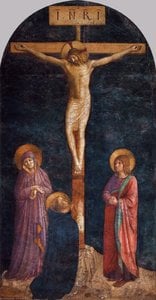
A Vision of Faith: Fra Angelico’s St. Peter Martyr
This striking panel painting by Fra Angelico, created around 1340, presents a powerful and intimate depiction of *St. Peter Martyr*, a Dominican friar assassinated for denouncing heresy. The artwork is a masterful example of Early Renaissance religious art, radiating both spiritual devotion and artistic skill.
Subject & Narrative
The painting centers on St. Peter Martyr, instantly recognizable by the gruesome yet poignant wound upon his forehead – a direct reference to the axe blow that ended his life in 1252. He is portrayed not in the throes of death, but with a solemn dignity and serene acceptance. His elongated form fills much of the frame, emphasizing his spiritual presence. He clutches a book, symbolizing knowledge and scripture, alongside a quill – representing his dedication to writing and teaching as instruments of faith. The stark, dark background serves to isolate the saint, focusing all attention on his figure and intensifying the emotional weight of his sacrifice.
Style & Technique
Fra Angelico’s style is immediately apparent in the meticulous detail and realistic rendering of textures. The painting exemplifies the emerging Renaissance aesthetic, moving away from the stylized forms of the Medieval period towards a more naturalistic representation. The artist employs precise lines to define the saint's robes and facial features, while geometric shapes – rectangles for the garments, an oval for the face – provide underlying structure.
Fresco secco, or dry-wall painting, is the technique employed here; visible brushstrokes create a subtle texture and depth, particularly noticeable in the fabric’s folds and the saint's skin tones. The use of tempera paint mixed with oil contributes to the work’s durability and rich color palette.
Symbolism & Iconography
Beyond the obvious symbolism of the wound, book, and quill, this painting is layered with meaning. The blood flowing from the forehead isn't merely a depiction of violence but represents martyrdom and the ultimate sacrifice for one’s beliefs. The saint’s gaze, directed slightly downward and inward, suggests contemplation and unwavering faith.
St. Peter Martyr was a champion against heresy, particularly the Cathars, making this image a powerful statement about religious conviction and defense of doctrine.
Historical Context & Artistic Significance
Fra Angelico (born Giovanni da Fiesole) was not only a gifted painter but also a Dominican friar – a fact deeply interwoven with his artistic output. His works are characterized by their profound spirituality, earning him the posthumous title of *Beato Angelico* ("Blessed Angelic"). He flourished during a period of significant artistic and intellectual change in Florence, contributing to the development of Renaissance painting. This piece reflects the Dominican order’s emphasis on learning, preaching, and defending the faith. The altarpiece for which this panel was originally created would have been part of a larger devotional program intended to inspire piety and reverence.
Emotional Impact & Interior Design
The artwork evokes a sense of solemnity, piety, and quiet contemplation. While depicting a violent event, the painting doesn’t dwell on brutality; instead, it focuses on the saint's inner strength and unwavering devotion. Its restrained palette and dignified composition make it suitable for a variety of interior settings – from traditional libraries and studies to more contemporary spaces seeking a touch of historical gravitas. A high-quality reproduction would serve as a focal point in any room, inviting reflection and adding a layer of cultural richness.
- Ideal for collectors of Renaissance art.
- A striking addition to religious or historically themed interiors.
- Provides a contemplative element to living spaces.



 Visualizar na parede
 Comprar impressão
 Compartilhar
 Compartilhar
 Detalhes

 Baixar imagem
 Semelhantes
 Raio X
 Slideshow


 Ler mais






































 A opção de vidro está disponível apenas para tamanhos inferiores a 110 cm