Impressão giclée ou em tela de qualidade de museu, com produção rápida e opções flexíveis de acabamento. ( Comprar pintura feita à mão Alternar para Imagem Digital)





























Escolha entre os nossos tamanhos pré-definidos que respeitam as proporções originais da obra de arte.

Insira a largura e a altura desejadas para se ajustarem à sua moldura ou parede. Uma impressão pode ser apenas cortada, nunca ampliada além da imagem original; portanto, um tamanho com proporções diferentes resultará na perda de parte da imagem. Enviamos uma maquete digital para sua aprovação antes de realizarmos a impressão. A imagem exibida nesta página não mostra o corte real — apenas a maquete o faz.
Entrega mundial () em 2 semanas, em vez das 4/5 semanas padrão. (8 Novembro)
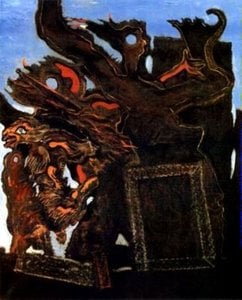
Three figures and three portraits Study
Tamanho da Reprodução
In Three Figures and Three Portraits Study, Fernand Léger presents far more than a mere arrangement of subjects; he offers a profound manifesto of engagement with the burgeoning industrial landscape of the early twentieth century. The painting invites viewers into a complex, rhythmic world where six individuals are depicted amidst a scattered collection of everyday objects, such as bottles and bowls. These elements serve as both compositional anchors and symbolic representations of life in motion. Through his unique method of constructive painting, Léger manages to retain essential visual references to the tangible world while simultaneously stripping away superfluous detail, creating a scene that feels both grounded in reality and elevated by abstraction.
The technique employed in this study is a masterful blend of geometric precision and organic texture. Léger’s distinctive style is characterized by bold shapes—cubes, cylinders, and spheres—arranged with meticulous care. Yet, these forms are far from sterile; they are brought to life through the use of impasto, where thick layers of paint create a palpable physicality on the canvas. This tactile quality conveys the raw energy and dynamism of industrial processes, hinting at an underlying organic rhythm that pulses beneath the surface of the mechanical aesthetic. For the collector or designer, this interplay of heavy texture and structured geometry offers a sophisticated visual depth that commands attention in any curated space.
Emerging from a period of profound societal transformation, this work captures the very zeitgeist of the dawn of the machine age. As Léger witnessed the rapid urbanization and mechanization sweeping across Europe, his art became a mirror to the psychological impact of progress. In this composition, the scattered bottles are not merely decorative; they act as symbols of containment, perhaps representing the bottled-up anxieties and aspirations of humanity within an increasingly complex, modern world. The figures themselves embody a fascinating tension between human presence and mechanical influence, with faces presented as fragmented geometric shapes that suggest identity is subject to constant reconfiguration.
Despite its abstract leanings, Three Figures and Three Portraits Study possesses a remarkable emotional resonance. It exudes a subtle vibrancy—a quiet assertion of vitality that speaks to the transformative power of art. The painting invites contemplation not only of its visual spectacle but also of the deeper questions regarding human experience within an evolving, technological landscape. For those seeking inspiration through high-quality reproductions, this piece serves as a powerful window into a moment in history when the boundaries between humanity and industry began to dissolve, leaving behind a legacy of bold color, structural strength, and enduring spirit.
As cores de "Three figures and three portraits Study", de Fernand Léger possuem uma saturação Balanced Soft. A saturação descreve o quão vívidas ou suaves são as cores.
As cores de "Three figures and three portraits Study" apresentam uma luminância Dark.
O espaço recomendado para "Three figures and three portraits Study", de Fernand Léger é uma Living Room. A sugestão pode, naturalmente, ser adaptada ao seu interior.


1881 - 1955 , França

Explore the profound spiritual depth of geometric abstraction. From Malevich's Suprematism to modern masters, our expert guide reveals how pure form and color command presence in fine art collections.
 Visualizar na parede
 Compartilhar
 Compartilhar
 Detalhes
 Guia
Guia

 Baixar imagem
 Semelhantes
 Raio X
 Ver diaporama
 Perguntas e Respostas
 Estatísticas

 Ler mais









 A opção de vidro está disponível apenas para tamanhos inferiores a 110 cm