x
Visualizar na paredeVisualizar na parede Ver em RAVer em RA Comprar impressão Comprar impressãoComprar imagem Comprar imagem CompartilharCompartilhar
DetalhesDetalhes Adicionar aos favoritos Adicionar aos favoritos Baixar imagemBaixar imagem SemelhantesSemelhantes Raio XRaio X SlideshowSlideshow

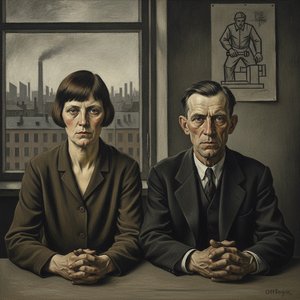
In the camp

Felix Nussbaum’s ‘In the Camp,’ painted in 1940, captures the psychological torment of Jewish prisoners enduring Nazi persecution. This stark depiction showcases Nussbaum's masterful use of Neue Sachlichkeit and serves as a powerful reminder of human suffering during WWII.

Felix Nussbaum (1904-1944) foi um pintor alemão judeu surrealista cuja obra inquietante oferece um olhar pungente sobre a vida, o exílio e a perda durante o Holocausto. Explore seu estilo New Objectivity e autorretratos poderosos – uma expressão artística que permanece como um testemunho da luta humana contra a adversidade.

Reprodução em Óleo Feita à Mão

Óleo sobre tela pintado à mão no tamanho e moldura de sua escolha, feito sob encomenda pelos nossos artistas. (Comprar impressão Comprar impressãoComprar imagem Comprar imagem)

P118B $10
P118H $10
P118W $10
P438Z $10
P508JH $12
P508YH $12
P805H $10
P805Z $10
P919BZ $10
P919G $10
P919XJ $10
P959ZH $10
P968JZ $12
W106C $8
W218G $10
W218JH $8
W218Y $10
W307PJ $10
W316G $10
W316PJ $8
W316Y $10
W398PJ $8
W4111J $10
W500HY $15
W500JH $15
W692G $12
W849H $8
W940BG $15
W953PJ $8

Tamanho padrão
personalizado
CM
INCH

Escolha entre os nossos tamanhos pré-definidos que respeitam as proporções originais da obra de arte.

largura
altura

Pode inserir as suas próprias dimensões para se adequar a uma moldura ou espaço específico. Se o tamanho selecionado não corresponder às proporções da imagem original, iremos cortar a obra de arte ou estender a pintura com elementos adicionais pintados à mão. Um esboço digital será enviado para sua aprovação antes do início da produção.
Tenha em atenção que a pré-visualização no ecrã não reflete o corte ou extensão real. Apenas o esboço mostrará com precisão a composição final.
Embora tamanhos personalizados estejam disponíveis, recomendamos selecionar uma dimensão da lista predefinida para preservar as proporções originais.

Exemplos do que pode ser personalizado: Substituir o rosto pela foto do cliente; Adicionar um animal de estimação (ex: substituir gato por cão); Incluir uma mensagem oculta no fundo; Alterar a paisagem ou elementos do fundo.
Após o pedido, a equipa WahooArt.com enviará um e-mail ao cliente para solicitar instruções e fornecer uma prévia do esboço.

Entrega mundial () em 3 a 4 semanas, em vez das 5 semanas padrão. (26 Agosto). Sem comprometer a qualidade.

why_choose_icon
Envio expresso gratuito para todo o mundo
why_choose_icon
Tela de Linho de Alta Qualidade
why_choose_icon
Seguro de transporte completo
why_choose_icon
Garantia de Reembolso de Impostos Alfandegários
why_choose_icon
Garantia de Fidelidade Cromática
why_choose_icon
Política de Devolução em 60 Dias (Apenas para Defeitos)
why_choose_icon
Garantia de reembolso de 100%
why_choose_icon
Oferta de desconto por quantidade

Preço Total

$ 272

reproduction

In the camp

Técnica de Reprodução

Tamanho da Reprodução

-

Preço Total

$ 272

Informações Rápidas

  • Dimensions: 47 x 42 cm
  • Medium: Oil on panel
  • Subject or theme: Despair, hopelessness
  • Artistic style: Psychological realism
  • Influences: Surrealism
  • Artist: Felix Nussbaum
  • Title: In the camp

Quiz de Arte

Cada pergunta possui apenas uma resposta correta.

Pergunta 1:
What is the artist’s name?
Pergunta 2:
In what year was the painting created?
Pergunta 3:
What artistic movement is Nussbaum’s style associated with?
Pergunta 4:
Where was Felix Nussbaum imprisoned during World War II?
Pergunta 5:
What does the painting depict about the experience of imprisonment?

Descrição da Obra

Felix Nussbaum’s “In The Camp” – A Portrait of Despair Rendered in Bold Minimalism

The painting "In The Camp" by Felix Nussbaum, created in 1940 during his imprisonment at Saint Cyprien internment camp—a harrowing experience that encapsulates the psychological toll of Nazi persecution—stands as a testament to both artistic innovation and profound human emotion. Nussbaum’s oeuvre is marked by Neue Sachlichkeit, or New Objectivity, an art movement born from disillusionment with Expressionism's emotional fervor following World War I. This stylistic choice reflects Nussbaum’s desire to confront the brutal realities of his situation without resorting to sentimental melodrama—a deliberate rejection of artistic conventions that would have obscured the gravity of the subject matter.
  • Subject Matter: The painting depicts a man seated on a crate in the sand, positioned against a bleak landscape dominated by barbed wire and scattered bones. This stark visual representation underscores the dehumanizing conditions endured by Jewish internees during the occupation of France.
  • Composition & Technique: Nussbaum employs a minimalist approach—primarily black and white—to heighten the impact of his depiction. The subdued palette amplifies the sense of isolation and hopelessness, mirroring the psychological state of those imprisoned. Thick brushstrokes contribute to textural richness, conveying both physical discomfort and emotional turmoil.
  • Symbolism: Several elements within the painting carry symbolic weight. The man’s slumped posture embodies defeat and resignation; his downward gaze signifies introspection and despair. The woman defecating into a steel drum serves as a visceral reminder of the degradation inherent in the camp environment, symbolizing loss of dignity and humanity.
  • Historical Context: Created during the Second World War, “In The Camp” captures the pervasive atmosphere of fear and uncertainty that gripped Europe under Nazi rule. Nussbaum’s artistic response to this crisis reflects a broader trend toward confronting uncomfortable truths—a courageous assertion of human experience amidst unimaginable suffering.

Exploring Nussbaum's Artistic Vision: Neue Sachlichkeit & Its Influence

Neue Sachlichkeit, championed by artists like Georg Grosz and Otto Dix, rejected the expressive distortions favored by Expressionism in favor of a rigorously objective portrayal of reality—often unflinching in its depiction of social ills. Nussbaum’s stylistic commitment aligns perfectly with this movement's ethos: he eschews emotional embellishment to convey the bleakness of his surroundings with uncompromising honesty. This deliberate aesthetic choice underscores Nussbaum’s conviction that art should serve as a conduit for confronting difficult truths and fostering empathy for those experiencing hardship.

The Emotional Resonance of “In The Camp”: A Window Into Existential Angst

Beyond its formal qualities, "In The Camp" possesses a palpable emotional resonance—a haunting portrayal of existential angst that transcends time and circumstance. Nussbaum’s masterful use of light and shadow contributes to the painting's dramatic intensity, emphasizing the man’s vulnerability against the backdrop of oppressive surroundings. The overall impression is one of profound sadness and disillusionment—a poignant reminder of the human cost of ideological extremism.

Reproductions & Artistic Legacy: Bringing Nussbaum’s Vision Home

High-quality reproductions of “In The Camp” offer a captivating glimpse into Nussbaum's artistic genius and his unflinching engagement with the horrors of the Holocaust. These prints allow viewers to appreciate the painting’s meticulous detail and expressive power—a testament to Nussbaum’s enduring legacy as an artist who bravely confronted darkness while striving to preserve beauty amidst despair. Consider framing it in a neutral tone to maximize its impact, enhancing its contemplative mood.

Biografia do Artista

A Life Etched in Exile: The Haunting Vision of Felix Nussbaum

Felix Nussbaum’s story is a stark and profoundly moving testament to the power of art born from unimaginable suffering. Born in Osnabrück, Germany, in 1904, his life unfolded against the backdrop of rising nationalism and escalating persecution, culminating in the horrors of the Holocaust. He wasn't simply a victim *of* history; he was an artist who meticulously documented its impact on his soul, creating a body of work that stands as both a personal lament and a universal warning. Nussbaum’s paintings offer a rare, unflinching glimpse into the psychological landscape of displacement, fear, and ultimately, annihilation – a perspective often absent from broader historical narratives. His father, Philipp Nussbaum, a World War I veteran with an early passion for painting himself, recognized and nurtured his son's talent, providing encouragement that would prove vital in the darkening years to come. This initial support fostered a lifelong dedication to art, even as political realities increasingly constricted his path.

Formative Years and Artistic Influences

Nussbaum’s artistic journey began with formal studies in Hamburg and Berlin in 1920, continuing for as long as circumstances allowed. His early work reveals a clear debt to the Post-Impressionist masters, particularly Vincent van Gogh and Henri Rousseau. The vibrant colors and expressive brushwork of these artists provided a foundation upon which Nussbaum would later build his unique style. However, he wasn’t content with mere imitation. He actively sought out new influences, drawn to the unsettling dreamscapes of Giorgio de Chirico and Carlo Carrà, pioneers of the *pittura metafisica* movement. The careful attention to color demonstrated by Carl Hofer's expressionist paintings also left a lasting impression on Nussbaum’s approach. These diverse inspirations coalesced into what would become known as his “New Objectivity” style – a blend of realism and surrealism, characterized by precise detail, unsettling compositions, and a pervasive sense of alienation. This period was marked by experimentation and growth, but the looming shadow of Nazi ideology soon threatened to extinguish his artistic promise.

The Surrealist Vision

Nussbaum’s embrace of Surrealism wasn't merely an aesthetic choice; it represented a profound psychological response to the anxieties of his time. Influenced by Sigmund Freud’s theories on the unconscious, he sought to depict inner turmoil and emotional truth—often confronting themes of loss, trauma, and vulnerability with unflinching honesty. His canvases pulsate with unsettling juxtapositions and symbolic imagery, reflecting the disorientation and terror experienced during periods of exile and persecution. Recurring motifs—such as fragmented figures, distorted landscapes, and recurring musical instruments—speak to his preoccupation with memory, identity, and the disintegration of familiar realities. The artist’s meticulous technique – characterized by layering textures and employing a palette of muted hues—served not only to capture visual beauty but also to convey an emotional depth that transcends mere representation.

The Nazi Shadow and Forced Exile

The rise of Adolf Hitler in 1933 irrevocably altered Nussbaum's trajectory, shattering his artistic aspirations and plunging him into the abyss of antisemitism. Studying on a scholarship at the Berlin Academy of the Arts—a beacon of German intellectual life—he witnessed firsthand the chilling pronouncements of Nazi propaganda minister Joseph Goebbels, outlining the tenets of Nazi art – glorification of heroism and the Aryan race. It became painfully clear that as a Jew, his place within the German artistic establishment was untenable. This realization spurred him into exile, initially to Paris in 1937, followed by Belgium shortly thereafter. The ensuing decade was defined by fear and isolation—a constant struggle against surveillance and repression. Despite finding some measure of refuge, Nussbaum endured profound psychological distress, haunted by memories of his parents’ perilous situation back in Germany and the looming threat of Nazi violence.

A Legacy of Suffering and Artistic Integrity

The German invasion of Belgium in 1940 marked a devastating turning point. Nussbaum was arrested as a “hostile alien” and interned at Saint-Cyprien camp, an experience that irrevocably scarred his psyche. He managed to escape amidst the chaos of wartime France, seeking refuge with Felka Platek—whom he married in 1937—and relying on the generosity of sympathetic friends for sustenance and protection. The final years of Nussbaum’s life were consumed by a desperate quest for survival, producing some of his most poignant and emotionally resonant works—a testament to his unwavering artistic integrity amidst unimaginable hardship. Among these masterpieces are *Self-Portrait with Jewish Identity Card*, a haunting depiction of dehumanization that captures the essence of Nazi persecution; *Triumph of Death*, a complex allegorical tableau reflecting on mortality and despair; and *Felka Platek Painting*, an evocative portrayal of his beloved wife—a symbol of resilience and enduring love. Tragically, Nussbaum’s parents were murdered at Auschwitz in July 1944—a devastating blow that shattered his world. Shortly thereafter, he and Felka were deported to Mechelen transit camp, and ultimately sent to Auschwitz themselves, where Felix Nussbaum perished in August 1944—completing the tragic annihilation of his family within a single year. Despite this unbearable loss, Nussbaum’s art endures as an indelible record of human suffering and a profound indictment of ideological barbarism—a legacy that continues to inspire contemplation and remembrance. His inclusion in documentaries like *Eyewitness* ensures that his voice—and the haunting beauty of his vision—will resonate for generations to come.

Felix Nussbaum

Felix Nussbaum

1904 - 1945 , Alemanha

Dados Rápidos

  • Artistic Movement Or Style: Surrealismo, Nova Objetividade
  • Artists Who Influenced This Artist:
    • Vincent van Gogh
    • Henri Rousseau
    • Giorgio De Chirico
    • Carlo Carrà
  • Date Of Birth: 1904
  • Date Of Death: 1944
  • Full Name: Felix Nussbaum
  • Nationality: Jüdisch-Deutsch
  • Notable Artworks:
    • Retrato com Cartão de Identidade Judaica
    • Triumpho da Morte
    • Pintura de Felka Platek
    • Máscara
  • Place Of Birth: Osnabrück, Alemanha
Explore obras de arte organizadas por temas, estilos e características.