Visualizar na paredeVisualizar na parede Ver em RAVer em RA Comprar impressão Comprar impressãoComprar pintura feita à mão Comprar pintura feita à mão CompartilharCompartilhar
DetalhesDetalhes Adicionar aos favoritos Adicionar aos favoritos Baixar imagemBaixar imagem SemelhantesSemelhantes Raio XRaio X SlideshowSlideshow

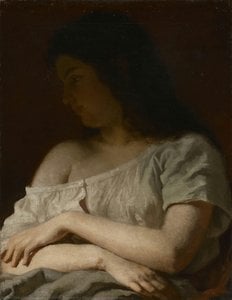
Meditation

Explore 'Meditation' by Eugène Carrière – a haunting 1893 portrait of Madame Carrière in muted tones. Impressionistic realism & poignant emotion. Discover this Symbolist masterpiece.

Eugène Carrière (1849-1906) foi um pintor francês conhecido por suas pinturas monocromáticas em tons de marrom e temas familiares. Influenciado por Rubens, sua obra, como "A Criança Enferma", inspirou Picasso e é um marco do simbolismo.

Adquira uma imagem digital de alta resolução e aprimorada, muito superior à prévia online.

Cada arquivo é meticulosamente preparado por nossos especialistas internos, utilizando ferramentas avançadas e retoques manuais de alta precisão. Garantimos que cada imagem apresente clareza excepcional, fidelidade de cores e detalhes minuciosos.

O arquivo final é entregue por e-mail em até 72 horas, otimizado para uso imediato em ambientes profissionais, editoriais e de impressão. Esta é a mesma qualidade utilizada por estúdios de design de alto nível, editoras e galerias.

Imagem Digital

Baixe um arquivo de alta resolução para exibição pessoal, impressão e projetos criativos. (Comprar impressão Comprar impressãoComprar pintura feita à mão Comprar pintura feita à mão)

Preço Total

$ 24,90

Incluído em cada compra de imagem digital

Entrega Digital Especializada e Garantida

Ao escolher o WahooArt.com, você não está apenas adquirindo uma imagem — você está recebendo uma obra de arte digital profissionalmente aprimorada, elaborada com precisão e com garantia de satisfação. Aqui está tudo o que acompanha seu pedido, automaticamente:

shipping_icon
Entrega rápida por e-mail

O seu arquivo de imagem digital em alta resolução será enviado por e-mail em até 72 horas após o pedido — pronto para uso imediato.

canvas_icon
Arquivo Digital com IA Otimizado

Sua obra de arte é otimizada profissionalmente por meio de ferramentas avançadas de IA e edição manual, garantindo o máximo de detalhes, clareza e precisão de cores.

insurance_icon
Reenvio gratuito vitalício

Apagou ou perdeu o seu ficheiro acidentalmente? Não se preocupe – nós reenviamos para si a qualquer momento, gratuitamente.

tax_icon
Sem Taxas de Importação - Sempre

Desfrute da sua obra de arte instantaneamente, sem taxas alfandegárias, impostos ou custos de entrega — downloads digitais são sempre isentos de taxas.

color_icon
Garantia de Fidelidade de Cores

Garantimos que sua imagem digital reflita as cores originais com a maior fidelidade possível, utilizando ferramentas profissionais e gerenciamento de cores.

return_icon
Garantia de Satisfação de 100 Dias

Se você não estiver satisfeito com sua imagem digital, nós a revisaremos ou reembolsaremos 100% dentro de 100 dias — sem perguntas.

guarantee_icon
Garantia de Reembolso 100%

Não está satisfeito? Receba o reembolso total em até 100 dias após o recebimento do seu arquivo digital — sem perguntas.

discount_icon
Descontos para pedidos em lote

Compre 3 imagens, economize 10% - Compre 5, economize 15% - Compre 10+, economize 20%. Ideal para projetos criativos, galerias e agências.

Informações Rápidas

  • Subject or theme: Loneliness, introspection
  • Artist: Eugène Anatole Carrière
  • Notable elements or techniques: Extensive layering and blending of oil paints; velvety texture.
  • Location: Musée des Beaux-Arts de Rouen
  • Movement: Symbolism
  • Title: Meditation
  • Year: 1893

Quiz de Arte

Cada pergunta possui apenas uma resposta correta.

Pergunta 1:
What is the predominant color palette used in Eugène Anatole Carrière’s painting ‘Meditation’?
Pergunta 2:
The artist's style is described as 'impressionistic' due to:
Pergunta 3:
Which artist influenced Carrière’s early work, particularly evident in the glowing colors of his paintings?
Pergunta 4:
What is a key characteristic of Carrière's technique – specifically how he achieved texture in the painting?
Pergunta 5:
The pose and expression of the woman depicted in ‘Meditation’ convey themes of:

Meditation

Eugène Anatole Carrière’s “Meditation” stands as a poignant testament to the Symbolist movement's preoccupation with psychological depth and emotional resonance. Painted in 1893, this oil on canvas portrait captures a young woman lost in contemplation—a figure instantly recognizable for its haunting stillness and subdued palette.

The artwork’s immediate impact is achieved through Carrière’s masterful use of color. Rejecting the vibrant hues favored by Impressionists, he opted for a deliberate monochrome scheme dominated by shades of brown and black, punctuated by subtle hints of muted reds and oranges. This restricted tonal range wasn't merely stylistic choice; it served as a crucial element in conveying the subject’s inner turmoil—a reflection of Rubensian influence evident in the luminous glow of his early canvases.

Technically, Carrière employed an ambitious layering process, meticulously blending oil paints to create a velvety texture that envelops the figure. Extensive glazing techniques were utilized to build up depth and luminosity, capturing the nuances of light and shadow with remarkable precision. The artist’s brushstrokes are loose yet controlled, conveying both spontaneity and deliberate artistic intention.

Beyond its aesthetic qualities, “Meditation” resonates deeply with Symbolist themes—specifically, the exploration of human emotion and subconscious experience. The woman's posture embodies vulnerability and introspection, mirroring the movement’s fascination with confronting inner anxieties and grappling with existential questions. Her gaze directs inward, suggesting a preoccupation with grief or melancholy – emotions central to the Symbolist canon.

The painting’s composition is deliberately flattened, prioritizing the figure against a hazy background—a technique designed to heighten emotional intensity and draw the viewer's eye directly to the subject’s face. Lines are organic and flowing, mirroring the contours of her body and emphasizing her stillness. The subtle use of warmer tones around her eyes lends warmth to the overall somber mood.

“Meditation” continues to captivate audiences today as a powerful example of Symbolist art—a piece that transcends mere visual representation to communicate profound psychological truths. Its enduring appeal lies in its ability to evoke empathy and contemplation, inviting viewers to consider themes of solitude, sorrow, and the complexities of human consciousness.


Biografia do Artista

Early Life and Training

Eugène Anatole Carrière, born January 16, 1849, in Gournay-sur-Marne, France, embarked on his artistic journey at a young age. He pursued his studies diligently at the École des Beaux-Arts in Paris, absorbing the foundational principles of classical art while simultaneously nurturing an inclination towards more expressive styles. His formative years under Cabanel instilled within him a meticulous attention to detail and a mastery of anatomical representation—skills that would prove invaluable throughout his prolific career.

Artistic Style and Influences

Carrière’s distinctive artistic style is immediately recognizable by its pervasive brown monochrome palette, a deliberate choice that has captivated critics and collectors alike. This unconventional aesthetic wasn't born in isolation; it resonated deeply with the spirit of Symbolism, an artistic movement characterized by its preoccupation with psychological states and spiritual themes.
A pivotal influence on Carrière’s oeuvre was Peter Paul Rubens—a Flemish Baroque painter whose dynamic compositions and luminous color harmonies captivated him during his formative years. Exposure to Rubens's work fostered a fascination for theatrical lighting and the depiction of emotion, elements that would permeate Carrière’s canvases.

The Young Mother (1879)

One of Carrière’s earliest masterpieces, “The Young Mother,” exemplifies the artist’s signature domestic themes. Executed in 1879, this poignant portrait captures a moment of quiet intimacy—a mother tenderly gazing upon her child.
Displayed prominently at the Musée des Beaux-Arts de Rouen, "The Young Mother" established Carrière's reputation as a painter of profound emotional depth and technical virtuosity. It signaled the beginning of his exploration into portraying human experience with sensitivity and nuance.

Notable Works and Exhibitions

Carrière’s artistic output spanned numerous exhibitions throughout his lifetime, notably those organized by the Société Nationale des Beaux-Arts, where he served as a respected member and influential educator.
Among his most celebrated paintings are “The Sick Child,” depicting a vulnerable infant bathed in soft light; “First Communion,” portraying a solemn religious ceremony with meticulous detail; and “Portrait of Louis-Henri Devillez,” which showcases Carrière’s exceptional ability to convey character and psychological complexity.

Legacy and Influence on Modern Art

Eugène Carrière's monochrome style exerted considerable influence on subsequent generations of artists, particularly Pablo Picasso during his Blue Period. This stylistic kinship underscores Carrière’s enduring legacy as a pioneer of French Symbolism—a movement that sought to transcend mere representation and delve into the realm of inner experience.
His unwavering commitment to exploring human emotion through restrained color palettes continues to inspire artists today, cementing Carrière's place as a cornerstone of modern art history.
Eugène Anatole Carrière

Eugène Anatole Carrière

1849 - 1906 , França

Breve Biografia

  • Artistic Movement Or Style: Simbolismo, Monocromático
  • Artists Or Movements Influenced By This Artist: ['Picasso (azul)']
  • Artists Who Influenced This Artist: ['Rubens']
  • Date Of Birth: 16 jan. 1849
  • Date Of Death: 27 mar. 1906
  • Full Name: Eugène Anatole Carrière
  • Nationality: Francês
  • Notable Artworks:
    • O Filho Doente
    • A Primeira Comunhão
  • Place Of Birth: Gournay-sur-Marne, França