Consultoria de arte gratuita

x
Comprar impressão Comprar impressãoComprar imagem em alta resolução Comprar imagem em alta resolução EnviarEnviar
DetalhesDetalhes Adicionar aos favoritos Adicionar aos favoritos BaixarBaixar SemelhantesSemelhantes Raio XRaio X SlideshowSlideshow

Spring frost

Discover 'Spring Frost' by Elioth Gruner – a captivating Australian landscape painting of cows bathed in golden light. Explore the serene beauty and artistic mastery of this iconic work.

Elioth Gruner (1882-1939) foi um pintor australiano renombrado pela beleza serena das paisagens rurais da Nova Gales do Sul e vencedor do Prêmio Wynne, um registro sete vezes. Explore seus estudos de luz impressionista!

Reprodução em Óleo Feita à Mão

Óleo sobre tela pintado à mão no seu tamanho e moldura, feito sob encomenda pelos nossos artistas.

P118B $10
P118H $10
P118W $10
P438Z $10
P508JH $12
P508YH $12
P805H $10
P805Z $10
P919BZ $10
P919G $10
P919XJ $10
P959ZH $10
P968JZ $12
W106C $8
W218G $10
W218JH $8
W218Y $10
W307PJ $10
W316G $10
W316PJ $8
W316Y $10
W398PJ $8
W4111J $10
W500HY $15
W500JH $15
W692G $12
W849H $8
W940BG $15
W953PJ $8

Standard
custom
CM
INCH

Escolha entre os nossos tamanhos pré-definidos que respeitam as proporções originais da obra de arte.

largura
altura

Pode inserir as suas próprias dimensões para se adequar a uma moldura ou espaço específico. Se o tamanho selecionado não corresponder às proporções da imagem original, iremos cortar a obra de arte ou estender a pintura com elementos adicionais pintados à mão. Um esboço digital será enviado para sua aprovação antes do início da produção.
Tenha em atenção que a pré-visualização no ecrã não reflete o corte ou extensão real. Apenas o esboço mostrará com precisão a composição final.
Embora tamanhos personalizados estejam disponíveis, recomendamos selecionar uma dimensão da lista predefinida para preservar as proporções originais.

Exemplos do que pode ser alterado: Substituir o rosto pela foto do cliente; Adicionar um animal de estimação (ex: substituir gato por cão); Incluir uma mensagem oculta no fundo; Alterar a paisagem ou elementos do fundo.
Após o pedido, a equipa WahooArt.com enviará um e-mail ao cliente para solicitar instruções e fornecer uma prévia do esboço.

Entrega Mundial () em 3 a 4 semanas, em vez das 5 semanas padrão. (2 Julho). Sem comprometer a qualidade.

why_choose_icon
Envio Expresso Gratuito para todo o Mundo
why_choose_icon
Tela de Linho Premium
why_choose_icon
Seguro de envio completo
why_choose_icon
Garantia de Reembolso de Impostos Alfandegários
why_choose_icon
Garantia de Fidelidade de Cores
why_choose_icon
Política de Devolução de 60 Dias (Apenas para Defeitos)
why_choose_icon
Garantia de 100% de Reembolso
why_choose_icon
Desconto para múltiplas unidades

Preço Total

-

reproduction

Spring frost

Técnica de Reprodução

Dimensões da Reprodução

-

Preço Total Final

-

Dados Rápidos

  • Notable elements: Impressionistic light
  • Location: Art Gallery NSW
  • Dimensions: 157 x 206 cm
  • Year: 1919
  • Style: Landscape painting
  • Artist: Elioth Gruner
  • Title: Spring Frost

Teste de Arte

Cada pergunta possui apenas uma resposta correta.

Pergunta 1:
What is the primary subject of Elioth Gruner’s ‘Spring Frost’?
Pergunta 2:
In what year was ‘Spring Frost’ painted?
Pergunta 3:
According to the provided text, what was a key factor in Gruner’s approach to painting ‘Spring Frost’?
Pergunta 4:
Which prize did ‘Spring Frost’ win in 1919?
Pergunta 5:
What artistic movement is most closely associated with Elioth Gruner’s style, as indicated by the text?

Descrição da Obra

A Dawn of Tranquility: Elioth Gruner’s “Spring Frost”

Elioth Gruner's "Spring Frost," painted in 1919, isn’t merely a depiction of a rural scene; it’s an immersion into the very essence of Australian light and landscape. This evocative work, now residing within the Art Gallery of New South Wales, captures a fleeting moment – the nascent warmth of early morning breaking over a pastoral vista—with a remarkable sensitivity to atmosphere and texture. Gruner, a pivotal figure in Australian Impressionism, masterfully translates the raw beauty of the Emu Plains countryside into a painting that resonates with both serenity and vibrant energy.

The scene unfolds before us: a small herd of dairy cows stands bathed in the soft glow of the rising sun, their forms rendered with a loose, expressive brushstroke. The foreground is dominated by a field of grass, its texture achieved through short, choppy strokes that seem to shimmer with reflected light. Beyond this immediate focus, the eye drifts into a hazy distance, where rolling hills and a muted sky create an expansive sense of space. Gruner’s choice of palette—a symphony of earthy browns, ochres, and subtle blues—evokes the cool tones of dawn while simultaneously injecting warmth through the golden highlights that dance across the cows' hides and the dew-kissed grasses.

The Influence of Light and Color

Gruner’s technique is deeply rooted in the Impressionist tradition, yet he possesses a distinctly Australian sensibility. He wasn’t simply aiming to replicate what he saw; instead, he sought to capture the *feeling* of that moment—the crispness of the air, the warmth on the skin, and the transformative power of light. His use of broken color, characteristic of Impressionism, creates a sense of movement and vibrancy within the painting. The colors aren’t blended smoothly; rather, they are applied in small, distinct strokes, allowing each hue to retain its individual identity and contribute to the overall luminosity of the scene.

Notably, Gruner was influenced by Max Meldrum's theories on color and light, a prominent figure in early 20th-century Australian art. Meldrum’s emphasis on “tone” – the fundamental quality of light—guided Gruner to prioritize capturing the subtle shifts in illumination across the landscape. This pursuit is evident in the painting’s masterful rendering of shadows and highlights, which create a dynamic interplay of form and atmosphere.

A Portrait of Rural Australia

"Spring Frost" isn't just a beautiful landscape; it’s also a poignant reflection on rural life in early 20th-century Australia. The presence of the cows—symbols of industry, sustenance, and connection to the land—underscores the importance of agriculture within the Australian identity. The solitary figure of the farmer, subtly integrated into the scene, suggests a quiet dignity and a deep understanding of his environment. This painting offers a glimpse into a world where life was intimately connected to the rhythms of nature.

Symbolism and Emotional Resonance

Beyond its representational qualities, “Spring Frost” is rich in symbolism. The title itself—"Spring Frost"—evokes a sense of delicate beauty and transient grace. The frost, barely perceptible yet undeniably present, hints at the fragility of life and the ephemeral nature of beauty. The painting’s overall mood is one of peaceful contemplation, inviting the viewer to slow down, appreciate the simple pleasures of rural existence, and connect with the natural world.

Reproductions of “Spring Frost” capture a significant portion of this original atmosphere. The artwork's enduring appeal lies in its ability to transport us to a bygone era—a time when life moved at a slower pace and the beauty of the Australian landscape was deeply revered. It remains a cornerstone of Australian art, embodying both the artistic innovation of its creator and the timeless allure of the bush.

Obras Relacionadas


Biografia do Artista

Elioth Gruner: The Texture of Light

Elioth Lauritz Leganyer Gruner (1882-1939) stands as one of Australia’s most revered landscape painters, a true heir to the Heidelberg School tradition and celebrated for his serene depictions of rural New South Wales. His artistic journey began in Gisborne, New Zealand, where he was born December 16th, 1882 – son of Elliott Grüner, a Norwegian-born bailiff, and Mary Ann Brennan, whose Irish heritage instilled within him a profound connection to the land—a connection that would become central to his artistic vision. Shortly after his birth, the family relocated to Sydney, immersing young Elioth in an environment brimming with burgeoning artistic expression. Already demonstrating an innate aptitude for drawing at a tender age, he received invaluable instruction from Julian Ashton around twelve years old, marking the genesis of his formal artistic education. However, fate dealt him a cruel blow when both his father and older brother succumbed to illness, thrusting him into considerable responsibilities at just fourteen—a formative experience that fueled his determination to pursue his passion for painting alongside his duties as caregiver. Gruner’s artistic style is undeniably Impressionistic, though it evolved over time, absorbing influences from diverse sources. He possessed an extraordinary talent for capturing the ephemeral effects of light and atmosphere in the Australian landscape, imbuing his canvases with a palpable sense of serenity and poetic beauty. The encouragement he received from Norman Lindsay proved instrumental in shaping his artistic trajectory, bolstering his confidence and refining his perception of artistic excellence. A pivotal moment arrived between 1923 and 1925 when Gruner embarked on an extended sojourn to Europe—a transformative experience that profoundly impacted his creative sensibilities. During this period, he deliberately simplified his compositions, prioritizing pattern and brushwork, and honing his technique under the guidance of Sir William Orpen – a deliberate effort to elevate his artistic craft. This newfound focus on light and color harmony would become a defining characteristic of his later works. His breakthrough came in 1907 when he began submitting paintings to exhibitions organized by the Society of Artists in Sydney, attracting considerable attention from fellow artists—particularly Norman Lindsay, who famously declared Gruner “painted the purest light that ever has been seen on a bit of canvas.” This accolade underscored Gruner’s unwavering commitment to capturing the essence of natural illumination and translating it onto his canvases. In 1916, he achieved recognition as a master when he secured the prestigious Wynne Prize for landscape painting with "Morning Light"—a luminous depiction of Jim Innes Farm at Emu Plains—purchased by the Art Gallery of New South Wales (AGNSW) and cementing his legacy as Australia’s most prolific Wynne Prize winner. Subsequent victories continued to affirm Gruner's artistic prowess, culminating in the acquisition of “Spring Frost” (1919), which remains arguably the most beloved Australian landscape painting—a testament to his ability to convey emotion through masterful brushwork and color palettes. Gruner’s dedication extended beyond mere technical skill; he meticulously considered every element of his subject matter before embarking on a painting project, reflecting a profound respect for the natural world and an unwavering desire to communicate its beauty authentically. He continued his artistic pursuits after Ashton's illness, taking complete charge of classes at Sydney Art School for approximately three months—a testament to his generosity and commitment to nurturing future generations of artists. His final masterpiece, “The Valley of the Tweed” (1921), commissioned by the AGNSW trustees, exemplifies Gruner’s masterful synthesis of technique and emotion—a poignant portrayal of Australian rural life that continues to resonate with viewers today. Elioth Gruner passed away October 17th, 1939, at his home in Waverley, leaving behind a remarkable body of work that embodies the spirit of Impressionism and celebrates the splendor of the Australian landscape. His paintings are not merely representations of places; they are evocative expressions of light, atmosphere, and emotion—a legacy that secures his place as one of Australia’s greatest artists.
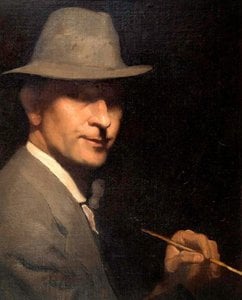
Elioth Gruner

Elioth Gruner

1882 - 1939 , Nova Zelândia

Informações Rápidas

  • Artistic Movement Or Style: Impressionismo
  • Artists Who Influenced This Artist:
    • Julian Ashton
    • Norman Lindsay
    • William Orpen
  • Date Of Birth: 16 dezembro 1882
  • Date Of Death: 17 outubro 1939
  • Full Name: Elioth Lauritz Leganyer Gruner
  • Nationality: Austríaco
  • Notable Artworks:
    • Morning Light
    • Spring Frost
    • The Valley of the Tweed
  • Place Of Birth (City And Country): Gisborne, Nova Zelândia