Visualizar na paredeVisualizar na parede Ver em RAVer em RA Alternar para Impressão Alternar para ImpressãoComprar pintura feita à mão Comprar pintura feita à mão CompartilharCompartilhar
DetalhesDetalhes Adicionar aos favoritos Adicionar aos favoritos Baixar imagemBaixar imagem SemelhantesSemelhantes Raio XRaio X SlideshowSlideshow EstatísticasEstatísticas

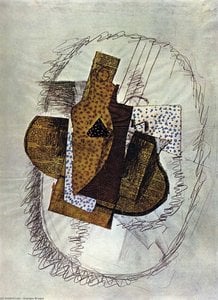
Proun 99

Explore Proun 99 by El Lissitzky, a striking geometric abstraction from 1924 embodying the Bauhaus aesthetic and Russian Constructivism. This mesmerizing canvas showcases layered triangles and circles—a testament to Lissitzky’s revolutionary vision; discover its beauty.

El Lissitzky (1890-1941): artista vanguardista russo de Suprematismo e Construtivismo. Explore sua influência na Bauhaus, tipografia, photomontagens e designs impactantes.

Adquira uma imagem digital de alta resolução e aprimorada, muito superior à prévia online.

Cada arquivo é meticulosamente preparado por nossos especialistas internos, utilizando ferramentas avançadas e retoques manuais de alta precisão. Garantimos que cada imagem apresente clareza excepcional, fidelidade de cores e detalhes minuciosos.

O arquivo final é entregue por e-mail em até 72 horas, otimizado para uso imediato em ambientes profissionais, editoriais e de impressão. Esta é a mesma qualidade utilizada por estúdios de design de alto nível, editoras e galerias.

Imagem Digital

Baixe um arquivo de alta resolução para exibição pessoal, impressão e projetos criativos. (Alternar para Impressão Alternar para ImpressãoComprar pintura feita à mão Comprar pintura feita à mão)

Preço Total

$ 24,90

Incluído em cada compra de imagem digital

Entrega Digital Especializada e Garantida

Ao escolher o WahooArt.com, você não está apenas adquirindo uma imagem — você está recebendo uma obra de arte digital profissionalmente aprimorada, elaborada com precisão e com garantia de satisfação. Aqui está tudo o que acompanha seu pedido, automaticamente:

shipping_icon
Entrega rápida por e-mail

O seu arquivo de imagem digital em alta resolução será enviado por e-mail em até 72 horas após o pedido — pronto para uso imediato.

canvas_icon
Arquivo Digital com IA Otimizado

Sua obra de arte é otimizada profissionalmente por meio de ferramentas avançadas de IA e edição manual, garantindo o máximo de detalhes, clareza e precisão de cores.

insurance_icon
Reenvio gratuito vitalício

Apagou ou perdeu o seu ficheiro acidentalmente? Não se preocupe – nós reenviamos para si a qualquer momento, gratuitamente.

tax_icon
Sem Taxas de Importação - Sempre

Desfrute da sua obra de arte instantaneamente, sem taxas alfandegárias, impostos ou custos de entrega — downloads digitais são sempre isentos de taxas.

color_icon
Garantia de Fidelidade de Cores

Garantimos que sua imagem digital reflita as cores originais com a maior fidelidade possível, utilizando ferramentas profissionais e gerenciamento de cores.

return_icon
Garantia de Satisfação de 100 Dias

Se não estiver satisfeito com a sua imagem digital, nós a revisaremos ou reembolsaremos 100% dentro de 100 dias — sem perguntas.

guarantee_icon
Garantia de Reembolso 100%

Não está satisfeito? Receba o reembolso total em até 100 dias após o recebimento do seu arquivo digital — sem perguntas.

discount_icon
Descontos para pedidos em lote

Compre 3 imagens, economize 10% - Compre 5, economize 15% - Compre 10+, economize 20%. Ideal para projetos criativos, galerias e agências.

Informações Rápidas

  • Subject or theme: Abstract design
  • Year: 1924
  • Location: Private Collection
  • Dimensions: 129 x 99 cm
  • Medium: Painting
  • Notable elements or techniques: Geometric abstraction
  • Title: Proun 99

A Geometric Symphony: Exploring Proun 99 by El Lissitzky

El Lissitzky’s Proun 99 stands as a testament to the revolutionary spirit of the Bauhaus era and a cornerstone of Constructivism, offering more than just visual beauty; it embodies an ambitious conceptual framework aimed at reshaping perception itself. Painted in 1924, this artwork isn't merely a depiction of shapes—it’s an assertion of geometric principles as instruments for constructing reality. Lissitzky, deeply influenced by Piet Mondrian and Kubist explorations, sought to transcend representational art, believing that pure abstraction could unlock deeper truths about the universe and humanity’s place within it.
  • Subject Matter: The composition centers around a dominant triangle, flanked by two smaller triangles positioned strategically at the upper left corner. Complementing this geometric core are three circles meticulously placed throughout the canvas—one anchoring the lower right quadrant, another subtly above and to the left of the central triangle, and finally occupying the uppermost portion of the left side.
  • Style & Technique: Lissitzky’s approach aligns perfectly with Constructivism's ethos – a movement dedicated to utilizing industrial materials and geometric forms to express social ideals. The painting employs a bold palette—primarily shades of gray—creating an austere yet impactful visual experience. Lissitzky achieved this effect through meticulous layering of paint, resulting in a textured surface that enhances the solidity and permanence of the shapes depicted.

Historical Context: Bauhaus and Beyond

Proun 99 emerged during a period of profound artistic and intellectual upheaval. The Bauhaus school in Weimar championed experimentation with new materials and techniques, rejecting traditional academic conventions in favor of functional design and universal aesthetic principles. Lissitzky’s work directly responded to this zeitgeist, reflecting the broader desire for artists to engage actively in shaping society—a conviction rooted in his involvement with Marxist ideology. He envisioned Proun as a tool for visualizing “Space-Time,” arguing that geometric abstraction could liberate viewers from illusionistic representations and foster a more rational understanding of existence.

Symbolism & Conceptual Depth

Beyond its formal qualities, Proun 99 carries significant symbolic weight. The triangle represents stability and unity—a foundational element in Lissitzky’s cosmological vision. It symbolizes the cosmos itself, mirroring the tetrahedron – a geometric shape considered sacred by ancient civilizations – representing the building blocks of reality. The circles contribute to this overarching symbolism, symbolizing movement and dynamism, countering the rigidity implied by the triangles. Lissitzky deliberately avoided explicit narrative content, prioritizing instead the viewer’s engagement with the artwork's underlying conceptual framework.

Emotional Impact & Artistic Legacy

Despite its apparent simplicity, Proun 99 possesses a remarkable emotional resonance. The restrained palette and precise execution convey a sense of calm contemplation—inviting viewers to consider the fundamental structures governing our perception. Lissitzky’s pioneering work continues to inspire artists and designers today, demonstrating the enduring power of abstraction to communicate complex ideas and evoke profound feelings. Reproductions of Proun 99 offer an opportunity to experience this seminal artwork's intellectual rigor and aesthetic elegance within a contemporary setting.

Biografia do Artista

A Revolutionary Vision: The Life and Art of El Lissitzky

El Lissitzky, born Lazar Markovich Lissitzky in 1890 in the small Russian town of Pochinok, emerged as a pivotal figure in the tumultuous landscape of early 20th-century art. His journey was one of constant reinvention, driven by a fervent belief in the power of art to shape society and reflect the dynamism of the modern world. From his initial training as an architect and engineer – pursuits hampered by restrictions placed upon Jewish students – Lissitzky’s path diverged towards artistic expression, initially through illustrations steeped in Jewish folklore. These early works, like his cover for ‘Chad Gadya’, reveal a nascent talent already grappling with narrative and visual storytelling, hinting at the profound cultural roots that would continue to inform his aesthetic. A move to Berlin and Darmstadt broadened his horizons, but it was upon returning to Russia that Lissitzky truly found his artistic voice, becoming inextricably linked with the revolutionary fervor sweeping through the nation.

The Embrace of Abstraction: Suprematism and Proun

A defining moment arrived with his encounter with Kazimir Malevich and the embrace of Suprematism. This radical movement, dedicated to pure geometric abstraction, resonated deeply with Lissitzky’s desire to transcend representational art and tap into a universal visual language. He became a key member of UNovis, the Suprematist group established in Vitebsk, actively disseminating its principles through teaching and artistic production. However, Lissitzky didn't simply replicate Malevich’s style; he forged his own distinct path with the development of *Proun*. This unique series, born from a fusion of Suprematism and Constructivism, explored spatial relationships and geometric forms in dynamic compositions that often resembled architectural blueprints or exploded diagrams. Proun wasn't merely painting; it was an investigation into the very structure of space itself, a premonition of future architectural possibilities. These works, with their floating planes and intersecting lines, embodied Lissitzky’s belief in art as a force capable of constructing new realities. The influence of his engineering background is palpable here, lending a structural logic to the abstract forms. He sought to represent not objects themselves, but the *relationships* between them – a radical departure from traditional artistic practice.

Art as Propaganda and Social Commentary

Lissitzky's artistic vision extended far beyond the canvas. He passionately believed that art should serve a social purpose, actively engaging with political ideologies and seeking ways to integrate design into everyday life. This conviction led him to become deeply involved in Soviet propaganda efforts, creating powerful posters and graphic designs intended to mobilize public support for the Bolshevik regime. His 1941 poster calling for tank construction stands as a testament to this commitment – a stark, impactful image reflecting the urgency of wartime. Beyond propaganda, Lissitzky revolutionized typography, exhibition design, and photomontage. He understood that effective communication required innovative visual strategies, and he fearlessly experimented with new techniques to convey his message. His photomontages, such as ‘The Constructor’ (1924), are particularly striking – self-portraits that blend photography with geometric abstraction, offering a complex commentary on identity and the role of the artist in society. These works were not simply decorative; they were carefully constructed arguments, designed to persuade and inspire action.

A Cultural Ambassador: Spreading Constructivist Ideals

Lissitzky's influence transcended national borders. He served as a crucial cultural ambassador for Soviet art, disseminating Constructivist ideas throughout Western Europe, particularly in Germany. His innovative exhibition designs challenged traditional gallery spaces, creating immersive environments that actively engaged viewers. These exhibitions weren’t simply displays of artwork; they were carefully constructed experiences designed to provoke thought and inspire action. His work had a profound impact on the Bauhaus and De Stijl movements, influencing generations of artists and designers with its emphasis on geometric abstraction, functionalism, and social responsibility. He collaborated with figures like Kurt Schwitters and Theo van Doesburg, fostering a cross-cultural exchange that enriched the artistic landscape of the era. Lissitzky’s belief in the potential of design to improve society fueled his dedication to educating others about Constructivist principles and promoting their application in various fields, from architecture to typography.

Legacy and Enduring Influence

El Lissitzky’s life was tragically cut short in 1941 in Moscow, but his legacy continues to resonate today. He bridged the gap between art and architecture, abstraction and social purpose, leaving behind a body of work that is both intellectually stimulating and visually captivating. The establishment of the Lissitzky Foundation in 2014 underscores the ongoing commitment to preserving his artistic heritage and preparing a comprehensive catalogue raisonné of his creations. His innovations in typography, exhibition design, and photomontage continue to inspire contemporary artists and designers, while his unwavering belief in the power of art as a force for social change remains profoundly relevant.
  • His work is held in numerous international collections
  • Museums featuring his works include the Taganrog Art Museum and Novokuznetsk Art Museum.
El Lissitzky wasn’t simply an artist; he was a visionary who dared to imagine a new world, and whose art continues to shape our understanding of visual communication and its potential for transformation.

El Lissitzky

El Lissitzky

1890 - 1941 , Rússia

Breve Biografia

  • Artistic Movement Or Style:
    • Suprematismo
    • Construtivismo
  • Artists Or Movements Influenced By This Artist:
    • Bauhaus
    • De Stijl
  • Artists Who Influenced This Artist: ['Kazimir Malevich']
  • Date Of Birth: 23 Nov 1890
  • Date Of Death: 30 Dez 1941
  • Full Name: El Lissitzky
  • Nationality: Russo
  • Notable Artworks:
    • O Construtor
    • Chad Gadya
    • Proun
  • Place Of Birth: Pochinki, Rússia