Impressão giclée ou em tela de qualidade de museu, com produção rápida e opções flexíveis de acabamento. ( Comprar pintura feita à mão Alternar para Imagem Digital)





























Escolha entre os nossos tamanhos pré-definidos que respeitam as proporções originais da obra de arte.

Insira a largura e a altura desejadas para se ajustarem à sua moldura ou parede. Uma impressão pode ser apenas cortada, nunca ampliada além da imagem original; portanto, um tamanho com proporções diferentes resultará na perda de parte da imagem. Enviamos uma maquete digital para sua aprovação antes de realizarmos a impressão. A imagem exibida nesta página não mostra o corte real — apenas a maquete o faz.
Entrega mundial () em 2 semanas, em vez das 4/5 semanas padrão. (11 Novembro)
Retable and side altars
Tamanho da Reprodução
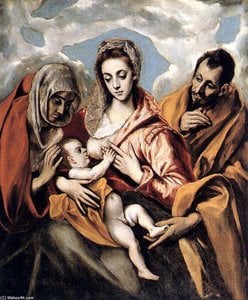
El Greco’s “Retable and Side Altars,” painted in 1577 for the Cistercian convent of Santo Domingo el Antiguo in Toledo, Spain, isn't merely a religious depiction; it’s a profound exploration of faith, emotion, and the burgeoning artistic spirit of the late Renaissance. Commissioned during a pivotal moment in El Greco’s career – his arrival in Spain after years spent honing his craft in Italy and Greece – this monumental altarpiece reveals a synthesis of influences, forging a uniquely powerful style that would resonate through art history. The work stands as a testament to El Greco's ability to imbue religious iconography with an intensely personal and dramatic sensibility, pushing beyond the established conventions of the time.
The core of the altarpiece centers around “The Assumption of the Virgin,” a breathtaking vision of Mary ascending into heaven. El Greco masterfully employs a dynamic composition, eschewing the static serenity often associated with religious art. Figures are elongated and distorted, their bodies contorted in expressions of anguish and ecstasy. The use of color is equally arresting – deep reds, blues, and ochres dominate, creating an atmosphere of heightened drama and spiritual intensity. The architectural setting, rendered with a subtle yet effective perspective, anchors the scene within the confines of Toledo’s Santo Domingo convent, grounding the divine in the earthly realm.
El Greco's artistic journey is crucial to understanding this masterpiece. His early training in Crete exposed him to Byzantine iconography, characterized by its stylized figures and rich symbolism. However, his time in Italy, particularly Venice, introduced him to the innovations of the Renaissance – a fascination with perspective, naturalism, and the use of oil paint. Crucially, he was deeply influenced by Flemish artists like Jan van Eyck and Dirk Bouts, whose meticulous detail, dramatic lighting, and emotional intensity found their way into his work. This confluence of influences is most evident in the altarpiece’s composition, its use of chiaroscuro (the contrast between light and dark), and the expressive faces of its figures.
Yet, El Greco didn't simply mimic these styles; he transformed them, imbuing them with his own distinctive vision. The elongated figures, the heightened emotionalism, and the unsettling use of color are distinctly *El Greco*. He wasn’t interested in creating a purely realistic representation of religious subjects; instead, he sought to convey their spiritual essence through powerful visual metaphors.
The “Retable and Side Altars” is rich with symbolic detail. The figures themselves are not merely portraits but embodiments of theological concepts. The placement of saints, the gestures they make, and their expressions all contribute to a complex narrative that speaks to themes of faith, devotion, and salvation. Note, for example, the prominent role of Saint John the Evangelist in one of the side panels – a figure often associated with divine revelation and prophecy. The inclusion of classical elements, such as the architectural framework and the references to Roman mythology, further enriches the work’s symbolic landscape.
The choice of Toledo itself is significant. As a city steeped in religious history and a center of Spanish culture, it provided El Greco with a fertile ground for his artistic explorations. The depiction of the city's skyline, subtly integrated into the background, connects the divine realm to the everyday world.
Ultimately, “Retable and Side Altars” is a profoundly moving work of art. It’s not simply a depiction of religious events; it's an exploration of human emotion – faith, doubt, joy, sorrow, and ultimately, hope. The elongated figures, the dramatic lighting, and the intense colors all contribute to a sense of heightened emotional intensity. The viewer is drawn into the scene, invited to contemplate the mysteries of faith and the complexities of the human experience. It’s a testament to El Greco's ability to transform religious iconography into a powerful expression of the soul—a legacy that continues to captivate audiences centuries later.
Consider commissioning a high-quality reproduction to bring this extraordinary artwork into your home or office, allowing its evocative power and spiritual depth to enrich your surroundings.
Tamanho Large, orientação Portrait: esta é a configuração de impressão sugerida para "Retable and side altars", de El Greco.
"Retable and side altars", de El Greco transmite um sentimento Spiritual em uma atmosfera geral Elegant.
"Retable and side altars" pertence ao Mature Period da carreira de El Greco. Esta classificação relaciona a obra ao desenvolvimento do artista.

Doménikos Theotokópoulos, conhecido pela história como El Greco, iniciou sua jornada em 1541 na ilha de Creta. Naquela época, a ilha era uma possessão veneziana, um fato que mais tarde lhe permitiria construir uma ponte entre as tradições orientais e ocidentais. Ele foi formado como um pintor de ícones dentro da tradição bizantina, uma disciplina que exigia uma atenção meticulosa ao detalhe e um foco na essência espiritual do tema, em vez de uma mera semelhança física. Essa imersão precoce na escola cretense conferiu-lhe um senso de precisão simbólica que permaneceria constante, mesmo quando o seu estilo passasse por transformações radicais.
Aos vinte e seis anos, ele partiu para Veneza, buscando expandir sua compreensão do mundo natural. Na República de Veneza, encontrou as obras de Ticiano e Tintoretto, absorvendo o domínio da cor e o uso da luz para definir a forma. Aprendeu a afastar-se das linhas rígidas de sua juventude, abraçando uma pincelada mais fluida e um senso de dinamismo. Este período não foi uma rejeição de suas raízes, mas uma expansão delas, à medida que ele começava a fundir a iconografia disciplinada de sua herança grega com a sensualidade atmosférica do Renascimento italiano.
Após um período em Roma, onde encontrou as formas alongadas e as composições sofisticadas do Maneirismo, El Greco estabeleceu-se em Toledo, Espanha, em 1577. Este movimento revelou-se decisivo. Toledo era um centro de intenso fervor religioso durante a Contrarreforma, proporcionando um cenário perfeitamente adequado à sua visão cada vez mais mística. Foi aqui que o seu estilo atingiu a sua fase mais distinta, caracterizada por figuras que pareciam esticadas e contorcidas, como se fossem puxadas por uma força espiritual invisível. Ele utilizava a cor não para imitar a realidade, mas para intensificar o impacto emocional, empregando frequentemente tons irreais para retratar o divino.
Sua obra na Espanha foi marcada por uma tensão entre o terreno e o etéreo. Em O Enterro do Conde de Orgaz (1586-1588), ele sobrepôs o retrato realista de figuras contemporâneas com formas celestiais alongadas, criando uma ponte visual entre o mortal e o divino. Sua habilidade em manipular a luz e a sombra permitiu-lhe criar um senso de drama que parecia, ao mesmo tempo, teatral e profundamente pessoal. Ele não apenas pintava cenas; ele tentava renderizar as realidades emocionais e espirituais que existem além da superfície do mundo físico.
Os últimos anos de sua vida testemunharam um movimento em direção a um misticismo e uma abstração ainda maiores. Suas composições tornaram-se mais complexas e suas figuras mais distorcidas, refletindo um distanciamento crescente das normas artísticas convencionais. Embora tenha alcançado o sucesso e recebido encomendas significativas de igrejas e mosteiros em Toledo, sua influência não foi sentida imediatamente pelo vasto mundo da arte após sua morte em 1614. Durante um longo período, ele foi visto como um excêntrico, com sua obra amplamente negligenciada pelo mainstream da história da arte.
Foi apenas no século XX que sua importância foi plenamente reconhecida. Os modernistas encontraram em sua obra um precursor dos estilos expressivos e fragmentados do futuro. Sua capacidade de distorcer a proporção e usar cores audazes e emotivas ressoou com aqueles que buscavam transmitir estados psicológicos internos. Hoje, suas pinturas são vistas como janelas para o espírito humano, celebradas por sua capacidade única de capturar a intensidade da fé e a luta pela transcendência.
Obras notáveis incluem:

1541 - 1614 , Grécia

Explore the profound drama of Spanish Baroque art. Delve into the mastery of light, shadow, and realism through the legendary works of Diego Velázquez and the Spanish Golden Age.
 Visualizar na parede
 Compartilhar
 Compartilhar
 Detalhes
 Guia
Guia

 Baixar imagem
 Semelhantes
 Raio X
 Ver diaporama
 Perguntas e Respostas
 Estatísticas


 Ler mais









 A opção de vidro está disponível apenas para tamanhos inferiores a 110 cm