A Life Forged in Expression
Egon Schiele, nascido em Tulln an der Donau, na Áustria, em 1890, foi um pintor austríaco cuja vida e obra são marcadas por uma intensidade emocional e uma busca implacável pela verdade. Sua trajetória foi permeada por perdas trágicas, desafios pessoais e uma visão artística que desafiou as convenções de sua época. Desde cedo, Schiele demonstrou uma sensibilidade aguçada e um fascínio pelo mundo ao seu redor, especialmente pelos trens – um tema recorrente em suas pinturas, simbolizando a efemeridade da vida e o desejo de movimento. Sua infância, no entanto, foi marcada pela doença e pela morte do pai, Adolf Schiele, vítima de sífilis quando Egon tinha apenas 14 anos. A perda da irmã Elvira também deixou uma cicatriz profunda em sua psique, influenciando a temática central de suas obras: a mortalidade e a fragilidade da existência humana. Criado inicialmente por sua mãe e posteriormente sob a tutela do tio Leopold Czihaczek, Schiele desenvolveu um espírito independente e uma determinação férrea em seguir seu próprio caminho artístico.
The Crucible of Vienna: Artistic Development
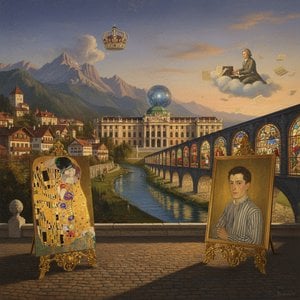
Schiele iniciou seus estudos formais na Kunstgewerbeschule (Escola de Artes e Ofícios) em Viena, mas logo se sentiu sufocado por sua abordagem conservadora. Transferiu-se para a Akademie der bildenden Künste (Academia de Belas Artes), apenas para se decepcionar ainda mais com as rígidas tradições acadêmicas. Desiludido com o sistema formal, Schiele optou por trilhar seu próprio caminho, uma demonstração de sua convicção artística inabalável. A influência de Gustav Klimt foi fundamental em seus primeiros anos; admirava o estilo decorativo e a exploração simbólica do mestre vienense, recebendo até mesmo orientação dele. No entanto, Schiele logo se distanciou da estética de Klimt, desenvolvendo uma voz singular caracterizada pela honestidade crua e pela intensidade psicológica. Co-fundou o Neues Wiener Kunstgruppe (Novo Grupo de Arte Vienense) em 1909, juntando-se a outros artistas progressistas que desafiavam as normas artísticas predominantes. Suas primeiras obras, frequentemente retratos perturbadores e autorretratos, emergiram como declarações poderosas de angústia emocional, apresentando figuras distorcidas e uma sensação palpável de vulnerabilidade. Essas pinturas não eram meras representações físicas, mas sim explorações do mundo interior – as ansiedades, desejos e medos que assombravam a psique humana. Ele buscava representar não o que *via*, mas o que *sentia*.
Raw Emotion and Unflinching Truth
A arte de Egon Schiele é imediatamente reconhecível por sua honestidade crua e profundidade psicológica. Confrontou sem hesitação temas frequentemente considerados tabu – sexualidade, morte, ansiedade, isolamento – com um olhar direto e implacável. Seu estilo distintivo apresenta figuras alongadas, poses contorcidas e linhas expressivas que transmitem uma sensação de inquietação e intensidade emocional. A figura humana, particularmente o nua, tornou-se seu principal assunto, não como um objeto de beleza idealizada, mas como um veículo para explorar as complexidades da experiência humana. Os autorretratos constituem uma parte significativa de sua obra, oferecendo vislumbres íntimos de seu mundo interior – um mundo frequentemente marcado pela solidão e pela autossabotagem. Ele não se esquivou de retratar a si mesmo em poses desfavoráveis ou vulneráveis, revelando um nível profundo de autoconsciência e introspecção. Além dos autorretratos, Schiele criou inúmeros retratos de outros indivíduos, capturando seus semblantes com um realismo inquietante que parecia penetrar abaixo da superfície. Seus paisagens, embora menos centrais em sua obra do que seus retratos, demonstram seu domínio da forma e da cor, frequentemente refletindo a mesma intensidade emocional de seus retratos. O uso da linha é particularmente notável na arte de Schiele; não é meramente uma ferramenta para definir a forma, mas uma força expressiva que transmite emoção e tensão psicológica.
Key Themes and Legacy
As obras de Egon Schiele são caracterizadas por uma série de temas recorrentes que refletem sua visão pessimista da vida e da morte. A mortalidade é um tema central, frequentemente representada através de símbolos como o *Physalis* (uma planta com um caroço seco que simboliza a transitoriedade da vida), a decomposição e a fragilidade do corpo humano. A sexualidade também desempenha um papel importante em sua obra, explorada de forma crua e honesta, muitas vezes com uma intensidade erótica e perturbadora. O isolamento e a solidão são temas constantes, refletidos na imagem solitária dos seus personagens e na atmosfera melancólica de suas paisagens. Apesar de enfrentar censura e desafios legais – incluindo um breve encarceramento por supostamente corromper menores com sua arte – Schiele ganhou reconhecimento dentro dos círculos vanguardistas de Viena. Sua obra desafiou as convenções da época, provocando admiração e indignação. No momento de sua trágica morte durante a pandemia da gripe espanhola em 1918, aos 28 anos, havia estabelecido-se como uma figura proeminente do Expressionismo austríaco. Suas obras, incluindo *Self-Portrait with Physalis*, *Couple Embracing* e *Field Landscape (Kreuzberg near Krumau)*, são consideradas testemunhos de seu talento artístico. Sua influência em gerações posteriores de artistas é inegável, especialmente aqueles interessados em explorar temas psicológicos e desafiar as normas artísticas convencionais. A arte de Schiele continua a ressoar com o público hoje, tornando-o um dos artistas mais importantes e influentes do início do século XX. Suas pinturas são agora exibidas em importantes museus ao redor do mundo, incluindo o Leopold Museum em Viena e o Egon Schiele Art Centrum em Český Krumlov, garantindo que seu legado artístico perdure. Ele deixou para trás um corpo de trabalho que não é apenas esteticamente atraente, mas profundamente humano – um testemunho do poder da arte para confrontar as complexidades da existência com honestidade, coragem e visão inabalável.
- Temas Chave: Mortalidade, sexualidade, isolamento, angústia psicológica.
- Influências: Gustav Klimt, Secessione Vienense, trauma pessoal.
- Características do Estilo: Figuras alongadas, poses contorcidas, linhas expressivas, emoção crua.



 Visualizar na parede
 Comprar pintura feita à mão
 Compartilhar
 Compartilhar
 Detalhes

 Baixar imagem
 Semelhantes
 Raio X
 Slideshow
 Estatísticas

 Ler mais






































 A opção de vidro está disponível apenas para tamanhos inferiores a 110 cm