


Impressão giclée ou em tela de qualidade de museu, com produção rápida e opções flexíveis de acabamento. ( Comprar pintura feita à mão Comprar imagem)





























Escolha entre os nossos tamanhos pré-definidos que respeitam as proporções originais da obra de arte.

Você pode inserir suas próprias dimensões para se ajustar a uma moldura ou espaço específico. Se o tamanho selecionado não corresponder às proporções da imagem original, iremos recortar a obra de arte ou estender a imagem com uma borda espelhada ou preenchimento sólido. Um mockup digital será enviado para sua aprovação antes do início da produção.
Por favor, observe que a visualização na tela não reflete o recorte ou a extensão real. Apenas o mockup mostrará com precisão a composição final.
Embora tamanhos personalizados estejam disponíveis, recomendamos selecionar uma dimensão da lista predefinida para preservar as proporções originais.
Entrega mundial () em 2 semanas, em vez das 4/5 semanas padrão. (6 Setembro)


Street in Krumau
Tamanho da Reprodução
Egon Schiele’s “Street in Krumau,” painted in 1917, isn't merely a depiction of an Austrian provincial town; it’s a concentrated distillation of the artist’s psychological landscape and a masterful embodiment of Expressionist principles. Captured with remarkable precision by Gustav Klimt, Schiele’s mentor, this artwork transcends its visual surface to convey a palpable sense of unease and impending doom—a feeling inextricably linked to the turbulent period in which it was created.
Historical Context: Painted during World War I, “Street in Krumau” reflects the anxieties and disillusionment prevalent at the time. Klimt's influence is evident in Schiele’s compositional choices—particularly the careful framing of the street—which hark back to Renaissance ideals of perspective while simultaneously rejecting their serene aesthetic. The painting speaks to a broader artistic movement grappling with themes of mortality, trauma, and the disintegration of traditional values.
Ultimately, “Street in Krumau” stands as a testament to Schiele’s artistic genius and his unflinching exploration of the human condition. A reproduction captures not only the visual details but also the profound emotional resonance of this iconic piece—a reminder that art can illuminate the darkest corners of our inner selves.


1890 - 1918 , Áustria

Explore the captivating journey of street art from urban walls to prestigious galleries. Discover how contemporary graffiti has evolved into a high-end collectible movement, redefining modern interior design and global art culture.
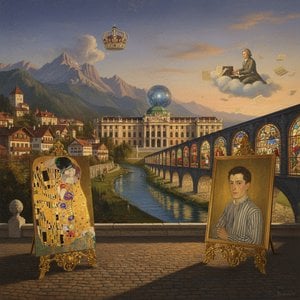
Embark on a sophisticated journey through Austrian art history. Explore the golden brilliance of Gustav Klimt and the elegance of the Vienna Secession through an expert lens, celebrating the enduring soul of Central European masterpieces.

 Visualizar na parede
 Compartilhar
 Compartilhar
 Detalhes

 Baixar imagem
 Semelhantes
 Raio X
 Slideshow

 Ler mais







 A opção de vidro está disponível apenas para tamanhos inferiores a 110 cm


