
A obra de arte exibida nesta página é protegida por leis de direitos autorais, o que significa que não podemos criar ou vender legalmente uma reprodução idêntica. Esta proteção é aplicada por meio de acordos internacionais, tais como a Convenção de Berna e pelas leis nacionais, incluindo as estabelecidas por Lei de Direitos Autorais dos EUA - Título 17.
Este método cumpre plenamente as regulamentações de direitos autorais, pois não envolve a cópia ou duplicação da obra protegida. Em vez disso, trata-se de uma reinterpretação criativa — uma nova pintura que é influenciada pela original, mas não idêntica a ela.
Impressão giclée ou em tela de qualidade de museu, com produção rápida e opções flexíveis de acabamento. ( Comprar pintura feita à mão Alternar para Imagem Digital)





























Escolha entre os nossos tamanhos pré-definidos que respeitam as proporções originais da obra de arte.

Insira a largura e a altura desejadas para se ajustarem à sua moldura ou parede. Uma impressão pode ser apenas cortada, nunca ampliada além da imagem original; portanto, um tamanho com proporções diferentes resultará na perda de parte da imagem. Enviamos uma maquete digital para sua aprovação antes de realizarmos a impressão. A imagem exibida nesta página não mostra o corte real — apenas a maquete o faz.
Entrega mundial () em 2 semanas, em vez das 4/5 semanas padrão. (8 Novembro)
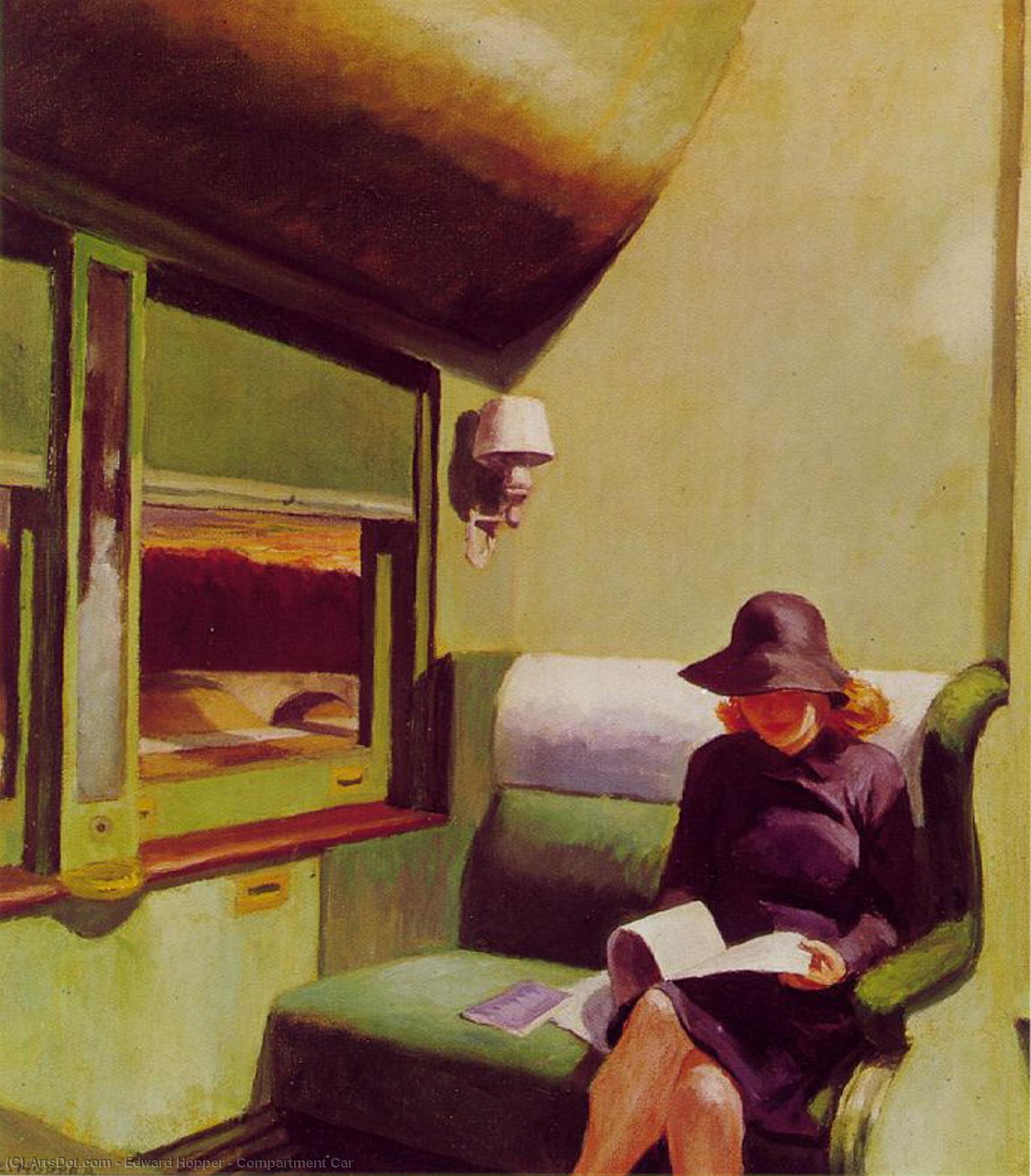
Compartment Car
Tamanho da Reprodução
Edward Hopper’s “Compartment Car” (1931) is more than just a depiction of a train journey; it’s a meticulously crafted meditation on solitude, urban alienation, and the quiet dramas unfolding within the seemingly mundane moments of modern life. Painted during a period of significant social and technological change in America – the rise of railroads, increased urbanization, and the burgeoning sense of individual detachment – the painting resonates with a profound psychological depth that continues to captivate viewers nearly a century later. Hopper’s masterful use of light and shadow, combined with his precise observation of human form, elevates this scene into a powerful symbol of the anxieties and uncertainties inherent in the modern experience.
Hopper’s genius lies not merely in his technical skill but in his ability to manipulate light and shadow to evoke specific moods and emotions. The dim, diffused natural light filtering through the window creates a sense of mystery and melancholy, casting long shadows that obscure the faces of the other passengers and further emphasize the woman's isolation. This use of chiaroscuro – the dramatic contrast between light and dark – is a hallmark of Hopper’s style and contributes significantly to the painting’s evocative power. The subtle variations in tone create a sense of depth and atmosphere, drawing the viewer into the scene and inviting contemplation.
"Compartment Car" was created during a period of profound social and economic change in America. The rise of industrialization and urbanization had led to increased mobility and a growing sense of alienation, particularly among those who found themselves adrift in the impersonal landscape of modern cities. Hopper's paintings often reflected this mood of disillusionment and uncertainty, capturing the loneliness and isolation that many Americans felt despite their increasing connectedness through technological advancements. Hopper’s work aligns with the broader artistic movement of American Regionalism, which sought to depict the realities of everyday life in America, particularly in urban settings. His focus on ordinary subjects – a diner, a department store, a train compartment – elevated these scenes into powerful statements about the human condition.
“Compartment Car” continues to resonate with viewers today because it taps into universal themes of loneliness, introspection, and the search for meaning in a complex world. Hopper’s ability to capture such profound emotions through seemingly simple imagery is a testament to his artistic genius. This painting exemplifies Hopper's enduring legacy as one of America's most important 20th-century artists, whose work continues to provoke thought and inspire contemplation about the nature of modern life.
A técnica de "Compartment Car", de Edward Hopper é Acrylic On Canvas. As reproduções visam reproduzir a aparência desta técnica.
A visualização em Raio-X de "Compartment Car", de Edward Hopper está disponível na página Raio X da obra: um exame interativo da imagem através de onze camadas ópticas.
Reproduções pintadas à mão de "Compartment Car", de Edward Hopper podem ser adquiridas no este site: uma reprodução a óleo pintada à mão sobre tela de linho, através da sua página de encomendas Reprodução Pintada à Mão.

1931 - 1967 , Estados Unidos da América

Master the nuances of Giclée printing with our expert guide. Discover how pigment-based inks and museum-grade substrates create fade-resistant, high-fidelity art reproductions designed for discerning collectors seeking unparalleled quality and longevity.

Discover museum-quality Giclée paper prints at WahooArt. Elevate your space with archival, pigment-based reproductions of the world's greatest masterpieces. Affordable, elegant, and designed for lasting beauty. Start curating your timeless art legacy today.

Descubra como transformar suas fotos em impressões Giclée de nível de museu. Ofereça aos seus seguidores obras de arte premium e atemporais sem a necessidade de estoque. Monetize sua estética com a qualidade incomparável da WahooArt. Transforme momentos em um legado de luxo.
 Visualizar na parede
 Compartilhar
 Compartilhar
 Detalhes
 Guia
Guia

 Baixar imagem
 Semelhantes
 Raio X
 Ver diaporama
 Perguntas e Respostas
 Estatísticas

 Ler mais









 A opção de vidro está disponível apenas para tamanhos inferiores a 110 cm


