Visualizar na paredeVisualizar na parede Ver em RAVer em RA Alternar para Impressão Alternar para ImpressãoComprar pintura feita à mão Comprar pintura feita à mão CompartilharCompartilhar
DetalhesDetalhes Adicionar aos favoritos Adicionar aos favoritos Baixar imagemBaixar imagem SemelhantesSemelhantes Raio XRaio X SlideshowSlideshow EstatísticasEstatísticas

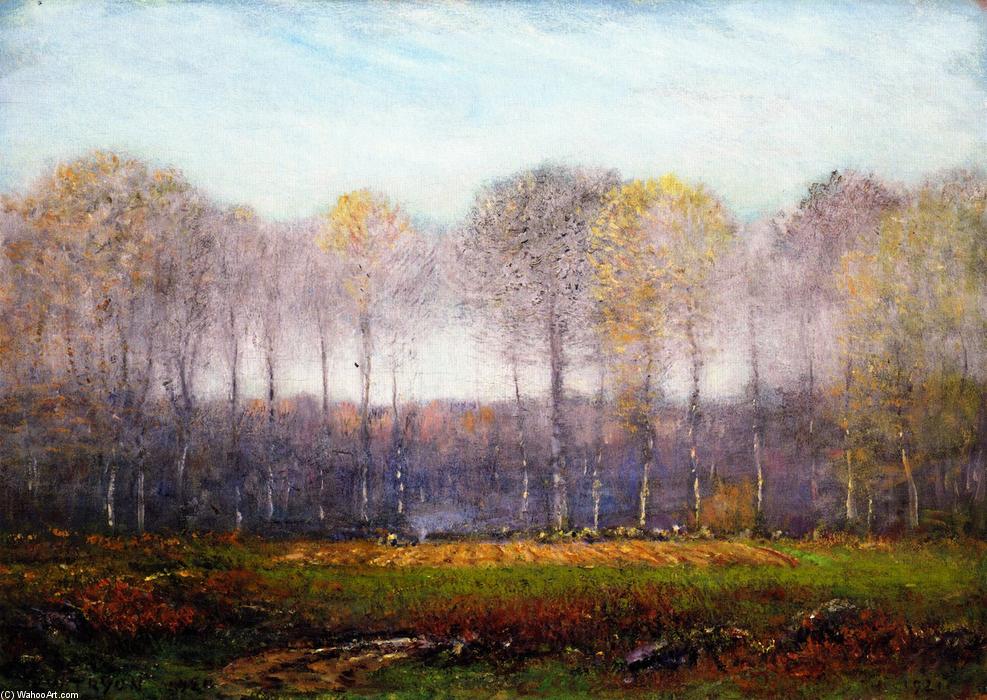
October Morning

Discover "October Morning" by Dwight William Tryon – a serene landscape painting capturing autumn's beauty. Explore its history, value & more at Invaluable.

Dwight William Tryon (1849-1925) foi um renomado pintor tonalista americano, conhecido por paisagens e cenas marítimas serenas e atmosféricas. Influenciado por Whistler, sua paleta delicada e atmosfera evocam paisagens naturais tranquilas e contemplativas.

Adquira uma imagem digital de alta resolução e aprimorada, muito superior à prévia online.

Cada arquivo é meticulosamente preparado por nossos especialistas internos, utilizando ferramentas avançadas e retoques manuais de alta precisão. Garantimos que cada imagem apresente clareza excepcional, fidelidade de cores e detalhes minuciosos.

O arquivo final é entregue por e-mail em até 72 horas, otimizado para uso imediato em ambientes profissionais, editoriais e de impressão. Esta é a mesma qualidade utilizada por estúdios de design de alto nível, editoras e galerias.

Imagem Digital

Baixe um arquivo de alta resolução para exibição pessoal, impressão e projetos criativos. (Alternar para Impressão Alternar para ImpressãoComprar pintura feita à mão Comprar pintura feita à mão)

Preço Total

$ 24,90

Incluído em cada compra de imagem digital

Entrega Digital Especializada e Garantida

Ao escolher o WahooArt.com, você não está apenas adquirindo uma imagem — você está recebendo uma obra de arte digital profissionalmente aprimorada, elaborada com precisão e com garantia de satisfação. Aqui está tudo o que acompanha seu pedido, automaticamente:

shipping_icon
Entrega rápida por e-mail

O seu arquivo de imagem digital em alta resolução será enviado por e-mail em até 72 horas após o pedido — pronto para uso imediato.

canvas_icon
Arquivo Digital com IA Otimizado

Sua obra de arte é otimizada profissionalmente por meio de ferramentas avançadas de IA e edição manual, garantindo o máximo de detalhes, clareza e precisão de cores.

insurance_icon
Reenvio gratuito vitalício

Apagou ou perdeu o seu ficheiro acidentalmente? Não se preocupe – nós reenviamos para si a qualquer momento, gratuitamente.

tax_icon
Sem Taxas de Importação - Sempre

Desfrute da sua obra de arte instantaneamente, sem taxas alfandegárias, impostos ou custos de entrega — downloads digitais são sempre isentos de taxas.

color_icon
Garantia de Fidelidade de Cores

Garantimos que sua imagem digital reflita as cores originais com a maior fidelidade possível, utilizando ferramentas profissionais e gerenciamento de cores.

return_icon
Garantia de Satisfação de 100 Dias

Se não estiver satisfeito com a sua imagem digital, nós a revisaremos ou reembolsaremos 100% dentro de 100 dias — sem perguntas.

guarantee_icon
Garantia de Reembolso 100%

Não está satisfeito? Receba o reembolso total em até 100 dias após o recebimento do seu arquivo digital — sem perguntas.

discount_icon
Descontos para pedidos em lote

Compre 3 imagens, economize 10% - Compre 5, economize 15% - Compre 10+, economize 20%. Ideal para projetos criativos, galerias e agências.

Informações Rápidas

  • Artistic style: Landscape
  • Influences: Whistler
  • Year: 1921
  • Subject or theme: Autumn scene
  • Medium: Oil on Panel
  • Notable elements: Tree row, sky
  • Location: Detroit Institute

Quiz de Arte

Cada pergunta possui apenas uma resposta correta.

Pergunta 1:
What artistic movement is Dwight William Tryon most closely associated with?
Pergunta 2:
The painting 'October Morning' primarily depicts:
Pergunta 3:
In what year was 'October Morning' painted?
Pergunta 4:
Dwight William Tryon was influenced by which artistic style?
Pergunta 5:
What is a key characteristic of Tryon's landscape style, as seen in 'October Morning'?

October Morning: A Symphony of Autumnal Light by Dwight William Tryon

Dwight William Tryon’s “October Morning” isn't merely a landscape painting; it’s an immersion into the heart of a fleeting autumnal moment, captured with a delicate precision and imbued with a profound sense of tranquility. Painted in 1921, during a period when American art was increasingly embracing tonalism – a style prioritizing mood and atmosphere over sharp detail – this piece exemplifies Tryon's signature approach: a quiet contemplation of the natural world rendered through subtle color shifts and luminous washes.

The scene unfolds within a gently sloping meadow, bisected by a meandering stream reflecting the soft hues of the sky. A carefully arranged row of trees dominates the midground, their branches reaching upwards like supplicating arms, each leaf painted with an almost impossibly delicate gradation of greens, yellows, and ochres – a testament to Tryon’s mastery of layering thin glazes of oil paint. These aren't the bold, vibrant colors of Impressionism; instead, they are muted, atmospheric, evoking the fading warmth of the sun as it dips below the horizon. The distant trees recede into a hazy blue-grey, creating an illusion of depth and vastness that draws the viewer’s eye into the painting’s serene embrace.

The Tonalist's Palette: Technique and Style

Tryon’s technique is characterized by its meticulous attention to light and shadow. He employed a ‘wet-on-wet’ approach, applying paint while it was still wet on the canvas, allowing colors to blend seamlessly and creating soft edges that contribute to the painting's ethereal quality. The absence of harsh outlines or defined forms reinforces this sense of atmospheric depth. The use of thin glazes – multiple layers of translucent color applied over each other – builds up the image gradually, resulting in a luminous surface that seems to glow from within. This technique is deeply rooted in the Barbizon school of painting, which emphasized capturing the essence of nature rather than its literal representation.

Notably, Tryon’s work aligns with the broader artistic currents of his time. Influenced by James McNeill Whistler's emphasis on tonal harmony and color relationships, he sought to evoke a feeling of quiet contemplation and spiritual connection through his art. His paintings are often described as “luminist,” though he predates the more formalized Luminist movement, sharing its core principles of capturing fleeting moments of light and atmosphere.

Symbolism and Emotional Resonance

“October Morning” is rich in symbolic meaning, reflecting a deep connection to the rhythms of nature. The row of trees, stretching towards the horizon, can be interpreted as a symbol of resilience and endurance – mirroring the steadfastness of nature through the changing seasons. The stream, flowing gently across the meadow, represents the passage of time and the cyclical nature of life. The muted colors evoke feelings of peace, nostalgia, and melancholy—a poignant reminder of the beauty of impermanence.

More than just a depiction of a landscape, “October Morning” is an invitation to pause, reflect, and connect with the natural world. It’s a painting that speaks to our deepest longings for tranquility and connection, offering a moment of respite from the complexities of modern life. The soft light and muted colors create a sense of warmth and serenity, inviting the viewer to lose themselves in the beauty of this autumnal scene.

A Legacy of Serenity: Tryon’s Enduring Appeal

Dwight William Tryon's work continues to resonate with audiences today due to its timeless appeal. His paintings capture a sense of quietude and beauty that transcends time, offering viewers a glimpse into the heart of nature. His dedication to capturing subtle nuances of light and color has earned him recognition as one of America’s most important landscape painters. Reproductions of “October Morning” are prized by collectors and interior designers alike, bringing a touch of serenity and autumnal charm to homes and galleries around the world.


Biografia do Artista

Early Life and Artistic Beginnings

Dwight William Tryon’s artistic journey began in the quiet, rural landscape of Hartford, Connecticut, in 1849. Born to Anson Tryon, a builder and contractor, and Delia O. Roberts, his early life was shaped by the loss of his father at a young age, an event that instilled within him a deep appreciation for solitude and the natural world – qualities that would profoundly influence his artistic vision. He spent his formative years on his grandparents’ farm in East Hartford, immersing himself in the rhythms of rural life and developing a keen eye for detail as he sketched the surrounding countryside: the weathered saltbox houses, the meandering Connecticut River, and the ever-changing light upon the fields. This early exposure to nature became the bedrock of his artistic practice, providing him with an intimate understanding of color, form, and atmosphere. Without formal training initially, Tryon’s talent blossomed organically; he sought instruction through instructional manuals found in a local bookstore, where he worked as an employee, absorbing techniques and developing his own unique approach to art. He began selling his sketches and paintings locally, gaining recognition for his ability to capture the essence of Connecticut's landscapes. His dedication culminated in his acceptance into the prestigious National Academy of Design in 1873, marking a significant milestone in his artistic career.

European Influences and the Shaping of a Style

Driven by a desire for formal training and inspired by the burgeoning art scene in Europe, Tryon embarked on a transformative journey to France in 1876. He enrolled at the École des Beaux-Arts in Paris, immersing himself in the artistic currents of the time and studying under renowned instructors such as Jacquesson de la Chevreuse. However, his education extended far beyond the classroom walls; he actively sought guidance from leading European artists, including Charles-François Daubigny, Henri Harpignies, and Jean Baptiste-Antoine Guillemet – masters of Luminism and Barbizon School techniques. Initially, Tryon’s style leaned towards Luminism, characterized by its emphasis on capturing the effects of light and atmosphere through subtle gradations of color. Yet, he soon embraced the principles of the Barbizon School—a movement that prioritized direct observation of nature and a more subdued palette—finding greater resonance in its contemplative mood and realistic depiction of the natural world. The influence of James McNeill Whistler was particularly profound; Tryon admired Whistler’s tonalist style – his ability to evoke emotion through carefully arranged colors and subtle variations in tone – which significantly shaped his own artistic approach.

Mature Style and Atmospheric Landscapes

By the late 1880s, Dwight William Tryon had fully realized his distinctive artistic style—a signature approach that would define his legacy as a leading American Tonalist. His canvases often feature a carefully orchestrated composition: a grouping or broken row of trees positioned in the middle distance, acting as a visual bridge between a luminous sky above and a foreground marsh or pasture below. These scenes are frequently imbued with autumnal hues—russets, browns, and golds—evoking a sense of tranquility, melancholy, and the passage of time. Beyond landscapes, Tryon also excelled at seascapes, skillfully capturing the expansive beauty of water, sky, and beach under varying weather conditions. His mastery lay in his ability to convey atmosphere – the subtle shifts in light, the delicate interplay of color, and the overall mood of a scene. *Salt-Marsh, December*, which garnered first prize at the Tennessee Centennial Exposition in 1897, stands as a prime example of this skill, showcasing his talent for capturing the serene beauty of the natural world. His paintings were consistently exhibited nationally, gaining recognition at prestigious venues such as the Pennsylvania Academy of Fine Arts and the Montross Gallery.

Patronage, Recognition, and Lasting Legacy

The trajectory of Tryon’s career was significantly enhanced by his relationship with Charles Lang Freer, a discerning collector who became his most important patron. Freer acquired dozens of Tryon's works and even collaborated with the artist on interior design projects for his Detroit home. This generous support allowed Tryon to fully dedicate himself to his art, resulting in a prolific output during this period. Further recognition came in 1908 when he received the Carnegie Prize at the Carnegie Exhibition, solidifying his position among the leading artists of his time. Throughout his career, Tryon was an active member of several prestigious art organizations, including the Society of American Artists, the American Watercolor Society, and the National Institute of Arts and Letters (now the American Academy of Arts and Letters). In 1887, he established a summer home in South Dartmouth, Massachusetts, which served as his primary residence for the remainder of his life. He also dedicated himself to education, teaching painting and drawing at Smith College from 1886 to 1923, where he founded the Tryon Gallery of Art. Dwight William Tryon passed away in 1925, leaving behind a rich artistic legacy defined by his contribution to American Tonalism and his exceptional ability to capture atmospheric landscapes and seascapes with delicate color and refined feeling. His works continue to be celebrated and are held in prominent collections such as the Smithsonian American Art Museum and the Freer Gallery of Art, ensuring that his vision endures for generations to come.
Dwight William Tryon

Dwight William Tryon

1849 - 1925 , Estados Unidos da América

Breve Biografia

  • Artistic Movement Or Style: Tonalismo, Barbizon
  • Artists Or Movements Influenced By This Artist:
    • Impressionismo
    • Barbizon School
  • Artists Who Influenced This Artist:
    • Whistler
    • Inness
    • Wyant
    • Daubigny
    • Harpignies
  • Date Of Birth: 13 de agosto de 1849
  • Date Of Death: 1 de julho de 1925
  • Full Name: Dwight William Tryon
  • Nationality: Americano
  • Notable Artworks:
    • Salt-Marsh, Dezembro
    • Primavera
    • Haystacks em Lua Cheia
  • Place Of Birth: Hartford, Estados Unidos