Consultoria de arte gratuita

x
Encomendar pintura Encomendar pinturaComprar imagem em alta resolução Comprar imagem em alta resolução EnviarEnviar
Detalhes da obraDetalhes da obra Adicionar aos favoritos Adicionar aos favoritos BaixarBaixar SemelhantesSemelhantes Raio XRaio X SlideshowSlideshow

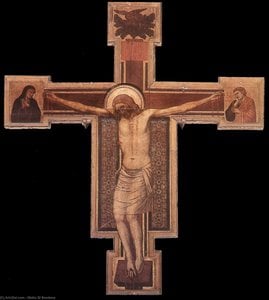
Crucifix

Explore Donatello’s iconic ‘Crucifix’ (1412) – a stunning stained-glass masterpiece showcasing realism & dramatic light. A pivotal Early Renaissance work.

Donatello (1386-1466): Escultor renascentista florentino. Pioneiro na escultura nua independente como o "David", conhecido pelo realismo expressivo, influência clássica e técnicas inovadoras. Explore suas obras-primas e legado!

Giclê / Impressão de Arte

Impressão giclée ou em tela de qualidade de museu, com produção rápida e opções flexíveis de acabamento.

P118B $10
P118H $10
P118W $10
P438Z $10
P508JH $12
P508YH $12
P805H $10
P805Z $10
P919BZ $10
P919G $10
P919XJ $10
P959ZH $10
P968JZ $12
W106C $8
W218G $10
W218JH $8
W218Y $10
W307PJ $10
W316G $10
W316PJ $8
W316Y $10
W398PJ $8
W4111J $10
W500HY $15
W500JH $15
W692G $12
W849H $8
W940BG $15
W953PJ $8

Standard
custom
CM
INCH

Escolha entre os nossos tamanhos pré-definidos que respeitam as proporções originais da obra de arte.

largura
altura

Você pode inserir suas próprias dimensões para se ajustar a uma moldura ou espaço específico. Se o tamanho selecionado não corresponder às proporções da imagem original, iremos recortar a obra de arte ou estender a imagem com uma borda espelhada ou preenchimento sólido. Um mockup digital será enviado para sua aprovação antes do início da produção.
Por favor, observe que a visualização na tela não reflete o recorte ou a extensão real. Apenas o mockup mostrará com precisão a composição final.
Embora tamanhos personalizados estejam disponíveis, recomendamos selecionar uma dimensão da lista predefinida para preservar as proporções originais.

Entrega mundial () em 2 semanas, em vez das 4/5 semanas padrão. (6 Julho)

why_choose_icon
Envio Expresso Gratuito para todo o Mundo
why_choose_icon
Tela de Linho Premium
why_choose_icon
Seguro de envio completo
why_choose_icon
Garantia de Reembolso de Impostos Alfandegários
why_choose_icon
Garantia de Fidelidade de Cores
why_choose_icon
Política de Devolução de 60 Dias (Apenas para Defeitos)
why_choose_icon
Garantia de 100% de Reembolso
why_choose_icon
Desconto para múltiplas unidades

Preço Total

-

reproduction

Crucifix

Giclê / Impressão de Arte

Dimensões da Reprodução

-

Preço Total Final

-

Dados Rápidos

  • Dimensions: 168 x 173 cm
  • Year: 1412-1413
  • Location: Santa Croce, Florence
  • Subject or theme: Crucifixion
  • Notable elements: Realistic depiction
  • Medium: Wood
  • Title: Crucifix

Teste de Arte

Cada pergunta possui apenas uma resposta correta.

Pergunta 1:
What is the primary subject depicted in Donatello’s ‘Crucifix’?
Pergunta 2:
According to Vasari, what did Donatello initially believe when creating the ‘Crucifix’?
Pergunta 3:
What material is Donatello’s ‘Crucifix’ primarily made from?
Pergunta 4:
In what historical period was Donatello's 'Crucifix' created?
Pergunta 5:
What is a key characteristic of Eastern Orthodox crucifixes compared to Western crucifixes?

Descrição da Obra

A Moment of Profound Sorrow and Spiritual Triumph

Donatello's 1412 Crucifix, housed within the Basilica of Santa Croce in Florence, isn’t merely a depiction of Christ on the cross; it’s a visceral experience. This early Renaissance masterpiece transcends simple representation, plunging the viewer into the heart of Christian theology and embodying the profound tension between suffering and redemption. Crafted from richly-toned pearwood, the sculpture immediately commands attention with its remarkably realistic portrayal of the human form – a radical departure from the idealized figures prevalent in preceding artistic traditions. Donatello masterfully captures not just the physical agony of Christ’s crucifixion but also an underlying sense of quiet dignity and acceptance, inviting contemplation on themes of sacrifice and faith.

The sculpture's power lies partly in its innovative approach to realism. Vasari famously remarked that Donatello had sculpted a “contadino” – a peasant – rather than a divine figure, highlighting the artist’s deliberate choice to humanize Christ, making his suffering relatable and deeply affecting. The musculature of Christ’s body is rendered with meticulous detail, conveying both the strain of the nails piercing his flesh and the subtle grace of his posture. The loincloth, meticulously carved, adds another layer of realism, anchoring the figure in a tangible, earthly reality. This deliberate focus on human anatomy was revolutionary for its time, setting a new standard for artistic representation and influencing generations of sculptors to come.

Technique and Materials: A Testament to Early Renaissance Skill

Donatello’s mastery is evident not only in the sculpture's realism but also in his skillful manipulation of materials. The pearwood, chosen for its rich color and durability, provides a warm, resonant base for the vibrant polychrome pigments that bring the figure to life. The artist employed a technique known as *polychromy*, applying layers of paint – primarily reds, browns, and golds – to create an illusion of depth and texture. The intricate detailing of the nails driven into Christ’s hands and feet is particularly noteworthy, demonstrating Donatello's precision and control.

Beyond the pigments, the sculpture’s construction itself speaks volumes about Renaissance craftsmanship. The wood was carved with painstaking care, utilizing a subtractive method – removing material to reveal the desired form. The lead lines forming the cross are expertly executed, creating a strong structural framework while simultaneously contributing to the overall aesthetic impact. This combination of sculptural skill and meticulous attention to detail exemplifies the artistic standards of the early Renaissance period.

Symbolism and Spiritual Resonance

The Crucifix is laden with symbolic meaning, reflecting core tenets of Christian belief. The cross itself represents sacrifice, atonement for humanity’s sins, and the path to salvation. Christ's suffering embodies humility, obedience, and love – qualities deeply valued within the Christian tradition. The figure’s serene expression, despite his evident pain, suggests a profound acceptance of God’s will and an unwavering faith in the promise of resurrection.

Furthermore, Donatello’s depiction subtly shifts from the traditional Byzantine emphasis on Christ as a glorious, divine being to a more humanistic portrayal – a hallmark of the Renaissance. This shift reflects a growing interest in earthly experience and the potential for humanity to connect with the divine through empathy and understanding. The sculpture invites viewers not just to witness Christ's suffering but also to contemplate their own capacity for compassion and faith.

A Legacy of Artistic Innovation

Donatello’s Crucifix stands as a pivotal work in the transition from medieval to Renaissance art, demonstrating a remarkable fusion of classical influences with Christian iconography. It represents a significant departure from earlier depictions of Christ on the cross, characterized by stylized forms and symbolic gestures. The sculpture's realism, emotional depth, and technical virtuosity established new standards for artistic representation and profoundly influenced subsequent generations of artists. Today, it remains a powerful testament to the enduring legacy of Donatello and his contribution to the development of Western art.


Biografia do Artista

Early Life and Artistic Beginnings

Donato di Niccolò di Betto Bardi, universally known as Donatello, emerged from the bustling heart of Florence around 1386 – a city already brimming with artistic innovation and ambition. His early life remains somewhat shrouded in mystery, yet it’s clear that his formative years were deeply intertwined with the burgeoning world of Florentine sculpture. Unlike many artists of his time who benefited from established family legacies, Donatello's origins were modest; his father, Niccolò di Betto Bardi, was a wool carder – a profession rooted in commerce rather than artistic tradition. However, this seemingly unremarkable background provided him with access to the workshops and studios where young sculptors honed their skills. Donatello’s formal training likely began around 1400, finding employment within the workshop of Lorenzo Ghiberti, a master sculptor renowned for his groundbreaking bronze doors for the Florence Cathedral (the Duomo). Ghiberti's studio served as a crucible of artistic experimentation, and Donatello absorbed countless techniques and principles during his time there. He was exposed to the intricate details of classical sculpture – a cornerstone of Renaissance art – alongside the established conventions of Gothic style prevalent at the time. This exposure would profoundly shape his future work, leading him to blend classical ideals with innovative approaches that distinguished him from his contemporaries.

Key Works and Artistic Innovations

Donatello’s artistic trajectory truly began to unfold in the mid-1420s, marked by a series of groundbreaking works that challenged established norms and captivated audiences. His most celebrated achievement, undoubtedly, is the bronze *David* – a monumental figure that redefined the representation of the male nude in Western art. Unlike previous depictions of David, which often portrayed him as a youthful shepherd boy, Donatello’s version captured the hero at the moment of confronting Goliath, radiating an aura of intense determination and physical prowess. This wasn't merely a replication of biblical narrative; it was a profound exploration of human potential and courage – a testament to Donatello’s ability to infuse his sculptures with psychological depth. Beyond *David*, Donatello produced a remarkable array of works that showcased his versatility and technical mastery. The *St. Louis of Toulouse* at the Basilica di Santa Croce, for instance, exemplifies his command of classical forms and architectural integration. The sculpture's elegant drapery and serene expression are complemented by a carefully designed classical frame, demonstrating Donatello’s willingness to borrow from antiquity while maintaining his own distinctive style. Similarly, his *Sacrifice of Isaac* for the campanile of Santa Maria del Fiore in Florence is characterized by strikingly realistic portrait details – a departure from the idealized figures common in earlier Renaissance sculpture. The work's dramatic composition and emotional intensity further solidified Donatello’s reputation as a sculptor capable of capturing the essence of human experience.

Artistic Style and Historical Context

Donatello’s artistic style evolved through distinct phases, reflecting both his personal development and the broader currents of the Italian Renaissance. Initially, his work exhibited a strong influence from Ghiberti's International Gothic style – characterized by graceful lines and subtle details. However, as he matured, Donatello increasingly embraced classical ideals, incorporating elements of Roman sculpture into his own creations. This shift is particularly evident in *David*, where the figure’s contrapposto stance (a naturalistic pose with weight shifted to one leg) and muscular anatomy are clearly indebted to ancient Greek models. Furthermore, Donatello's style was marked by a willingness to experiment with new techniques and materials. He pioneered the use of “rilievo schiacciato” – a shallow relief technique that created an illusion of depth and volume. This approach allowed him to achieve remarkable detail in smaller works while maintaining a sense of dynamism and spatial awareness. His innovative use of bronze, particularly his mastery of lost-wax casting, further distinguished his work from that of his contemporaries. Donatello’s artistic legacy extends far beyond his individual masterpieces. He profoundly influenced subsequent generations of sculptors, including Michelangelo Buonarroti, who famously declared that “all the artists of Christendom have been imitating Donatello.” His emphasis on realism, psychological depth, and classical ideals helped to shape the course of Renaissance art, leaving an indelible mark on Western artistic tradition.

Museums and Artistic Legacy

Donatello’s sculptures are scattered across numerous museums and collections throughout Italy and beyond. The Museo della Collegiata in Empoli houses a remarkable collection of early Italian Renaissance art, including works by Francesco Botticini and Raffaello Botticini – providing valuable insights into Donatello's artistic development. The Museo Nazionale del Bargello in Florence proudly displays *St. George*, a testament to Donatello’s mastery of bronze sculpture. Similarly, the Basilica di Santa Croce in Venice houses the iconic *St. Louis of Toulouse*. The Baptistery of Siena features his relief work, including the dramatic depiction of *The Sacrifice of Isaac*. Finally, the Palazzo Vecchio in Florence retains *Judith Slaying Holofernes*, a powerful and unsettling portrayal of violence and triumph. Donatello’s impact on art history is undeniable. His innovative techniques, expressive figures, and profound understanding of human nature continue to inspire artists and captivate audiences today. He remains one of the most celebrated sculptors of all time – a true pioneer of the Renaissance and a master of his craft.
Donatello

Donatello

1386 - 1466 , Itália

Informações Rápidas

  • Artistic Movement Or Style: Renascimento Italiano
  • Artists Or Movements Influenced By This Artist: ['Renascimento Florentino']
  • Artists Who Influenced This Artist: ['Escultores clássicos']
  • Date Of Birth: c. 1386
  • Date Of Death: 1466
  • Full Name: Donatello di Niccolò
  • Nationality: Italiano
  • Notable Artworks:
    • David
    • São Lourenço
    • Sacrifício de Isaac
  • Place Of Birth: Florença, Itália
Explore obras de arte organizadas por temas, estilos e características.