


A obra de arte exibida nesta página é protegida por leis de direitos autorais, o que significa que não podemos criar ou vender legalmente uma reprodução idêntica. Esta proteção é aplicada por meio de acordos internacionais, tais como a Convenção de Berna e pelas leis nacionais, incluindo as estabelecidas por Lei de Direitos Autorais dos EUA - Título 17.
Este método cumpre plenamente as regulamentações de direitos autorais, pois não envolve a cópia ou duplicação da obra protegida. Em vez disso, trata-se de uma reinterpretação criativa — uma nova pintura que é influenciada pela original, mas não idêntica a ela.
Impressão giclée ou em tela de qualidade de museu, com produção rápida e opções flexíveis de acabamento. ( Comprar pintura feita à mão Alternar para Imagem Digital)





























Escolha entre os nossos tamanhos pré-definidos que respeitam as proporções originais da obra de arte.

Insira a largura e a altura desejadas para se ajustarem à sua moldura ou parede. Uma impressão pode ser apenas cortada, nunca ampliada além da imagem original; portanto, um tamanho com proporções diferentes resultará na perda de parte da imagem. Enviamos uma maquete digital para sua aprovação antes de realizarmos a impressão. A imagem exibida nesta página não mostra o corte real — apenas a maquete o faz.
Entrega mundial () em 2 semanas, em vez das 4/5 semanas padrão. (8 Novembro)
Florence
Tamanho da Reprodução
To gaze upon this depiction of Florence is to step through a veil of time, into a moment suspended between vibrant history and quiet contemplation. Carlo Carrà’s vision captures more than just the magnificent dome of Santa Maria del Fiore; it encapsulates the very soul of Florentine artistry—a spirit rooted in the rigorous beauty of the Quattrocento. The composition itself feels like an archaeological discovery rendered in paint, presenting the city not as a mere collection of buildings, but as a unified, breathing volume. Carrà masterfully guides the eye across this aerial panorama, where every overlapping block and delicate curve speaks to centuries of human endeavor and artistic devotion.
Technically, the painting is a profound study in restraint. Carrà employs a technique characterized by light, quick brushstrokes and the exquisite layering of transparent glazes, or velature. This process allows the color to build up luminosity from within, giving the entire scene an ethereal, almost spiritual glow that seems to emanate from the very stone of the city. The structure is defined by thin, delicate black outlines—lines that are structural rather than restrictive. These lines serve to delineate the cubic forms of the architecture, suggesting a geometric order beneath the soft wash of color. It is this interplay between the rigid geometry suggested by the outlines and the atmospheric softness achieved through glazing that gives the piece its unique visual tension.
This work stands as a beautiful testament to the breadth of Carrà's artistic journey. Having navigated the turbulent waters of Futurism, Metaphysics, and various avant-garde movements throughout the twentieth century, here he finds a profound synthesis. In this later period, his focus turns inward, toward essential forms and pictorial simplicity. The painting moves away from overt naturalism or dramatic impressionism, instead achieving an equilibrium between concrete reality and sublime abstraction. It is Carrà distilling the monumental into its most fundamental visual components—a mature artist finding quiet power in elegant reduction.
The subject matter itself carries immense symbolic weight. Florence, particularly viewed through the lens of Brunelleschi’s dome, represents the pinnacle of Renaissance humanism and artistic revival. For Carrà, this city was not just a backdrop; it was a cultural touchstone. The muted palette—of soft blues, earthy grays, and pale terracotta—contributes to an overwhelming sense of tranquility. It invites the viewer into a meditative state, suggesting that true beauty lies in the enduring structure of culture itself. Owning this piece is acquiring not just art, but a tangible connection to the deep, abiding spirit of Italian artistic heritage.
For collectors and designers seeking an object imbued with history and quiet grandeur, this reproduction offers unparalleled depth. The soft luminosity achieved through Carrà’s glazing technique translates beautifully into interior spaces, acting as a focal point that uplifts any room without overwhelming it. It speaks to those who appreciate art that rewards close looking—a piece where the eye can wander from the defined geometry of the foreground blocks to the hazy, luminous expanse of the sky, finding continuous beauty in every subtle shift of tone.
Carlo Carrà também é conhecido como Carlo Carra.
"Florence" é atribuída a Carlo Carrà.
Uma reprodução de "Florence", de Carlo Carrà é recomendada para Accent. Esta sugestão decorre do tema, da atmosfera e das cores da obra.


1881 - 1966 , Itália
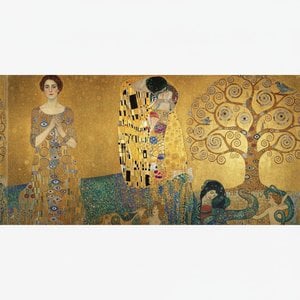
Descubra as 25 obras-primas de Gustav Klimt, ícone da Secession Vienense e do Art Nouveau. Explore a beleza dourada, o simbolismo e a paixão em cada pintura. Encontre reproduções de arte exclusivas para decorar sua casa com elegância na WahooArt.com!

Descubra os 25 tesouros da Galeria Uffizi, em Florença! Explore a história de Botticelli, Leonardo da Vinci e Michelangelo. Encontre reproduções de arte renascentista para decorar sua casa com elegância. WahooArt.

Explore the artistic journey of Carlo Carrà, a pivotal figure in Italian Futurism & Metaphysical painting. Discover his dynamic compositions, collaborations with de Chirico, and lasting influence on modern art history.

Explore the profound works of Mario Sironi, a key figure in Italian Modernism. Discover his evolution from Futurism to Metaphysical painting and his powerful social commentary. Learn about his legacy at WahooArt.

Descubra as 10 pinturas mais famosas para transformar sua sala de estar! Explore a história de Van Gogh, Da Vinci e outras obras-primas. Reproduções de arte exclusivas e inspiração decor em WahooArt.com.
 Visualizar na parede
 Compartilhar
 Compartilhar
 Detalhes
 Guia
Guia

 Baixar imagem
 Semelhantes
 Raio X
 Ver diaporama
 Perguntas e Respostas
 Estatísticas


 Ler mais









 A opção de vidro está disponível apenas para tamanhos inferiores a 110 cm


