A Life Rooted in Observation: The World of Camille Pissarro
Camille Pissarro, um nome sinônimo tanto do nascimento quanto da evolução do Impressionismo, foi um artista cuja vida refletiu os paisagens em constante mudança que ele tão devotadamente capturava em suas telas. Nascido Jacob Abraham Camille Pissarro em 10 de julho de 1830, em Charlotte Amalie, São Tomás – então parte das Índias Ocidentais Dinamarquesas, hoje as Ilhas Virgens Americanas – suas origens eram tão diversas e vibrantes quanto as cenas que mais tarde definiriam sua visão artística. Seu pai, um comerciante português judeu com nacionalidade francesa, e sua mãe, de uma família judaica francesa na ilha, lhe infundiram uma herança cultural única, algo relativamente incomum devido a complexidades familiares. Essa criação, em certa medida não convencional devido a complexidades familiares, fomentou uma sensibilidade precoce ao mundo ao seu redor, uma qualidade que se tornaria o alicerce de sua prática artística. Sua formação inicial na Savary Academy perto de Paris forneceu-lhe uma base em técnicas tradicionais, mas foi seu retorno a São Tomás e seu trabalho subsequente como copeiro que realmente acendeu sua paixão pela observação. O porto movimentado, a vida local vibrante e a beleza bruta do cenário caribenho tornaram-se seus primeiros temas, moldando um olhar aguçado para as nuances da existência cotidiana.
Da Realidade à Revolução: Desenvolvimento Artístico
A jornada artística de Pissarro foi uma exploração e refinamento constantes. Após um período auxiliando o pintor dinamarquês Anton Melbye em Paris, ele mergulhou nos trabalhos de mestres como Gustave Courbet, Jean-Baptiste-Camille Corot e Honoré Daumier – artistas que defendiam o realismo e os comentários sociais. Inicialmente, buscou aceitação no mundo da arte estabelecido, expondo na Salon de Paris, mas logo encontrou suas restrições sufocantes. Um momento decisivo veio com sua adoção da pintura *plein air* – trabalhando ao ar livre diretamente da natureza – uma prática incentivada por Corot que se tornaria central para o Impressionismo. Essa mudança não era meramente técnica; representava uma mudança filosófica, um desejo de capturar os efeitos passageiros da luz e da atmosfera, a própria essência de uma cena em vez de sua representação precisa. Ele começou a experimentar com pinceladas mais soltas e paletas mais vibrantes, afastando-se das convenções acadêmicas em direção a um estilo mais subjetivo e expressivo. Seu trabalho inicial de paisagens, embora ainda ancorado no realismo, prenunciava o caminho revolucionário que ele estava prestes a trilhar. Esse período viu-o lutando para encontrar sua própria voz em meio à fermentação artística crescente de Paris, uma cidade em rápida transformação que fornecia inspiração ilimitada.
O Pai Figura do Impressionismo
Camille Pissarro não era simplesmente *um* Impressionista; ele foi, sem dúvida, a força unificadora e mais constante do movimento. De forma única, ele expôs em todas as oito exposições impressionistas de Paris entre 1874 e 1886, atuando como uma presença estável dentro de um grupo frequentemente caracterizado por discordâncias internas e ambições individuais. Ele não estava simplesmente presente – ele incentivava ativamente seus colegas artistas, oferecendo apoio, orientação e um senso de camaradagem muito necessário. Isso lhe rendeu o carinhoso apelido de “pai figura” do movimento. Seu compromisso com a liberdade artística e a inovação foi inabalável, mesmo diante da desaprovação crítica e da indiferença pública. Acreditava no poder da ação coletiva e defendia a ideia de artistas expondo independentemente das restrições das regras do Salon. Além de seu próprio trabalho, a influência de Pissarro se estendeu à nova geração de artistas, incluindo Paul Cézanne, Vincent van Gogh e Paul Gauguin, aos quais ele mentorou e impactou profundamente. Ele forneceu a eles não apenas conselhos técnicos, mas também uma estrutura filosófica para suas explorações artísticas. Sua disposição para experimentar levou-o brevemente ao Neo-Impressionismo, influenciado pelas técnicas de pontilhismo de Georges Seurat e Paul Signac, antes de retornar finalmente a um estilo mais pessoal que combinava suas influências anteriores com novas descobertas.
Paisagens de Vida: Temas e Legado
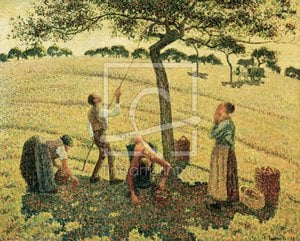
A produção artística de Pissarro foi notavelmente diversa, mas consistentemente focada no mundo ao seu redor. Ele é celebrado por suas representações tanto de paisagens rurais quanto urbanas, muitas vezes retratando cenas de vida cotidiana – camponeses trabalhando em campos, ruas parisienses movimentadas, praças de vilarejo tranquilas. Suas pinturas não eram simplesmente vistas pitorescas; elas eram comentários sociais, refletindo sua profunda empatia pela classe trabalhadora e seu compromisso em retratá-los com dignidade e respeito.
- Paisagens: Reconhecido por capturar a beleza tanto da paisagem rural quanto urbana.
- Cenas de vida parisiense: Representações vívidas de uma metrópole em rápida transformação.
- Vida camponesa: Refletindo sua consciência social e empatia pela classe trabalhadora.
Suas obras posteriores, particularmente aquelas criadas durante períodos de agitação política ou dificuldades pessoais, muitas vezes carregam um senso de melancolia e crítica social. O legado de Pissarro se estende além de suas belas pinturas. Ele foi um defensor da liberdade artística, um mentor para gerações de artistas e um pioneiro no desenvolvimento da arte moderna. Seu compromisso com a pintura *plein air* revolucionou a arte de paisagem, enquanto sua disposição para experimentar diferentes estilos demonstrou sua curiosidade intelectual e dedicação inabalável ao seu ofício. Hoje, suas obras são exibidas em importantes museus em todo o mundo, continuando a inspirar e cativar públicos com sua honestidade, beleza e profunda humanidade. Ele permanece uma figura celebrada cuja contribuição continua a ser estudada e apreciada por sua relevância duradoura. *A arte de Camille Pissarro não é apenas um registro do mundo como ele era; é um testemunho do poder da observação, da empatia e da inovação artística.*



 Visualizar em escala
 Encomendar reprodução pintada à mão
 Enviar
 Compartilhar
 Ver detalhes
 Guia
Guia

 Baixar imagem
 Semelhantes
 Raio X
 Apresentação de slides
 Estatísticas

 Ver mais






































 A opção de vidro está disponível apenas para tamanhos inferiores a 110 cm