Visualizar em escala Visualizar em RA Alternar para Impressão Encomendar reprodução pintada à mão Enviar
Ver detalhes Guia Adicionar aos favoritos Baixar imagem Semelhantes Raio X Apresentação de slides Estatísticas

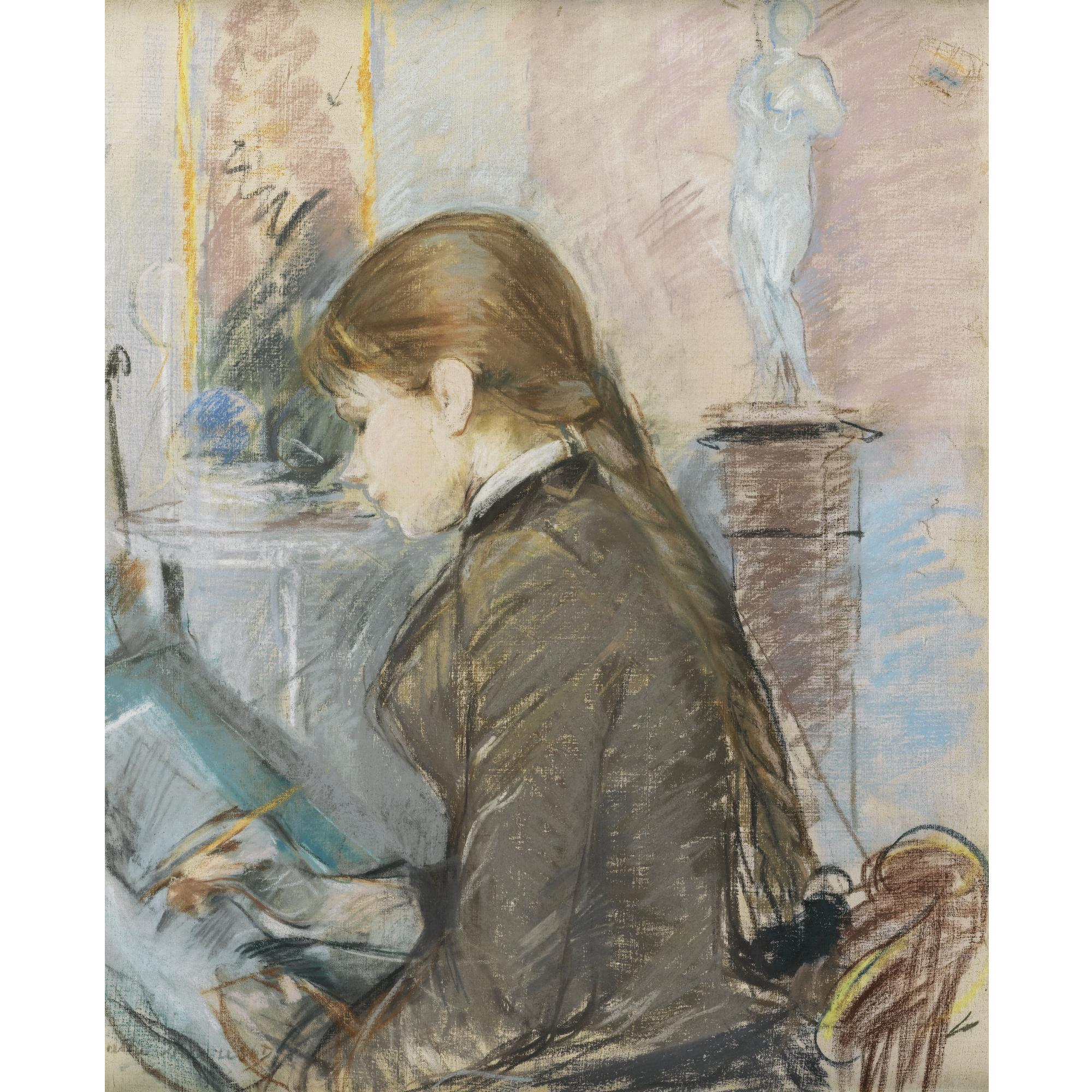
Paule Gobillard Painting

Discover Berthe Morisot's 'Paule Gobillard Painting,' a captivating Impressionist portrait capturing domestic life with delicate brushstrokes and serene beauty. Explore her legacy at the Musée Marmottan Monet.

Berthe Morisot: Pioneira impressionista, capturou luz e intimidade em cenas domésticas e retratos delicados. Explore sua obra e legado com Édouard Manet.

Adquira uma imagem digital de alta resolução e aprimorada, muito superior à prévia online.

Cada arquivo é meticulosamente preparado por nossos especialistas internos, utilizando ferramentas avançadas e retoques manuais de alta precisão. Garantimos que cada imagem apresente clareza excepcional, fidelidade de cores e detalhes minuciosos.

O arquivo final é entregue por e-mail em até 72 horas, otimizado para uso imediato em ambientes profissionais, editoriais e de impressão. Esta é a mesma qualidade utilizada por estúdios de design de alto nível, editoras e galerias.

Imagem Digital

Baixe um arquivo de alta resolução para exibição pessoal, impressão e projetos criativos. ( Alternar para Impressão Encomendar reprodução pintada à mão)

Preço Total

$ 24,90

Incluído em cada pedido de imagem digital

Entrega Digital Especializada e Garantida

Ao escolher o WahooArt.com, você não está apenas adquirindo uma imagem — você está recebendo uma obra de arte digital profissionalmente aprimorada, elaborada com precisão e com garantia de satisfação. Aqui está tudo o que acompanha seu pedido, automaticamente:

shipping_icon
Entrega rápida por e-mail

O seu arquivo de imagem digital em alta resolução será enviado por e-mail em até 72 horas após o pedido — pronto para uso imediato.

canvas_icon
Arquivo Digital com IA Otimizado

Sua obra de arte é otimizada profissionalmente por meio de ferramentas avançadas de IA e edição manual, garantindo o máximo de detalhes, clareza e precisão de cores.

insurance_icon
Reenvio gratuito vitalício

Apagou ou perdeu o seu ficheiro acidentalmente? Não se preocupe – nós reenviamos para si a qualquer momento, gratuitamente.

tax_icon
Sem Taxas de Importação - Sempre

Desfrute da sua obra de arte instantaneamente, sem taxas alfandegárias, impostos ou custos de entrega — downloads digitais são sempre isentos de taxas.

color_icon
Garantia de Precisão de Cores

Garantimos que sua imagem digital reflita as cores originais com a maior fidelidade possível, utilizando ferramentas profissionais e gerenciamento de cores.

return_icon
Garantia de satisfação de 100 dias

Se não estiver satisfeito com a sua imagem digital, nós a revisaremos ou reembolsaremos 100% dentro de 100 dias — sem perguntas.

guarantee_icon
Garantia de Reembolso 100%

Não está satisfeito? Receba o reembolso total em até 100 dias após o recebimento do seu arquivo digital — sem perguntas.

discount_icon
Descontos para pedidos em lote

Compre 3 imagens, economize 10% - Compre 5, economize 15% - Compre 10+, economize 20%. Ideal para projetos criativos, galerias e agências.

Detalhes Rápidos

  • Artist: Berthe Morisot
  • Year: 1886
  • Influences:
    • Morisot
    • Corot
  • Artistic style: Realist, Impressionist
  • Dimensions: 85 x 94 cm
  • Movement: Impressionism
  • Location: Musée Marmottan Monet, Paris

Teste de Conhecimentos Artísticos

Cada pergunta possui apenas uma resposta correta.

Questão 1:
What is the primary subject depicted in Berthe Morisot’s ‘Paule Gobillard Painting’?
Questão 2:
In what year was ‘Paule Gobillard Painting’ created?
Questão 3:
Which museum currently houses ‘Paule Gobillard Painting’?
Questão 4:
Berthe Morisot is considered a significant figure in the Impressionist movement. What characteristic best describes her approach to painting?
Questão 5:
The painting includes elements such as a vase and a clock. What do these details primarily suggest about the scene?

A Moment of Domestic Grace: Exploring Berthe Morisot’s Paule Gobillard Painting

Berthe Morisot's "Paule Gobillard Painting," a captivating portrait completed in 1886, offers a rare glimpse into the quiet intimacy of everyday life during the Impressionist era. More than simply a depiction of a young woman, it’s a study in light, color, and the subtle nuances of human connection—a testament to Morisot's remarkable ability to capture fleeting moments of beauty within the domestic sphere. The painting resides at the Musée Marmottan Monet in Paris, a fitting home for this delicate yet powerful work, surrounded by other masterpieces of the Impressionist movement.

Paule Gobillard Painting by Berthe Morisot

At first glance, the scene is remarkably simple: Paule Gobillard, a niece of Morisot and daughter of Yves Gobillard, sits poised before a chair, her hands resting gently on a small table. She holds a plate or basket – its contents obscured, inviting the viewer’s imagination to fill in the details. The room itself is bathed in soft light, filtered through the window, creating an atmosphere of serene tranquility. Yet, it's within these seemingly ordinary elements that Morisot’s genius shines through.

The Impressionist Palette and Technique

Morisot was a master of capturing the ephemeral qualities of light and color—a hallmark of the Impressionist movement. She employed loose, broken brushstrokes, layering hues to create an effect of shimmering luminosity. Notice how she uses delicate washes of pinks, blues, and greens to define the fabrics and shadows, avoiding sharp outlines or precise details. This technique allows the colors to blend and mingle, mimicking the way light actually interacts with surfaces. The painting’s composition is carefully balanced, drawing the eye to Paule's face—her expression serene and contemplative. Morisot’s use of a limited palette contributes to the painting’s overall sense of harmony and tranquility.

The choice of canvas size – 85 x 94 cm – further enhances the intimacy of the scene. It feels as though we are invited into a private moment, observing a familiar domestic tableau. The brushwork is remarkably free and expressive, reflecting Morisot’s commitment to capturing the immediacy of her observations rather than creating a meticulously rendered representation.

A Portrait of Family and Era

“Paule Gobillard Painting” offers a poignant glimpse into the lives of women during the late 19th century. Berthe Morisot herself was a pioneering female artist in a male-dominated field, often painting scenes of domestic life—a subject that was typically relegated to the role of a secondary genre. By focusing on Paule Gobillard, Morisot elevates this everyday subject matter, imbuing it with a sense of dignity and grace. The inclusion of the vase and chair suggests a comfortable, familiar setting – a space for quiet contemplation and connection.

The painting’s historical context is also significant. It was created during a period of rapid social change in France, as industrialization transformed urban landscapes and traditional ways of life. Morisot's work reflects this shift, capturing the lingering traces of rural beauty amidst the encroaching modernity. The portrait speaks to the quiet resilience and understated elegance of women navigating these changing times.

Collecting a Legacy: Reproductions and Beyond

For art enthusiasts seeking to experience the beauty and emotional depth of “Paule Gobillard Painting,” high-quality reproductions are readily available through platforms like WahooArt.com, offering meticulously crafted oil painting recreations that faithfully capture Morisot’s artistic vision. This allows a wider audience to appreciate the nuances of her technique and the profound insights she offers into the human experience. Consider this piece not just as a beautiful image, but as a window into a specific moment in art history—a testament to the enduring power of Impressionism.


Biografia do Artista

A Life Immersed in Light and Intimacy

Berthe Morisot, born in Bourges, France, in 1841, stands as a remarkably significant figure within the Impressionist movement—a title she earned not simply through membership, but through an utterly unique artistic vision. To reduce her story to mere “female Impressionism” is to fundamentally misunderstand the profound originality of her approach and her unwavering dedication to capturing the fleeting, intimate moments that defined modern life. Her lineage was rich with artistic heritage; she descended from Jean-Honoré Fragonard, a celebrated Rococo painter, providing her with an early exposure to the world of art and establishing a connection to a long line of creative expression. Despite the limitations placed upon women’s education during this era, Morisot received an uncommon upbringing—one that nurtured her innate talent and fostered a lifelong commitment to painting. Her initial training involved lessons with Geoffroy-Alphonse Chocarne and Joseph Guichard, providing foundational skills in technique, but it was her immersion within the masterpieces of the Louvre, meticulously copying works by Old Masters, that truly ignited her artistic sensibility—a process that instilled in her a deep understanding of composition, color theory, and the power of observation. This rigorous period of study laid the groundwork for her later explorations of light, color, and form, shaping her distinctive style. Crucially, she was deeply influenced by Jean-Baptiste-Camille Corot, whose emphasis on *plein air* painting—working directly from nature outdoors—became a cornerstone of Morisot’s artistic practice. This approach allowed her to capture the ephemeral qualities of light, atmosphere, and emotion with an unparalleled sensitivity, transforming fleeting moments into enduring works of art.

Navigating the Impressionist Circle

Morisot's artistic journey became inextricably linked with that of Édouard Manet, whom she met in 1864. Their relationship transcended a simple mentor-student dynamic; it blossomed into one of mutual respect, intellectual exchange, and genuine friendship. Manet served as a guiding influence, offering encouragement and sharing his evolving style, but Morisot was far from a passive subject. She actively participated in the burgeoning Impressionist movement, becoming a founding member alongside Monet, Degas, Renoir, and Pissarro. This decision to join the “rejected” artists at the 1874 exhibition—a bold move that defied the conservative standards of the official Salon—marked a pivotal moment in art history. The first Impressionist exhibition, held in a studio belonging to the photographer Nadar, was a defiant assertion of artistic independence and a challenge to the established order. Morisot’s participation solidified her place within this revolutionary group, demonstrating her commitment to pushing boundaries and exploring new forms of expression. She continued to exhibit with the Impressionists throughout the 1870s and 1880s, consistently showcasing her unique perspective and contributing to the movement's growing recognition. Her work—often depicting intimate domestic scenes, portraits of family members, and glimpses into everyday life—offered a distinctly feminine gaze, subtly challenging societal expectations and expanding the possibilities for female artists.

A Distinctive Artistic Voice

What truly distinguishes Berthe Morisot’s art is not merely *what* she painted but *how* she painted it—her distinctive technique and approach to capturing light and emotion. Her brushwork is characterized by a remarkable delicacy and fluidity, conveying an impression of spontaneity and immediacy. She employed a technique known as “broken color”—applying small, distinct strokes of pure pigment side-by-side rather than blending them together—to create a shimmering effect of light and atmosphere. This method allowed her to capture the subtle nuances of color and texture with remarkable precision. Unlike some of her Impressionist colleagues who focused on grand landscapes or bustling cityscapes, Morisot often chose intimate interior scenes and portraits, exploring the complexities of human relationships and the quiet beauty of everyday life. Her palette is typically soft and harmonious, favoring pastel shades and delicate gradations of color—a deliberate choice that contributes to the overall sense of serenity and intimacy in her paintings. Furthermore, she was a skilled printmaker, mastering techniques such as etching and drypoint, which allowed her to explore different textures and tonal values. Her work is not simply decorative; it possesses a profound emotional depth and a remarkable sensitivity to light—qualities that continue to resonate with viewers today.

Key Works and Recognition

Throughout her career, Morisot produced a body of work that showcases her evolving artistic style and her deep engagement with the world around her. Some of her most celebrated paintings include *Woman at Her Toilette* (1876), a remarkably intimate portrait capturing a moment of private reflection; *The Cradle* (1872), depicting a tender scene between a mother and child; and *Summer’s Day* (1879), which captures the fleeting beauty of a summer afternoon. These works, along with many others, demonstrate her mastery of light, color, and composition—as well as her ability to convey complex emotions through subtle gestures and expressions. Despite facing considerable prejudice and skepticism during her lifetime, Morisot’s work gradually gained recognition within the art world. She was praised by critics like Gustave Geffroy, who described her as “one of the three great ladies” of Impressionism—alongside Marie Bracquemond and Mary Cassatt—acknowledging her significant contribution to the movement. Her paintings were included in international exhibitions, including the International Exhibition in Paris (1887) and the exhibition at the Metropolitan Museum of Art in New York City (1887), further solidifying her place as a major figure in modern art.

Legacy and Lasting Influence

Berthe Morisot’s life was tragically cut short by pneumonia in 1895, but her artistic legacy endures—a testament to her talent, dedication, and unwavering spirit. Her work continues to be celebrated for its delicate beauty, emotional honesty, and innovative technique. She paved the way for future generations of female artists, demonstrating that women could achieve artistic excellence and contribute meaningfully to the evolution of art history. Morisot’s paintings are now housed in prestigious collections around the world—serving as a reminder of her enduring influence on the art world and her profound contribution to the development of Impressionism. Her story is one of quiet determination, artistic vision, and a remarkable ability to capture the fleeting beauty of everyday life.

Berthe Morisot

Berthe Morisot

1841 - 1895 , França

Informações Rápidas

  • Artistic Movement Or Style: Impressionismo
  • Artists Or Movements Influenced By This Artist: ['Impressionismo']
  • Artists Who Influenced This Artist:
    • Corot
    • Manet
  • Date Of Birth: 14 Jan 1841
  • Date Of Death: 2 Mar 1895
  • Full Name: Berthe Morisot
  • Nationality: Francesa
  • Notable Artworks:
    • Mulher no vestido verde
    • O berço
    • Dia de verão
  • Place Of Birth: Bourges, França