Visualizar em escala Visualizar em RA Encomendar reprodução pintada à mão Ver Imagem Digital Enviar
Ver detalhes Guia de Obras do Aluno Adicionar aos favoritos Baixar imagem Semelhantes Raio X Apresentação de slides Estatísticas

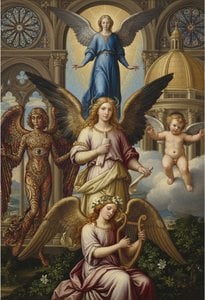
Spring

Discover Antonio Zucchi's 'Spring' (1769), a serene painting of cherubs and a woman, part of the Adam Library ceiling at Kenwood House. Explore art history & decorative arts.

Antonio Zucchi (1726-1795) foi um pintor neoclássico italiano renomado por seus afrescos decorativos, cenas mitológicas e paisagens 'veduta'. Colaborou com Robert Adam e casou-se com Angelica Kauffmann. Explore sua obra.

Giclée / Impressão de Arte

Impressão giclée ou em tela de qualidade de museu, com produção rápida e opções flexíveis de acabamento. ( Encomendar reprodução pintada à mão Ver Imagem Digital)

Corner sample of the P118B picture frame: poliestireno moldado, 5 cm wide and 3 cm thick
P118B €10
Corner sample of the P118H picture frame: poliestireno moldado, 5 cm wide and 3 cm thick
P118H €10
Corner sample of the P118W picture frame: poliestireno moldado, 5 cm wide and 3 cm thick
P118W €10
Corner sample of the P438Z picture frame: poliestireno moldado, 5.5 cm wide and 3.5 cm thick
P438Z €10
Corner sample of the P508JH picture frame: poliestireno moldado, 7 cm wide and 3.5 cm thick
P508JH €12
Corner sample of the P508YH picture frame: poliestireno moldado, 7 cm wide and 3.5 cm thick
P508YH €12
Corner sample of the P805H picture frame: poliestireno moldado, 5 cm wide and 3.5 cm thick
P805H €10
Corner sample of the P805Z picture frame: poliestireno moldado, 5 cm wide and 3.5 cm thick
P805Z €10
Corner sample of the P919BZ picture frame: poliestireno moldado, 7 cm wide and 3.5 cm thick
P919BZ €10
Corner sample of the P919G picture frame: poliestireno moldado, 7 cm wide and 3.5 cm thick
P919G €10
Corner sample of the P919XJ picture frame: poliestireno moldado, 7 cm wide and 3.5 cm thick
P919XJ €10
Corner sample of the P959ZH picture frame: poliestireno moldado, 5 cm wide and 3 cm thick
P959ZH €10
Corner sample of the P968JZ picture frame: poliestireno moldado, 6 cm wide and 4 cm thick
P968JZ €12
Corner sample of the W106C picture frame: madeira maciça, 5 cm wide and 3 cm thick
W106C €8
Corner sample of the W218G picture frame: madeira maciça, 5 cm wide and 3 cm thick
W218G €10
Corner sample of the W218JH picture frame: madeira maciça, 5 cm wide and 3 cm thick
W218JH €8
Corner sample of the W218Y picture frame: madeira maciça, 5 cm wide and 3 cm thick
W218Y €10
Corner sample of the W307PJ picture frame: madeira maciça, 6 cm wide and 3 cm thick
W307PJ €10
Corner sample of the W316G picture frame: madeira maciça, 6 cm wide and 3 cm thick
W316G €10
Corner sample of the W316PJ picture frame: madeira maciça, 6 cm wide and 3 cm thick
W316PJ €8
Corner sample of the W316Y picture frame: madeira maciça, 6 cm wide and 3 cm thick
W316Y €10
Corner sample of the W398PJ picture frame: madeira maciça, 5 cm wide and 3 cm thick
W398PJ €8
Corner sample of the W4111J picture frame: madeira maciça, 6.5 cm wide and 3.5 cm thick
W4111J €10
Corner sample of the W500HY picture frame: madeira maciça, 7 cm wide and 5 cm thick
W500HY €15
Corner sample of the W500JH picture frame: madeira maciça, 7 cm wide and 5 cm thick
W500JH €15
Corner sample of the W692G picture frame: madeira maciça, 8 cm wide and 4 cm thick
W692G €12
Corner sample of the W849H picture frame: madeira maciça, 5 cm wide and 3 cm thick
W849H €8
Corner sample of the W940BG picture frame: madeira maciça, 7.5 cm wide and 4.5 cm thick
W940BG €15
Corner sample of the W953PJ picture frame: madeira maciça, 6 cm wide and 3.5 cm thick
W953PJ €8

Padrão
sob medida
CM
INCH

Escolha entre os nossos tamanhos pré-definidos que respeitam as proporções originais da obra de arte.

largura
altura

Digite a largura e a altura de que necessita, para se ajustar à sua moldura ou à sua parede. Uma impressão só pode ser cortada, nunca ampliada além da imagem original, pelo que um tamanho com uma proporção diferente perderá parte da imagem. Enviamos-lhe uma maquete digital para aprovação antes de imprimirmos qualquer coisa. A imagem apresentada nesta página não mostra o corte real — apenas a maquete o faz.

Entrega mundial () em 2 semanas, em vez das 4/5 semanas padrão. (24 Outubro)

Envio expresso gratuito para todo o mundo
Tela de Linho Premium
Seguro de transporte total
Garantia de Reembolso de Impostos Alfandegários
Garantia de Fidelidade de Cor
Política de Devolução em 100 Dias (Apenas para Defeitos)
Garantia de reembolso de 100%
Desconto para múltiplas unidades

Preço Total

€ 60

Spring

Giclée / Impressão de Arte

Dimensões da Reprodução

-

Preço Total

€ 60

Detalhes Rápidos

  • Dimensions: 59 x 57 cm
  • Notable elements: Cherubs, vases, bird
  • Movement: Neoclassic
  • Artist: Antonio Zucchi
  • Medium: Oil on paper
  • Artistic style: Decorative fresco

Teste de Conhecimentos Artísticos

Cada pergunta possui apenas uma resposta correta.

Questão 1:
What is the primary subject depicted in Antonio Zucchi’s ‘Spring’ (1769)?
Questão 2:
The painting ‘Spring’ is part of what larger architectural project?
Questão 3:
Which artist is primarily known for his innovative use of pastel and capturing fleeting moments of character, as described in the provided text?
Questão 4:
According to the text, what was a key characteristic of Antonio Zucchi’s portraiture style?
Questão 5:
The painting ‘Spring’ is located in which museum?

Antonio Zucchi’s “Spring,” A Venetian Masterpiece of Light and Grace

Within the opulent Adam Library at Kenwood House in London resides a breathtaking ceiling fresco, a testament to the artistic vision of Antonio Zucchi – a Venetian painter who flourished during the mid-18th century. “Spring,” painted in 1769, isn’t merely a decorative element; it's a carefully orchestrated tableau of serenity and gentle beauty, capturing a fleeting moment of idyllic repose amidst a winter landscape. The panel, measuring approximately 59 x 57 cm, is executed with Zucchi’s signature mastery of pastel and oil, blending delicate hues to create an atmosphere of luminous warmth against the cool backdrop of snow-laden trees.

Zucchi's style during this period leaned heavily towards a refined elegance, influenced by the Venetian tradition of *vedute* – landscape views – but imbued with a distinctly personal sensibility. He moved beyond simple representation, striving to evoke mood and emotion through subtle shifts in color and light. Notice how he doesn’t depict a harsh winter scene, but rather one softened by an unseen warmth; the snow is rendered as a gentle, almost ethereal white, while the figures are bathed in a golden glow emanating from a central fire. This deliberate choice immediately establishes a sense of comfort and domesticity, inviting the viewer into the intimate space depicted.

A Scene of Quiet Contemplation

The composition centers around three figures: a woman and child, nestled within a richly appointed interior, and a third individual carrying firewood. The woman’s head rests gently on the shoulder of a cherubic figure – an angel or cupid – suggesting a moment of shared solace and affection. The details are remarkably refined; observe the intricate folds of the clothing, the delicate rendering of the child's face, and the subtle expressions conveying contentment and peace. There is no overt drama or narrative; instead, Zucchi presents a simple, yet profoundly moving, scene of domestic harmony.

The inclusion of two vases – one positioned near the top right corner and another towards the bottom left – adds an element of classical grace to the composition. These aren’t merely decorative additions; they subtly reference the artistic conventions of the era, echoing the themes of abundance and fertility often associated with springtime. The placement is deliberate, drawing the eye across the panel and reinforcing the sense of balance and equilibrium.

Technique and Venetian Influence

Zucchi’s technique is characterized by a remarkable ability to capture light and texture. He employs layers of translucent paint – a hallmark of Venetian painting – to create an illusion of depth and luminosity. The colors are rich and vibrant, yet tempered with a delicate pastel quality that lends the scene an air of ethereal beauty. The brushwork is remarkably smooth and refined, reflecting Zucchi’s meticulous attention to detail.

His training under Francesco Fontebasso and Jacopo Amigoni in Venice undoubtedly shaped his artistic sensibilities. These masters were renowned for their mastery of color and composition, and Zucchi clearly absorbed much of their expertise. The influence of Venetian painting is evident in the panel’s overall atmosphere – a sense of warmth, light, and refined elegance that distinguishes it from the more austere styles prevalent in other European courts.

Symbolism and Emotional Resonance

“Spring” transcends mere representation; it speaks to universal themes of family, comfort, and the promise of renewal. The scene evokes a feeling of quiet contentment and domestic bliss – a welcome respite from the harsh realities of winter. The cherub’s gesture suggests protection and nurturing, while the woman's repose conveys a sense of peace and security.

More than just a decorative panel, “Spring” is a poignant meditation on the beauty of simple pleasures and the enduring power of human connection. It remains a captivating work of art, offering viewers a glimpse into the refined aesthetic sensibilities of 18th-century Venice and a reminder of the timeless appeal of light, grace, and tranquility.

Perguntas e Respostas

Quão saturada é a paleta de "Spring"?

"Spring" de Antonio Zucchi é registrado com uma saturação de Subtle Color.

Como foi feita a obra "Spring" e quais são as suas dimensões?

A obra original "Spring" de Antonio Zucchi é um trabalho em Acrylic On Canvas com dimensões de 59 x 57 cm. A técnica e o tamanho descrevem o objeto original.

Que emoção transmite "Spring" de Antonio Zucchi?

O tom emocional registrado para "Spring" de Antonio Zucchi é Calm. Ele resume o sentimento que a obra expressa.


Biografia do Artista

Francis Cotes: Um Pioneiro do Pastel Inglês

Francis Cotes (1726–1770) ergue-se como uma figura fundamental no florescente mundo do retrato inglês, sendo particularmente reconhecido pelo seu uso inovador do pastel e pela sua capacidade de capturar momentos fugazes de personalidade. Nascido em Londres, foi aprendiz de William Faithorne, um pintor célebre pelos seus retratos de grupo teatrais, uma experiência que, sem dúvida, moldou as suas primeiras sensibilidades artísticas. No entanto, Cotes rapidamente superou o seu mestre, desenvolvendo um estilo distintamente individual, caracterizado por uma sensibilidade notável à luz, à textura e às nuances psicológicas dos seus modelos. Ao contrário da formalidade muitas vezes rígida do retrato inglês anterior, as obras de Cotes possuem uma imediate de vibrante, refletindo um envolvimento profundo com a personalidade do retratado e uma consciência aguda do mundo visual que o rodeava. O início da sua carreira foi marcado por encomendas de famílias proeminentes, incluindo os Astley, para os quais criou a célebre obra “Aos Sete Anos, e o seu Irmão Edward, aos Cinco Anos e Meio”, uma representação terna da inocência infantil que permanece como uma das suas obras mais amadas. Esta pintura exemplifica a capacidade de Cotes de imbuir até temas aparentemente simples com uma profunda ressonância emocional. Ele empregou habilmente o pastel — um meio então considerado relativamente novo na Inglaterra — para alcançar efeitos notáveis de cor e tom, capturando o rubor delicado da pele, o brilho dos tecidos e as subtis gradações de luz e sombra. Cotes não estava simplesmente a replicar aparências; ele traduzia a realidade observada para a tela com uma graça pictórica que o distinguia dos seus contemporâneos. O seu uso de pinceladas soltas e expressivas criava uma sensação de movimento e vitalidade, contribuindo para a qualidade cativante dos seus retratos.

Técnica e Influências

O domínio técnico de Cotes derivava não apenas do seu talento inato, mas também do seu estudo meticuloso da natureza e das obras de outros artistas. Ele foi profundamente influenciado pelos Mestres Holandeses, particularmente por Rembrandt, cujo uso de luz e sombra para criar efeitos dramáticos é evidente nos retratos de Cortes. Admirava também o trabalho de Anthony van Dyck, cujas composições elegantes e percepções psicológicas ele procurou emular. Contudo, ao contrário do estilo polido de Van Dyck, Cotes abraçou uma abordagem mais informal, frequentemente retratando os seus modelos em poses relaxadas e capturando-os em cenários naturais. A sua técnica de pastel foi ainda refinada através da experimentação com a sobreposição de cores e a aplicação destas com variados graus de pressão, permitindo-lhe alcançar uma gama surpreendente de valores tonais e texturas. Os retratos resultantes não são meros semelhanças; são estudos íntimos de caráter, imbuídos de um sentido palpável de vida.

Obras Notáveis e Encomendas

Para além do icónico “Aos Sete Anos”, Cotes produziu um corpo de trabalho significativo que inclui inúmeros retratos de membros da aristocracia e da pequena nobreza. Pintou para figuras proeminentes como Sir Robert Peel, Lord Charles Townshend e Lady Mary Wortley Montagu. As suas encomendas eram frequentemente impulsionadas pelo desejo de capturar a personalidade única e o estatuto social do modelo, refletindo as mudanças de gosto na Inglaterra do século XVIII. O seu trabalho estendeu-se também para além do retrato; produziu pinturas de paisagem e cenas de género, demonstrando a sua versatilidade como artista. A Royal Academy, fundada em 1769, reconheceu as contribuições de Cotes ao elegerlo como um dos seus membros fundadores, consolidando o seu lugar entre os principais artistas da sua época.

Legado e Significado Histórico

O legado de Francis Cotes reside primordialmente no seu papel pioneiro no desenvolvimento da pintura pastel inglesa. Ele demonstrou o potencial deste meio para capturar nuances subtis de cor e tom, abrindo caminho para gerações futuras de artistas do pastel. Os seus retratos são admirados hoje não apenas pela sua brilhância técnica, mas também pela sua profundidade psicológica e ressonância emocional. A obra de Cotes representa um afastamento das convenções formais do retrato anterior, abraçando uma abordagem mais íntima e expressiva que refletia o espírito do Iluminismo. Ele é lembrado como uma figura chave no estabelecimento da pintura inglesa como uma tradição distinta e vibrante, deixando uma marca indelével na história da arte. A sua influência pode ser vista nas obras de artistas posteriores que seguiram os seus passos, consolidando a sua posição como um verdadeiro inovador e um mestre do seu ofício.
Antonio Zucchi

Antonio Zucchi

1726 - 1795 , Inglaterra

Informações Rápidas

  • Artistic Movement Or Style: Provavelmente influenciado por Van Loo
  • Artists Or Movements Influenced By This Artist:
    • Chardin
    • Greuze
  • Artists Who Influenced This Artist: ['Jean Baptiste van Loo']
  • Date Of Birth: 15 de outubro de 1726
  • Full Name: Francoise Duparc
  • Nationality: Espanhola
  • Notable Artworks:
    • La tricoteuse
    • Homem com um saco de nozes
  • Place Of Birth: Murcia, Espanha
Explore obras de arte organizadas por temas, estilos e características.