Obtenha um arquivo pronto para impressão que vai muito além da visualização na web. Cada imagem digital que vendemos provém de um arquivo mestre de alta resolução em nosso banco de dados — geralmente entre 5.000 e 15.000 pixels de largura — para que você possa imprimir em grandes formatos, realizar cortes precisos ou reproduzir detalhes minuciosos com total confiança.
Nenhum arquivo sai do nosso estúdio sem passar por um cuidadoso processo de revisão. Um especialista digital verifica as cores em relação à pintura original e as corrige se necessário, aumentando então a clareza e o detalhe com ferramentas profissionais de retoque — sempre mantendo a fidelidade às pinceladas e ao estilo do artista. O resultado é uma imagem que se assemelha à pintura, e não a um scan com filtros.
Aprovação antes da finalização: nosso especialista enviará a imagem por e-mail em até 72 horas para sua revisão. Não ficou satisfeito? Solicite melhorias ou correções, ou peça o reembolso caso a qualidade não atenda às suas expectativas.
Esta é a qualidade em que confiam editoras, estúdios de design, galerias e gráficas.
Baixe um arquivo de alta resolução para exibição pessoal, impressão e projetos criativos. ( Alternar para Impressão Comprar pintura feita à mão)
Ao escolher o WahooArt.com, você não está apenas adquirindo uma imagem — você está recebendo uma obra de arte digital profissionalmente aprimorada, elaborada com precisão e com garantia de satisfação. Aqui está tudo o que acompanha seu pedido, automaticamente:
O seu arquivo de imagem digital em alta resolução será enviado por e-mail em até 72 horas após o pedido — pronto para uso imediato.
Sua obra de arte é otimizada profissionalmente por meio de ferramentas avançadas de IA e edição manual, garantindo o máximo de detalhes, clareza e precisão de cores.
Apagou ou perdeu o seu ficheiro acidentalmente? Não se preocupe – nós reenviamos para si a qualquer momento, gratuitamente.
Desfrute da sua obra de arte instantaneamente, sem taxas alfandegárias, impostos ou custos de entrega — downloads digitais são sempre isentos de taxas.
Garantimos que sua imagem digital reflita as cores originais com a maior fidelidade possível, utilizando ferramentas profissionais e gerenciamento de cores.
Se não estiver satisfeito com a sua imagem digital, nós a revisaremos ou reembolsaremos 100% dentro de 100 dias — sem perguntas.
Não está satisfeito? Receba o reembolso total em até 100 dias após o recebimento do seu arquivo digital — sem perguntas.
Compre 3 imagens, economize 10% - Compre 5, economize 15% - Compre 10+, economize 20%. Ideal para projetos criativos, galerias e agências.
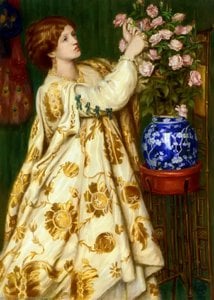
Anthony Frederick Augustus Sandys's “Grace Rose,” painted in 1866, is more than just a portrait; it’s a meticulously crafted tableau vivant, a shimmering glimpse into the opulent world of Victorian society and infused with the evocative spirit of the Pre-Raphaelites. This captivating work, now housed at the Yale Center for British Art, reveals Sandys's profound understanding of color, texture, and symbolic detail – elements that elevate it beyond a simple likeness to a richly layered exploration of beauty, femininity, and the allure of antiquity.
The subject herself, Grace Charlotte Rose, was a woman of considerable social standing, the daughter of Captain Winterton Snow and wife of Sir William Anderson Rose. Sandys’s choice to depict her in such exquisite detail speaks volumes about the importance placed on lineage and status within Victorian society. However, it's not merely a celebration of wealth; rather, the painting subtly hints at a deeper narrative woven through carefully chosen motifs. The elegant pose, the delicate lace trim, and the shimmering pearls all contribute to an atmosphere of refined grace, while simultaneously grounding the portrait in a tradition of aristocratic portraiture.
Sandys’s technical mastery is immediately apparent. He employs a rich, velvety impasto technique, building up layers of paint to create a tactile surface that invites close inspection. The delicate rendering of Grace's silk dress, the subtle sheen of her jewelry, and the intricate details of the antique vase all demonstrate his exceptional skill in capturing texture and light. Notably, Sandys deliberately avoids the stark realism favored by earlier portraitists, instead opting for a softer, more atmospheric approach—a hallmark of Pre-Raphaelite painting.
The composition is carefully orchestrated to draw the viewer’s eye through a series of interconnected elements. The green marble parapet, reminiscent of Italian Renaissance architecture, provides a dramatic backdrop for Grace and establishes an immediate connection to classical antiquity. The arrangement of the pink, crimson, and yellow roses within the vase isn't merely decorative; it speaks to themes of beauty, love, and fleeting moments—a common preoccupation in Pre-Raphaelite art. The inclusion of Japanese painted screens, a popular motif during this period (Japonisme), further enhances the sense of exoticism and adds another layer of visual richness.
“Grace Rose” occupies a fascinating space between the Pre-Raphaelite Brotherhood and the burgeoning aesthetic movement. Sandys, like many artists of his time, was drawn to the Pre-Raphaelite’s emphasis on beauty, detail, and mythological subjects, but he also embraced the aesthetic movement's fascination with decorative arts and exotic influences. The painting’s opulent details—the gold jewelry, the intricate vase, the Japanese screens—reflect this dual sensibility.
The choice of a Japanese screen as a backdrop is particularly significant. It represents a deliberate attempt to incorporate elements of Eastern art into a Western context, aligning with the aesthetic movement's interest in creating visually stimulating and emotionally evocative works. Furthermore, Sandys’s use of color—the rich reds, greens, and golds—is deliberately heightened, creating a sense of dramatic intensity that is characteristic of both Pre-Raphaelite and aesthetic paintings.
Ultimately, “Grace Rose” transcends its formal elements to evoke a powerful emotional response. The portrait captures not just Grace’s physical appearance but also her inner grace and dignity. The subtle gaze, the delicate expression, and the overall atmosphere of quiet elegance suggest a woman of considerable intelligence and refinement. It's a painting that invites contemplation—a reminder of the beauty and complexity of Victorian society and the enduring power of art to capture the essence of human experience.
"Grace Rose", de Anthony Frederick Augustus Sandys pode ser descarregado na página de Download da obra, como download de imagem digital em alta resolução.
Sugere-se uma reprodução de Medium para "Grace Rose", de Anthony Frederick Augustus Sandys. O tamanho pode ser ajustado mantendo as proporções.
A identidade cromática de "Grace Rose", de Anthony Frederick Augustus Sandys: uma paleta Earthy, dominada por Walnut (#7f5827).


1829 - 1904 , Reino Unido
 Visualizar na parede
 Compartilhar
 Compartilhar
 Detalhes
 Guia
Guia

 Baixar imagem
 Semelhantes
 Raio X
 Ver diaporama
 Q&A
Q&A Estatísticas


 Ler mais