

Impressão giclée ou em tela de qualidade de museu, com produção rápida e opções flexíveis de acabamento. ( Comprar pintura feita à mão Alternar para Imagem Digital)





























Escolha entre os nossos tamanhos pré-definidos que respeitam as proporções originais da obra de arte.

Insira a largura e a altura desejadas para se ajustarem à sua moldura ou parede. Uma impressão pode ser apenas cortada, nunca ampliada além da imagem original; portanto, um tamanho com proporções diferentes resultará na perda de parte da imagem. Enviamos uma maquete digital para sua aprovação antes de realizarmos a impressão. A imagem exibida nesta página não mostra o corte real — apenas a maquete o faz.
Entrega mundial () em 2 semanas, em vez das 4/5 semanas padrão. (10 Novembro)
St Christopher
Tamanho da Reprodução
Step closer to the print and observe how the ink settles into the paper. In this 1511 woodcut, we find St. Christopher navigating the currents of a river, his massive frame dominating the foreground. The weight he carries is both physical and spiritual; the Christ Child rests upon his shoulders, a small but profound presence that alters the very gravity of the scene. There is a quiet tension in the way the saint moves through the water, a sense of purposeful effort against the resistance of the stream.
The composition relies on a strong diagonal line, pulling your gaze from the heavy, muscular torso of the saint upward toward the child. This movement creates a sense of depth, leading the eye past the immediate struggle into a landscape of rolling hills and distant trees. It is a scene of profound stillness amidst motion.
Notice the technical discipline required to achieve such texture through monochrome printmaking. The artist utilizes hatching and cross-hatching to sculpt form from nothing but black ink. These fine, rhythmic lines define the heavy folds of the saint's robes and the rugged contours of his skin. The water itself is rendered with short, choppy strokes, suggesting the restless movement of a river in flux.
Every incision on the woodblock serves to modulate light and shadow. There is no reliance on color here; instead, the density of the lines creates a tonal range that gives the figures a three-dimensional reality. The way the light catches the edges of the drapery or the crest of a small wave provides a sense of atmosphere that feels grounded in the natural world.
Beyond the physical depiction, the elements within the frame carry deep significance. The river acts as a symbol of earthly trials, a turbulent passage that the saint must endure. The landscape behind him suggests a realm of tranquility, perhaps mirroring the spiritual destination toward which he moves.
The interaction between the figures is subtle. Christ’s gaze embodies mercy, while Christopher’s posture reflects an unwavering resolve. It is a depiction of faith expressed through physical labor and endurance. The presence of the landscape and the meticulous detail of the trees and hills ground this religious narrative in a tangible, human reality, making the divine encounter feel immediate and present.
A data de 1511 situa "St Christopher" no Mature Period do desenvolvimento de Albrecht Dürer.
"St Christopher", de Albrecht Dürer pertence ao movimento Northern Renaissance. Este movimento fornece o contexto estilístico da obra.
No catálogo, "St Christopher", de Albrecht Dürer está registrado como WallArt. A categoria ajuda a encontrar obras semelhantes.

A influência de Dürer ressoa através dos séculos de história da arte. Sua precisão meticulosa, seu uso inovador da gravura e seus escritos teóricos continuam a inspirar artistas e estudiosos até hoje. Ele demonstrou que a arte poderia ser tanto tecnicamente magistral quanto intelectualmente rigorosa – um legado que continua a moldar o cenário artístico de hoje.

1471 - 1528 , Alemanha
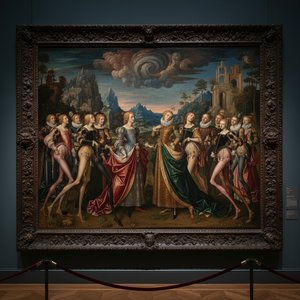
Explore the dramatic evolution of Northern Mannerism. Discover how masters like Bosch and Grünewald transitioned from Renaissance harmony to profound, elegant distortion through an expert analysis of symbolism, emotional intensity, and artistic innovation.

Explore the profound mastery of engraving and intaglio printmaking. Delve into the rich history, technical precision of the burin, and the enduring legacy of fine art techniques that shaped the world's most iconic masterpieces.
 Visualizar na parede
 Compartilhar
 Compartilhar
 Detalhes
 Guia
Guia

 Baixar imagem
 Semelhantes
 Raio X
 Ver diaporama
 Perguntas e Respostas
 Estatísticas


 Ler mais









 A opção de vidro está disponível apenas para tamanhos inferiores a 110 cm


