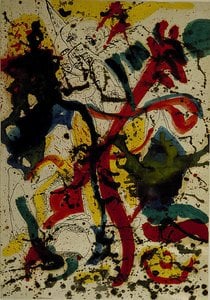
Jackson Pollock, 1912 – 1956

Jackson Pollock: The 100 Most Famous Paintings

Symfonia Jesieni nr 30 is the most famous painting by Jackson Pollock. Numer 1, 1949 (1950) and Zbieżność are the next two works the world knows best. From the 186 works of Jackson Pollock in our catalogue, here are the 100 that collectors and museum visitors look at most, with the year, the museum and the story of each.

Ranking oparty na naszym wskaźniku popularności, który łączy liczbę wyszukiwań, wizyt oraz zamówień dla każdego dzieła. Aktualizacja: Październik 2026. Every masterpiece on this page can be ordered as a museum-quality, hand-painted oil reproduction or a fine art print, at the size you choose.

Portret Jackson Pollock
Jackson Pollock · 1912 – 1956
Urodzony · zmarł
1912 – 1956, Cody
Nurt
Abstract expressionism
Dzieła w naszym katalogu
186
Najsłynniejsze
Symfonia Jesieni nr 30
Najwięcej dzieł w
MoMA - Museum of Modern Art

Top 10: Jackson Pollock's best-known paintings

Symfonia Jesieni nr 30 autorstwa Jackson Pollock
1

Symfonia Jesieni nr 30

Obraz olejny na płótnie

„Autumn Rhythm. Number 30, 1950” stanowi dzieło o kluczowym znaczeniu w ramach przełomowego wkładu Jacksona Pollocka w nurt ekspresjonizmu abstrakcyjnego. To wielkoformatowe płótno nie jest jedynie obrazem; to imersyjne doświadczenie – wizualny zapis energii, gestu oraz głęboko osobistego zaangażowania artysty w proces twórczy.

Numer 1, 1949 (1950) autorstwa Jackson Pollock
2

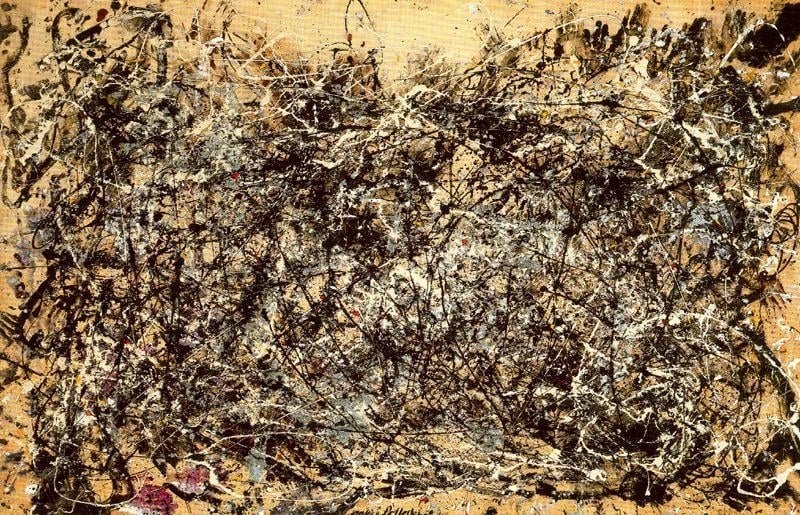
Numer 1, 1949

1950 · Obraz olejny na płótnie · Private collection, New York City

Stworzony w 1950 roku obraz „Numer 1” to fascynujące dzieło uosabiające rewolucyjny duch abstrakcjonizmu i stanowiące kwintesencję ikonicznej techniki \"drip\" Jacksona Pollocka. Imponująca skala płótna – 240 x 120 cm – przyciąga uwagę nie tylko swoimi wymiarami, ale przede wszystkim energią emanującą z jego złożonej powierzchni. To nie jest jedynie obraz; to manifestacja spontaniczności i głębokiej ekspresji artystycznej.

Zbieżność autorstwa Jackson Pollock
3

Zbieżność

Obraz olejny na płótnie

Zbieżność Jacksona Pollocka to nie jest po prostu obraz; to zmysłowe doświadczenie – monumentalne świadectwo potęgi ekspresji abstrakcyjnej i dzieło definiujące dla powojennego malarstwa amerykańskiego. Stworzone w kluczowym momencie historii sztuki, to płótno ucieleśnia innowację, rzucając wyzwanie tradycyjnym pojęciom reprezentacji i zapraszając widzów do dynamicznego świata koloru oraz energii.

Numer 1A autorstwa Jackson Pollock
4

Numer 1A

Obraz olejny na płótnie

Istota Ekspresjonizmu Abstrakcyjnego „Number 1A” Jacksona Pollocka to kwintesencja ekspresjonizmu abstrakcyjnego – nurtu, który w połowie XX wieku na nowo zdefiniował oblicze sztuki amerykańskiej. To urzekające dzieło ucieleśnia surową energię i spontaniczność, z których słynął Pollock, co czyni je pozycją obowiązkową dla każdego kolekcjonera sztuki współczesnej oraz miłośnika nowoczesnych wnętrz. Taniec Chaosu i Kontroli Dzieło to prezentuje abstrakcyjną kompozycję, którą charakteryzują chaotyczne, pełne energii pociągnięcia pędzla oraz gęsta kumulacja linii…

Białe Światło (1954) autorstwa Jackson Pollock
5

Białe Światło

1954 · Obraz olejny na płótnie · MoMA - Museum of Modern Art, Nowy Jork

„Białe Światło” to dzieło, które natychmiast przyciąga uwagę i zaprasza do głębokiego zanurzenia się w świecie abstrakcji. To nie jest obraz, który oferuje łatwe interpretacje czy widoczne formy; to raczej intensywna ekspresja emocji, ucieleśnienie siły abstrakcyjnego ekspresjonizmu. Autor, z niezwykłą swobodą, stworzył dzieło pełne dynamicznego ruchu i wewnętrznej intensywności, gdzie każdy element – od gęstych warstw farby po improwizacyjne linie – wydaje się pulsować życiem.

One. Number 31, 1950 autorstwa Jackson Pollock
6

One. Number 31, 1950

Painting

In the pantheon of modern art, few works command the room with such raw, unbridled intensity as Paul Jackson Pollock’s “One: Number 31, 1950.” To stand before this canvas is to witness a moment of pure, unfiltered creation captured in time. As a cornerstone of the Abstract Expressionist movement, this painting transcends the boundaries of traditional composition, offering instead a dense, rhythmic web of energy that seems to pulse with…

Number 5 (1948) autorstwa Jackson Pollock
7

Number 5

1948 · Oil On Canvas

A Universe Unfurled: Decoding Jackson Pollock’s No. 5, 1948 Jackson Pollock’s *No. 5, 1948* isn't simply a painting; it is an event frozen in time – a visual record of energy, gesture, and the very act of creation. This monumental work stands as perhaps the most iconic example of Abstract Expressionism, captivating viewers for decades with its complex layering and seemingly chaotic beauty. It’s a piece that demands attention, sparking…

Mural (1943) autorstwa Jackson Pollock
8

Mural

1943 · Acrylic On Canvas

Jackson Pollock's "Mural," completed in 1943, isn't merely a painting; it’s an immersive experience, a visceral embodiment of the burgeoning abstract expressionist movement. Commissioned by Peggy Guggenheim as a centerpiece for her Manhattan townhouse, this monumental work – measuring a commanding 247 x 605 cm – immediately announces Pollock’s arrival as a revolutionary force in the art world. The sheer scale invites contemplation, drawing the viewer into a swirling vortex…

Number 5 (1948) autorstwa Jackson Pollock
9

Number 5

1948 · Oil On Canvas

Jackson Pollock’s *No. 5*, created in 1948, stands as an emblem of Abstract Expressionism—a movement that irrevocably altered the landscape of modern art. More than just a painting; it's a visceral embodiment of emotion, intellect, and revolutionary technique, captivating viewers with its mesmerizing complexity and enduring legacy. This monumental canvas, measuring eight by four feet on fiberboard, transcends mere visual representation, inviting contemplation about the very nature of artistic expression…

Alchemy (1947) autorstwa Jackson Pollock
10

Alchemy

1947 · Acrylic On Canvas

A Dance of Chaos and Transformation: Exploring Jackson Pollock’s Alchemy The Genesis of Spontaneity Decoding the Drip Technique Historical Resonance and Symbolic Weight A Legacy of Innovation Jackson Pollock’s *Alchemy*, a monumental work from 1947, isn't merely a painting; it’s an immersive experience, a visceral embodiment of the burgeoning Abstract Expressionist movement. Created during a pivotal moment in American art history, this piece captures the raw energy and revolutionary spirit…

The rest of the Jackson Pollock ranking, 11 to 100

Number 6 (1949) autorstwa Jackson Pollock
#12

Number 6

1949

Number 6 stands as a pivotal work within Jackson Pollock's oeuvre and the broader movement of Abstract Expressionism. Emerging in post-World War II America, this style rejected traditional…

Commission a hand-painted copy →
Number 23, 1951 autorstwa Jackson Pollock
#13

Number 23, 1951

Chrysler Museum of Art

Paul Jackson Pollock's "Number 23, 1951" isn’t merely a painting; it’s an immersion. Created during a pivotal period of his artistic evolution – the “black pourings” – this…

Bring it home →
Number 1 (1948) autorstwa Jackson Pollock
#14

Number 1

1948 · MoMA - Museum of Modern Art

Jackson Pollock's "Number 1, 1948," housed within the hallowed halls of the Museum of Modern Art in New York, isn’t merely a painting; it’s an immersion. It’s a…

Bring it home →
There Were Seven in Eight (1945) autorstwa Jackson Pollock
#15

There Were Seven in Eight

1945 · MoMA - Museum of Modern Art

A Descent Into Chaotic Beauty The canvas of Jackson Pollock’s 1945 masterpiece, "There Were Seven in Eight," serves as a visceral gateway into the turbulent heart of Abstract…

Bring it home →
Saint autorstwa Jackson Pollock
#16

Saint

Jackson Pollock is widely regarded as one of the most influential artists of the 20th century, and his painting Saint is a quintessential example of his unique style.…

Order a reproduction →
The She Wolf (1943) autorstwa Jackson Pollock
#17

The She Wolf

1943

Jackson Pollock's “The She Wolf,” completed in 1943, is more than just an abstract canvas; it’s a visceral plunge into the heart of early Abstract Expressionism and a…

Bring it home →
Composition with Pouring II (1943) autorstwa Jackson Pollock
#18

Composition with Pouring II

1943

Created in 1943, "Composition with Pouring II" stands as a pivotal work in Jackson Pollock's career and the broader development of Abstract Expressionism. While often considered an early…

Bring it home →
Blue poles (Number 11) (1952) autorstwa Jackson Pollock
#19

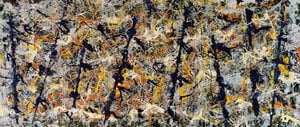
Blue poles (Number 11)

1952

Jackson Pollock’s “Blue Poles (Number 11),” completed in 1952, isn’t merely a painting; it’s an explosion of controlled chaos, a visceral embodiment of the abstract expressionist movement. Measuring…

Commission a hand-painted copy →
Yellow Islands autorstwa Jackson Pollock
#21

Yellow Islands

A Symphony of Chaos: Exploring Jackson Pollock’s ‘Yellow Islands’ Jackson Pollock's ‘Yellow Islands’, painted in 1952, stands as a pivotal work within the Abstract Expressionist movement – a…

Bring it home →
The Flame (1938) autorstwa Jackson Pollock
#23

The Flame

1938

The painting The Flame consists of oil on fiberboard, measuring 51 x 76 cm. The surface features a central motif of an incandescent blaze that moves through an…

Commission a hand-painted copy →
Portrait and a Dream autorstwa Jackson Pollock
#24

Portrait and a Dream

Jackson Pollock’s Portrait and a Dream (1953) isn’t merely a painting; it’s an immersion into the very heart of Abstract Expressionism, a visceral embodiment of the artist’s process…

Order a reproduction →
Number 3 (1948) autorstwa Jackson Pollock
#25

Number 3

1948

Jackson Pollock: A Revolutionary in Abstract Expressionism Jackson Pollock (1912-1956) stands as a monumental figure within the abstract expressionist movement, forever altering the trajectory of modern art. His…

Commission a hand-painted copy →
Ocean Greyness autorstwa Jackson Pollock
#26

Ocean Greyness

Ocean Greyness is an oil painting created by Jackson Pollock in 1953. This work measures 229 x 146.7 cm and is currently held in the Solomon R. Guggenheim…

Bring it home →
Lucifer (1947) autorstwa Jackson Pollock
#28

Lucifer

1947

Jackson Pollock’s “Lucifer,” painted in 1947, isn’t merely a painting; it’s an immersion. Measuring a substantial 268 x 104 cm, this work embodies the raw energy and profound…

Commission a hand-painted copy →
Woman autorstwa Jackson Pollock
#29

Woman

Jackson Pollock's “Woman,” completed in 1945 and currently residing within the hallowed halls of the Museum of Modern Art in New York City, isn’t merely a painting; it’s…

Commission a hand-painted copy →
Untitled (Naked Man) autorstwa Jackson Pollock
#30

Untitled (Naked Man)

A Figure Forged in Turmoil: Exploring Pollock’s ‘Untitled (Naked Man)’ This powerful painting by Jackson Pollock plunges the viewer into a vortex of emotion and raw energy. Depicting…

Order a reproduction →
Lavender Mist_Number 1 autorstwa Jackson Pollock
#31

Lavender Mist_Number 1

Jackson Pollock’s “Lavender Mist_Number 1” isn't merely a painting; it’s an immersion, a visceral experience captured on canvas. This seminal work from the late 1940s embodies the revolutionary…

Order a reproduction →
Birth autorstwa Jackson Pollock
#32

Birth

A Tempestuous Birth: Decoding Pollock’s Abstract Vision Jackson Pollock's *Birth* (1948-51) is a pivotal work within his mature “drip” period and a cornerstone of Abstract Expressionism. More than…

Bring it home →
Blue (Moby Dick) autorstwa Jackson Pollock
#33

Blue (Moby Dick)

Jackson Pollock's “Blue (Moby Dick),” painted in 1943, isn’t merely a canvas splashed with color; it’s an immersive experience, a visual embodiment of the anxieties and primal forces…

Bring it home →
The key (1946) autorstwa Jackson Pollock
#34

The key

1946 · Art Institute of Chicago

A Dance Across Canvas: Exploring Jackson Pollock’s ‘The Key’ Subject Matter & Composition The artwork depicts a group of individuals engaged in various postures—seated on chairs, standing upright,…

Commission a hand-painted copy →
Untitled II autorstwa Jackson Pollock
#35

Untitled II

To stand before an Untitled II by Paul Jackson Pollock is not merely to observe paint on canvas; it is to witness an event. It is a raw,…

Order a reproduction →
Cathedral autorstwa Jackson Pollock
#36

Cathedral

Introduction to Jackson Pollock and Abstract Expressionism Paul Jackson Pollock, known professionally as Jackson Pollock, was an American painter and a major figure in the abstract expressionist movement.…

Bring it home →
Number 27, 1950 autorstwa Jackson Pollock
#38

Number 27, 1950

Jackson Pollock’s ‘Number 27, 1950’: A Symphony of Controlled Chaos Number 27, 1950 is a landmark achievement in the history of Abstract Expressionism, embodying the movement's radical departure…

Commission a hand-painted copy →
Circumcision January (1946) autorstwa Jackson Pollock
#40

Circumcision January

1946

Jackson Pollock, a titan of 20th-century art, remains synonymous with abstract expressionism. His painting, Circumcision January, exemplifies his groundbreaking approach and continues to captivate viewers with its dynamic…

Bring it home →
Sheet of Studies (1941) autorstwa Jackson Pollock
#41

Sheet of Studies

1941

A Window into Pollock’s Subconscious: “Sheet of Studies” (1941) This intensely energetic work on paper, created in 1941, offers a fascinating glimpse into the formative period of Jackson…

Bring it home →
Number 12, 1949 autorstwa Jackson Pollock
#42

Number 12, 1949

A Universe Within: Decoding Jackson Pollock’s “Number 12, 1949” Jackson Pollock's "Number 12, 1949" isn't simply a painting; it’s an event frozen in time – a visual record…

Order a reproduction →
War autorstwa Jackson Pollock
#43

War

War: A Descent into Chaos – Jackson Pollock’s Post-Traumatic Masterpiece Jackson Pollock's *War*, painted in 1947, isn’t merely a canvas splashed with color; it’s a visceral embodiment of…

Bring it home →
Marrón y plata autorstwa Jackson Pollock
#44

Marrón y plata

A Symphony of Shadow and Silver: Exploring Jackson Pollock’s “Marrón y plata” Jackson Pollock's "Marrón y plata" ("Brown and Silver") stands as a pivotal work within his celebrated…

Bring it home →
Number 10 (1949) autorstwa Jackson Pollock
#46

Number 10

1949

A Tempestuous Vision: Exploring Jackson Pollock’s ‘Number 10’ Number 10, created in 1949, stands as a monumental example of Jackson Pollock's revolutionary drip painting technique and the apex…

Commission a hand-painted copy →
Untitled 28 autorstwa Jackson Pollock
#47

Untitled 28

A Visceral Encounter: Decoding Jackson Pollock’s “Untitled 28” This intensely compelling work by Jackson Pollock, known simply as “Untitled 28,” offers a raw and unsettling glimpse into the…

Order a reproduction →
Number 25 (1950) autorstwa Jackson Pollock
#48

Number 25

1950

To stand before Number 25 is to confront pure, unmediated action. This canvas does not merely depict an image; it records an event—a moment of intense physical and…

Untitled (1939) autorstwa Jackson Pollock
#49

Untitled

1939 · Art Institute of Chicago

The canvas known as Untitled emerges from 1939, a moment when Jackson Pollock begins to navigate the turbulent currents of his own creative impulses. This abstract expressionist work…

Commission a hand-painted copy →
Untitled 6 autorstwa Jackson Pollock
#50

Untitled 6

A Tempest of Emotion: Exploring Jackson Pollock’s Untitled 6 This captivating work by Jackson Pollock plunges viewers into a dynamic world of abstract expressionism. *Untitled 6* is not…

Order a reproduction →
Full Fathom Five autorstwa Jackson Pollock
#51

Full Fathom Five

In the annals of American art history, few works capture the raw, unbridled energy of a movement quite like Paul Jackson Pollock’s Full Fathom Five. Painted in 1947,…

Bring it home →
Figures in a Landscape (1937) autorstwa Jackson Pollock
#52

Figures in a Landscape

1937

To encounter Jackson Pollock’s "Figures in a Landscape" is to step into a realm where the boundaries between reality and the subconscious begin to dissolve. Created in 1937,…

Bring it home →
Cut out autorstwa Jackson Pollock
#54

Cut out

Jackson Pollock, born on January 28, 1912, was an American painter who played a significant role in the abstract expressionist movement. He is renowned for his unique style…

Commission a hand-painted copy →
Masked Image autorstwa Jackson Pollock
#55

Masked Image

The canvas breathes with a restless energy, presenting a singular, stylized visage that seems to emerge from a thicket of overlapping shapes. This is not a portrait in…

Order a reproduction →
Untitled autorstwa Jackson Pollock
#56

Untitled

A Glimpse into Pollock’s Preparatory Process: An Early Study in Motion This captivating work on paper offers a rare look into Jackson Pollock's artistic development *before* his iconic…

Order a reproduction →
Portrait of H.M autorstwa Jackson Pollock
#57

Portrait of H.M

Paul Jackson Pollock's “Portrait of H.M.”, a work shrouded in mystery and brimming with raw energy, isn’t merely a painting; it’s an immersive experience. Created during a turbulent…

Commission a hand-painted copy →
Summertime: Number 9A (1948) autorstwa Jackson Pollock
#58

Summertime: Number 9A

1948 · Tate Modern

Jackson Pollock’s “Summertime: Number 9A,” painted in 1948, isn't merely a canvas splashed with color; it’s an immersive experience, a visceral representation of the artist’s state of mind…

Order a reproduction →
Untitled (1941) autorstwa Jackson Pollock
#59

Untitled

1941

A Moment Suspended: Exploring Jackson Pollock’s 1941 Untitled Work This striking work by Jackson Pollock, created in 1941, offers a fascinating glimpse into the artist's formative years –…

Order a reproduction →
Untitled (Silkscreen I) autorstwa Jackson Pollock
#60

Untitled (Silkscreen I)

In the realm of Abstract Expressionism, few works capture the raw, unbridled tension of human struggle as poignantly as Paul Jackson Pollock’s “Untitled (Silkscreen I).” This striking black…

Bring it home →
Grayed Rainbow autorstwa Jackson Pollock
#61

Grayed Rainbow

Art Institute of Chicago

Jackson Pollock was a revolutionary figure in the abstract expressionist movement, reshaping artistic perception and challenging conventional notions of painting. His groundbreaking drip technique—characterized by pouring and splattering…

Commission a hand-painted copy →
The Water Bull (1946) autorstwa Jackson Pollock
#62

The Water Bull

1946 · Stedelijk Museum

Subject and Composition This captivating abstract masterpiece immerses viewers in a whirlwind of vibrant colors and dynamic forms. While its subject remains open to interpretation, the energetic interplay…

Bring it home →
Totem Lesson 2 (1945) autorstwa Jackson Pollock
#63

Totem Lesson 2

1945

Totem Lesson 2: An Exploration of Abstract Expressionism’s Chaotic Harmony Paul Jackson Pollock's "Totem Lesson 2," painted in 1945, stands as a cornerstone of Abstract Expressionism—a movement that…

Bring it home →
Figure autorstwa Jackson Pollock
#64

Figure

Jackson Pollock, a name synonymous with Abstract Expressionism and the revolutionary ‘drip’ technique, also harbored a period of intensely focused figuration that often goes unacknowledged. The work simply…

Bring it home →
Untitled 9 autorstwa Jackson Pollock
#65

Untitled 9

A Tempest of Emotion: Decoding Jackson Pollock’s “Untitled 9” This intensely evocative work by Jackson Pollock, designated “Untitled 9,” plunges the viewer into a swirling vortex of color…

Commission a hand-painted copy →
Stenographic Figure (1942) autorstwa Jackson Pollock
#66

Stenographic Figure

1942

Jackson Pollock's 'Stenographic Figure,' painted in 1942, isn’t merely a depiction of a horse and rider; it’s a visceral embodiment of the anxieties and burgeoning freedom defining Abstract…

Order a reproduction →
Number 3 (1949) autorstwa Jackson Pollock
#67

Number 3

1949

A Revolution in Paint: Exploring Jackson Pollock’s ‘Number 3’ Jackson Pollock's 'Number 3', created in 1949, stands as a monumental achievement within the Abstract Expressionist movement. Measuring 157…

Bring it home →
Untitled 8 autorstwa Jackson Pollock
#68

Untitled 8

The air feels heavy with the restless energy of Jackson Pollock as he confronts the vastness of "Untitled 8." This monumental painting emerges from a period of profound…

Order a reproduction →
Number 8 autorstwa Jackson Pollock
#69

Number 8

Jackson Pollock's "Number 8," created in 1949, stands as a pivotal work within the Abstract Expressionist movement. This piece exemplifies Pollock’s revolutionary “drip technique,” where paint was poured…

Bring it home →
Head autorstwa Jackson Pollock
#70

Head

A Visceral Exploration of the Human Condition Jackson Pollock’s *Head*, a work shrouded in some mystery due to its lack of definitive dating and detailed documentation, presents a…

Commission a hand-painted copy →
Circle (1941) autorstwa Jackson Pollock
#72

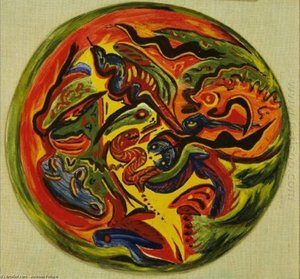
Circle

1941

Jackson Pollock’s Circle: A Dance of Color and Chaos Jackson Pollock's “Circle,” painted in 1941, isn’t merely a depiction of a circle; it’s an embodiment of the burgeoning…

Order a reproduction →
Untitled 23 autorstwa Jackson Pollock
#73

Untitled 23

A Chaotic Symphony in Black and White: Deconstructing Pollock’s “Untitled 23” Jackson Pollock's "Untitled 23" isn’t merely an ink drawing; it’s a visceral exploration of energy, anxiety, and…

Commission a hand-painted copy →
Easter and the Totem (1953) autorstwa Jackson Pollock
#74

Easter and the Totem

1953

Unveiling Jackson Pollock’s “Easter and the Totem” A Masterpiece of Abstract Expressionism: Jackson Pollock's 1953 painting, Easter and the Totem, stands as a pivotal work within the Abstract…

Bring it home →
Untitled (Composition with Pouring I) autorstwa Jackson Pollock
#75

Untitled (Composition with Pouring I)

A Revolution in Paint: Exploring Jackson Pollock’s “Untitled (Composition with Pouring I)” This captivating work embodies the raw energy and groundbreaking innovation that defined Jackson Pollock's contribution to…

Bring it home →
Untitled 13 autorstwa Jackson Pollock
#76

Untitled 13

In the pantheon of twentieth-century art, few names command as much visceral respect and intrigue as Jackson Pollock. His work Untitled 13 serves as a profound testament to…

Order a reproduction →
Male and Female (1942) autorstwa Jackson Pollock
#78

Male and Female

1942

Jackson Pollock: A Pioneer of Abstract Expressionism Jackson Pollock (1912–1956) stands as one of the most transformative figures in 20th-century art, irrevocably altering perceptions of painting and establishing…

Commission a hand-painted copy →
Miners autorstwa Jackson Pollock
#79

Miners

Paul Jackson Pollock: A Pioneer of Abstract Expressionism Paul Jackson Pollock (1912-1956) stands as one of the most influential figures in 20th-century art, irrevocably shaping the trajectory of…

Bring it home →
GREETINGS autorstwa Jackson Pollock
#80

GREETINGS

Paul Jackson Pollock's “Greetings” stands as a testament to the radical spirit of Abstract Expressionism, encapsulating the movement’s core tenets within a deceptively simple composition. This artwork, created…

Bring it home →
Number 23 (1948) autorstwa Jackson Pollock
#82

Number 23

1948

Jackson Pollock’s “Number 23,” completed in 1948, stands as an undeniable cornerstone of Abstract Expressionism—a movement that fundamentally challenged artistic conventions and prioritized emotional expression over representational accuracy.…

Bring it home →
Untitled (Silkcreen no. VI) autorstwa Jackson Pollock
#83

Untitled (Silkcreen no. VI)

A Dance of Chaos and Connection: Exploring Jackson Pollock’s “Untitled (Silkcreen no. VI)” Paul Jackson Pollock's "Untitled (Silkcreen no. VI)" stands as an emblem of Abstract Expressionism, a…

Order a reproduction →
Untitled 27 autorstwa Jackson Pollock
#84

Untitled 27

Jackson Pollock's “Untitled 27,” a monumental drip painting from 1950, stands as an emblem of Abstract Expressionism—a movement that irrevocably altered the course of twentieth-century art. More than…

Order a reproduction →
Silver and Black I autorstwa Jackson Pollock
#85

Silver and Black I

A Symphony of Chaos: Exploring Jackson Pollock’s “Silver and Black I” “Silver and Black I” is a powerful example of Jackson Pollock's revolutionary contribution to Abstract Expressionism, created…

Commission a hand-painted copy →
Untitled 4 autorstwa Jackson Pollock
#86

Untitled 4

In the realm of Abstract Expressionism, few works capture the raw, unbridled energy of the human psyche quite like Paul Jackson Pollock’s Untitled 4. This mesmerizing monochrome composition…

Bring it home →
Shimmering Substance (1946) autorstwa Jackson Pollock
#87

Shimmering Substance

1946

Shimmering Substance: A Dance of Chaos and Control Jackson Pollock’s “Shimmering Substance,” completed in 1946, stands as a cornerstone of Abstract Expressionism—a movement that irrevocably altered the landscape…

Order a reproduction →
Composition autorstwa Jackson Pollock
#88

Composition

Jackson Pollock executed the painting titled Composition in 1949. This work emerged during a period when the artist was developing a specific approach to the canvas, moving away…

Order a reproduction →
Gothic autorstwa Jackson Pollock
#89

Gothic

The canvas known as Gothic emerges from the creative mind of Paul Jackson Pollock. Created in 1944, this work exists within the permanent collection of The Museum of…

Order a reproduction →
Untitled (Cut-out) autorstwa Jackson Pollock
#91

Untitled (Cut-out)

In the pantheon of Abstract Expressionism, few works capture the raw, visceral energy of the mid-century avant-garde quite like Paul Jackson Pollock’s "Untitled (Cut-out)." Created in 1954, a…

Bring it home →
Going West (1935) autorstwa Jackson Pollock
#92

Going West

1935

Jackson Pollock's "Going West," painted in 1935, isn’t merely a depiction of a winter landscape; it’s a deeply personal narrative woven into the fabric of American pioneering spirit.…

Order a reproduction →
Number 2 (1951) autorstwa Jackson Pollock
#93

Number 2

1951

A Symphony of Chaos and Color: Decoding Jackson Pollock’s “Number 2” Jackson Pollock's "Number 2," completed in 1951, stands as a cornerstone of Abstract Expressionism—a movement that irrevocably…

Commission a hand-painted copy →
Number 3, 1950 autorstwa Jackson Pollock
#94

Number 3, 1950

A Universe of Color: Exploring Jackson Pollock’s Number 3, 1950 Jackson Pollock's *Number 3, 1950* is arguably one of the most iconic and significant works of Abstract Expressionism.…

Bring it home →
Untitled 1 autorstwa Jackson Pollock
#95

Untitled 1

Paul Jackson Pollock (1912-1956), a titan of Abstract Expressionism, remains one of the most enigmatic figures in twentieth-century art. His monumental canvases—like “Untitled 1”—are not merely splashes of…

Commission a hand-painted copy →
Echo autorstwa Jackson Pollock
#96

Echo

Jackson Pollock’s “Echo,” Number 25, 1951, stands as a testament to the fervor of Abstract Expressionism—a movement that sought to liberate art from representational constraints and delve into…

Order a reproduction →
Composition with Woman autorstwa Jackson Pollock
#97

Composition with Woman

A Vortex of Emotion: Decoding Jackson Pollock’s Abstract Expressionism This captivating painting embodies the raw energy and emotional intensity that define Jackson Pollock's revolutionary contribution to 20th-century art.…

Commission a hand-painted copy →
Untitled (1941) autorstwa Jackson Pollock
#98

Untitled

1941

Jackson Pollock's "Untitled," painted in 1941, stands as a cornerstone of Abstract Expressionism—a movement that fundamentally challenged artistic conventions and prioritized spontaneous gesture over meticulous representation. This monumental…

Order a reproduction →
Głowa Pomarańczowa autorstwa Jackson Pollock
#99

Głowa Pomarańczowa

„Orange Head” to dzieło, które z definicją definiuje abstrakcję ekspresjonistyczną – ruch artystyczny, który w połowie XX wieku wyłonił się z głębokiej potrzeby wyrażenia wewnętrznych emocji i doświadczeń.…

Bring it home →
Untitled (13) (1943) autorstwa Jackson Pollock
#100

Untitled (13)

1943

Jackson Pollock: A Pioneer of Abstract Expressionism Jackson Pollock (1912-1956) stands as one of the most influential figures in 20th-century art, irrevocably altering the landscape of painting and…

Bring it home →

Jackson Pollock's paintings by period

Drip Period

1948 · 3 dzieł na tej liście

The subjects Jackson Pollock painted most

The four subjects that return most often among these masterpieces, with the finest example of each.

Where to see Jackson Pollock's paintings

6 muzeów, w których znajduje się najwięcej obrazów z tej strony.

Muzeum Miasto Dzieła artysty Jackson Pollock Obrazy z tej listy
MoMA - Museum of Modern Art, Nowy JorkMoMA - Museum of Modern Art Nowy Jork 4 Białe Światło, Number 1, There Were Seven in Eight
Art Institute of Chicago, ChicagoArt Institute of Chicago Chicago 3 The key, Untitled, Grayed Rainbow
Private collection, New York CityPrivate collection New York City 1 Numer 1, 1949
Chrysler Museum of Art, NorfolkChrysler Museum of Art Norfolk 1 Number 23, 1951
Tate Modern, LondynTate Modern Londyn 1 Summertime: Number 9A
Stedelijk Museum, AmsterdamStedelijk Museum Amsterdam 1 The Water Bull

Jackson Pollock through the decades: one masterpiece for each

  1. 1930s
    The Flame (1938) autorstwa Jackson Pollock
    No. 23 of 100

    The Flame

    Wiek 18 – 27

    The painting The Flame consists of oil on fiberboard, measuring 51 x 76 cm. The surface features a central motif of an incandescent blaze that moves through an…

  2. 1940s
    Number 5 (1948) autorstwa Jackson Pollock
    No. 7 of 100

    Number 5

    Wiek 28 – 37

    A Universe Unfurled: Decoding Jackson Pollock’s No. 5, 1948 Jackson Pollock’s *No. 5, 1948* isn't simply a painting; it is an event frozen in time – a visual…

  3. 1950s
    Numer 1, 1949 (1950) autorstwa Jackson Pollock
    No. 2 of 100

    Numer 1, 1949

    Wiek 38 – 44 · Private collection

    Stworzony w 1950 roku obraz „Numer 1” to fascynujące dzieło uosabiające rewolucyjny duch abstrakcjonizmu i stanowiące kwintesencję ikonicznej techniki \"drip\" Jacksona Pollocka. Imponująca skala płótna – 240 x…

Jackson Pollock's paintings: frequently asked questions

What is the most famous Jackson Pollock painting?Show the answer

Symfonia Jesieni nr 30. Next come Numer 1, 1949 (1950) and Zbieżność.

Which are the 10 most famous Jackson Pollock paintings?Show the answer

Symfonia Jesieni nr 30, Numer 1, 1949, Zbieżność, Numer 1A, Białe Światło, One. Number 31, 1950, Number 5, Mural, Number 5 i Alchemy. The ranking above gives the year and the museum of each.

How many paintings by Jackson Pollock are there?Show the answer

Our catalogue lists 186 works by Jackson Pollock, dated from 1935 to 1954.

Where can I see the most famous Jackson Pollock paintings?Show the answer

Most of them are in MoMA - Museum of Modern Art (Nowy Jork), Art Institute of Chicago (Chicago) i Private collection (New York City). The table above lists the museums one by one.

In which period did Jackson Pollock paint the best-known works?Show the answer

In 1940s: 29 of the 100 works on this page date from then, among them Number 5.

What is the earliest famous Jackson Pollock painting, and the latest?Show the answer

The earliest on this page is Going West (1935), the latest Białe Światło (1954).

What subjects did Jackson Pollock paint?Show the answer

Drip painting (43), Color field (31) i Chaos (26), among the 100 works on this page.

What did Jackson Pollock paint on, and with what?Show the answer

Acrylic On Canvas: 39 of the 100 works on this page.

Which movement does Jackson Pollock's art belong to?Show the answer

Abstract expressionism, as the paintings on this page show.

What Jackson Pollock paintings does the MoMA - Museum of Modern Art hold?Show the answer

Białe Światło, Number 1 i There Were Seven in Eight are among the 3 works on this page held by the MoMA - Museum of Modern Art, Nowy Jork.

Where can I buy a Jackson Pollock reproduction?Show the answer

Yes. Every painting on this page can be ordered as a museum-quality, hand-painted oil reproduction or a fine art print, in the size you choose, from the painting's own page.

Jackson Pollock: biography

Wczesne lata, rodzina i kształcenie

Historia, którą napisał Jackson Pollock, bierze swój początek w surowym krajobrazie Cody w stanie Wyoming, gdzie 28 stycznia 1912 roku przyszedł na świat młody chłopiec. Był najmłodszym z pięciu braci, owocem związku Stelli May McClure i LeRoya Pollocka. Jego ojciec pracował jako geodeta, a ten zawód wymuszał nieustanne przemieszczanie się przez bezkresne obszary amerykańskiego Zachodu. To nomadyczne życie sprawiło, że wczesne lata artysty upłynęły pod znakiem częstych przeprowadzek – niepokój ten zdawał się odzwierciedlać zmieniające się horyzonty pracy jego ojca. Te wczesne wędrówki przez Zachód zapewniły mu bezpośrednie, niepośredniczone spotkanie z naturą oraz duchowym rezonansem sztuki rdzennych Amerykanów; wrażenia te cicho osadzały się w jego podświadomości na długo przed tym, zanim po raz pierwszy chwycił za pędzel.

W miarę dorastania, poszukiwanie własnego miejsca na ziemi skierowało go ku miejskiej energii wybrzeża. Zapisał się do Manual Arts High School w Los Angeles, szukając formalnej struktury dla swoich rodzących się impulsów. Jednak prawdziwe ukształtowanie jego warsztatu nastąpiło znacznie później, gdy przeprowadził się do Nowego Jorku. To właśnie tam, w Art Students League, rozpoczął długi i przełomowy okres studiów. Od 1929 do 1942 roku kształcił się pod okiem Thomasa Harta Bentona. Podczas gdy Benton kładł nacisk na rytmiczną kompozycję i narracyjny ciężar amerykańskiego życia, młody student zaczął już wówczas dryfować w stronę własnych, bardziej abstrakcyjnych, wewnętrznych prawd.

Rozwój unikalnej techniki

Do 1947 roku w jego podejściu do płótna zaszła głęboka przemiana. Odsunął od siebie tradycyjną sztalugę, wybierając zamiast tego kładzenie płócien bezpośrednio na podłodze. Ta zmiana pozwoliła mu stanąć nad swoim dziełem, stając się integralną częścią samego aktu twórczego. Nie ograniczał się jedynie do nakładania farby; on ją lał, chlapał i rozrzucał z góry, pozwalając płynnej materii opadać w nieprzewidywalnych wzorach. Metoda ta przekształciła proces malowania w fizyczny performans, w którym to grawitacja i gest dyktowały ostateczny kształt kompozycji.

Jego narzędzia były równie niekonwencjonalne, co same metody. Sięgał po patyki, noże, a nawet strzykawki, aby manipulować płynnym medium. Czasami używał kielni lub rzadkiej, ściekającej farby, by uzyskać specyficzne tekstury. Często drapał powierzchnię lub wykorzystywał dziwne przedmioty, by budować grubą, niemal rzeźbiarską skorupę farby, nadając pracy namacalną, trójwymiarową jakość. Proces ten nie polegał na kontrolowanym prowadzeniu pędzla, lecz na rytmicznym, niemal pierwotnym uwalnianiu energii bezpośrednio na powierzchnię płótna.

Kluczowe dzieła i ekspresja artystyczna

W miarę jak Pollock odchodził od ograniczeń sztalugi, jego płótna zaczęły odzwierciedlać coraz bardziej instynktowne, wręcz wizceralne zaangażowanie w materię malarską. W 1943 roku stworzył Mural, monumentalne dzieło o wymiarach 2,4 na 6,1 m, które udowodniło jego niezwykłą zdolność do panowania nad ogromną powierzchnią. W tym okresie jego poszukiwania w głąb podświadomości oraz sam akt malowania doprowadziły do powstania takich prac jak Eyes in the Heat, powstałych około 1946 roku. Dzieła te nie były jedynie obrazami, lecz zapisem fizycznej obecności, w której ruch całego ciała artysty dyktował rozmieszczenie każdej plamy i kałuży koloru.

Lata, które nadeszły później, przyniosły dopracowanie rytmicznych, kompozycji typu „all-over”, które miały zdefiniować jego sławę. Dążył on do stworzenia poczucia nieskończonej przestrzeni, w której żaden pojedynczy punkt nie dominował nad resztą płótna. Podejście to jest wyraźnie widoczne w Number 1, 1949 – pracy oddającej surowy wybuch energii – oraz w Lavender Mist, Number 1, 1950, która pozostaje jednym z najważniejszych osiągnięć w jego dorobku. W tych kompozycjach gra między kontrolą a przypadkiem tworzy subtelną równowagę, jak gdyby farba została uwolniona, a nie nałożona na podłoże.

Jego późniejsze eksperymenty nieustannie przesuwały granice tego, jak można manipulować farbą na płaskiej, poziomej powierzchni. Często używał patyczków, noży, a nawet samych puszek, by rozbryzgiwać pigment, co skutkowało powstaniem złożonych sieci linii. Metoda ta jest wyraźnie dostrzegalna w Blue Poles, Number 11, 1952 oraz w pełnej energii Convergence. Dzięki tym pracom Jackson Pollock osiągnął stan, w którym obraz zdawał się posiadać własne życie, wyłaniając się z głębokiego zanurzenia w jego własnej wyobraźni.

Mecenasi, pracownia i zlecenia

Droga jego kariery była kształtowana zarówno przez potrzeby publiczne, jak i przez hojność nielicznych, lecz kluczowych protektorów. Między 1938 a 1942 rokiem znajdował stałe zatrudnienie jako malarz w ramach WPA Federal Art Project, co zapewniło niezbędny rytm jego rozwijającej się praktyce twórczej. Ta stabilizacja ustąpiła miejsca bardziej osobistemu i przełomowemu przymierzu, gdy w lipcu 1943 roku Peggy Guggenheim zaoferowała mu kontrakt galeryjny. Jej wsparcie okazało się czymś więcej niż tylko profesjonalnym układem; w 1945 roku przekazała mu 2000 dolarów zaliczki na zakup domu, co było gestem głęboko splatającym jego życie prywatne z artystycznym przetrwaniem.

Jego życie twórcze znalazło w końcu swoje centrum w East Hampton w Nowym Jorku. Tam, w przestrzeni Pollock-Krasner House and Studio, żył i tworzył u boku swojej żony, Lee Krasner. Pracownia ta była miejscem intensywnego ruchu fizycznego, w którym granice między artystą a płótnem ulegały całkowitemu rozmyciu. Często rezygnował z tradycyjnej sztalugi, woląc kłaść płótna bezpośrednio na podłodze, aby móc obcować z farbą z każdej strony. To miejsce pracy nie było jedynie pomieszczeniem do produkcji dzieł, lecz przestrzenią głębokiej, niespokojnej energii, w której rodziły się jego najbardziej radykalne eksperymenty.

Późne lata i śmierć

Prywatne życie artysty było nierozerwalnie splecione z jego twórczymi zmaganiami. W 1945 roku poślubił artystkę Lee Krasner, związek, który stał się kluczowym elementem jego egzystencji w najbardziej przełomowych latach twórczości. Jednak pod powierzchnią profesjonalnych sukcesów i nieustannego wzrostu znaczenia, w cieniu jego życia pozostawał nieustępliwy mrok. Przez całe życie zmagał się z uzależnieniem od alkoholu – walką, która wielokrotnie komplikowała jego codzienność oraz zdolność do radzenia sobie z ogromną presją, jaką niosła ze sobą rosnąca sława.

To wewnętrzne i zewnętrzne rozchwianie doprowadziło do tragicznego finału w East Hampton w stanie Nowy Jork. 11 sierpnia 1956 roku, w wieku zaledwie 44 lat, jego życie zostało brutalnie przerwane w wyniku nagłego, tragicznego wypadku. Podczas jazdy doszło do wypadku samochodowego spowodowanego spożyciem alkoholu. Zderzenie okazało się śmiertelne, pozostawiając po sobie dziedzictwo równie burzliwe i nieprzewidywalne, jak farba, którą Pollock rozlewał na swoich płótnach.

Dziedzictwo i wpływ na sztukę nowoczesną

Echa jego radykalnych metod rozeszły się daleko poza ściany pracowni w East Hampton. Poprzez zerwanie tradycyjnej więzi między pędzlem a sztalugą, Jackson Pollock stał się centralną postacią ruchu ekspresjonizmu abstrakcyjnego – przesunięcia, które fundamentalnie zmieniło trajektorię amerykańskiej kreatywności. Jego obecność pomogła ugruntować pozycję Nowego Jorku jako światowego centrum sztuki nowoczesnej, przenosząc serce awangardy zdominowanej dotychczas przez Europę. Był jednym z pierwszych amerykańskich malarzy uznanych za równorzędnego partnera dla wielkich mistrzów europejskich XX wieku, udowadniając, że nowy, pierwotny język może wyrosnąć bezpośrednio z amerykańskiej ziemi.

Jego wpływ zadziałał jako katalizator dla wielu późniejszych nurtów artystycznych, które podążyły jego śladem. Sposób, w jaki wchodził w relację z płótnem – traktując je jako arenę dla fizycznego działania, a nie jedynie powierzchnię do reprezentacji – otworzył drzwi dla wielu twórców pragnących wyrazić podświadomość poprzez gest. To skupienie na samym procesie tworzenia pozostawiło trwały ślad w historii sztuki nowoczesnej, zapewniając, że spontaniczność i nieplanowane działanie na zawsze zajmą specjalne miejsce w warsztacie artysty.

Gdzie dziś można podziwiać jego dzieła

Aby stać twarzą w twarz z fizycznymi śladami jego ruchu, należy udać się do wielkich instytucji, które ocaliły tę radykalną energię od zapomnienia. W Nowym Jorku Museum of Modern Art przechowuje kilka jego płócien, pozwalając widzom stanąć przed rozległymi, pozbawionymi centralnego punktu kompozycjami, które zdefiniowały jego epokę. National Gallery of Art w Waszyngtonie również posiada jego prace, oferując przestrzeń do kontemplacji tych skomplikowanych sieci barw, które artysta osiągnął dzięki swoim unikalnym metodom. Po drugiej stronie Atlantyku, londyńska Tate Gallery podtrzymuje jego obecność w swoich kolekcjach, dbając o to, by jego wpływ sięgał daleko poza brzegi Ameryki.

Dla tych, którzy pragną bardziej intymnego kontaktu z procesem twórczym, Pollock-Krasner House and Studio w East Hampton oferuje głębokie poczucie obcowania z historią. To miejsce, uznane za narodowy zabytek historyczny, było przestrzenią, w której on i jego żona, Lee Krasner, żyli i tworzyli. Rezydencja pozostaje żywym ogniwem łączącym nas z jego życiem, zachowując środowisko, które pielęgnowało jego przejście od tradycyjnych form ku spontanicznym, wykonywanym na podłodze metodom, które zmieniły bieg nowoczesnego malarstwa. Spacerowanie po tych przestrzeniach pozwala poczuć skalę i fizyczną rzeczywistość jego artystycznej walki.

  • Number 1, 1949
  • Blue Poles: Number 11, 1952
  • Mural (1943)
  • Convergence

Wszystkie 186 dzieła artysty Jackson Pollock →