August Macke, 1887 – 1914

August Macke: The 100 Most Famous Paintings

Kobieta w zielonej kurtce (1913) is the most famous painting by August Macke, held by the Museum Ludwig in Kolonia. Bathing girls z miastem w tle (1913) and "Hat Shop" -> "Sklep z kapeluszami" (1913) are the next two works the world knows best. From the 283 works of August Macke in our catalogue, here are the 100 that collectors and museum visitors look at most, with the year, the museum and the story of each.

Ranking oparty na naszym wskaźniku popularności, który łączy liczbę wyszukiwań, wizyt oraz zamówień dla każdego dzieła. Aktualizacja: Październik 2026. Every masterpiece on this page can be ordered as a museum-quality, hand-painted oil reproduction or a fine art print, at the size you choose.

Portret August Macke
August Macke · 1887 – 1914
Urodzony · zmarł
1887 – 1914, Meschede
Nurt
German expressionism
Dzieła w naszym katalogu
283
Najsłynniejsze
Kobieta w zielonej kurtce (1913)
Najwięcej dzieł w
Westfälisches Landesmuseum

Top 10: August Macke's best-known paintings

Kobieta w zielonej kurtce (1913) autorstwa August Macke
1

Kobieta w zielonej kurtce

1913 · Obraz olejny na płótnie · Museum Ludwig, Kolonia

August Macke’s ‘Woman in a Green Jacket’: A Symphony of Color and Modern Spirit A glimpse into modern life: August Macke’s vibrant scene – this 1913 painting by German Expressionist August Macke transcends mere depiction, presenting instead a profound meditation on human connection amidst the burgeoning dynamism of the early twentieth century. More than just figures strolling through a park-like setting, it's a masterful orchestration of color, form, and compositional…

Bathing girls z miastem w tle (1913) autorstwa August Macke
2

Bathing girls z miastem w tle

1913 · Akryl na płótnie · Staatsgalerie Moderner Kunst, Monachium

Wprowadzenie do „Bohaterów kąpielowych z miastem w tle” August Macke „Bohereczniki kąpielowi z miastem w tle” August Macke, stworzony w 1913 roku, to więcej niż tylko obraz – to wyraz ducha epoki, fascynujący przykład ekspresjonizmu i głębokie studium relacji między człowiekiem a naturą. To dzieło, które emanuje radością życia, spokojem i niezwykłą wrażliwością na piękno otaczającego świata. Macke, artysta o krótkim, lecz intensywnym życiu, w tym obrazie doskonale oddaje swój…

"Hat Shop" -> "Sklep z kapeluszami" (1913) autorstwa August Macke
3

"Hat Shop" -> "Sklep z kapeluszami"

1913 · Obraz olejny na płótnie

Temat i Kompozycja To urzekające dzieło sztuki chwyta żywą, a jednocześnie intymną chwilę w miejskiej butiku, gdzie kobieta oddaje się prostej czynności zakupów kapeluszy. Scena została przemyślana z wielką starannością; postać kobiety, umieszczona po lewej stronie, swoją kontemplacyjną postawą subtelnie prowadzi wzrok widza w stronę ekspozycji kapeluszy w witrynie sklepowej. Elementy architektoniczne obramowują tę scenę, sugerując tętniącą życiem ulicę miasta, podczas gdy fakturowane ściany i jasne wnętrze przywołują poczucie codzienności…

Portrait of the Artist's Wife with Hat (1909) autorstwa August Macke
4

Portrait of the Artist's Wife with Hat

1909 · Oil On Canvas · Westfälisches Landesmuseum, Münster

August Macke’s “Portrait of the Artist’s Wife with Hat,” painted in 1909, isn't merely a depiction of a woman; it’s a carefully constructed window into the heart of early German Expressionism and the burgeoning artistic spirit of the time. This captivating work, housed within the Westphalian State Museum of Art and Cultural History, immediately draws the viewer in with its warm palette, intimate setting, and the direct gaze of the…

People by the Lake (1913) autorstwa August Macke
5

People by the Lake

1913 · Acrylic On Canvas · Staatliche Kunsthalle Karlsruhe, Karlsruhe

People by the Lake – An Expressionist Echo of Summer’s Embrace The painting “People by the Lake,” created in 1913 by August Macke, isn't merely a depiction of a tranquil lakeside scene; it’s a visceral embodiment of Expressionism’s core tenets—a fervent distillation of emotion and experience rendered with audacious color and fractured form. Situated at the Staatliche Kunsthalle Karlsruhe, this oil on canvas masterpiece captures a moment suspended in time,…

Woman Playing the Lute (1910) autorstwa August Macke
6

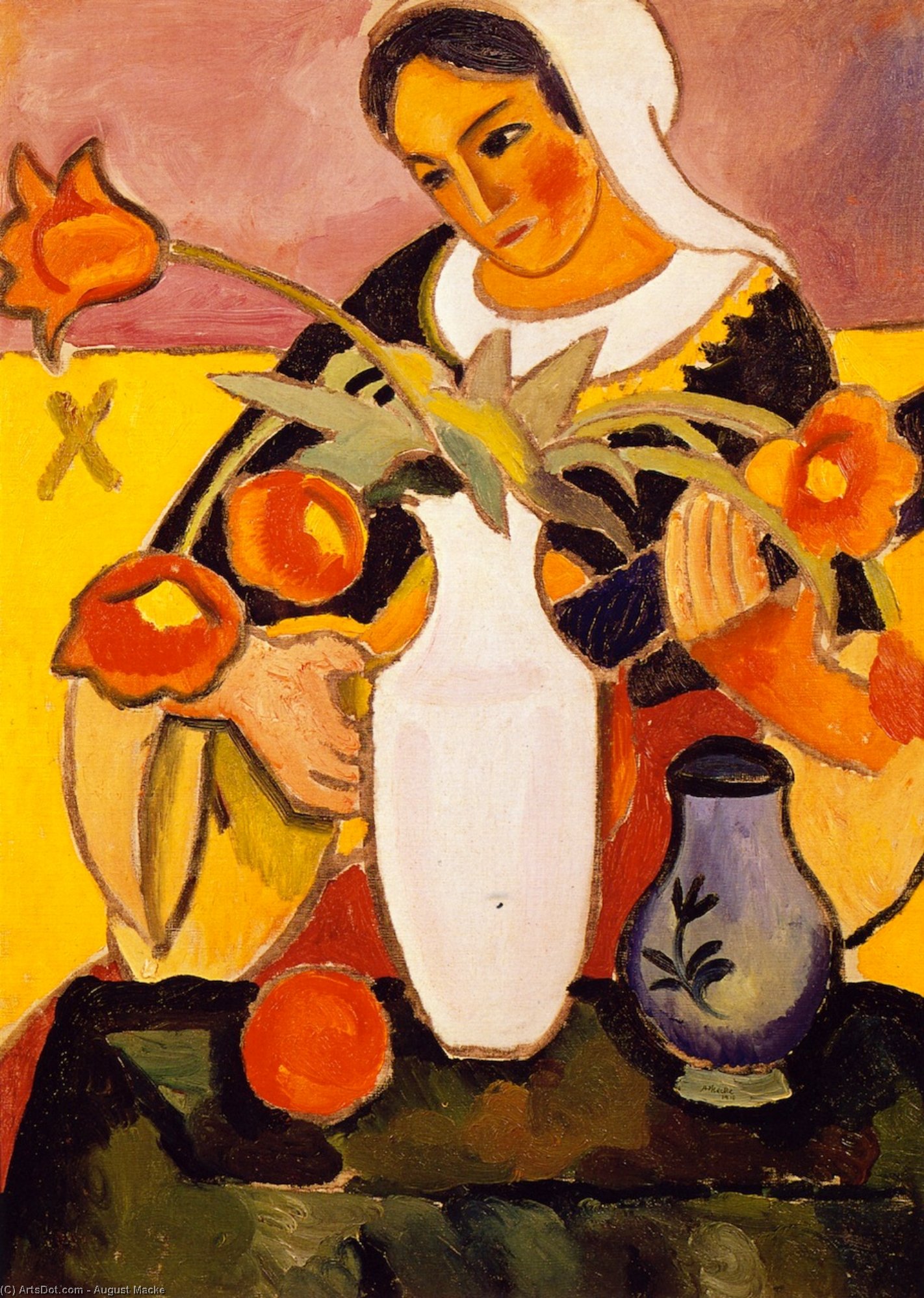
Woman Playing the Lute

1910 · Acrylic On Canvas · Musée d’Art Moderne de la Ville de Paris, Paryż

August Macke’s Woman Playing the Lute: A Portrait of Fragility Amidst Expressionist Boldness The painting “Woman Playing the Lute,” executed by August Macke in 1910, stands as a poignant emblem of German Expressionism's aesthetic sensibilities – a captivating blend of delicate beauty and unsettling psychological depth. More than just a depiction of an instrument and its performer, it’s a meticulously crafted meditation on vulnerability and artistic contemplation within the turbulent…

Reclining female nude autorstwa August Macke
7

Reclining female nude

Oil

In this intimate composition, a woman rests upon a bed, her body partially draped in a sheet that softens the contours of her form. She is positioned on her side, her gaze turned away from us toward something unseen beyond the frame. There is a profound sense of stillness here, a moment of private repose captured in a way that feels both fleeting and permanent. The background is a deep,…

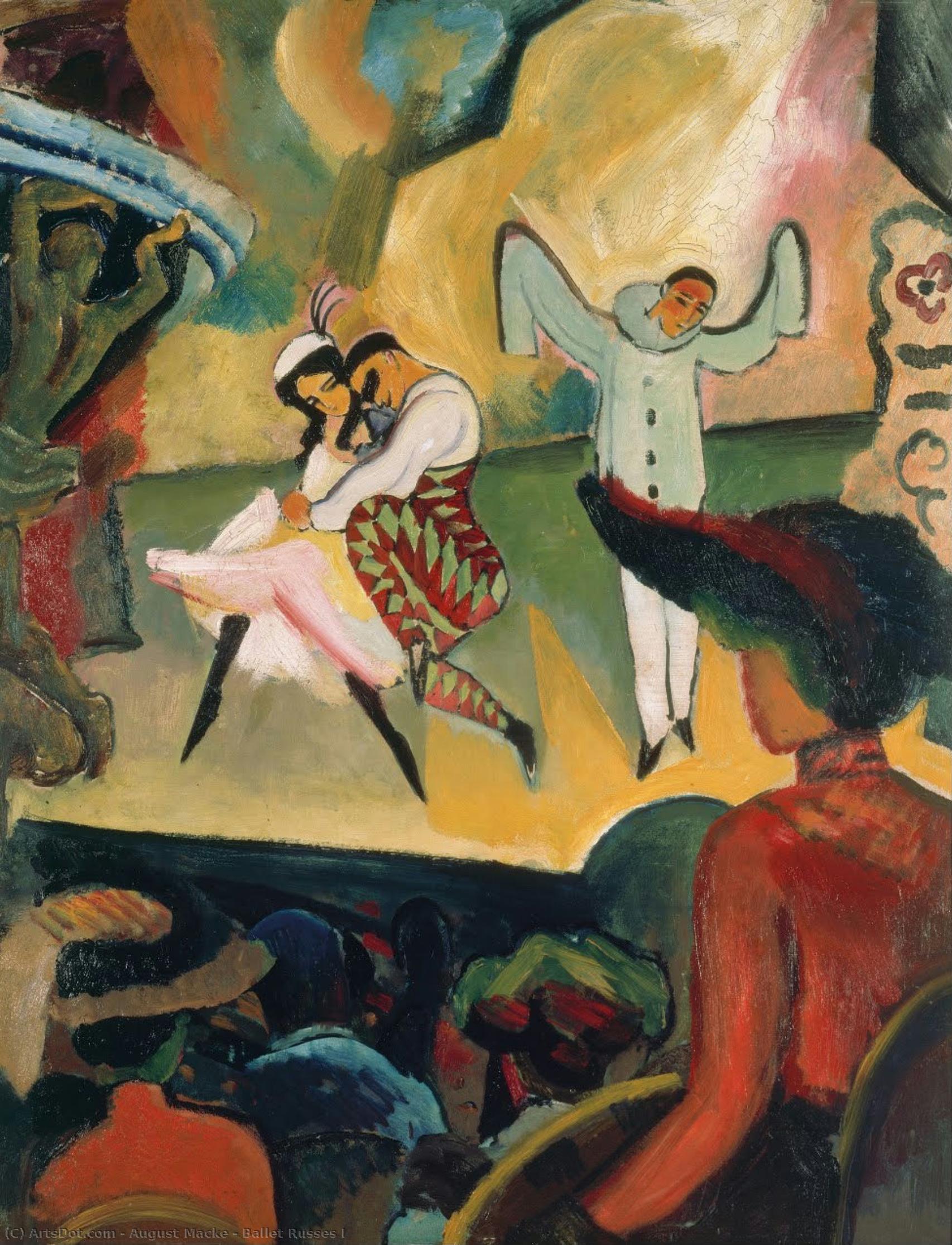
Ballet Russes I (1912) autorstwa August Macke
8

Ballet Russes I

1912 · Oil On Canvas · Kunsthalle Bremen, Brema

Ballet Russes I is an oil painting on canvas that depicts a dramatic scene from a ballet performance. The composition centers on two principal dancers in a close embrace, illuminated by a warm light source. The figure of Harlequin is shown in the act of abducting the coquettish Columbine. Nearby, the figure of Pierrot is depicted with arms raised in a plaintive gesture of abandonment, a movement echoed by a…

Couple in the woods (1912) autorstwa August Macke
9

Couple in the woods

1912 · Acrylic On Canvas

August Macke's "Couple in the Woods," painted in 1912, is more than just a depiction of two figures amidst a woodland setting; it’s a vibrant distillation of the burgeoning Orphism movement and a poignant reflection on the anxieties and aspirations of early 20th-century Germany. Created during a pivotal moment in Macke's artistic development, this work showcases his increasingly bold experimentation with color and form, anticipating the radical shifts that would…

The rest of the August Macke ranking, 11 to 100

Naked Girl with Headscarf (1910) autorstwa August Macke
#35

Naked Girl with Headscarf

1910 · Städel Museum

The oil painting titled Naked Girl with Headscarf was created by the German artist August Macke in 1910. This work belongs to the Expressionist movement, utilizing a medium…

Order a reproduction →
Couple on the Forest Track (1913) autorstwa August Macke
#36

Couple on the Forest Track

1913 · Lehmbruck Museum

“Couple on the Forest Track,” painted in 1913 by August Macke, is more than just a depiction of two women amidst a woodland scene; it's a poignant encapsulation…

Bring it home →
Leave-taking (1914) autorstwa August Macke
#37

Leave-taking

1914

A Bustling Street in Motion Leave-taking unfolds as a lively urban scene where the rhythm of daily life pulses through a crowded thoroughfare. People move in a synchronized…

Order a reproduction →
Landscape near Hammamet (1914) autorstwa August Macke
#38

Landscape near Hammamet

1914 · Westfälisches Landesmuseum

This watercolor depicts a serene coastal landscape overlooking the Mediterranean Sea, situated close to Hammamet, Tunisia. The composition features a small boat gliding across calm waters, framed by…

Commission a hand-painted copy →
House in a Landscape autorstwa August Macke
#40

House in a Landscape

To gaze upon August Macke’s "House in a Landscape" is to step through a portal into a sun-drenched, almost dreamlike corner of early 20th-century life. The scene unfolds…

Bring it home →
St. Germain near Tunis (1914) autorstwa August Macke
#41

St. Germain near Tunis

1914

is a watercolor painting created in 1914. The artwork depicts a cityscape featuring a variety of buildings and structures, including houses with different colors and styles. A woman…

Bring it home →
Hat Shop (1914) autorstwa August Macke
#44

Hat Shop

1914 · Museum Folkwang

August Macke's "Hat Shop" (1914) isn’t merely a depiction of a street scene; it’s a carefully constructed distillation of modern experience, rendered with the vibrant energy and emotional…

Commission a hand-painted copy →
Self-Portrait with Hat (1909) autorstwa August Macke
#49

Self-Portrait with Hat

1909

August Macke’s Self-Portrait with Hat, painted in 1909, captures more than just a likeness; it arrests a moment of vibrant, almost theatrical engagement. The central figure dominates the…

Order a reproduction →
Tegernsee Landscape (1910) autorstwa August Macke
#53

Tegernsee Landscape

1910 · Germanisches Nationalmuseum

August Macke captured the essence of the Bavarian scenery in his 1910 work, Tegernsee Landscape. This oil on canvas presents a specific moment of light and color through…

Bring it home →
Afternoon in the Garden (1913) autorstwa August Macke
#54

Afternoon in the Garden

1913

August Macke’s Afternoon in the Garden transports us into a scene steeped in the gentle warmth of early 20th-century leisure. This watercolor captures more than just a gathering;…

Order a reproduction →
Native Sea Fight (1912) autorstwa August Macke
#55

Native Sea Fight

1912

August Macke’s Native Sea Fight is not merely a depiction of naval combat; it is a visceral plunge into the heart of human drama played out against the…

Bring it home →
Landscape by the Sea (1914) autorstwa August Macke
#56

Landscape by the Sea

1914 · Bawarskie Państwowe Zbiory Malarstwa

The scene unfolds in Landscape by the Sea, an expressive work by August Macke. Created in 1914, this painting captures a coastal moment through a lens of intense…

Commission a hand-painted copy →
Woman in park (1914) autorstwa August Macke
#57

Woman in park

1914 · MoMA - Museum of Modern Art

In the fleeting moments before the shadows of the Great War descended upon Europe, August Macke captured a vision of serenity that remains as vibrant today as it…

Commission a hand-painted copy →
Girls under Trees (1914) autorstwa August Macke
#62

Girls under Trees

1914 · Staatsgalerie Moderner Kunst

August Macke's “Girls Under Trees” (1914) isn't merely a depiction of children playing in the woods; it’s a vibrant distillation of early 20th-century optimism and a powerful expression…

Order a reproduction →
Parkway (1914) autorstwa August Macke
#67

Parkway

1914

To stand before August Macke’s Parkway is to be enveloped by a joyous, almost breathless current of modern existence. This oil on canvas, dating from the pivotal year…

Order a reproduction →
People by the Blue Lake (1913) autorstwa August Macke
#69

People by the Blue Lake

1913

The scene unfolds in 1913, a moment frozen in time as August Macke captures a quiet afternoon by the water. In this genre art piece, titled People by…

Bring it home →
Sunny way (1913) autorstwa August Macke
#70

Sunny way

1913 · Westfälisches Landesmuseum

In the fleeting moments captured within "Sunny Way," we are transported to a world where the boundaries between nature and humanity dissolve into a vibrant dance of color.…

Bring it home →

August Macke's paintings by period

The subjects August Macke painted most

The four subjects that return most often among these masterpieces, with the finest example of each.

Where to see August Macke's paintings

8 muzeów, w których znajduje się najwięcej obrazów z tej strony.

Muzeum Miasto Dzieła artysty August Macke Obrazy z tej listy
Westfälisches Landesmuseum, MünsterWestfälisches Landesmuseum Münster 19 Portrait of the Artist's Wife with Hat, Knight Georg and Dragon, Circus Scene I: Equestrian with Clowns
Lenbachhaus, MonachiumLenbachhaus Monachium 17 Portrait Elisabeth Macke, Study for a self-portrait, The Spirit in the House Furniture: Still Life with Cat
Kunstmuseum Bonn, BonnKunstmuseum Bonn Bonn 11 Courtyard of a Villa at St. Germain, Red House in a Park, St. Mary's with Houses and Chimney (Bonn)
Städel Museum, Frankfurt nad MenemStädel Museum Frankfurt nad Menem 4 Two Girls, Naked Girl with Headscarf
Thyssen-Bornemisza Museum, MadrytThyssen-Bornemisza Museum Madryt 3 Circus, Woman on a Divan
Staatsgalerie Moderner Kunst, MonachiumStaatsgalerie Moderner Kunst Monachium 2 Bathing girls z miastem w tle, Girls under Trees
Bawarskie Państwowe Zbiory Malarstwa, MonachiumBawarskie Państwowe Zbiory Malarstwa Monachium 5 Landscape by the Sea
Albertina, WiedeńAlbertina Wiedeń 4 Sailing boat on the Tegernsee

August Macke through the years: the masterpieces of each year

12 years of August Macke's painting, 1903 to 1914, told year by year through its best-known works.

  1. 1903
  2. 1906
    Self Portrait (1906) autorstwa August Macke
    No. 20 of 100

    Self Portrait

    Wiek: 19 · Westfälisches Landesmuseum
  3. 1906
    Self-portrait (1906) autorstwa August Macke
    No. 59 of 100

    Self-portrait

    Wiek: 19

    In the quiet, focused gaze of Self-portrait (1906), we encounter a rare moment of stillness from an artist whose life would soon be swept up in the turbulent…

  4. 1907
  5. 1907
  6. 1907
  7. 1908
  8. 1908
  9. 1909
    Portrait of the Artist's Wife with Hat (1909) autorstwa August Macke
    #4 of 100

    Portrait of the Artist's Wife with Hat

    Wiek: 22 · Westfälisches Landesmuseum

    August Macke’s “Portrait of the Artist’s Wife with Hat,” painted in 1909, isn't merely a depiction of a woman; it’s a carefully constructed window into the heart of…

  10. 1909
  11. 1909
    Self-Portrait with Hat (1909) autorstwa August Macke
    #49 of 100

    Self-Portrait with Hat

    Wiek: 22

    August Macke’s Self-Portrait with Hat, painted in 1909, captures more than just a likeness; it arrests a moment of vibrant, almost theatrical engagement. The central figure dominates the…

  12. 1910
    Woman Playing the Lute (1910) autorstwa August Macke
    No. 6 of 100

    Woman Playing the Lute

    Wiek: 23 · Musée d’Art Moderne de la Ville de Paris

    August Macke’s Woman Playing the Lute: A Portrait of Fragility Amidst Expressionist Boldness The painting “Woman Playing the Lute,” executed by August Macke in 1910, stands as a…

  13. 1910
    Portrait Elisabeth Macke (1910) autorstwa August Macke
    No. 13 of 100

    Portrait Elisabeth Macke

    Wiek: 23 · Lenbachhaus

    The gaze of Elisabeth Macke meets the viewer in this intimate 1910 portrait, a work titled Portrait Elisabeth Macke. Painted by the artist August Macke, the piece captures…

  14. 1910
  15. 1911
  16. 1911
  17. 1912
    Ballet Russes I (1912) autorstwa August Macke
    #8 of 100

    Ballet Russes I

    Wiek: 25 · Kunsthalle Bremen

    Ballet Russes I is an oil painting on canvas that depicts a dramatic scene from a ballet performance. The composition centers on two principal dancers in a close…

  18. 1912
    Couple in the woods (1912) autorstwa August Macke
    #9 of 100

    Couple in the woods

    Wiek: 25

    August Macke's "Couple in the Woods," painted in 1912, is more than just a depiction of two figures amidst a woodland setting; it’s a vibrant distillation of the…

  19. 1912
  20. 1913
    Kobieta w zielonej kurtce (1913) autorstwa August Macke
    No. 1 of 100

    Kobieta w zielonej kurtce

    Wiek: 26 · Museum Ludwig

    August Macke’s ‘Woman in a Green Jacket’: A Symphony of Color and Modern Spirit A glimpse into modern life: August Macke’s vibrant scene – this 1913 painting by…

  21. 1913
    Bathing girls z miastem w tle (1913) autorstwa August Macke
    Rank 2 / 100

    Bathing girls z miastem w tle

    Wiek: 26 · Staatsgalerie Moderner Kunst

    Wprowadzenie do „Bohaterów kąpielowych z miastem w tle” August Macke „Bohereczniki kąpielowi z miastem w tle” August Macke, stworzony w 1913 roku, to więcej niż tylko obraz –…

  22. 1913
    "Hat Shop" -> "Sklep z kapeluszami" (1913) autorstwa August Macke
    #3 of 100

    "Hat Shop" -> "Sklep z kapeluszami"

    Wiek: 26

    Temat i Kompozycja To urzekające dzieło sztuki chwyta żywą, a jednocześnie intymną chwilę w miejskiej butiku, gdzie kobieta oddaje się prostej czynności zakupów kapeluszy. Scena została przemyślana z…

  23. 1914
  24. 1914
  25. 1914

August Macke's paintings: frequently asked questions

What is the most famous August Macke painting?Show the answer

Kobieta w zielonej kurtce (1913), Museum Ludwig, Kolonia. Next come Bathing girls z miastem w tle (1913) and "Hat Shop" -> "Sklep z kapeluszami" (1913).

At what age did August Macke paint Kobieta w zielonej kurtce?Show the answer

26 years old: Kobieta w zielonej kurtce dates from 1913 and August Macke was born in 1887.

Which are the 10 most famous August Macke paintings?Show the answer

Kobieta w zielonej kurtce, Bathing girls z miastem w tle, "Hat Shop" -> "Sklep z kapeluszami", Portrait of the Artist's Wife with Hat, People by the Lake, Woman Playing the Lute, Reclining female nude, Ballet Russes I, Couple in the woods i Circus. The ranking above gives the year and the museum of each.

How many paintings by August Macke are there?Show the answer

Our catalogue lists 283 works by August Macke, dated from 1903 to 1914.

Where can I see the most famous August Macke paintings?Show the answer

Most of them are in Westfälisches Landesmuseum (Münster), Lenbachhaus (Monachium) i Kunstmuseum Bonn (Bonn). The table above lists the museums one by one.

In which period did August Macke paint the best-known works?Show the answer

In 1914: 25 of the 100 works on this page date from then, among them Woman with Parrot.

What is the earliest famous August Macke painting, and the latest?Show the answer

The earliest on this page is Portrait of Dr. Ludwig Deubner, writing (1903), the latest Woman with Parrot (1914).

What subjects did August Macke paint?Show the answer

Landscape (15), Trees (9) i People (8), among the 100 works on this page.

What did August Macke paint on, and with what?Show the answer

Oil On Canvas: 26 of the 100 works on this page.

Which movement does August Macke's art belong to?Show the answer

German expressionism, as the paintings on this page show.

What August Macke paintings does the Westfälisches Landesmuseum hold?Show the answer

Portrait of the Artist's Wife with Hat, Knight Georg and Dragon i Circus Scene I: Equestrian with Clowns are among the 12 works on this page held by the Westfälisches Landesmuseum, Münster.

Where can I buy a August Macke reproduction?Show the answer

Yes. Every painting on this page can be ordered as a museum-quality, hand-painted oil reproduction or a fine art print, in the size you choose, from the painting's own page.

August Macke: biography

Wczesne lata, rodzina i edukacja

Historia, którą napisał August Macke, bierze swój początek w niemieckim miasteczku Meschede, gdzie 3 stycznia 1887 roku przyszedł na świat pierwszy i jedyny syn Augusta Friedricha Hermanna Macke, budowniczego i artysty amatora, oraz Marii Florentine. Dzieciństwo artysty kształtowały zmienne losy firmy jego ojca, które rzucały rodzinę raz do Kolonii, a raz do Bonn. Już jako mały chłopiec, August wykazywał nieodparty pociąg do ekspresji wizualnej; spędzał wczesne lata na szkicowaniu i projektowaniu scenografii do szkolnych przedstawień, znajdując sposób na przenoszenie otaczającego go świata na papier na długo przed tym, zanim przekroczył progi formalnej akademii.

Jego właściwa edukacja artystyczna rozpoczęła się z pełną mocą, gdy trafił do Akademii w Düsseldorfie, gdzie kształcił się w latach 1904–1906. Pod okiem Adolfa Maennchena uczył się dyscypliny tradycyjnej techniki, jednak jego niepokorny duch zdawał się łaknąć czegoś znacznie bardziej rozległego i wyzwolonego. Ten wewnętrzny niepokój popchnął go ku poszukiwaniu wiedzy na kursach wieczorowych u Fritza Helmuta Ehmke. Nienasycony głód zrozumienia rzemiosła skierował go w stronę Berlina, gdzie studiował pod okiem niemieckiego malarza, jakim był Lovis Corinth. Te lata rygorystycznego treningu położyły techniczny fundament, na którym August Macke zbudował później swój unikalny język wizualny, odchodząc od surowych reguł wczesnego wykształcenia w stronę bardziej osobistego, intymnego sposobu patrzenia na świat.

Wpływ francuskiego modernizmu

Uliczki Paryża wywarły potężny wpływ na młodego artystę, odciągając go od tradycyjnych struktur jego dotychczasowego wykształcenia. Podczas pierwszej wizyty w tym mieście w 1907 roku, poczuł on głębokie poruszenie twórczością malarzy impresjonistów. Zaczął naśladować ich podejście, starając się uchwycić grę światła poprzez subtelnie nakładane, plamiste kolory. Nie było to jednak jedynie przelotne zainteresowanie; między 1907 a 1912 rokiem wielokrotnie powracał do Paryża, pozwalając atmosferze francuskiej stolicy całkowicie przekształcić jego postrzeganie płótna.

Przełomowy moment nastąpił w 1912 roku, kiedy na jego drodze stanął Robert Delaunay. To spotkanie okazało się objawieniem, które fundamentalnie zmieniło kierunek jego twórczości. Artysta uległ głębokiemu wpływowi chromatycznego kubizmu Delaunaya – stylu koncentrującego się na rytmie koloru i światła. To podejście, często utożsamiane z orfizmem, zachęciło go do przejścia w stronę bardziej dynamicznego i nieprzedstawiającego sposobu widzenia. Zaczął eksperymentować z rozbitymi płaszczyznami barw, dążąc do przełożenia wrażeń płynących z nowoczesnego życia na język czystego światła i formy.

Przynależność do Der Blaue Reiter

Trajektoria życia, którą podążał August Macke, uległa znaczącej zmianie w 1909 roku, kiedy przybył do Monachium. To właśnie tam spotkał Franza Marca, co zapoczątkowało głęboką i trwałą przyjaźń. Ta relacja wciągnęła go w krąg myślicieli i twórców, którzy pragnęli wyjść poza ramy zwykłego naśladowania natury. Do 1911 roku August Macke stał się czołowym członkiem wpływowej grupy ekspresjonistycznej znanej jako Der Blaue Reiter. Nie był on jedynie uczestnikiem tego ruchu; współtworzył jego istotę, przyczyniając się do organizacji wystaw oraz szerzenia jego radykalnych idei.

Jego pozycja w tym awangardowym kręgu została umocniona przez bliskie więzi z innymi luminarzami epoki. Łączyła go głęboka więź z Marcem oraz Paulem Klee, w których towarzystwie odnalazł wspólną dążność ku sferze duchowości i emocji. Nawet gdy poruszał się wśród zmiennych krajobrazów modernizmu, jego interakcje z postaciami takimi jak Robert Delaunay pomagały mu szlifować unikalną perspektywę. Podczas gdy inni członkowie grupy często zgłębiali mroczniejsze lub bardziej niepokojące tematy, August Macke poszukiwał harmonii i piękna. Patrzył na świat i widział w nim miejsce światła oraz radości, nawet gdy polityczne cienie kładące się na Europie zaczęły się wydłużać.

Technika i styl artystyczny

August Macke dążył do uchwycenia wewnętrznego ducha sceny, a nie tylko powierzchowności rzeczy. Jego pociągnięcia pędzla odchodziły od obiektywnej reprodukcji rzeczywistości, wybierając zamiast tego wyrażanie głębokich uczuć i nastrojów. Aby to osiągnąć, często deformował zarówno kolor, jak i formę, naginając fizyczny świat do swoich emocjonalnych potrzeb. Jego kompozycje często opierały się na odważnych barwach i geometrycznych kształtach, tworząc poczucie struktury pośród ekspresyjnego przepływu podmiotów. Odnalazł sposób na wplecenie dynamizmu włoskiego futuryzmu w swoje kompozycje, nasycając sceny poczuciem ruchu i nowoczesnej energii.

Ta pogoń za światłem i kolorem osiągnęła swój szczyt podczas podróży do Afryki Północnej. Jego tunezyjskie akwarele z 1914 roku ukazują wyjątkową biegłość w operowaniu barwą, oddając intensywne, zmieniające się światło tego regionu. W tych dziełach pigment zdaje się pulsować własnym życiem, wykraczając poza prostą reprezentację w stronę bardziej świetlistej, duchowej esencji. Nie malował on jedynie krajobrazu; malował on samo odczucie przebywania w jego wnętrzu.

Kluczowe dzieła i arcydzieła

W miarę jak jego wizja artystyczna dojrzewała, August Macke zaczął chwytać ciche rytmy nowoczesnego życia przez pryzmat intensywnego koloru. W 1913 roku stworzył Woman in a Green Jacket, dzieło emanujące niezwykłą witalnością dzięki odważnej palecie barw i pewnym, zdecydowanym pociągnięciom pędzla. Jego fascynacja grą światła i miejską przestrzenią doprowadziła go do namalowania Large Bright Shop Window, w którym zgłębiał sposób, w jaki światło przenika przez taflę szkła. Często zwracał również uwagę na proste przyjemności codzienności, czego przykładem jest Bathing girls with town in the backgraund, gdzie poprzez uproszczone formy starał się oddać poczucie idyllicznego spokoju.

Ostatni etap jego życia, ukształtowany przez podróże do Afryki Północnej, przyniósł jego płótnom zupełnie nową świetlistość. Pobyt w Tunezji zaowocował cyklem prac, które wielu uznaje za jego największe osiągnięcia, wśród których na szczególną uwagę zasługuje Türkisches Café. To właśnie w tym okresie powstał również Market in Tunis, dzieło, które podczas aukcji w 2000 roku osiągnęło zawrotną cenę 4,1 miliona dolarów (2,86 miliona funtów). Nawet gdy nad światem zaczęły gromadzić się mroczne cienie wojny, artysta wciąż odnajdywał piękno w intymnych scenach, takich jak The Couple at a Garden Table, które w 1997 roku w domu aukcyjnym Christie's zostało sprzedane za 2 miliony funtów.

  • 1913: Woman in a Green Jacket
  • 1914: Market in Tunis
  • 1914: The Couple at a Garden Table

Późne lata i tragiczna śmierć

Rok 1914 przyniósł nagłą zmianę w świetle, które August Macke tak usilnie starał się uchwycić na płótnie. Wiosną udał się w podróż do Tunisu w Tunezji, towarzyszący mu Paul Klee oraz Louis Moilliet. Ta wyprawa pozwoliła mu doświadczyć zupełnie innego rodzaju słońca, co wywarło ogromny wpływ na luministyczne podejście, które zdefiniowało jego ostatni okres twórczości. Powrócił jednak do Europy pogrążonej w gwałtownie narastającym chaosie. Gdy mijał pierwszy miesiąc Wielkiej Wojny, artysta poczuł nieuchronne przyciąganie konfliktu. Kierowany poczuciem obowiązku, zgłosił się na ochotnika do służby wojskowej.

Koniec nadszedł z porażającą szybkością. W drugim miesiącu I wojny światowej August Macke poległ w walce na froncie we Francji. Zginął w pobliżu Perthes-lès-Hurlus 26 września 1914 roku. Miał zaledwie 27 lat. Jego śmierć nastąpiła w momencie, gdy jego język artystyczny osiągał zupełnie nowy poziom klarowności i światła. Nagłość jego odejścia pozostawiła pustkę w niemieckich kręgach awangardy, brutalnie przerywając karierę, którą definiował nieustanny, poszukujący duch.

Dziedzictwo i wpływ

Choć czas spędzony w blasku światła był krótki, wpływ, jaki August Macke wywarł na najważniejsze ruchy artystyczne dwudziestego wieku, pozostaje niezwykle głęboki. Zdołał on wywalczyć swoje miejsce w historii jako znacząca postać ekspresjonizmu, oferując perspektywę, która często poszukiwała harmonii tam, gdzie inni odnajdywali jedynie dysonans. Jego zdolność do syntezy radykalnych idei współczesnych mu twórców w unikalny, osobisty język sprawiła, że jego wizja nie zaginęła w mrokach Wielkiej Wojny.

Waga jego wkładu w kulturę została formalnie uznana długo po jego przedwczesnej śmierci, co doprowadziło do ustanowienia Nagrody im. Augusta Macke w 1959 roku. To wyróżnienie wciąż oddaje hołd duchowi jego twórczych poszukiwań. Nawet dzisiaj jego obecność jest wyczuwalna w sposobie, w jaki współcześni artyści kontynuują zgłębianie głębokich powiązań między kolorem a ludzkimi emocjami. August Macke nauczył nas, że światło i barwa mogą przemawiać o wewnętrznym stanie duszy – to lekcja, która rezonuje przez kolejne dziesięciolecia.

Gdzie dziś można podziwiać jego dzieła

Aby przejść się po salach, w których wciąż tętni jego duch, należy udać się do Bonn w Niemczech. To właśnie tam August-Macke-Haus stanowi poświęcone mu sanktuarium, przechowujące pamięć o człowieku w murach, w których niegdyś żył i tworzył. To w tym domu odnalazł swoją pracownię – przestrzeń, która pozwoliła jego twórczej energii rozkwitnąć, zanim nad światem nadciągnęły cienie wojny. Nieopodal, Kunstmuseum w Bonn również gromadzi jego obrazy, dbając o to, by jego wizja pozostała dostępna dla tych, którzy pragną odnaleźć światło tak starannie przez niego uchwycone.

Jego obecność wyczuwalna jest na wielu granicach, niosąc się w kolekcjach wielkich instytucji. W Kolonii Museum Ludwig skrywa jego dzieła, podczas gdy Museum Folkwang w Essen udostępnia jego płótna do publicznej kontemplacji. Ślady jego geniuszu można odnaleźć także w Staatsgalerie Moderner Kunst w Monachium, gdzie jego kolory nieustannie przemawiają ze starych ram. Nawet w Zurychu Kunsthaus Zürich pielęgnuje część jego dziedzictwa, przechowując obrazy będące odzwierciedleniem jego unikalnego sposobu patrzenia na świat.

  • Bathing girls with town in the backgraund (ok. 1913)
  • Woman in a Green Jacket (1913)
  • Landscape with Cows and Camel (1914)
  • Türkisches Café (1914)

Wszystkie 283 dzieła artysty August Macke →