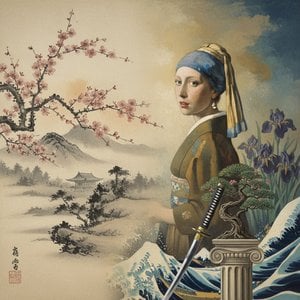
early life and training
seigan sōi, a japanese buddhist priest and painter, was born in 1522 in kyoto, japan. he passed away in the same city in 1591, leaving behind an indelible mark on the world of art. as a disciple of the renowned artist sesshū tōyō, seigan sōi's artistic foundation was rooted in the traditions of japanese painting.artistic contributions and style
seigan sōi is celebrated for his ink paintings, particularly his landscapes, which exemplify the serene beauty of japanese art. his mastery of the tea ceremony further underscores his dedication to the nuances of japanese culture. as a member of the rinzai school of zen buddhism, seigan sōi's work often reflects the philosophical underpinnings of this sect.- key artistic contributions:
- innovative use of ink in landscape painting
- contribution to the rinzai school of zen buddhism through art
- mastery of the traditional japanese tea ceremony
- notable works:**
- landscapes with figures (late 16th century, myōshin-ji temple, kyoto) - a testament to seigan sōi's skill in capturing the essence of japanese landscapes
- mountain and river (circa 1580, national museum of japan) - demonstrates his use of ink to evoke a sense of serenity
legacy and influence
seigan sōi's influence on japanese art is profound, with his works held in many museums and private collections worldwide. his dedication to the rinzai school of zen buddhism has ensured his legacy extends beyond the art world.- relevant art movements:**
- the suiboku ga art movement - influenced by seigan sōi's use of ink
- the bunjinga art movement - reflects the personal expression seen in seigan sōi's landscapes
- view seigan sōi's art:**
- seigan sōi | WahooArt.com - explore his ink paintings and learn more about his life
conclusion
seigan sōi's enigmatic yet serene landscapes have left an indelible mark on the world of japanese art. his dedication to the rinzai school of zen buddhism and mastery of the tea ceremony further underscore his significance in japanese culture.- key resources:**
- the kanō school style art movement - influenced by seigan sōi's artistic style
- myōshin-ji temple, kyoto - where many of seigan sōi's works are housed
references:
Pytania i odpowiedzi
Jak mogę znaleźć dzieła artysty Seigan Sōi w konkretnej palecie barw?
Strona Według palet kolorystycznych grupuje dzieła Seigan Sōi według ich palet kolorystycznych.
Czy istnieje oś czasu prac Seigan Sōi?
Strona Chronologia dzieł prezentuje dzieła Seigan Sōi uporządkowane chronologicznie, rok po roku.
Czy istnieje chronologiczny opis twórczości Seigan Sōi?
Kariera Seigan Sōi rozwija się etap po etapie na stronie Osiągnięcia artystyczne: jako pozioma oś czasu dzieł, pogrupowanych w rozdziały odpowiadające poszczególnym okresom twórczości.