
1
Pamela Andrews
Ręcznie malowana reprodukcja olejowa od $199 29 × 35 cm
Rozmiar zgodny z oryginałem $324 60 × 78 cm Zamów w oryginalnym rozmiarze →

Pamela Andrews (1741) to najsłynniejszy obraz autorstwa Robert Feke, znajdujący się w Rhode Island School of Design Museum of Art w Providence. Self Portrait (1743) i Anne Shippen Willing (Mrs. Charles Willing) (1746) to dwa kolejne dzieła, które świat zna najlepiej. Z 22 dzieł Robert Feke w naszym katalogu, oto 22 najczęściej wybieranych przez kolekcjonerów i zwiedzających muzea, wraz z rokiem powstania, informacją o muzeum oraz historią każdego z nich.
Ranking oparty na naszym wskaźniku popularności, który łączy liczbę wyszukiwań, wizyt oraz zamówień dla każdego dzieła. Aktualizacja: Listopad 2026. Każde arcydzieło na tej stronie można zamówić jako ręcznie malowaną reprodukcję olejną o jakości muzealnej lub jako wysokiej jakości wydruk artystyczny, w wybranym przez Ciebie rozmiarze.


Cztery tematy najczęściej powracające w tych arcydziełach, wraz z najdoskonalszym przykładem każdego z nich.
8 muzeów, w których znajduje się najwięcej obrazów z tej strony.
| Muzea | Miasto | Dzieła artysty Robert Feke | Obrazy z tej listy |
|---|---|---|---|
 Museum of Fine Arts |
Boston | 4 | Self Portrait, Mary Channing (Mrs. John Channing), John Channing |
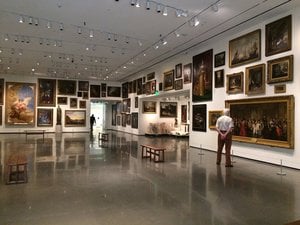 Rhode Island School of Design Museum of Art |
Providence | 3 | Pamela Andrews, Portrait of Mrs. Tweedy, Portrait of Joseph Whipple Jr. |
 Harvard Art Museums |
Cambridge | 3 | Susannah Speakman Inman (Mrs. Ralph Inman) (1727-1761), Benjamin Franklin (1706-1790), Ralph Inman (1713-1788) |
 National Gallery of Art |
Waszyngton | 2 | Captain Alexander Graydon, Simon Pease |
 Peabody Essex Museum |
Salem | 1 | Judge Richard Saltonstall by Robert Feke |
 Cleveland Museum of Art |
Cleveland | 1 | Charles Apthorp |
 Brooklyn Museum |
Brooklyn | 1 | Portrait of a Woman |
 Museum of Fine Arts |
Houston | 1 | Portrait of Mrs. Samuel McCall, Sr. (Anne McCall, 1720–1785) |
Około dziesięciu lat, od 1741 do 1750, obejmuje wszystkie datowane arcydzieła artysty Robert Feke: oto one, rok po roku.


Pamela Andrews (1741), Rhode Island School of Design Museum of Art, Providence. Następnie pojawiają się Self Portrait (1743) oraz Anne Shippen Willing (Mrs. Charles Willing) (1746).
36 lat: Pamela Andrews pochodzi z 1741, a Robert Feke urodził(a) się w 1705.
Pamela Andrews, Self Portrait, Anne Shippen Willing (Mrs. Charles Willing), Judge Richard Saltonstall by Robert Feke, Portrait of Mrs. Tweedy, Portrait of Joseph Whipple Jr., Charles Apthorp, Portrait of a Woman, Portrait of Mrs. Samuel McCall, Sr. (Anne McCall, 1720–1785) i Portrait of Dr. Phineas Bond (1717-1773). Powyższy ranking zawiera rok oraz muzeum dla każdego z nich.
Nasz katalog obejmuje 22 dzieł autorstwa Robert Feke, datowanych od 1741 do 1750.
Większość z nich znajduje się w Museum of Fine Arts (Boston), Rhode Island School of Design Museum of Art (Providence) i Harvard Art Museums (Cambridge). Powyższa tabela zawiera listę muzeów po kolei.
W okresie 1748: 8 z 22 dzieł na tej stronie pochodzi z tego czasu, w tym Charles Apthorp.
Najwcześniejszy na tej stronie to Pamela Andrews (1741), najpóźniejszy Judge Richard Saltonstall by Robert Feke (1750).
Self Portrait, Mary Channing (Mrs. John Channing) i John Channing to jedne z 4 dzieł na tej stronie znajdujących się w zbiorach Museum of Fine Arts, Boston.
Tak. Każdy obraz na tej stronie można zamówić jako ręcznie malowaną reprodukcję olejną o jakości muzealnej lub jako wysokiej jakości wydruk artystyczny w wybranym przez Ciebie rozmiarze, bezpośrednio ze strony danego dzieła.
In the tapestry of early American art, few threads are as intriguing yet elusive as those woven by Robert Feke. A painter whose life remains shrouded in the mists of the eighteenth century, Feke emerged as a vital force in the colonial landscape, capturing the burgeoning identity of a new world through the faces of its rising aristocracy. Born around 1705 in Oyster Bay, New York, his early years are largely lost to history, leaving behind only fragments of a journey that would eventually lead him to the heart of Boston’s social elite. While much of his personal biography remains speculative, his artistic presence is undeniable; he was a man who translated the quiet dignity and material wealth of the American colonies into enduring visual legacies.
Feke’s arrival in Boston around 1741 marked a transformative moment for regional portraiture. Before his ascent, the colonial aesthetic often lacked a cohesive, sophisticated standard, but Feke brought with him a refined sensibility that bridged the gap between rugged frontier life and European elegance. His work was not merely about recording a likeness; it was an exercise in psychological realism and social positioning. By observing the subtle textures of silk, the luster of pearls, and the stern resolve in a merchant's gaze, Feke provided his patrons with more than just a portrait—he provided them with a sense of permanence and prestige.
The artistic DNA of Robert Feke was deeply shaped by the masters who traversed the Atlantic. Scholars often point to the profound influence of John Wollaston, a British painter whose arrival in the colonies introduced a more flamboyant, Rococo-inspired grace. From Wollaston, Feke learned to navigate the complexities of light and shadow, yet he chose to temper this exuberance with a uniquely restrained elegance. Where others might have leaned into excessive ornamentation, Feke favored meticulous observation and subtle tonal gradations, creating a style that felt both grounded and aristocratic.
This stylistic evolution is perhaps most evident in his ability to blend various European traditions into a distinctively American vernacular. He drew inspiration from the compositions of John Smibert, notably seen in his group portrait of the Isaac Royall family, which echoed the structured grandeur of earlier masters. Through this synthesis, Feke developed a technique that emphasized:
Though his active years were relatively brief—with his documented activities tapering off around 1751—the impact of Feke’s oeuvre was monumental. He worked across a significant geographic corridor, leaving his mark on the vibrant communities of Boston, Newport, and Philadelphia. His subjects were the architects of the colonial economy: shipping magnates, lawyers, and wealthy landowners who sought to immortalize their lineage. In doing so, Feke became a chronicler of an era, documenting the faces of a society on the precipice of profound historical change.
Today, the surviving works of Robert Feke—roughly sixty paintings in total—serve as precious windows into the eighteenth century. His ability to set a new standard for his contemporaries was recognized by art historians like Richard Saunders, who noted that Feke’s pictures established the benchmark by which the next generation of colonial artists would be judged. Whether through the commanding presence of Portrait of Ralph Inman or the delicate grace of his depictions of women, Feke remains a quiet master whose brushstrokes continue to resonate with the dignity of a lost age.
