A Syrian Visionary: Exploring the Art of Rida Hus-Hus
Rida Hus-Hus (1939 – 2016) emerged from Homs, Syria, as a singular voice in contemporary Arabic art. His artistic journey was marked by unwavering dedication to abstraction and a profound engagement with the complexities of Syrian society under authoritarian rule—a duality that profoundly shaped his distinctive visual language.
- Early Life & Education:
Hus-Hus’s formative years were spent in Damascus University’s Faculty of Fine Arts, where he honed his skills in drawing and painting.
- Drawing Beyond Representation:
His life drawings and portraits demonstrated a genuine empathy for human subjects, capturing nuanced expressions and conveying an intimate understanding of the human condition. These pieces stand apart from purely decorative endeavors; they represent Hus-Hus’s sincere interest in observing and portraying people.
The Language of Geometry: Hus-Hus's Artistic Style
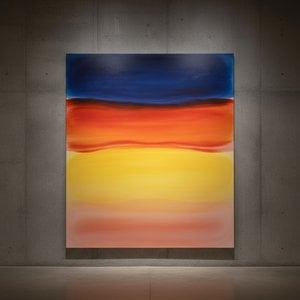
Hus-Hus’s artistic style is characterized by a masterful manipulation of geometric forms—circles, squares, triangles—to distill landscapes and cityscapes into their essential essence. He eschewed detailed realism, prioritizing rhythm and harmony achieved through simplified shapes. This approach wasn’t merely stylistic; it served as a deliberate strategy to navigate the constraints imposed by political censorship.
- Still Life & Floral Studies:
He found inspiration in everyday details, particularly still life compositions featuring flowers, meticulously rendered with vibrant pastel hues. These works celebrate the beauty of quotidian moments and reveal Hus-Hus’s meticulous attention to texture and color.
- Syria Through Pastel Eyes:
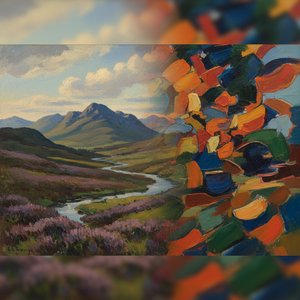
His landscapes painted in pastel—particularly those depicting Syria—were imbued with a luminous quality, capturing the spirit of his homeland with sensitivity and artistic vision. These paintings weren't simply scenic representations; they were expressions of Hus-Hus’s love for Syria and his desire to portray it in its most captivating form.
Political Engagement & Artistic Resilience
Despite the repressive atmosphere of the Assad regime, Hus-Hus steadfastly defended his artistic independence. Recognizing the dangers posed by censorship, he adopted a remarkably prudent lifestyle—a quiet existence underpinned by careful financial management—allowing him to continue creating art without compromising his convictions.
- Symbolism & Resistance:
His geometric abstraction wasn’t merely aesthetic; it functioned as a subtle form of resistance against ideological control, conveying ideas and emotions beyond the reach of official narratives. The repetition of shapes—circles, squares—became emblems of stability and integrity amidst turbulent times.
Legacy & Recognition
Rida Hus-Hus’s contribution to Syrian art is undeniable. His distinctive style—characterized by vibrant color palettes and geometric abstraction—continues to inspire artists today.
His work serves as a testament to the power of artistic expression in confronting political challenges and preserving cultural identity. Explore his oeuvre, including “Mouna Portrait,” for a deeper understanding of this remarkable artist’s vision and enduring legacy.