

Najsłynniejszym obrazem Peter Cross jest Colonel James Griffin, Aged 15 (1682), znajdujący się w Yale Center for British Art w New Haven. Nasz katalog zawiera 2 dzieł autorstwa Peter Cross; poniższych 2 to te, na które świat patrzy najczęściej – każde z podaniem roku powstania, muzeum, w którym się znajduje, oraz uzasadnieniem jego znaczenia.
Ranking oparty na naszym wskaźniku popularności, który łączy liczbę wyszukiwań, wizyt oraz zamówień dla każdego dzieła. Aktualizacja: Listopad 2026. Każde arcydzieło na tej stronie można zamówić jako ręcznie malowaną reprodukcję olejną o jakości muzealnej lub jako wysokiej jakości wydruk artystyczny, w wybranym przez Ciebie rozmiarze.


2 muzeów, w których znajduje się najwięcej obrazów z tej strony.
| Muzea | Miasto | Dzieła artysty Peter Cross | Obrazy z tej listy |
|---|---|---|---|
 Yale Center for British Art |
New Haven | 1 | Colonel James Griffin, Aged 15 |
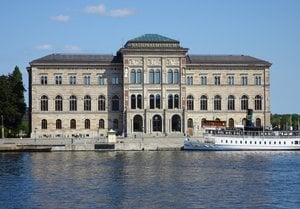 Nationalmuseum |
Stockholm | 1 | Porträtt av man i allongeperuk med röd mantel |
19 lat twórczości Peter Cross, od 1682 do 1700, rok po roku: najsłynniejsze obrazy z każdego roku, w kolejności chronologicznej.

Colonel James Griffin, Aged 15 (1682)
37 lat: Colonel James Griffin, Aged 15 pochodzi z 1682, a Peter Cross urodził(a) się w 1645.
Nasz katalog obejmuje 2 dzieł autorstwa Peter Cross, datowanych od 1682 do 1700.
Większość z nich znajduje się w Yale Center for British Art (New Haven) i Nationalmuseum (Stockholm). Powyższa tabela zawiera listę muzeów po kolei.
Najwcześniejszy na tej stronie to Colonel James Griffin, Aged 15 (1682), najpóźniejszy Porträtt av man i allongeperuk med röd mantel (1700).
Tak. Każdy obraz na tej stronie można zamówić jako ręcznie malowaną reprodukcję olejną o jakości muzealnej lub jako wysokiej jakości wydruk artystyczny w wybranym przez Ciebie rozmiarze, bezpośrednio ze strony danego dzieła.
In the delicate, intimate world of seventeenth-century portraiture, few names evoke as much quiet fascination as Peter Cross. A master of the miniature, Cross operated during a transformative era in English art, navigating the complex social landscapes of the late Stuart period. Though his life remains partially veiled by the mists of history, documentary evidence suggests he was born around 1645, likely to parents of French extraction. His family, led by Anthony Cross, resided in the bustling heart of London, near Lombard Street, providing him with a foundation of stability and access to the vibrant artistic currents flowing through the capital. As a limner, Cross possessed the rare ability to capture the very essence of a sitter within a tiny, jewel-like frame, creating works that were as much precious objects as they were portraits.
The artistry of Peter Cross was deeply rooted in the traditions of his predecessors, most notably the legendary Samuel Cooper. It is widely believed by historians that Cross may have trained under Cooper, and this influence is unmistakable in the precision and grace of his execution. He was a careful imitator of the great masters, yet he possessed a distinctive touch that allowed him to command the attention of the highest eppers of society. His skill was such that during the reign of Queen Anne, he became an extensively employed miniaturist for both royalty and the nobility. His work found its way into the most prestigious collections in the world, including the Royal Collection at Windsor, ensuring that his delicate hand would be preserved for centuries to come.
One of the most intriguing aspects of Cross’s career is the historical confusion surrounding his very identity. For many years, art historians were divided, believing that two separate artists—Peter and Laurence Cross—were responsible for a variety of miniatures. This scholarly error stemmed from his unique method of signing his work; he utilized an interlaced monogram in gold paint that could easily be misread as "LC" instead of "PC." It was not until the twentieth century that researchers successfully untangled this knot, confirming that these exquisite works all belonged to a single, masterful hand. This revelation brought much-needed clarity to his oeuvre, allowing his true brilliance to shine without the shadow of mistaken attribution.
Beyond mere technical proficiency, Cross’s work often touched upon the boundaries of reality and idealization. A famous, albeit controversial, anecdote tells of a commission to repair a portrait of Mary, Queen of Scots. Tasked with making the figure appear more beautiful, Cross allegedly renovated the features of the original painting so effectively that he created an entirely erroneous type of her likeness. While such an act might be viewed as a breach of historical accuracy today, in the context of the seventeenth century, it demonstrated his profound ability to manipulate medium and light to achieve a desired aesthetic perfection. His life, marked by both personal devotion—evidenced by his marriage to Arabella Burman and his large family—and professional triumph, remains a testament to the enduring power of the miniature portrait.
The significance of Peter Cross lies not only in the beauty of his miniatures but in his role as a bridge between the era of Cooper and the evolving tastes of the English aristocracy. His achievements include: